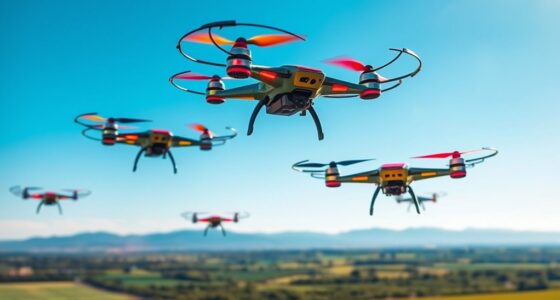
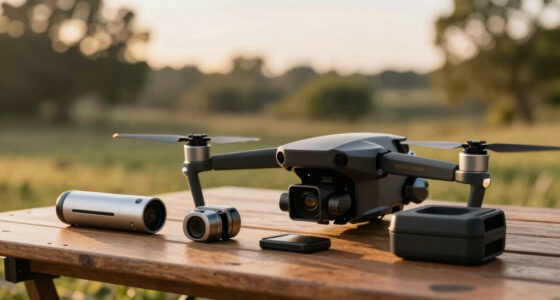
For wildlife photography, the best drone is not simply the one with the longest flight time or most detailed camera: it must let you capture useful images without pressuring animals. I rank the DJI Air 3S Fly More Combo with RC 2 as the best overall choice in this lineup for its capable camera system and bundled field gear; the DJI Mini 5 Pro stands out for a compact setup, while the DJI Mavic 4 Pro is the premium option for photographers prioritizing imaging flexibility. The main tradeoffs are camera reach versus portability, flight endurance versus noise and disturbance, and advertised image specs versus dependable control and composition. No drone makes close approaches ethically acceptable, and local rules, species sensitivity, and field conditions matter more than a product feature. Continue reading for the full comparison and advice on choosing a drone that supports a respectful working distance.

Get the latest gadgets delivered free with Prime
- Fast, free delivery on millions of items
- Prime Video, Amazon Music and more included
- Member-only deals all year
Complete the kit



Key Takeaways
- The Air 3S Fly More Combo with RC 2 ranks first overall because it pairs a capable camera platform with a field-ready bundle, rather than relying on headline megapixels alone.
- The Mini 5 Pro is the compact standout for photographers who need a smaller kit, but a light aircraft does not give permission to approach wildlife more closely.
- The Mavic 4 Pro is the premium imaging pick; its larger, more capable setup makes most sense for experienced operators who can justify the extra size and complexity.
- Several Ruko, Bwine, V11PRO, and generic GPS listings emphasize 8K photos or long flight times; buyers should verify camera stabilization, usable video quality, and support before treating those numbers as field advantages.
- Ethical distance depends on behavior and local guidance, not just drone capability: the camera should help you frame from far away, and any sign of disturbance is a reason to withdraw.
| DJI Mini 5 Pro Ultra-Light Drone With Camera, 1-Inch CMOS |  | Best Overall for Image Quality and Sensing | Weight: 249.9 g ± 4 g | Camera: 50MP, 1-inch CMOS | Video: 4K/60fps HDR | VIEW ON AMAZON | See Our Full Breakdown |
| DJI Mini 4K Drone with 4K UHD Camera, Under 249 g |  | Best for Beginners | Weight: Under 249 g | Camera: 4K UHD | Gimbal: 3-axis | VIEW ON AMAZON | See Our Full Breakdown |
| DJI Mini 3 with DJI RC – Compact 4K Camera Drone |  | Best for Screen-Based Field Control | Weight: Under 249 g | Video: 4K HDR | Gimbal: 3-axis mechanical | VIEW ON AMAZON | See Our Full Breakdown |
| Ruko U11MINI 4K Camera Drone with Touchscreen Remote |  | Best for Long Sessions on a Dedicated Screen | Weight: Under 249 g | Photo and video: 8K photos, 4K/30fps video | Flight time: Up to 64 minutes | VIEW ON AMAZON | See Our Full Breakdown |
| Ruko F11PRO 2 Plus Drone with 48MP Camera, 8K Photo, 74 Minutes Flight Time |  | Best for Multi-Battery Endurance | Camera: 48MP, 1/2-inch CMOS | Photo resolution: 8K | Video: 4K/30fps | VIEW ON AMAZON | See Our Full Breakdown |
| DJI Flip Two-Battery Combo Drone with 4K Camera and Remote Controller |  | Best for Close-to-Home, Controlled Shoots | Listed weight: 335 g | Video resolution: 4K | Camera sensor: 1/1.3-inch CMOS | VIEW ON AMAZON | See Our Full Breakdown |
| Bwine F7MINI 8K Photo 5.5″ 1080P RC Screen Drone with Camera for Adults |  | Best for Beginners Who Want a Built-In Screen | Photo and video: 8K photos, 4K video | Controller display: 5.5-inch, 1080P | Flight time: Up to 64 minutes with two batteries | VIEW ON AMAZON | See Our Full Breakdown |
| Skyrover S1 Mini Drone with Camera, 4K/60fps Video, 8K/48MP Photos |  | Best for Smooth Video in a Compact Package | Video resolution: 4K/60fps | Photo resolution: 8K/48MP | Flight time: Up to 40 minutes | VIEW ON AMAZON | See Our Full Breakdown |
| DJI Air 3S Fly More Combo with RC 2 Screen Remote Controller |  | Best Premium Pick for Distant, Detailed Framing | Camera system: Dual 4K/60fps HDR cameras | Effective still resolution: 50 MP | Obstacle avoidance: Omnidirectional with LiDAR | VIEW ON AMAZON | See Our Full Breakdown |
| V11PRO Drone with 8K Camera, 3-Axis Gimbal & 80-Minute Flight |  | Best for Long Sessions Between Landings | Photo resolution: 8K | Video resolution: 4K/30fps | Camera sensor: 1/2-inch CMOS | VIEW ON AMAZON | See Our Full Breakdown |
| DJI Mavic 4 Pro Drone with DJI RC 2 |  | Best for Professional Detail at Long Standoff | Camera: 100MP Hasselblad 4/3 CMOS | Video: 6K/60fps HDR | Flight time: Up to 51 minutes | VIEW ON AMAZON | See Our Full Breakdown |
| GPS Drone with 4K UHD Camera, 1640ft Range, Auto Return, Follow Me, 3-Axis Gimbal, APP & Remote Control |  | Best for GPS-Assisted Beginners | Camera: 4K UHD | Gimbal: 3-axis | Flight range: Up to 1,640 feet | VIEW ON AMAZON | See Our Full Breakdown |
| Ruko F11PRO 2 Drone with 6K Camera for Adults, 4K/30fps Video | 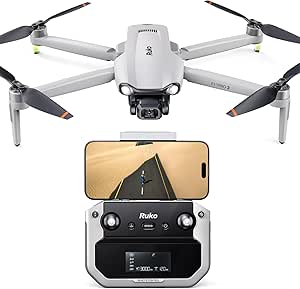 | Best for Long Sessions on a Moderate Budget of Complexity | Video capture: 4K at 30fps | Photo resolution: 6K | Flight time: Up to 70 minutes with two batteries | VIEW ON AMAZON | See Our Full Breakdown |
| DJI Air 3S Drone with RC 2 Fly More Combo (with Screen) 4K HDR, 45-Min Max Flight Time, 128GB, Landing Pad, Backpack, CPS 2 Year Warranty, Lens Cleaning Kit |  | Best Dual-Camera Travel Kit | Wide camera: 50MP, 1-inch CMOS, 24mm | Medium telephoto camera: 48MP, 1/1.3-inch CMOS | Video: 4K HDR at 60fps | VIEW ON AMAZON | See Our Full Breakdown |
| Ruko Drone with Camera for Adults 4K Video & 8K Photo, 96 Minutes Flight Time |  | Best Lightweight Multi-Battery Pick | Sensor: 1/2-inch CMOS, 48MP | Photo resolution: 8K | Video: 4K/30fps | VIEW ON AMAZON | See Our Full Breakdown |
| drones for wildlife photography ethical distance | Weight | Flight time | Gimbal |
|---|---|---|---|
| DJI Mini 5 Pro Ultra-Light Dro | 249.9 g ± 4 g | Up to 36 minutes | — |
| DJI Mini 4K Drone with 4K UHD | Under 249 g | 31 minutes per battery | 3-axis |
| DJI Mini 3 with DJI RC | Under 249 g | — | 3-axis mechanical |
| Ruko U11MINI 4K Camera Drone w | Under 249 g | Up to 64 minutes | 3-axis mechanical brushless |
| Ruko F11PRO 2 Plus Drone with | — | 74 minutes across two batteries; 37 minutes each | 3-axis mechanical |
| DJI Flip Two-Battery Combo Dro | — | — | — |
| Bwine F7MINI 8K Photo 5.5" 108 | Under 249 g | Up to 64 minutes with two batteries | 3-axis brushless |
| Skyrover S1 Mini Drone with Ca | 249 g | Up to 40 minutes | 3-axis |
| DJI Air 3S Fly More Combo with | — | — | — |
| V11PRO Drone with 8K Camera | 300 g | Up to 80 minutes with two batteries | 3-axis with EIS |
| DJI Mavic 4 Pro Drone with DJI | 2,372 g | Up to 51 minutes | — |
| GPS Drone with 4K UHD Camera | 2.6 pounds | — | 3-axis |
| Ruko F11PRO 2 Drone with 6K Ca | — | Up to 70 minutes with two batteries | 3-axis mechanical |
| DJI Air 3S Drone with RC 2 Fly | — | — | — |
| Ruko Drone with Camera for Adu | 249 g | Up to 96 minutes with three batteries | 3-axis brushless |
More Details on Our Top Picks
DJI Mini 5 Pro Ultra-Light Drone With Camera, 1-Inch CMOS
For wildlife photography, I rank the Mini 5 Pro first because its 1-inch CMOS sensor and omnidirectional obstacle sensing pair image detail with a better chance of avoiding trees and other obstacles while keeping a respectful distance. Its 4K/60fps HDR capture offers more flexibility for documenting movement than the Mini 4K’s listed 4K footage, while the 36-minute flight time is ample for a planned observation session. The sub-250-gram weight also makes it easier to carry to remote locations, though it does not grant permission to fly near or disturb wildlife. The tradeoff is that some specifications are sparse, and the app must be downloaded from DJI’s website. I’d choose the Mini 4K for simpler beginner use, but its product data does not list obstacle sensing.
Pros:- 1-inch CMOS sensor and 50MP camera data support detailed still photography.
- 4K/60fps HDR capture provides more motion and exposure flexibility than the Mini 4K’s listed 4K video.
- Omnidirectional obstacle sensing adds awareness around trees and other obstacles.
- 249.9 g listed weight and foldable design suit travel to field locations.
Cons:- 36-minute flight time is shorter than the listed optional-battery maximum for the Mini 3 and the multi-battery totals of the Ruko models.
- DJI app installation requires a download from DJI’s website rather than Google Play.
- Some feature details are limited, and night-flight rules can vary by region.
Best for: Wildlife photographers who want a portable drone with higher-end image capture and obstacle sensing for carefully planned flights.
Not ideal for: Pilots who need clearly documented operating details, want a fully specified obstacle-sensing system, or cannot install DJI’s app outside Google Play.
- Weight:249.9 g ± 4 g
- Camera:50MP, 1-inch CMOS
- Video:4K/60fps HDR
- Flight time:Up to 36 minutes
- Maximum range:20 km
- Obstacle sensing:Omnidirectional
- Gimbal rotation:225°
- Connectivity:Bluetooth, Wi-Fi
Our verdict“Choose the Mini 5 Pro if image quality and obstacle sensing matter more than the simpler setup or longer multi-battery endurance of alternatives.”
DJI Mini 4K Drone with 4K UHD Camera, Under 249 g
I’d point first-time wildlife observers toward the Mini 4K when they want a straightforward camera drone rather than the Mini 5 Pro’s more advanced sensing and image system. Its 3-axis gimbal helps keep footage steady, while one-tap takeoff and GPS Return to Home reduce the amount of piloting complexity to manage. That simplicity can help a new pilot focus on flight planning and keeping well away from animals, not on chasing a shot. The listed 31 minutes per battery is useful, and optional battery bundles can extend a session, but flight time varies with conditions. Unlike the Mini 5 Pro, the product data does not specify obstacle avoidance, so I would not treat its beginner-friendly controls as protection from trees or other hazards. The DJI Fly app also requires a website download.
Pros:- Under-249-gram weight makes the drone easy to pack for field trips.
- 3-axis gimbal stabilizes 4K UHD footage.
- One-tap takeoff and GPS Return to Home simplify basic operation.
- Battery options can provide listed totals of 62 or 93 minutes across multiple batteries.
Cons:- Obstacle avoidance and advanced flight-mode details are not specified.
- DJI Fly must be downloaded from DJI’s website due to platform compatibility issues.
- Actual flight time can fall below the listed figure depending on conditions.
Best for: New drone pilots seeking stabilized 4K footage, basic automated controls, and a lightweight aircraft for learning responsible field habits.
Not ideal for: Wildlife photographers who need listed obstacle sensing, higher-end sensor details, or a drone designed around more advanced image capture.
- Weight:Under 249 g
- Camera:4K UHD
- Gimbal:3-axis
- Flight time:31 minutes per battery
- Battery options:1, 2, or 3 batteries; listed totals of 31, 62, or 93 minutes
- Maximum transmission range:10 km
- Wind resistance:Level 5
Our verdict“Pick the Mini 4K to learn controlled, distant wildlife filming with stabilized 4K, but choose the Mini 5 Pro if obstacle sensing is a priority.”
DJI Mini 3 with DJI RC – Compact 4K Camera Drone
The Mini 3’s clearest advantage over the Mini 4K is its included 5.5-inch HD display in the DJI RC, which avoids relying on a phone screen when framing a distant landscape or checking a planned route. Its 4K HDR video, vertical shooting, and 3-axis mechanical gimbal make it a flexible choice for documenting habitats as well as wildlife from a responsible distance. Optional batteries raise the stated maximum flight time to 51 minutes, longer than the Mini 4K’s 31 minutes per battery, though the extra battery is sold separately and flight conditions affect endurance. Compared with the Mini 5 Pro, this model has no listed omnidirectional obstacle sensing, so it suits open, carefully surveyed locations better than cluttered terrain. I’d skip it if the extra battery and accessories would complicate a simple setup.
Pros:- Built-in 5.5-inch HD controller display reduces dependence on a phone for viewing.
- 4K HDR video and vertical shots offer flexible framing.
- 3-axis mechanical gimbal supports stable footage.
- Optional battery raises listed flight time to as much as 51 minutes.
Cons:- The battery needed for the 51-minute maximum is sold separately.
- Obstacle sensing is not listed, unlike the Mini 5 Pro.
- Some features require an in-app purchase or additional accessories.
Best for: Wildlife photographers who prefer a dedicated controller display, shoot both landscape and vertical footage, and fly in open areas.
Not ideal for: Pilots who need listed obstacle sensing or want the longer flight time without buying an optional battery.
- Weight:Under 249 g
- Video:4K HDR
- Gimbal:3-axis mechanical
- Maximum flight time:Up to 51 minutes with optional battery
- Maximum transmission range:10 km
- Wind resistance:Level 5
- Display:Built-in 5.5-inch HD display
- Battery:Intelligent Flight Battery Plus, sold separately
Our verdict“Choose the Mini 3 if a dedicated controller screen and optional extended endurance suit your field workflow better than the Mini 4K’s simpler setup.”
Ruko U11MINI 4K Camera Drone with Touchscreen Remote
The U11MINI stands apart from the DJI Mini 4K by combining a 5.5-inch touchscreen controller with a listed 64 minutes of flight time. For a wildlife photographer waiting at a respectful distance, that endurance can mean fewer battery changes during a planned observation period. It also lists 8K photos and 4K/30fps video, though the product data does not give a sensor size, making it harder to compare image performance directly with the Mini 5 Pro’s 1-inch CMOS sensor. Its under-249-gram weight is travel-friendly, but the stated 20,000-foot range is not a reason to fly farther from the pilot or closer to animals; local rules and responsible line-of-sight practice still apply. I’d be cautious around wooded habitats because obstacle avoidance is not mentioned, and Wi-Fi control may be less dependable in complex environments.
Pros:- Listed 64-minute flight time supports longer planned sessions.
- 5.5-inch touchscreen remote provides an integrated viewing and control setup.
- 3-axis mechanical brushless gimbal supports stable video.
- Under-249-gram weight is convenient for transport.
Cons:- Obstacle avoidance sensors are not specified.
- Wi-Fi control may face limitations in complex environments.
- Sensor size is not listed, limiting direct image-quality comparison with the Mini 5 Pro.
Best for: Wildlife observers who want a built-in touchscreen and long listed flight time for patient, stationary observation in open areas.
Not ideal for: Pilots working near dense trees, seeking documented obstacle sensing, or prioritizing clearly specified sensor performance over headline photo resolution.
- Weight:Under 249 g
- Photo and video:8K photos, 4K/30fps video
- Flight time:Up to 64 minutes
- Range:20,000 feet
- Display:5.5-inch touchscreen
- Gimbal:3-axis mechanical brushless
- Battery:2200mAh; supports PD 3.0 fast charging
- Connectivity:Wi-Fi, R2 digital system
Our verdict“Pick the U11MINI for a dedicated touchscreen and extended listed endurance in open locations, not for flights that demand documented obstacle sensing.”
Ruko F11PRO 2 Plus Drone with 48MP Camera, 8K Photo, 74 Minutes Flight Time
For photographers who value time aloft over a compact pack, the F11PRO 2 Plus offers the longest stated total in this group: 74 minutes across two batteries, with 37 minutes per battery. That can support a longer observation plan without needing to rush a shot, though ethical distance still means letting wildlife set the limits and ending a flight if animals show signs of disturbance. The 48MP camera, 8K photos, 4K/30fps video, and 3-axis mechanical gimbal make it a more capable imaging proposition on paper than the U11MINI’s unspecified sensor size. By contrast, the Mini 5 Pro lists a 1-inch CMOS sensor and omnidirectional sensing, advantages this Ruko model does not document. Its plastic construction and need for some control familiarity make it a less reassuring choice for beginners or rough field use.
Pros:- 74-minute total flight time across two batteries, with 37 minutes listed per battery.
- 48MP camera and 8K photo capability support high-resolution stills.
- 3-axis mechanical gimbal helps stabilize footage.
- Listed 20,000-foot transmission range.
Cons:- Plastic construction may be less durable than a more robust build.
- Requires some familiarity with drone controls.
- Obstacle sensing and sensor size are not specified, unlike the Mini 5 Pro’s listed sensing and 1-inch CMOS sensor.
Best for: Experienced outdoor photographers who want two-battery endurance and high-resolution stills for planned, open-area wildlife observation.
Not ideal for: New pilots, photographers who need listed obstacle sensing, or anyone prioritizing a sub-249-gram drone or a documented larger sensor.
- Camera:48MP, 1/2-inch CMOS
- Photo resolution:8K
- Video:4K/30fps
- Flight time:74 minutes across two batteries; 37 minutes each
- Transmission range:20,000 feet
- Gimbal:3-axis mechanical
- Battery capacity:3200mAh
- Control technology:Bluetooth
Our verdict“Choose the F11PRO 2 Plus for two-battery endurance and high-resolution photos if you can manage its controls and do not need documented obstacle sensing.”
DJI Flip Two-Battery Combo Drone with 4K Camera and Remote Controller
The DJI Flip earns its place for photographers who value a compact, guarded design and stabilized 4K HDR capture more than long-range wildlife scouting. Its subject tracking can help frame moving animals from a respectful, stationary position, but it is not a reason to pursue or crowd wildlife: keep distance, follow local rules, and stop if an animal changes behavior. Compared with the DJI Air 3S, the Flip is the lighter, simpler travel choice, while the Air 3S offers longer flight time and more advanced obstacle sensing. The supplied description says under 249 g, but the listed weight is 335 g, so buyers should verify the actual configuration and applicable registration rules rather than assume an exemption. Two batteries support longer outings, though a charger is sold separately.
Pros:- Foldable propeller guards add protection during transport and controlled takeoffs.
- 4K HDR camera with a 1/1.3-inch CMOS sensor is suited to detailed outdoor footage.
- Two included batteries allow more shooting time than a single-battery setup.
- Subject tracking can assist with framing when used without closing distance to wildlife.
Cons:- Listed weight is 335 g, conflicting with the under-249 g claim; verify the actual weight and rules.
- Battery charger is sold separately.
- DJI Fly app compatibility on Google Play may complicate setup for some Android users.
Best for: Traveling nature photographers who want a compact drone for distant landscape context and occasional wildlife footage without approaching animals.
Not ideal for: Buyers who need verified sub-249 g weight, a charger in the box, or long endurance for remote wildlife surveys.
- Listed weight:335 g
- Video resolution:4K
- Camera sensor:1/1.3-inch CMOS
- Maximum range:13 km
- Battery capacity:3110 mAh
- Batteries included:Two
- Control type:Remote control
- Connectivity:Bluetooth, Wi-Fi
Our verdict“Choose the Flip for portable, guarded 4K shooting from a respectful distance, but verify its weight and budget for a separate charger.”
Bwine F7MINI 8K Photo 5.5″ 1080P RC Screen Drone with Camera for Adults
The Bwine F7MINI suits newcomers who want to monitor a camera feed on a dedicated controller rather than depend on a phone. Its 5.5-inch 1080P screen, GPS return features, and three-axis gimbal make setup and stable framing more approachable, while the stated 64 minutes across two batteries can support a longer field session. For wildlife work, that endurance is useful only when the pilot stays well back and respects local restrictions; the advertised 20,000-foot range is not a target distance or permission to fly beyond visual line of sight. Compared with the Skyrover S1, the Bwine emphasizes its controller display and longer stated flight time, while Skyrover specifies 4K/60fps video and obstacle avoidance. The Bwine’s 8K photo claim does not by itself establish wildlife detail, and its charger is sold separately.
Pros:- Built-in 5.5-inch 1080P controller display avoids relying on a phone for the live view.
- Three-axis brushless gimbal helps steady footage when recording from a fixed, respectful position.
- Two-battery setup is listed for up to 64 minutes of total flight time.
- GPS intelligent modes and auto return can help newer pilots manage basic flight tasks.
Cons:- Fast charger is sold separately.
- The long advertised transmission range does not replace visual-line-of-sight and wildlife-distance rules.
- Its feature set may take time to learn, and the product description flags the cost as high for casual use.
Best for: First-time nature photographers who prefer a screen-equipped controller, GPS return assistance, and two batteries for patient, distant observation.
Not ideal for: Pilots who need a clearly specified obstacle-avoidance system, fast charging included, or a drone for flights beyond legal visual range.
- Photo and video:8K photos, 4K video
- Controller display:5.5-inch, 1080P
- Flight time:Up to 64 minutes with two batteries
- Transmission range:20,000 feet
- Weight:Under 249 g
- Gimbal:3-axis brushless
- Storage:32 GB internal
- Battery capacity:2200 mAh
Our verdict“Pick the Bwine if a built-in controller screen and beginner aids matter more than the Skyrover S1’s specified 4K/60fps video and obstacle avoidance.”
Skyrover S1 Mini Drone with Camera, 4K/60fps Video, 8K/48MP Photos
The Skyrover S1 stands out for the combination of 4K/60fps video, a three-axis gimbal, and a listed 249 g weight. Higher frame-rate video gives wildlife footage more flexibility for smooth playback, while the gimbal helps steady distant views without flying closer to the subject. Its obstacle avoidance and intelligent tracking are useful aids, not substitutes for maintaining a buffer around animals or checking the rules of the location. Compared with the Bwine F7MINI, Skyrover specifies faster 4K video and forward obstacle avoidance, while Bwine lists longer total flight time and a built-in controller display. Skyrover’s stated 40 minutes is more modest, and the full resolution requires a firmware update. Its long transmission range should not be treated as permission to fly out of sight.
Pros:- 4K/60fps video supports smooth footage and flexible editing.
- Three-axis gimbal stabilizes the camera for distant, measured framing.
- Forward obstacle avoidance and auto track add flight assistance.
- Listed 249 g weight and compact dimensions suit travel.
Cons:- Full resolution requires a firmware update.
- Listed flight time is 40 minutes, shorter than the Bwine F7MINI’s stated 64 minutes.
- The advertised 7.45-mile range does not override visual-line-of-sight rules or ethical distance.
Best for: Compact-drone buyers who prioritize stabilized 4K/60fps footage and want obstacle-avoidance assistance for cautious, distant wildlife filming.
Not ideal for: Photographers who need the longest battery session, want full resolution without an update, or expect obstacle avoidance to make close wildlife approaches safe.
- Video resolution:4K/60fps
- Photo resolution:8K/48MP
- Flight time:Up to 40 minutes
- Transmission range:7.45 miles
- Weight:249 g
- Camera sensor:1/2-inch CMOS
- Gimbal:3-axis
- Special features:Forward obstacle avoidance, auto track, vertical shooting, timelapse
Our verdict“Choose the Skyrover S1 for compact, stabilized 4K/60fps wildlife footage, provided you accept the firmware update and shorter stated flight time.”
DJI Air 3S Fly More Combo with RC 2 Screen Remote Controller
The DJI Air 3S is the strongest fit here for experienced pilots who need flexible framing while keeping wildlife at a distance. Its dual 4K/60fps HDR cameras and 50MP stills give more options for composing a scene than the simpler single-camera choices, and the bright RC 2 screen makes the live view easier to monitor outdoors. A stated 45-minute flight time and three included batteries can support planned observation sessions, while omnidirectional obstacle avoidance with LiDAR adds a layer of collision awareness. Those features do not make close approaches ethical, nor do they replace careful route planning. Compared with the DJI Flip, the Air 3S offers more camera flexibility and longer listed endurance, but its premium positioning and more advanced controls are harder to justify for casual users. The charger is sold separately.
Pros:- Dual 4K/60fps HDR cameras provide more framing options than the single-camera DJI Flip.
- 50MP effective still resolution supports detailed landscape and wildlife-context images.
- Omnidirectional obstacle avoidance with LiDAR adds collision-awareness assistance.
- Three included batteries and a stated 45-minute maximum flight time support longer outings.
Cons:- Battery charger is sold separately.
- Advanced controls and features may be excessive for casual or first-time pilots.
- Its long transmission range does not authorize flights beyond visual line of sight or close approaches to wildlife.
Best for: Experienced wildlife and landscape pilots who need two-camera framing options, a clear built-in screen, and multiple batteries for deliberate, distant shoots.
Not ideal for: New pilots seeking a lightweight, simple setup or anyone who cannot justify a premium, more complex aircraft for occasional use.
- Camera system:Dual 4K/60fps HDR cameras
- Effective still resolution:50 MP
- Obstacle avoidance:Omnidirectional with LiDAR
- Transmission range:20 km
- Maximum flight time:45 minutes
- Batteries included:Three
- Remote controller:DJI RC 2 with built-in screen
- Connectivity:Bluetooth, Wi-Fi
Our verdict“Choose the Air 3S for advanced, distant wildlife framing and multiple-camera flexibility, but skip it if a simpler or lighter setup is your priority.”
V11PRO Drone with 8K Camera, 3-Axis Gimbal & 80-Minute Flight
The V11PRO’s main distinction is its stated 80 minutes of flight time across two batteries, which can reduce interruptions during a planned field session. That is useful for patient observation from a fixed, respectful vantage point, not for following animals over long distances. Its three-axis gimbal and EIS aim to steady footage, while the 1/2-inch sensor and listed 4K/30fps video give buyers more concrete video information than the headline 8K photo claim alone. Compared with the Skyrover S1, the V11PRO lists substantially longer combined flight time but weighs 300 g and has a larger footprint; Skyrover is the more compact travel choice and specifies 4K/60fps capture. The V11PRO’s intelligent modes may require practice, and its 6,000-meter maximum range must not be mistaken for permission to fly beyond visual line of sight.
Pros:- Two-battery setup is listed for up to 80 minutes of total flight time.
- Three-axis gimbal and EIS are designed to reduce camera shake.
- 1/2-inch CMOS sensor is specified alongside the 8K photo claim.
- A 6,000-meter maximum range offers transmission capacity for compliant flights within visual line of sight.
Cons:- At 300 g, it is heavier than the listed 249 g Skyrover S1.
- Video is listed at 4K/30fps, below the Skyrover S1’s 4K/60fps specification.
- The intelligent flight features may take time to learn.
Best for: Nature photographers planning longer, stationary observation sessions who prefer fewer battery changes and can carry a larger 300 g drone.
Not ideal for: Travelers prioritizing a compact sub-249 g aircraft, or buyers who need higher-frame-rate video than the listed 4K/30fps.
- Photo resolution:8K
- Video resolution:4K/30fps
- Camera sensor:1/2-inch CMOS
- Gimbal:3-axis with EIS
- Flight time:Up to 80 minutes with two batteries
- Maximum range:6,000 meters
- Weight:300 g
- Dimensions:13.78 × 13.78 × 3.26 inches
Our verdict“Pick the V11PRO for longer battery-supported observation sessions, but choose the Skyrover S1 if lower weight and 4K/60fps matter more.”
DJI Mavic 4 Pro Drone with DJI RC 2
The 100MP Hasselblad camera and dual telephoto lenses make this the strongest choice here for resolving wildlife detail while keeping the aircraft farther from a subject. That reach supports a more conservative approach than flying close for a tight frame, though it does not make every approach ethical: I would still keep distance, avoid disrupting behavior, and follow local rules. Its 51-minute flight time gives a photographer more time to reposition from a suitable vantage point than the Ruko F11PRO 2, whose stated 70 minutes covers two batteries rather than one flight. The tradeoff is substantial: at 2,372 g, this is the heaviest option in the batch, and its professional controls are a bigger learning commitment than the beginner-oriented GPS Drone. Night obstacle sensing is a safety feature, not a reason to fly near wildlife after dark.
Pros:- 100MP Hasselblad camera and dual telephoto lenses support detailed framing from farther away.
- Up to 51 minutes of flight time allows longer single sorties.
- Omnidirectional obstacle sensing is specified for low-light conditions.
- 6K/60fps HDR video supports high-resolution moving footage.
Cons:- At 2,372 g, it is much less portable than the 249 g Ruko model.
- Advanced professional features may be difficult for new pilots to manage.
- Its capabilities can encourage ambitious flights, but ethical distance and wildlife disturbance still require pilot judgment.
Best for: Experienced wildlife photographers who need high-resolution stills and telephoto framing to work from a respectful distance.
Not ideal for: Travelers prioritizing a light kit, new pilots who want simple controls, or anyone expecting obstacle sensing to make close wildlife flights acceptable.
- Camera:100MP Hasselblad 4/3 CMOS
- Video:6K/60fps HDR
- Flight time:Up to 51 minutes
- Maximum range:30 km
- Weight:2,372 g
- Obstacle sensing:0.1-Lux Nightscape omnidirectional
- Transmission:O4+
- Controller:DJI RC 2
Our verdict“Choose the Mavic 4 Pro if you are an experienced photographer who needs telephoto reach and high-resolution capture, and can manage its size and complexity.”
GPS Drone with 4K UHD Camera, 1640ft Range, Auto Return, Follow Me, 3-Axis Gimbal, APP & Remote Control
This is the most approachable pick in the batch for a beginner who wants GPS support before attempting wildlife photography. Its auto return and 3-axis gimbal can help with recovery and steadier footage, while beginner modes offer a simpler entry point than the feature-heavy Mavic 4 Pro. The stated 1,640-foot flight range is not the same as the 985-foot maximum transmission distance, so I would not treat the larger figure as a promise of reliable control or a suitable wildlife buffer. Compared with the Ruko F11PRO 2, this model has fewer supplied details about flight time and camera performance beyond 4K UHD, making it harder to plan a full outing. At 2.6 pounds, it is also not a lightweight travel choice. GPS aids control; it does not replace careful distance or local wildlife guidance.
Pros:- 3-axis gimbal helps reduce unwanted camera movement in footage.
- GPS auto return offers a recovery aid for outdoor flying.
- Beginner modes make initial control less demanding.
- 4K UHD camera provides a straightforward video format.
Cons:- Battery life is not specified, limiting session planning.
- Listed flight range and transmission distance differ, which may confuse expectations.
- At 2.6 pounds, it is heavier to carry than the Ruko 249 g model.
Best for: New outdoor photographers who want GPS return features and stabilized 4K footage for learning in open, legal areas away from wildlife.
Not ideal for: Backpackers needing a light aircraft, photographers planning long sessions without battery-life details, or pilots seeking documented telephoto reach.
- Camera:4K UHD
- Gimbal:3-axis
- Flight range:Up to 1,640 feet
- Maximum transmission distance:985 feet
- Weight:2.6 pounds
- Dimensions:11.61 × 9.33 × 3.54 inches
- Battery:Lithium-ion
- Controls:App and remote control
Our verdict“Pick this GPS drone if you are learning outdoor flying and value return assistance more than a clearly documented long flight time or a lightweight kit.”
Ruko F11PRO 2 Drone with 6K Camera for Adults, 4K/30fps Video
The Ruko F11PRO 2 stands out for its claimed 70 minutes across two batteries, which gives a photographer more total airtime between charging stops than the GPS Drone with no stated battery duration. Its 3-axis mechanical gimbal supports smoother footage, while GPS auto-return adds a useful recovery feature for open-area flights. The camera records 4K at 30fps and captures 6K photos, a more modest imaging proposition than the Mavic 4 Pro’s 100MP camera and dual telephoto lenses. That difference matters for wildlife: this Ruko lacks stated telephoto optics, so it is less suited to framing distant animals tightly without moving the aircraft closer. The long 10,000-foot maximum range should not be treated as a target distance; I would keep the drone within legal limits and well clear of wildlife. Beginners may also find its extra flight modes a learning hurdle.
Pros:- Up to 70 minutes of stated flight time with two batteries.
- 3-axis mechanical gimbal helps stabilize video.
- GPS auto-return provides a recovery aid.
- 6K photo capture and 4K/30fps video offer distinct still and video modes.
Cons:- The 70-minute total is split across two batteries, not one continuous flight.
- No telephoto lens is specified, limiting distant subject framing compared with the Mavic 4 Pro.
- Advanced modes may add a learning curve for complete beginners.
Best for: Outdoor hobbyists who want stabilized 4K video, GPS return, and multiple batteries for longer outings while keeping expectations moderate on wildlife detail.
Not ideal for: Photographers needing telephoto reach, a single long uninterrupted flight, or the simplest possible controls.
- Video capture:4K at 30fps
- Photo resolution:6K
- Flight time:Up to 70 minutes with two batteries
- Maximum range:10,000 feet
- Battery capacity:3,200 mAh
- Gimbal:3-axis mechanical
- Media format:MP4, JPEG
- FAA compliance:Listed as compliant
Our verdict“Choose the F11PRO 2 if you want longer outings with GPS support and stabilized video, but do not need the Mavic 4 Pro’s telephoto wildlife detail.”
DJI Air 3S Drone with RC 2 Fly More Combo (with Screen) 4K HDR, 45-Min Max Flight Time, 128GB, Landing Pad, Backpack, CPS 2 Year Warranty, Lens Cleaning Kit
The Air 3S pairs a 50MP wide camera with a 48MP medium telephoto camera, giving wildlife photographers more framing choices than the single-camera Ruko F11PRO 2. The telephoto option can help compose a shot from farther back, while the 45-minute maximum flight time and three included batteries support a substantial outing. This bundle also arrives with a backpack, landing pad, charging hub, ND filters, and a 128GB card, so it is better prepared for organized field work than the GPS Drone package described here. Its omnidirectional sensing and LiDAR are safety aids, not permission to approach animals closely or fly at night around them. Compared with the Mavic 4 Pro, the Air 3S has a less imposing stated camera system but a more travel-oriented accessory bundle. Weight is not provided, so portability is difficult to judge from the listing.
Pros:- Dual cameras offer wide and medium-telephoto framing options.
- Up to 45 minutes of flight time per stated maximum.
- Three Intelligent Flight Batteries are included.
- Bundle includes a backpack, landing pad, charging hub, ND filters, and 128GB card.
Cons:- Weight is not specified, making travel portability hard to compare.
- The dual-camera setup and bundle may be more involved than a beginner needs.
- Night sensing does not make night flights near wildlife appropriate.
Best for: Wildlife photographers who want wide and medium-telephoto framing, multiple batteries, and a ready-to-pack accessory kit for field trips.
Not ideal for: Buyers who need a confirmed carry weight, a simpler starter setup, or the Mavic 4 Pro’s specified 100MP Hasselblad camera.
- Wide camera:50MP, 1-inch CMOS, 24mm
- Medium telephoto camera:48MP, 1/1.3-inch CMOS
- Video:4K HDR at 60fps
- Maximum flight time:45 minutes
- Live transmission:1080p/60fps, up to 20 km
- Obstacle sensing:Omnidirectional with LiDAR sensor
- Storage included:128GB microSD card
- Included batteries:3 Intelligent Flight Batteries
Our verdict“Choose the Air 3S bundle if you want two focal-length options and a field-ready accessory kit, and can accept that its weight is unspecified.”
Ruko Drone with Camera for Adults 4K Video & 8K Photo, 96 Minutes Flight Time
At 249 g, this Ruko is the easiest option in this batch to carry into a field location, and its three batteries add up to a stated 96 minutes of flight time across the set. A 3-axis brushless gimbal and 1/2-inch 48MP sensor give it more stabilization detail than the basic GPS Drone, while the listing specifies 4K/30fps video and 8K photos. Those numbers do not supply the telephoto framing offered by the Mavic 4 Pro or Air 3S, so this is better for wide environmental scenes than tight wildlife portraits from a distance. Its 20,000-foot range is a technical maximum, not an ethical operating target; maintaining a respectful buffer matters more than reaching farther. The lightweight build improves portability, but the three-battery total still means swapping packs, and its feature set is less advanced than the DJI options.
Pros:- 249 g weight makes it the most portable option in this batch.
- Three batteries provide up to 96 minutes of stated combined flight time.
- 3-axis brushless gimbal and optical stabilization features support steadier footage.
- GPS auto-return and 48MP sensor add useful field capabilities.
Cons:- The 96-minute figure is across three batteries, not a single uninterrupted flight.
- No telephoto lens is specified, unlike the DJI Mavic 4 Pro and Air 3S.
- Its feature set may be limiting for advanced professional workflows.
Best for: Hikers and travel-minded wildlife photographers who prioritize a lightweight kit, multiple batteries, and wide-scene documentation.
Not ideal for: Photographers who need telephoto wildlife framing, professional-grade camera controls, or long continuous flight on one battery.
- Sensor:1/2-inch CMOS, 48MP
- Photo resolution:8K
- Video:4K/30fps
- Flight time:Up to 96 minutes with three batteries
- Range:20,000 feet
- Weight:249 g
- Gimbal:3-axis brushless
- Features:GPS, auto return, optical flow, TOF, barometric altitude hold
Our verdict“Pick this Ruko if low carry weight and multiple batteries matter more than telephoto reach or advanced professional imaging controls.”

How We Picked
I ranked these 15 listings around the needs of wildlife photographers working at a respectful distance: useful image-making capability, stable control, practical flight time, portability, and how well the setup fits a quiet, considered field workflow. I gave more weight to camera and control features that can help a photographer frame from farther away than to large megapixel or endurance claims on their own. A screen-equipped controller, bundled batteries, and a manageable kit can reduce field friction, but none of those features overrides wildlife welfare, airspace rules, or species-specific guidance.
The order reflects the strength and clarity of the listed package for this use, not a claim that any drone is silent, disturbance-free, or suitable for every habitat. Established camera-drone systems lead where the product details suggest a stronger imaging and control proposition; compact models follow for buyers who prize portability, while listings built around dramatic photo-resolution or flight-time claims rank lower when those claims alone do not establish real-world camera usefulness. I also weigh the buyer’s likely experience: beginners benefit from a straightforward kit and conservative operating habits, while premium models make sense only when the operator can use their added capability without moving closer to animals.
Factors to Consider When Choosing Drones For Wildlife Photography Ethical Distance
Choosing a drone for wildlife work starts with the field situation, not a spec sheet. I would set the viewing distance and rules for the species and location first, then choose the aircraft and camera around those limits. These factors can help prevent expensive features from becoming a reason to fly too close or stay airborne when an animal shows signs of stress.
Set Ethical and Legal Limits Before Choosing a Camera
Before comparing camera systems, find the rules for the location and any species-specific guidance that applies. Protected areas, nesting sites, parks, and private land can each have restrictions, and general drone regulations may not address every wildlife concern. A legal flight can still disturb animals, so plan a generous buffer and treat changes in behavior as a stop signal. Avoid launching near nests, dens, colonies, or animals that cannot easily move away. Do not use a drone to flush wildlife into view or follow it as it retreats. A long lens and patient positioning from an approved area may produce better images with less impact than a drone flight.
Prioritize Framing From Farther Away Over Megapixel Claims
High stated photo resolution does not automatically produce more useful wildlife images. Sensor quality, lens reach, stabilization, exposure control, and the ability to keep a stable, distant composition all shape the final result. Check whether a listing clearly describes video resolution, frame rate, gimbal behavior, and camera controls rather than relying on an 8K or 48MP label. Digital cropping can help with framing, but it cannot recreate detail that the lens and sensor did not capture. Optical reach may reduce the temptation to move closer, though it does not make a close approach acceptable. Decide what image size and output you actually need before paying for headline numbers.
Treat Flight Time as a Planning Margin, Not Permission to Linger
Long advertised endurance can sound ideal for fieldwork, but it is not a target for hovering near animals. Wind, temperature, battery condition, and the need to return safely can reduce usable flight time. Plan a short flight with a conservative reserve, and leave early if conditions change or wildlife reacts. Extra batteries can support several brief, planned sessions, but repeated launches may add disturbance even when each flight is short. Compare the complete battery and charging setup, not only the largest quoted runtime. If a shoot requires extended observation, a stationary hide or ground-based camera may be a better tool.
Balance Portability, Noise, and Operating Conditions
A compact foldable drone is easier to carry to remote locations and can make it simpler to keep equipment out of the way. Smaller size does not guarantee lower acoustic impact, and perceived noise varies with distance, wind, terrain, and the animal. Read product information for operating limits and control features, then plan a site visit without flying when you need to learn how animals use the area. Avoid assuming that flying high always solves the problem: altitude rules, visibility, wind, and camera capability still matter. Carry only the equipment you can manage safely, especially on long walks or uneven ground. Portability is useful when it supports restraint and careful positioning, not when it encourages more frequent flights.
Check Controller, Support, and Camera Claims Before Buying
Wildlife shoots often happen far from a desk, so a clear controller display and reliable access to settings can be more valuable than a long list of automated modes. Read the exact listing carefully: similar model names can refer to different bundles, controllers, battery counts, or accessories. Confirm what the camera records, how footage transfers, whether spare parts and batteries are available, and what support the seller provides. Be cautious when a product headline combines very high photo resolution with exceptionally long flight claims but gives little detail about stabilization or video capture. A setup that is straightforward to operate can help a new pilot avoid rushed maneuvers. Keep software, batteries, and storage ready before reaching the field so troubleshooting does not extend a wildlife encounter.
Frequently Asked Questions
Can a small drone be used near wildlife without causing disturbance?
Not necessarily. A smaller aircraft may be easier to transport, but its sound and presence can still alter animal behavior, and sensitivity varies by species, season, and setting. Follow local restrictions and specialist guidance, then keep a wider buffer than the minimum you think you can manage. Watch for changes such as alarm calls, repeated looking toward the drone, interrupted feeding, or movement away. If you see a response, stop filming and withdraw safely rather than trying a different angle.
Is a longer flight-time claim a good reason to choose a drone for wildlife photography?
Only if the rest of the package suits your work; a large endurance number does not prove that a drone has a useful camera or stable footage. Real flight time changes with wind, temperature, battery age, and how much reserve you keep for the return. For wildlife, longer hovering can also increase disturbance, so it is better to plan brief flights with a clear purpose. Compare battery availability, charging needs, and the camera system alongside the stated runtime. If you need prolonged observation, consider a ground camera or hide instead.
Should I choose a compact drone or a larger premium model?
Choose based on the distance and image quality you need, the conditions you expect, and how much equipment you can carry responsibly. A compact model such as the Mini 5 Pro is a natural fit for a light travel kit, while the Mavic 4 Pro is aimed at buyers seeking a more capable premium imaging setup. A larger or more expensive drone does not grant permission to fly closer, and added complexity can be a poor match for a new pilot. If your camera needs can be met from a legal, distant position with a compact model, portability may be the more useful advantage. If they cannot, compare the camera system carefully before paying for a larger aircraft.
Are 8K photo and 48MP claims reliable ways to compare wildlife drones?
They are only part of the comparison. A resolution label does not tell you how well the camera performs in changing light, how stable the footage is, or whether the lens provides useful reach from an ethical distance. Look for clear information about the sensor, video modes, gimbal, exposure controls, and file handling. When a product listing gives few details beyond a large number, treat that as a reason to verify the specifications rather than assume superior results. The Air 3S and Mavic 4 Pro lead this roundup on the strength of their overall camera-drone propositions, not because a single number settles the decision.
What should I do if an animal reacts after I launch?
End the approach and move the drone away using a safe route; do not keep filming to see whether the animal settles. A response can include interrupted feeding, alarm calls, vigilance, avoidance, or a change in movement, and the signs depend on the species. Follow any site protocol or wildlife guidance, and land when you can do so without creating further risk. Do not relaunch nearby for another angle or follow the animal after it moves. Record what happened and use that information to plan a more distant, ground-based, or no-flight setup next time.
Conclusion
For most experienced buyers seeking a balanced field kit, I recommend the DJI Air 3S Fly More Combo with RC 2 as best overall. The DJI Mini 4K is the best value-oriented pick for buyers who want a straightforward compact camera drone without reaching for a premium package, while the DJI Mini 5 Pro is best for beginners who prioritize a small, capable setup and are ready to learn conservative flight habits. Choose the DJI Mavic 4 Pro as the best premium option when its imaging flexibility fits a demanding workflow; the DJI Flip is a distinct alternative for buyers who value a compact, convenient kit. For any specific need, compare the exact bundle and verified camera details carefully, especially on listings emphasizing extreme photo resolution or endurance. My final recommendation is to set an ethical distance before takeoff and choose the drone that makes useful images from there—not the one that encourages a closer pass.