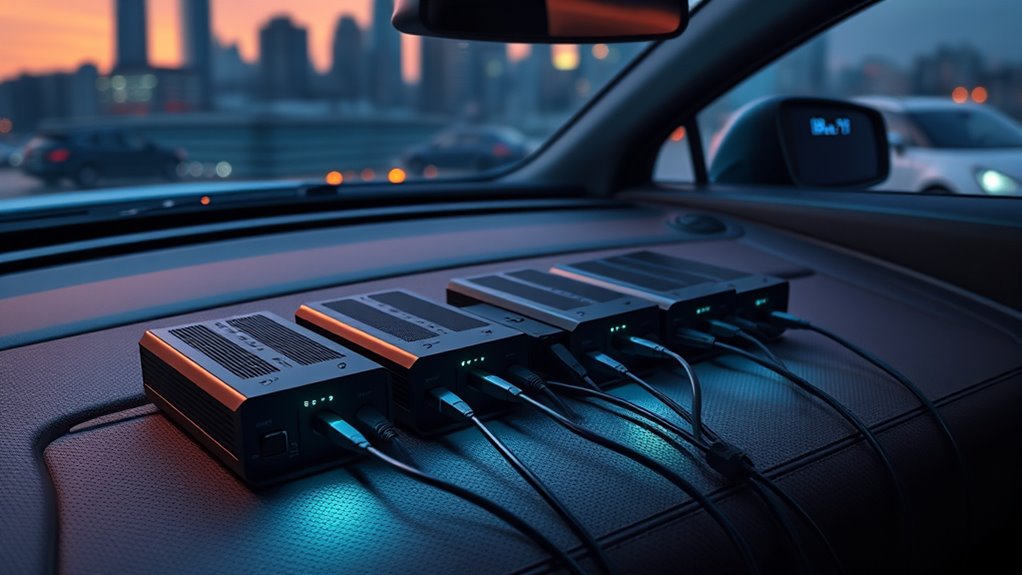

For car power inverters for drone charging, my best overall pick is the BESTEK 400W with USB-C and USB-A: its mix of AC and direct USB outputs suits a wider range of charging setups than a basic outlet-only model. The 500W inverter with 25W USB-C PD stands out for extra headroom, while the 200W models make more sense for compact, lower-draw chargers. The main tradeoff is between inverter capacity and portability: higher wattage can support more demanding charging gear, but the vehicle outlet, wiring, heat, and the drone charger’s actual draw set practical limits. Check your charger’s input requirements before choosing. Read on for the full comparison and a guide to matching an inverter to your charging routine.

Get the latest gadgets delivered free with Prime
- Fast, free delivery on millions of items
- Prime Video, Amazon Music and more included
- Member-only deals all year
Complete the kit



Key Takeaways
- The BESTEK 400W USB-C/USB-A model ranks first for versatility: it combines AC outlets with direct USB charging, while the 400W Pro Chaser and other AC-focused options offer a simpler connection path.
- Higher wattage is not automatically better for a car outlet: the 1000W model’s advertised capacity may exceed what a typical 12V accessory socket can safely supply continuously.
- USB-C output can simplify lighter charging setups: the 500W model lists 25W PD, but buyers should check whether that output matches their drone battery hub or controller.
- The 200W options suit modest, known loads better than multi-battery sessions: models from ALLWEI, BESTEK, and the generic 200W listing are capacity-limited compared with 400W and 500W picks.
- Special-purpose options trade breadth for a defined use: the 300W inverter with a Starlink Mini adapter targets a particular accessory setup, while the 120W 12V/24V model emphasizes vehicle compatibility and multiple ports rather than high AC capacity.
| RUTNRIXA 500W Power Inverter, 12V DC to 110V AC |  | Best for Multi-Battery Charging Setups | Continuous output: 500W | Peak output: 1000W | Input: 12V DC | VIEW ON AMAZON | See Our Full Breakdown |
| 1000W Power Inverter for Vehicles, 12V to 110V/120V |  | Best for High-Power Charging Loads | Continuous output: 1000W | Peak output: 2000W | Input: 12V DC | VIEW ON AMAZON | See Our Full Breakdown |
| 200W Car Power Inverter, 12V DC to 110V AC with USB-C |  | Best Compact AC Option | Output power: 200W | Peak output: 200W listed | Input: 12V DC | VIEW ON AMAZON | See Our Full Breakdown |
| HearGrow 100W Car Power Inverter, 12V DC to 110V AC |  | Best for USB-First Charging | Power output: 100W | Input: 12V DC | Output: 110V AC | VIEW ON AMAZON | See Our Full Breakdown |
| ALLWEI 200W Car Power Inverter, 12V DC to 110V AC with USB-C |  | Best Value for Everyday Travel Charging | Power output: 200W | Input: 12V DC | Output: 110V AC | VIEW ON AMAZON | See Our Full Breakdown |
| Car Power Inverter 120W DC 12V/24V to AC 110V with 3 AC Outlets and 4 USB Ports |  | Best for 12V/24V Vehicle Flexibility | Input: 12V/24V DC | Peak output: 150W | AC output: 110V | VIEW ON AMAZON | See Our Full Breakdown |
| 400W Power Inverters for Vehicle Dual AC Car Plug Adapter Outlet |  | Best for On-the-Go USB-C Charging | AC outlets: 2 | USB-C: 30W PD | USB ports: Multiple; exact count not provided | VIEW ON AMAZON | See Our Full Breakdown |
| Pro Chaser 400W Power Inverters for Vehicles DC 12v to AC 110v Car Inverter |  | Best for Higher-Wattage AC Chargers | Input voltage: 12V DC | Peak output: 800W | AC output: 110V | VIEW ON AMAZON | See Our Full Breakdown |
| 150W Power Inverter for Vehicle: 12V DC to 110V AC Converter with Dual USB Charger |  | Best Compact Pick for Light Charging | Input voltage: 12V DC | Peak output: 300W | AC output: 110V | VIEW ON AMAZON | See Our Full Breakdown |
| 400W Car Power Inverter for Vehicles DC 12V to AC 110V |  | Best for Fast USB Device Charging | Input: 12V DC | Continuous output: 400W | Surge output: 800W | VIEW ON AMAZON | See Our Full Breakdown |
| BESTEK 400W Car Power Inverter DC 12V to AC 110V with USB-C & USB-A Ports |  | Best Overall for Mixed Charging | Power output: 400W | Input voltage: 12V DC | AC output: 110V | VIEW ON AMAZON | See Our Full Breakdown |
| 300W Car Power Inverter with Starlink Mini Adapter |  | Best for Drone Trips with Starlink Mini | Power: 300W | Input voltage: 11–17V | AC outlets: 2 × 110V | VIEW ON AMAZON | See Our Full Breakdown |
| BESTEK 200W Power Inverter 12V DC to 110V AC Car Plug Adapter Converter |  | Best for a Single Low-Wattage Drone Charger | Continuous output: 200W | Peak output: 500W | Input voltage: 12V DC; listed range 11–17V | VIEW ON AMAZON | See Our Full Breakdown |
| 300W Portable Charger Car Power Inverters for Vehicle |  | Best Compact Pick for a Basic Charging Kit | Claimed power: 300W in description | Product-information output: 200W | Product-information peak output: 200W | VIEW ON AMAZON | See Our Full Breakdown |
| car power inverters for drone charging | AC outlets | Waveform | Dimensions | Peak output |
|---|---|---|---|---|
| RUTNRIXA 500W Power Inverter | 3 | Modified sine wave | 8.27 x 4.33 x 2.36 inches | 1000W |
| 1000W Power Inverter for Vehic | 3 | Modified sine wave | 4.13 x 2.32 x 7.4 inches | 2000W |
| 200W Car Power Inverter | 2 | Modified sine wave | 5.5 x 3 x 1.4 inches | 200W listed |
| HearGrow 100W Car Power Invert | — | Modified sine wave | 2.4 x 1.8 x 4.7 inches | — |
| ALLWEI 200W Car Power Inverter | 2 | — | 5.9 x 3 x 1.3 inches | — |
| Car Power Inverter 120W DC 12V | — | Modified sine wave | 6.1 x 1.3 x 3.15 inches | 150W |
| 400W Power Inverters for Vehic | 2 | — | — | — |
| Pro Chaser 400W Power Inverter | 2 | Modified sine wave | — | 800W |
| 150W Power Inverter for Vehicl | 1 | Conflicting product information: description says pure sine wave; specifications say modified sine wave | 3.5 x 2.5 x 1.5 inches | 300W |
| 400W Car Power Inverter for Ve | 2 | — | — | — |
| BESTEK 400W Car Power Inverter | 2 | — | — | — |
| 300W Car Power Inverter with S | 2 × 110V | — | 5 × 2.68 × 1.4 inches | — |
| BESTEK 200W Power Inverter 12V | 2 | Modified sine wave | 5.6 × 2.94 × 5.6 inches | 500W |
| 300W Portable Charger Car Powe | — | Modified sine wave | — | — |
More Details on Our Top Picks
RUTNRIXA 500W Power Inverter, 12V DC to 110V AC
The 500W continuous output gives this RUTNRIXA more headroom than the 200W ALLWEI for charging several drone batteries or running a charger alongside smaller gear. Its three AC outlets and multiple USB ports also make it useful when a crew has phones and a controller to top up at the same time. The LCD reports input and output voltage plus load and battery status, helping you track what the vehicle supply is doing during a charging session.
The tradeoff is its modified sine wave, which may not suit every charger, so check the charger’s input requirements. The listing also gives conflicting USB-C wattages, and the included cigarette-lighter connection should not be assumed to support the full 500W; use the battery clips for heavier loads and follow the inverter’s connection guidance. Compared with the 1000W inverter, this is a more modest-capacity choice, not a route to sustained high-power use.
Pros:- 500W continuous output offers more AC charging capacity than the 200W ALLWEI.
- Three AC outlets allow multiple compatible chargers to connect at once.
- LCD displays input and output voltage, battery capacity, and load capacity.
- Includes battery clips as well as a cigarette-lighter plug.
Cons:- Modified sine wave output may not be compatible with every drone battery charger.
- The product description gives conflicting USB-C power ratings.
- The 500W rating should not be treated as the capacity of the cigarette-lighter connection.
Best for: Drone pilots charging multiple battery packs from a parked vehicle who want several AC outlets and a display to monitor load.
Not ideal for: Pilots whose charger specifies pure sine wave input, or anyone planning to draw the full 500W through a cigarette-lighter socket.
- Continuous output:500W
- Peak output:1000W
- Input:12V DC
- Output:110V AC
- Waveform:Modified sine wave
- AC outlets:3
- Display:LCD: input/output voltage, battery capacity, and load capacity
- Dimensions:8.27 x 4.33 x 2.36 inches
Our verdict“Choose this for a multi-charger setup that benefits from its display and battery-clip connection, after confirming your chargers accept modified sine wave power.”
1000W Power Inverter for Vehicles, 12V to 110V/120V
For a drone crew with chargers that draw substantial AC power, the 1000W continuous rating gives this inverter the most stated capacity in this batch. It also has three AC outlets and a PD port, so it can serve a battery charger and smaller devices together. Against the RUTNRIXA 500W, it offers twice the listed continuous output, which gives more room for compatible equipment—but only if the vehicle’s 12V supply and wiring can support the load.
The listing does not specify the PD port’s wattage or provide a dimensioned LCD description, so I would not choose it based on assumptions about those details. Its modified sine wave output may also conflict with a charger’s requirements, and its 12-ounce weight is not a substitute for suitable cables or a properly rated battery connection. For a single modest drone charger, the compact 200W ALLWEI is a less powerful but more proportionate option.
Pros:- 1000W continuous and 2000W peak output provide the highest stated power capacity in this batch.
- Three AC outlets support multiple compatible chargers.
- Includes USB ports and a PD port for smaller devices.
- Lists protections for over-voltage, overload, overheating, and short circuit.
Cons:- Modified sine wave output may not suit every drone charger.
- The PD port’s power rating is not specified in the supplied product data.
- High output requires a suitably capable vehicle supply and connection; the included information does not detail connection hardware.
Best for: Drone teams with higher-draw AC chargers who need multiple outlets and can provide a suitably rated 12V supply and connection.
Not ideal for: Pilots charging one small battery at a time, or those who need a confirmed pure sine wave output or specified PD charging wattage.
- Continuous output:1000W
- Peak output:2000W
- Input:12V DC
- Output:110V/120V AC
- Waveform:Modified sine wave
- AC outlets:3
- USB ports:2 USB ports and 1 PD port
- Dimensions:4.13 x 2.32 x 7.4 inches
Our verdict“Pick this for a high-draw, multi-device charging setup only when your charger compatibility and 12V power connections are confirmed.”
200W Car Power Inverter, 12V DC to 110V AC with USB-C
This compact inverter is a practical middle ground for pilots who need an AC outlet for a drone charger but do not want the larger capacity—and vehicle-power demands—of the RUTNRIXA 500W. Its listed 200W output, dual AC outlets, and 65W USB-C make it suited to one compatible charger plus a phone or controller, provided the combined load stays within the inverter’s limits. At 5.5 by 3 by 1.4 inches and 320g, it is easier to stow than the larger 1000W vehicle inverter.
There is a notable data mismatch: the product title says 200W, the feature text mentions 300W, and the supplied specs list 200W output and 200W peak. I would treat 200W as the safe planning figure and verify the actual charger’s draw. Like the ALLWEI 200W, it uses modified sine wave output; it also has less stated AC capacity than the 500W RUTNRIXA, so it is not for running multiple high-draw chargers.
Pros:- Compact 5.5 x 3 x 1.4-inch body is convenient to pack in a vehicle.
- Two AC outlets provide connection options for compatible gear.
- 65W USB-C port can charge supported devices directly.
- Listed 200W output is more capacity than the 100W HearGrow.
Cons:- Product details conflict on rated wattage; supplied specs state 200W output and 200W peak.
- Modified sine wave output may not be accepted by some drone chargers.
- 200W capacity limits simultaneous or high-draw AC charging.
Best for: Solo drone pilots who need a small inverter for one low- or moderate-draw AC charger and USB device charging.
Not ideal for: Pilots running multiple battery chargers or equipment whose combined draw exceeds 200W, or whose charger requires pure sine wave power.
- Output power:200W
- Peak output:200W listed
- Input:12V DC
- Output:110V AC
- Waveform:Modified sine wave
- AC outlets:2
- USB-C:65W
- Dimensions:5.5 x 3 x 1.4 inches
- Weight:320g
Our verdict“Choose this compact option for one modest AC drone charger and USB gear, but verify the wattage and charger compatibility before relying on it.”
HearGrow 100W Car Power Inverter, 12V DC to 110V AC
The HearGrow makes the most sense when a drone pilot primarily charges through USB-C and only needs a small AC outlet for a low-draw accessory. Its 100W output and compact 2.4 x 1.8 x 4.7-inch size suit a light travel kit, while PD3.0 Type-C and USB-A connections can reduce reliance on AC for supported phones or other small devices. Compared with the 200W ALLWEI, it offers less stated AC capacity, but its two-year warranty is a useful differentiator in the supplied information.
This is not the pick for a typical multi-battery AC charging station: 100W is a strict ceiling, and the supplied data does not state the individual USB port wattages. The modified sine wave output also makes charger compatibility something to check rather than assume. Pilots who need room for a larger AC charger should move up to the 200W models, while those running several chargers should look at the RUTNRIXA 500W instead.
Pros:- Compact dimensions make it easy to keep in a vehicle kit.
- PD3.0 Type-C and USB-A ports support direct charging of compatible devices.
- Two-year warranty is specified.
- Built-in protections are listed for overheating, overload, and short circuit.
Cons:- 100W output is too limited for many multi-battery drone charging setups.
- Modified sine wave output may be incompatible with some AC chargers.
- USB port wattages are not specified in the supplied data.
Best for: Pilots who mostly charge phones and other USB devices in the car and use only a low-draw AC accessory.
Not ideal for: Drone operators using AC battery chargers above 100W or charging several packs simultaneously.
- Power output:100W
- Input:12V DC
- Output:110V AC
- Waveform:Modified sine wave
- Frequency:60Hz
- USB charging:PD3.0 Type-C and USB-A
- Dimensions:2.4 x 1.8 x 4.7 inches
- Warranty:2 years
Our verdict“Choose the HearGrow for a compact, USB-led vehicle charging kit, not as the main inverter for charging multiple drone batteries.”
ALLWEI 200W Car Power Inverter, 12V DC to 110V AC with USB-C
The ALLWEI is a straightforward pick for a pilot carrying one modest AC drone charger alongside phones, a controller, or other USB-powered kit. Its 200W output and two AC outlets provide more listed AC capacity than the HearGrow 100W, while four USB ports make it convenient when several small devices need power. The USB-C PD port is rated at 18W, useful for supported phones and accessories, though it is not a substitute for powering a higher-wattage battery charger.
Compared with the 200W inverter with 65W USB-C, the ALLWEI offers more USB connections but lower stated USB-C charging power. Its 10.4-ounce weight and slim dimensions favor packing, yet the 200W limit still restricts simultaneous AC loads. The supplied data does not identify its waveform, so I would check compatibility with the drone charger’s manufacturer rather than assume it behaves like the modified sine wave models. For larger charging sessions, the RUTNRIXA 500W has substantially more headroom.
Pros:- Two AC outlets and four USB ports support a mixed set of small devices.
- USB-C PD 18W is specified for compatible mobile devices.
- Compact 5.9 x 3 x 1.3-inch design weighs 10.4 ounces.
- Lists built-in safety protections and an intelligent cooling fan.
Cons:- 200W output limits the size and number of AC drone chargers it can run.
- 18W USB-C is modest compared with the 65W USB-C listed for the other 200W inverter.
- Waveform is not specified in the supplied product data.
Best for: Road-trip drone pilots who want two AC outlets for a modest charger and several USB ports for phones and accessories.
Not ideal for: Pilots who need more than 200W of AC capacity, a high-output USB-C port, or confirmed waveform compatibility without checking product documentation.
- Power output:200W
- Input:12V DC
- Output:110V AC
- AC outlets:2
- USB ports:4
- USB-C PD:18W
- Frequency:60Hz
- Dimensions:5.9 x 3 x 1.3 inches
- Weight:10.4 ounces
Our verdict“Pick the ALLWEI for compact everyday charging with several USB devices, but choose a higher-capacity inverter for multi-pack AC charging.”
Car Power Inverter 120W DC 12V/24V to AC 110V with 3 AC Outlets and 4 USB Ports
Its standout advantage is dual-voltage input: unlike the 12V-only Pro Chaser 400W, this inverter can suit either a car or a compatible 24V truck. Three AC outlets and four USB ports give a crew several ways to charge batteries and personal devices, but the 120W output is the limiting factor. Check the combined draw of your drone charger and other connected gear; this is a fit for modest charging loads, not fast multi-battery charging or power-hungry equipment. The intelligent display and listed protection features help make vehicle use easier to monitor, while its modified sine wave output is less suited to devices that call for a pure sine wave. I’d choose it for input flexibility and port count, not raw charging capacity.
Pros:- Supports both 12V and 24V DC inputs
- Three AC outlets and four USB ports provide several connection options
- Display monitoring and multiple listed protection functions
- Compact, lightweight body at 13.7 ounces
Cons:- 120W output can restrict drone-charger and accessory combinations
- Modified sine wave output may not suit every charger
- The listed cable is 90 centimeters, which may limit placement options
Best for: Drone owners who switch between compatible 12V cars and 24V trucks and need several low-draw charging connections.
Not ideal for: Pilots charging several drone batteries at once or using a charger with a high AC draw; the inverter is rated for just 120W.
- Input:12V/24V DC
- Peak output:150W
- AC output:110V
- Waveform:Modified sine wave
- Ports:3 AC outlets and 4 USB ports
- Frequency:60Hz
- Dimensions:6.1 x 1.3 x 3.15 inches
- Weight:13.7 ounces
Our verdict“Choose this when 12V/24V compatibility and multiple ports matter more than the higher output offered by the Pro Chaser 400W.”
400W Power Inverters for Vehicle Dual AC Car Plug Adapter Outlet
The 30W USB-C PD port is its clearest advantage for pilots who want to charge a compatible phone, tablet, or laptop directly without occupying an AC outlet. The listed 400W rating and dual AC outlets also give it more headroom than the 120W Car Power Inverter in this roundup, though the product details don’t specify waveform, input voltage, dimensions, or whether 400W is continuous output. That missing information makes it harder to judge compatibility with a particular drone charger, so check the charger’s requirements before relying on it in the field. An LED display can help spot voltage or fault information, and the cooling fan and protection features are useful for extended vehicle use. I’d favor this for mixed USB and AC charging, but not where published electrical details are a must.
Pros:- 30W USB-C PD port supports direct charging of compatible devices
- Two AC outlets and multiple USB ports allow several devices to connect
- LED display reports voltage, power, and fault status
- Cooling fan and listed overload, temperature, voltage, and short-circuit protections
Cons:- Waveform and input-voltage specifications are not provided
- The product details do not clarify whether 400W is continuous output
- Cooling fan may add noise during charging
Best for: Road-trip drone pilots who want a direct 30W USB-C PD connection for personal devices alongside AC charging.
Not ideal for: Buyers who need verified waveform, vehicle-input, or continuous-output specifications before matching an inverter to a sensitive or demanding drone charger.
- AC outlets:2
- USB-C:30W PD
- USB ports:Multiple; exact count not provided
- Display:LED voltage, power, and fault-status display
- Cooling:High-performance cooling fan
- Protection features:Over-voltage, overload, over-temperature, and short-circuit protection
- Input voltage:Not specified
Our verdict“Pick this for convenient USB-C PD and multi-device charging, but choose a model with clearer electrical specifications if your drone charger has strict requirements.”
Pro Chaser 400W Power Inverters for Vehicles DC 12v to AC 110v Car Inverter
A stated 400W output and 800W peak make this a more suitable choice than the 120W Car Power Inverter when a drone charger draws more power or you want room for another small device. It has two AC sockets, while its dual USB ports handle phones and accessories without taking an AC connection. The tradeoff is that it is 12V only and uses a modified sine wave; pilots should check both their charger’s input guidance and the vehicle’s power limits rather than treating the peak figure as an operating rating. Its compact size and 30-inch cord help with placement in a car, and the fan starts at a stated 113°F. Compared with the 400W model from Strenrmgo, Pro Chaser supplies fuller electrical and size specifications, but lacks a specified USB-C PD port.
Pros:- 400W rated output with 800W peak specification
- Two 110V AC sockets for charger and accessory use
- Compact 14.08-ounce design with a 30-inch cord
- Listed protections and temperature-controlled cooling fan
Cons:- 12V input only, unlike the dual-voltage Car Power Inverter
- Modified sine wave output may not suit every charger
- No USB-C PD port is specified
Best for: Pilots with a 12V vehicle and an AC drone charger whose draw fits within a 400W inverter’s rated output.
Not ideal for: 24V vehicle owners, users who require pure sine wave output, or pilots relying on USB-C PD fast charging.
- Input voltage:12V DC
- Peak output:800W
- AC output:110V
- Waveform:Modified sine wave
- AC outlets:2
- USB ports:2, rated 3.1A each; 6.2A combined stated
- Cooling fan activation:113°F (45°C)
- Dimensions and weight:4.8 x 3.07 x 1.81 inches; 14.08 ounces
Our verdict“Choose the Pro Chaser when your 12V vehicle and drone charger call for more AC capacity than the 120W option provides.”
150W Power Inverter for Vehicle: 12V DC to 110V AC Converter with Dual USB Charger
Small, quiet, and aimed at modest loads, this inverter suits a pilot who wants to top up a drone battery or run a low-draw charger without a fan adding cabin noise. Its 150W rated output sits between the 120W Car Power Inverter and the 400W Pro Chaser, but its single AC outlet leaves less room for simultaneous AC charging. The description calls the output pure sine wave, while the supplied specifications list a modified sine wave; that conflict needs checking with the seller or manufacturer before purchase, especially if your charger specifies a waveform. USB-C PD and QC3.0 are described, although port wattages aren’t supplied. This compact option makes more sense for simple, low-power setups than for a full charging station or several batteries at once.
Pros:- Compact 3.5 x 2.5 x 1.5-inch form factor
- Fanless design avoids cooling-fan noise
- USB-C PD and QC3.0 charging are described
- Anti-loosening cigarette lighter attachment is listed
Cons:- 150W rated output limits higher-draw chargers and simultaneous loads
- Only one AC outlet
- Description and specifications conflict on waveform
Best for: Solo drone pilots who prioritize a small, quiet inverter for one compatible low-draw AC charger and USB devices.
Not ideal for: Pilots who need multiple AC outlets, higher sustained output, or confirmed pure sine wave performance for their charger.
- Input voltage:12V DC
- Peak output:300W
- AC output:110V
- Waveform:Conflicting product information: description says pure sine wave; specifications say modified sine wave
- AC outlets:1
- USB charging:USB-C PD and QC3.0 described; wattages not specified
- Dimensions:3.5 x 2.5 x 1.5 inches
- Weight:8.8 ounces
Our verdict“This is a sensible compact choice for a single low-draw charging setup, provided you confirm the waveform and your charger’s power needs.”
400W Car Power Inverter for Vehicles DC 12V to AC 110V
Its 30W USB-C PD and 18W QC USB-A ports make this a convenient pick when a drone pilot also needs fast charging for a phone or tablet. With a stated 400W continuous output and 800W surge, it offers substantially more AC capacity than the 150W compact model, while dual AC outlets can leave one socket available for another compatible device. The aluminum housing and intelligent fan are described as supporting heat management, but the unit still depends on a 12V vehicle supply and shouldn’t be treated as a stationary high-power source. No waveform is specified, which matters if your drone charger requires a particular output type. Compared with the Pro Chaser, this model adds clearly specified fast USB charging and an aluminum housing, while Pro Chaser provides more listed size and waveform details.
Pros:- 400W continuous output with 800W surge rating
- 30W USB-C PD and 18W QC USB-A charging ports
- Two AC outlets support more than one AC connection
- Aluminum housing, intelligent fan, and listed safety protections
Cons:- 12V input only
- Waveform is not specified
- Included cables or adapters are not specified
Best for: 12V vehicle owners who want a higher-output inverter for a drone charger plus fast USB charging for personal devices.
Not ideal for: Pilots with 24V vehicles or chargers that require a confirmed waveform specification before use.
- Input:12V DC
- Continuous output:400W
- Surge output:800W
- AC output:110V
- AC outlets:2
- USB-C port:30W PD
- USB-A port:18W QC
- Protection features:Overheat, undervoltage, overvoltage, overload, and short-circuit protection
- Housing and cooling:Aluminum housing; silent intelligent fan
Our verdict“Choose this over the Pro Chaser if specified fast USB charging matters, but confirm waveform compatibility with your drone charger first.”
BESTEK 400W Car Power Inverter DC 12V to AC 110V with USB-C & USB-A Ports
For drone trips that also involve charging a controller, phone, or laptop, this BESTEK offers a useful mix of 400W AC capacity and fast-charge USB ports. Its two AC outlets can handle a compatible drone battery charger, while 30W USB-C PD and USB-A QC 3.0 keep smaller gear off the AC outlets. Compared with the 300W Portable Charger Car Power Inverter, it provides more stated AC output, but lacks that model’s notably small dimensions and weight data. The main limitation is the 12V cigarette-lighter connection; check your vehicle socket’s limits before drawing substantial power, and confirm the drone charger’s wattage. The provided specs do not mention cooling, so I would not make this my first pick for long, sustained charging sessions.
Pros:- 400W output gives more headroom than the 300W car inverter options listed here.
- Two AC outlets can power a compatible drone battery charger and another small AC device.
- 30W USB-C PD and USB-A QC 3.0 support separate charging for phones and accessories.
- Overvoltage, overheating, and short-circuit protections are specified.
Cons:- Requires a 12V cigarette-lighter socket, whose output may limit usable inverter capacity.
- No fan or cooling details are provided for sustained charging.
- 400W output is not suited to high-power chargers or appliances.
Best for: Drone owners who want to run a modest AC battery charger while also fast-charging a phone or controller from a 12V vehicle socket.
Not ideal for: Pilots with high-draw multi-battery chargers or long charging sessions who need documented cooling or more than 400W of inverter output.
- Power output:400W
- Input voltage:12V DC
- AC output:110V
- AC outlets:2
- USB-C:PD 30W
- USB-A:QC 3.0
- Safety features:Overvoltage, overheating, and short-circuit protection
- Color:Red
Our verdict“Choose this BESTEK for a mixed load of a compatible drone charger and smaller devices, but look for a higher-capacity, better-documented cooling solution for extended heavy use.”
300W Car Power Inverter with Starlink Mini Adapter
This is the most specialized option here: alongside two AC outlets for a compatible drone charger, it includes a dedicated 65W 12V Starlink Mini port. That can simplify a vehicle setup for pilots who need connectivity at a remote launch site. Its digital voltage display also gives a quick read on vehicle input, a practical aid when several devices are drawing power. Compared with the BESTEK 400W, this model has less stated AC capacity, so it is a weaker match for chargers with demanding input needs. The compact 5-by-2.68-by-1.4-inch body and 9.03-ounce weight favor a portable kit, but the 300W ceiling and 12V-only input rule out higher loads and 24V vehicle systems. The cooling fan may also be audible when working under load.
Pros:- Dedicated 65W 12V output is tailored to a Starlink Mini.
- Two 110V AC outlets provide connections for a compatible drone charger and another small device.
- Digital display helps monitor vehicle input voltage.
- Compact dimensions and low listed weight suit a portable field kit.
Cons:- 300W output is lower than the BESTEK 400W, leaving less headroom for AC charging.
- Input range of 11–17V limits it to compatible 12V systems.
- Cooling fan can be noisy under load.
Best for: Drone pilots who travel with a Starlink Mini and a modest AC drone charger, and want voltage monitoring in a compact 12V setup.
Not ideal for: Pilots using high-wattage multi-battery chargers or 24V vehicle systems; its stated output and input range do not fit those needs.
- Power:300W
- Input voltage:11–17V
- AC outlets:2 × 110V
- USB-C:30W Type-C
- USB-A:24W
- Starlink Mini output:65W, 12V
- Dimensions:5 × 2.68 × 1.4 inches
- Weight:9.03 oz
Our verdict“Pick this when Starlink Mini power is part of your drone-field setup; choose a higher-output inverter if your charger needs more than its 300W rating.”
BESTEK 200W Power Inverter 12V DC to 110V AC Car Plug Adapter Converter
When a drone battery charger draws modest power and the rest of the load is mostly USB accessories, this BESTEK keeps the setup compact without pretending to be a high-capacity inverter. It supplies 200W continuous AC output, two AC outlets, and 30W USB-C PD plus 18W QC USB-A. The built-in 12V socket adds flexibility for a compatible vehicle accessory, while the listed 24-inch cord can help position the unit within reach. Compared with the 300W Portable Charger Car Power Inverter, this model has less stated continuous output but provides a separate 12V socket and specified USB fast-charge rates. Its modified sine-wave output and 200W limit call for checking charger compatibility and wattage before use; it is not the pick for a multi-battery charging station.
Pros:- 200W continuous AC output is clearly stated, making it easier to compare with a charger’s power draw.
- 30W USB-C PD and 18W QC USB-A can charge smaller accessories without occupying AC outlets.
- Two AC outlets plus a 12V socket offer several connection options.
- Listed protections include shutdown for voltage, overload, current, and temperature faults.
Cons:- 200W continuous output is less than the 300W and 400W choices in this group.
- Modified sine-wave output may not suit every AC charger; compatibility should be checked.
- Designed for 12V vehicles, not 24V systems.
Best for: Pilots with one low-wattage drone charger who also want to charge a phone, controller, or other USB device from a 12V car.
Not ideal for: Drone operators running multiple AC chargers or any charger whose draw approaches or exceeds 200W continuous output.
- Continuous output:200W
- Peak output:500W
- Input voltage:12V DC; listed range 11–17V
- AC output:110V AC
- Waveform:Modified sine wave
- AC outlets:2
- USB charging:USB-C PD 30W; USB-A QC 18W
- Dimensions:5.6 × 2.94 × 5.6 inches
- Cord length:24 inches
Our verdict“Choose this BESTEK for one compatible, low-draw drone charger and accessory charging, but step up to a higher-output model for multiple batteries or heavier loads.”
300W Portable Charger Car Power Inverters for Vehicle
For a pilot who values a small footprint over extra charging features, this 300W inverter is the most portable-looking option in this batch: it measures 5.43 × 2.75 × 1.4 inches and weighs about nine ounces. Two AC outlets can serve a compatible drone charger, while the four USB-A/C ports provide a way to charge smaller field gear. The listing describes each USB port as 24W, though it does not give separate port-by-port output details. Compared with the BESTEK 400W, this model is smaller by its listed dimensions but offers less AC output and fewer specified safety details. Its description claims 300W, while the product information also lists 200W output and 200W peak, so I would verify the actual rating with the seller before connecting a drone charger.
Pros:- Compact listed dimensions and roughly nine-ounce weight suit a small vehicle kit.
- Two 110V AC outlets accommodate a compatible drone battery charger.
- Four USB-A/C ports allow several smaller devices to connect.
- An intelligent cooling fan is described for prolonged operation.
Cons:- Power ratings conflict: the description says 300W, while product information lists 200W output and peak.
- USB port allocation and individual output details are not specified.
- Modified sine-wave output may not be suitable for every AC charger.
Best for: Pilots building a lightweight 12V travel kit for one compatible drone charger and several low-power USB devices.
Not ideal for: Buyers who need an unambiguous output rating, more than 200W of listed output, or a documented safety-protection set for field charging.
- Claimed power:300W in description
- Product-information output:200W
- Product-information peak output:200W
- Input voltage:12V DC
- AC output:110V AC
- Outlets:2 AC outlets; 4 USB-A/C ports
- Waveform:Modified sine wave
- Dimensions and weight:5.43 × 2.75 × 1.4 inches; about 9 oz
Our verdict“Consider this compact option only after confirming its actual continuous wattage and your charger’s compatibility; the BESTEK 400W is clearer for buyers who need more stated AC capacity.”

How We Picked
I ranked these inverters around the job at hand: powering drone battery chargers from a vehicle, not running arbitrary household appliances. The main criteria were stated continuous wattage, connection options, USB output details when listed, vehicle-voltage compatibility, and how clearly the product information indicates its intended setup. A higher peak figure alone did not earn a higher position; charger demand and the vehicle’s power connection matter more than a brief surge rating.
The BESTEK 400W USB-C/USB-A leads for its mix of charging routes and useful capacity, while the 500W model follows for buyers who want more stated headroom and a listed 25W PD port. The 400W and 200W alternatives rank by how well their listed output fits common charging scenarios and how much flexibility they offer. Models with limited specifications, unusually high claims for a vehicle-plug connection, or a narrow accessory focus rank lower because buyers have more compatibility questions to resolve before connecting drone gear.
| car power inverters for drone charging | Waveform |
|---|---|
| RUTNRIXA 500W Power Inverter | Modified sine wave |
| 1000W Power Inverter for Vehic | Modified sine wave |
| 200W Car Power Inverter | Modified sine wave |
| HearGrow 100W Car Power Invert | Modified sine wave |
| ALLWEI 200W Car Power Inverter | — |
| Car Power Inverter 120W DC 12V | Modified sine wave |
| 400W Power Inverters for Vehic | — |
| Pro Chaser 400W Power Inverter | Modified sine wave |
| 150W Power Inverter for Vehicl | Conflicting product information: description says pure sine wave; specifications say modified sine wave |
| 400W Car Power Inverter for Ve | — |
| BESTEK 400W Car Power Inverter | — |
| 300W Car Power Inverter with S | — |
| BESTEK 200W Power Inverter 12V | Modified sine wave |
| 300W Portable Charger Car Powe | Modified sine wave |
Factors to Consider When Choosing Car Power Inverters For Drone Charging
Choosing an inverter for drone charging starts with the charger and the car, not the inverter’s biggest number. These checks can help prevent a mismatch between the drone battery hub, inverter output, and the vehicle’s electrical limits.
Weigh portability against the way you travel
A compact plug-in inverter is convenient for occasional charging and easy to move between vehicles, but it can limit available power. A larger unit with battery cables may support heavier loads yet needs careful placement, secure connections, and more setup. Think about where the inverter will sit while the car is running and whether its fan noise or cable length will be a nuisance. For field trips, protect the unit and charger from dust, moisture, and loose gear; most vehicle inverters are not outdoor-proof power stations. Paying for more capacity makes sense only when your charger and vehicle connection can actually use it.
Frequently Asked Questions
Can I charge drone batteries from a cigarette-lighter inverter while driving?
Often, yes, if the drone charger’s input draw stays within the inverter’s continuous output and the vehicle socket’s rated limit. Check both ratings rather than relying on the inverter’s peak wattage. A multi-battery hub can draw more than a single-pack charger, especially when several batteries are charging at once. Keep the inverter ventilated and stop if the socket, plug, or inverter becomes unusually hot. Follow the vehicle and inverter manuals, and do not leave charging gear unattended if the manufacturer advises against it.
Is a 1000W inverter a better choice than a 200W or 400W model for drone charging?
Not automatically. The right capacity depends on the charger’s input draw, the number of devices running together, and whether your connection can deliver that much power. A 1000W inverter plugged into a standard accessory socket may be limited by the socket and wiring long before it reaches its headline output. For one modest charger, a 200W unit may be enough; a 400W model gives more room for additional gear when the vehicle connection supports it. Check the continuous rating and connection requirements before choosing by wattage alone.
Can I plug a drone battery charger into an inverter’s USB-C port?
Only if the charger itself accepts USB-C input and the inverter’s port supplies the required power profile. Many drone battery chargers use AC power, in which case they need an inverter outlet rather than a USB port. A USB-C port may still be useful for charging a controller, phone, or compatible compact device while the battery charger uses AC. Compare the device’s input voltage and wattage with the port’s published output details. Do not treat a generic fast-charging label as proof of compatibility.
Can a car inverter charge several drone batteries at the same time?
It can if the combined input draw of the chargers or hub remains below the inverter’s continuous capacity and the vehicle connection’s limit. Add the power requirements for every device that will run concurrently, including a laptop or other accessories. Some hubs charge packs in sequence, while others may draw substantial power when multiple batteries are connected, so check the hub documentation. Leave capacity headroom and keep airflow around the inverter clear during extended sessions. If the load approaches the socket’s limit, use a connection specifically rated for the required current rather than forcing the accessory plug.
Should I choose a pure sine wave inverter for my drone charger?
Check the charger manufacturer’s guidance first, since compatibility depends on the charger’s design. Some chargers operate on modified sine wave output, while others may perform poorly or be incompatible. If the manual specifies pure sine wave or does not clarify the waveform and you want to avoid uncertainty, a pure sine wave inverter is the more cautious choice. It may add cost and size, so it is not a feature every basic charging setup needs. Whichever waveform you choose, verify continuous wattage and vehicle connection limits too.
Conclusion
For most buyers, my best overall recommendation is the BESTEK 400W with USB-C and USB-A, because it balances AC charging and direct USB options. The best value direction is a 200W model when your charger’s draw is modest and clearly within the vehicle socket’s limit; among these, compare the ALLWEI and BESTEK listings against the specific ports you need. For a best premium or higher-headroom pick, the 500W inverter with 25W USB-C PD suits buyers whose gear can use its added capacity, but verify its connection limits. Beginners should start with the 120W 12V/24V model only for light loads and its stated vehicle compatibility, or choose a clearly specified 200W AC model for a simple single-charger setup. For a specific accessory setup, consider the 300W Starlink Mini adapter model; for drone charging alone, favor a standard AC inverter unless that extra compatibility serves your kit. Match the charger draw to the inverter and vehicle before buying, and the best fit will be the smallest capable option rather than the one with the largest number on its label.