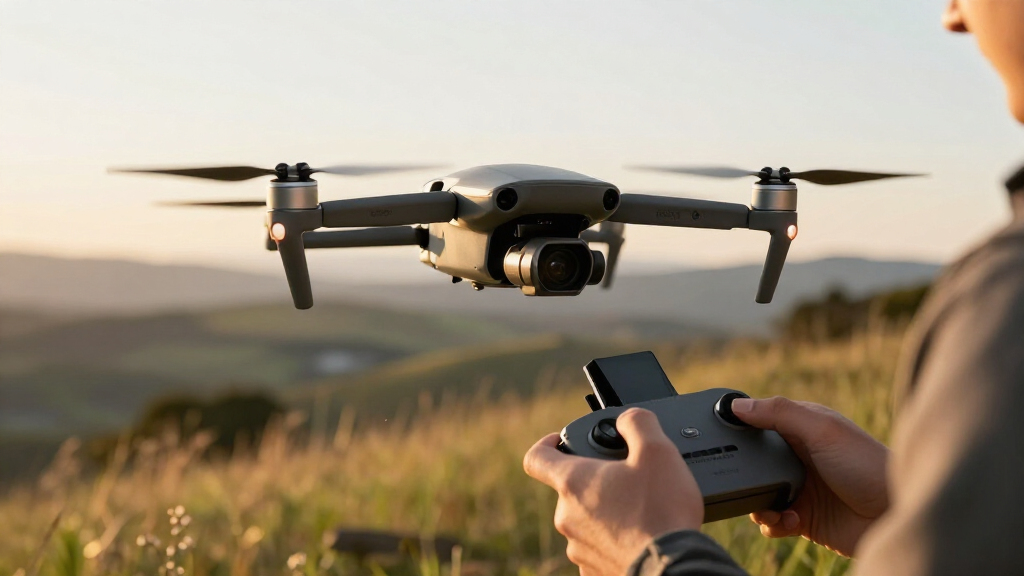

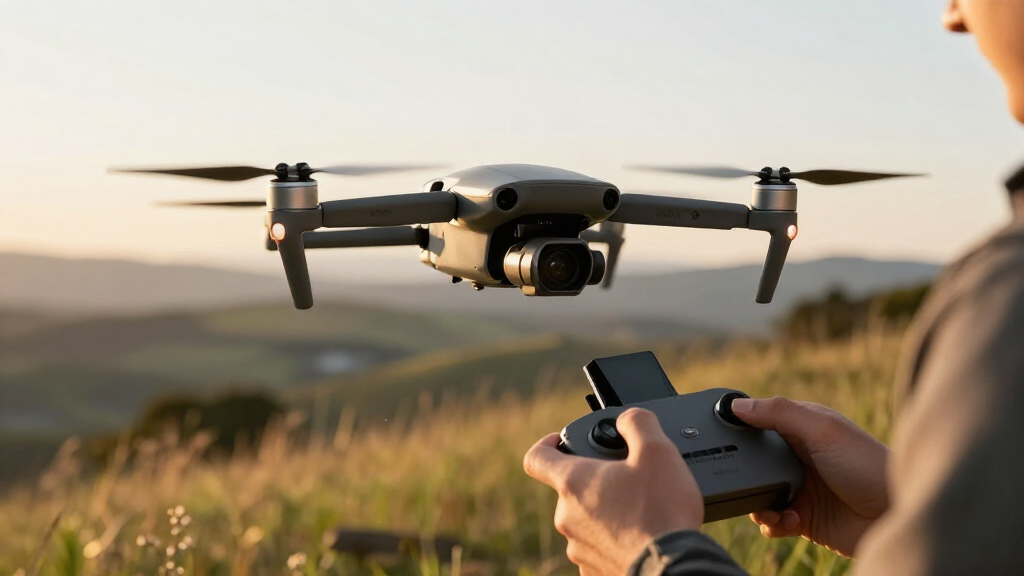
The best drone under $1,000 overall is the DJI Mini 4K, a balanced choice for buyers who want a compact aircraft and a stabilized 4K camera. The DJI Neo stands out for quick, approachable flights and subject tracking, while the REDRIE HK33 offers a 2-axis gimbal for buyers focused on smoother footage. The main tradeoff is between camera stabilization, beginner-friendly controls, portability, and practical extras such as spare batteries or a screen-equipped controller. A 4K label alone does not tell you how steady the video will look or how easy the drone is to operate. Read on for my full comparison of all nine options and guidance on choosing one for your flying style.

Get the latest gadgets delivered free with Prime
- Fast, free delivery on millions of items
- Prime Video, Amazon Music and more included
- Member-only deals all year
Complete the kit



Key Takeaways
- The DJI Mini 4K is my best overall pick because it balances a compact form with a stabilized 4K camera, rather than focusing on one specialty.
- The DJI Neo is the clearest beginner-oriented alternative in this lineup, with subject tracking and QuickShots that favor quick, guided flights over a conventional camera-drone setup.
- The REDRIE HK33’s 2-axis gimbal sets it apart from models described primarily by their 4K cameras; stabilization can matter more to footage quality than resolution alone.
- Battery bundles change the practical value equation. The NAFYRE N11 PRO includes three batteries, which may suit longer outings better than a model whose standout feature is its controller screen.
- Several GPS foldables share overlapping feature claims. The Holy Stone HS360S, HS175D, BLINORY HK55, and two screen-controller models should be compared by specific controls, support, and included accessories—not by 4K or GPS labels alone.
| REDRIE HK33 Foldable Drone with 4K Camera and 2-Axis Gimbal |  | Best for Extended Flight Time | Camera: 4K video; 8 MP photos | Gimbal: 2-axis | Flight time: Up to 60–70 minutes total with three batteries | VIEW LATEST PRICE | See Our Full Breakdown |
| DJI Mini 4K Drone with 4K UHD Camera |  | Best Overall for Stabilized Video | Camera: 4K UHD | Gimbal: 3-axis | Weight: Under 249 g | VIEW LATEST PRICE | See Our Full Breakdown |
| NAFYRE N11 PRO 4K GPS Drone with Camera, Three Batteries, Brushless Motors, Follow Me and Auto Return |  | Best for Long Combined Flight Time | Camera: 4096 × 3072 photos; 2048 × 1080 video | Effective still resolution: 8.3 MP | Flight time: Up to 90 minutes with three batteries | VIEW LATEST PRICE | See Our Full Breakdown |
| DJI Neo Mini Drone with 4K UHD Camera, Subject Tracking, QuickShots, and Propeller Guards |  | Best Compact Drone for Easy Self-Filming | Weight: 135 g | Video resolution: 4K UHD | Effective still resolution: 12 MP | VIEW LATEST PRICE | See Our Full Breakdown |
| Holy Stone HS360S GPS Drone with 4K UHD Camera |  | Best for GPS Route Planning | Camera: 4K UHD video; 8 MP stills | Sensor: 1/3-inch CMOS GalaxyCore | Weight: 213 g | VIEW LATEST PRICE | See Our Full Breakdown |
| 4K GPS Foldable Camera Drone with 4.5-Inch Screen Controller |  | Best for Phone-Free Viewing | Camera: 4K; 90-degree adjustable lens | Controller screen: 4.5 inches | Flight time: Up to 60 minutes combined with two batteries | VIEW LATEST PRICE | See Our Full Breakdown |
| BLINORY HK55 GPS Drone with 4K Camera, Foldable Design, and Brushless Motors |  | Best for Beginner-Friendly Flight Modes | Camera: 4K with electrically adjustable 90-degree angle | Video transmission: 5 GHz FPV | Flight time: Up to 32 minutes with two batteries | VIEW LATEST PRICE | See Our Full Breakdown |
| Holy Stone HS175D GPS Drone with 4K Camera |  | Best for Longer Two-Battery Outings | Camera: 4K; 3840 × 2160 video output | Lens: 110-degree field of view; camera angle adjusts 90 degrees | Flight time: Up to 46 minutes with two batteries, depending on conditions | VIEW LATEST PRICE | See Our Full Breakdown |
| Foldable GPS Drone with 4K Camera and 4.5-Inch Screen Controller |  | Best for Built-In Storage and Phone-Free Flying | Camera: 4K UHD with 90-degree adjustable lens | Controller screen: 4.5-inch HD | Flight time: Approximately 60 minutes with two batteries | VIEW LATEST PRICE | See Our Full Breakdown |
| drones under $1000 | Camera | Flight time | Weight |
|---|---|---|---|
| REDRIE HK33 Foldable Drone wit | 4K video; 8 MP photos | Up to 60–70 minutes total with three batteries | 249 g |
| DJI Mini 4K Drone with 4K UHD | 4K UHD | — | Under 249 g |
| NAFYRE N11 PRO 4K GPS Drone wi | 4096 × 3072 photos; 2048 × 1080 video | Up to 90 minutes with three batteries | 180 g |
| DJI Neo Mini Drone with 4K UHD | — | — | 135 g |
| Holy Stone HS360S GPS Drone wi | 4K UHD video; 8 MP stills | Up to 20 minutes | 213 g |
| 4K GPS Foldable Camera Drone w | 4K; 90-degree adjustable lens | Up to 60 minutes combined with two batteries | — |
| BLINORY HK55 GPS Drone with 4K | 4K with electrically adjustable 90-degree angle | Up to 32 minutes with two batteries | Claimed under 250 g; listed item weight is 16 oz |
| Holy Stone HS175D GPS Drone wi | 4K; 3840 × 2160 video output | Up to 46 minutes with two batteries, depending on conditions | — |
| Foldable GPS Drone with 4K Cam | 4K UHD with 90-degree adjustable lens | Approximately 60 minutes with two batteries | — |
More Details on Our Top Picks
REDRIE HK33 Foldable Drone with 4K Camera and 2-Axis Gimbal
The REDRIE HK33 is a strong fit for buyers who want more time in the air without packing extra gear separately: its three included batteries provide up to 60–70 minutes of combined flight. Its 2-axis gimbal helps steady 4K footage, though the DJI Mini 4K’s 3-axis stabilization is better suited to smoother camera movement. GPS Follow, Route Planning, and automatic return add useful assistance for planned flights, while the foldable body and carrying case make transport easier. The tradeoff is a shorter listed video transmission range than DJI’s, and sharing footage involves a MicroSD card or mobile-device syncing. I’d choose it for battery flexibility, not for the most refined stabilization or longest video link.
Pros:- Three included batteries provide up to 60–70 minutes of combined flight time.
- A 2-axis gimbal helps reduce shake in 4K footage.
- GPS return and Follow mode support more assisted flying.
- Foldable design and included carrying case ease transport.
Cons:- Video transmission range is listed at up to 300 m, shorter than the DJI Mini 4K’s listed maximum.
- A 2-axis gimbal offers less stabilization than the DJI Mini 4K’s 3-axis setup.
- Footage storage and sharing rely on MicroSD or mobile-device syncing.
Best for: Travelers and casual aerial-video creators who want several batteries in the kit and GPS-assisted flight modes.
Not ideal for: Filmmakers prioritizing smoother movement or buyers who need a longer video transmission link; the DJI Mini 4K has a 3-axis gimbal and a substantially longer listed transmission range.
- Camera:4K video; 8 MP photos
- Gimbal:2-axis
- Flight time:Up to 60–70 minutes total with three batteries
- Video transmission range:Up to 300 m (985 ft)
- Signal range:Up to 500 m (1,640 ft)
- Weight:249 g
- Flight features:GPS Follow, Route Planning, Fly Around, automatic return
- Included accessories:Three rechargeable batteries and carrying case
Our verdict“Choose the HK33 if multiple included batteries matter more than three-axis stabilization or a longer video link.”
DJI Mini 4K Drone with 4K UHD Camera
The DJI Mini 4K earns my overall pick for buyers who put dependable-looking footage and straightforward controls ahead of a large battery bundle. Its 3-axis gimbal gives it a stabilization advantage over the REDRIE HK33’s 2-axis system, while GPS Return to Home, one-tap takeoff and landing, and QuickShots make basic filming approachable. The listed 10 km maximum transmission range also exceeds the ranges stated for the HK33 and NAFYRE N11 PRO, although real-world conditions can affect links. Its main compromise is the kit: it includes one battery for up to 31 minutes per flight, far less combined airtime than the NAFYRE’s three-battery setup. Buyers must also download the DJI Fly app from DJI’s website rather than Google Play.
Pros:- A 3-axis gimbal stabilizes 4K UHD footage.
- GPS Return to Home, stable hovering, and one-tap takeoff and landing support simpler operation.
- QuickShots automate several camera movements.
- Under-249 g weight makes it a lightweight option.
Cons:- The included kit has one battery, rated for up to 31 minutes per flight.
- The DJI Fly app must be downloaded from DJI’s website rather than Google Play.
- Its standard kit is less suited to long flying sessions than multi-battery alternatives.
Best for: Newer pilots and casual videographers who value gimbal stabilization, automated camera moves, and a lightweight airframe over bundled spare batteries.
Not ideal for: Pilots planning long sessions without access to charging; the included single battery gives it less combined flight time than the REDRIE HK33 or NAFYRE N11 PRO bundles.
- Camera:4K UHD
- Gimbal:3-axis
- Weight:Under 249 g
- Maximum flight time:31 minutes per battery
- Maximum transmission range:10 km (32,800 ft)
- Wind resistance:38 kph (Level 5)
- Included battery count:1
- Automated shooting modes:Helix, Dronie, Rocket, Circle, Boomerang
Our verdict“Pick the Mini 4K for a strong balance of stabilized footage and beginner-friendly controls, provided one included battery is enough for your sessions.”
NAFYRE N11 PRO 4K GPS Drone with Camera, Three Batteries, Brushless Motors, Follow Me and Auto Return
Among these options, the NAFYRE N11 PRO offers the longest stated combined battery time: up to 90 minutes across three batteries. That makes it a better match than the DJI Mini 4K for pilots who want repeated flights before recharging, though DJI has a 3-axis gimbal and the NAFYRE’s video specification is only 2048 × 1080, not 4K video capture. GPS and optical-flow positioning support outdoor and indoor hovering, while Follow Me, Tap Fly, and automatic return add assisted-flight options. At 180 g, it is also lighter than the HK33. A notable kit limitation is that no charger is included, so buyers need to account for charging separately. I’d put it ahead of single-battery choices for airtime, but not for video resolution or stabilization.
Pros:- Three batteries provide up to 90 minutes of combined flight time.
- GPS and optical flow support positioning indoors and outdoors.
- Automatic return can respond to low battery or lost signal.
- Follow Me, Tap Fly, and Point of Interest offer assisted flight options.
Cons:- Listed video capture is 2048 × 1080, below 4K video resolution.
- A charger is not included.
- The stated camera specifications do not list a gimbal.
Best for: Pilots who want multiple batteries for extended practice or casual flying and value GPS plus optical-flow positioning.
Not ideal for: Video creators who require 4K recorded footage or gimbal-based stabilization; the DJI Mini 4K lists 4K UHD video and a 3-axis gimbal.
- Camera:4096 × 3072 photos; 2048 × 1080 video
- Effective still resolution:8.3 MP
- Flight time:Up to 90 minutes with three batteries
- Control range:3,328 ft
- Weight:180 g
- Positioning:GPS and optical flow
- Connectivity:Wi-Fi; 5 GHz FPV transmission
- Special features:Follow Me, Tap Fly, Point of Interest, automatic return, brushless motors
Our verdict“Choose the N11 PRO for long combined airtime and positioning features, but look to the DJI Mini 4K for 4K video and three-axis stabilization.”
DJI Neo Mini Drone with 4K UHD Camera, Subject Tracking, QuickShots, and Propeller Guards
The DJI Neo takes a different approach from the GPS-focused REDRIE HK33 and Holy Stone HS360S: it emphasizes simple, close-range creative flying rather than a stated GPS return system or long-distance control. At 135 g, it is the lightest option here, and palm takeoff and landing, app or voice control, and subject tracking make quick self-filming less dependent on a traditional controller. Its 4K video, stabilization, and eight QuickShots modes give newer creators automated ways to capture short clips. Full-coverage propeller guards add reassurance around people and obstacles. The standard set includes one battery, and activation requires the DJI Fly app from DJI’s website. Compared with the Mini 4K, the Neo is more convenient and tracking-focused, but less suited to buyers seeking a conventional long-range camera-drone setup.
Pros:- Lightweight 135 g design with palm takeoff and landing.
- 4K video with stabilization and subject tracking.
- Eight QuickShots modes simplify short-form filming.
- Full-coverage propeller guards are included.
Cons:- The standard combo includes one battery.
- The DJI Fly app must be downloaded from DJI’s website to activate the drone.
- Its controller-free focus is less suited to buyers wanting conventional GPS flight planning.
Best for: Solo travelers, social-video creators, and beginners who want a light drone with subject tracking and controller-free launch options.
Not ideal for: Pilots seeking a conventional GPS camera drone for longer-range route planning; the HS360S lists GPS positioning, waypoint flight, and a 10,000-foot control range.
- Weight:135 g
- Video resolution:4K UHD
- Effective still resolution:12 MP
- Maximum range:10 km
- Wind resistance:Level 4
- Control options:Controller-free, voice, app, or compatible remote
- Storage and formats:Micro SD; JPEG photos and MP4 video
- Included accessories:One battery and propeller guards
Our verdict“Choose the Neo for compact, tracking-led self-filming and easy launches, not for the GPS route-planning style of the HS360S.”
Holy Stone HS360S GPS Drone with 4K UHD Camera
The HS360S suits buyers who want a conventional foldable GPS drone with several ways to automate a flight. Its Follow Me, Waypoint Flight, and Point of Interest modes offer more planning flexibility than the DJI Neo’s tracking-and-QuickShots approach, while GPS return can respond to low battery or lost connection. The camera records 4K UHD video and captures 8 MP stills, and the listed 10,000-foot control range is substantial on paper. The main compromise is airtime: up to 20 minutes is shorter than the DJI Mini 4K’s 31 minutes per battery and far below the combined totals of the multi-battery HK33 and N11 PRO. Connecting a smartphone to the controller also requires a data cable. This is a feature-led GPS pick, not the best choice for long sessions between charges.
Pros:- GPS return home can activate on low battery or lost connection.
- Waypoint Flight, Follow Me, and Point of Interest support varied automated flights.
- Records 4K UHD video and captures 8 MP stills.
- Foldable 213 g design is practical to carry.
Cons:- Up to 20 minutes of flight time is shorter than the DJI Mini 4K’s per-battery figure.
- Smartphone connection to the controller requires a data cable.
- Its listed control range does not change the short flight-time limit.
Best for: Pilots who want GPS-assisted waypoint routes, Follow Me, and Point of Interest modes in a foldable drone.
Not ideal for: Buyers who need longer uninterrupted flights or prefer a wireless phone-to-controller setup; its listed flight time is up to 20 minutes and the phone connection uses a data cable.
- Camera:4K UHD video; 8 MP stills
- Sensor:1/3-inch CMOS GalaxyCore
- Weight:213 g
- Flight time:Up to 20 minutes
- Control range:Up to 10,000 ft (3,000 m)
- Camera angle:Adjustable within 90°
- Flight features:GPS return home, Follow Me, Waypoint Flight, Point of Interest, beginner mode
- Connectivity:5 GHz Wi-Fi; smartphone connects to controller by data cable
Our verdict“Pick the HS360S if GPS route modes matter more than long airtime or a cable-free phone connection.”
4K GPS Foldable Camera Drone with 4.5-Inch Screen Controller
The built-in 4.5-inch screen is the clearest reason to choose this model: you can view live footage from its controller without relying on a phone app. That makes it a better fit for pilots who prefer a dedicated control setup than the Holy Stone HS175D, which uses Wi-Fi live view. GPS return modes, Follow Me, and waypoint flight add useful outdoor automation, while optical flow supports indoor hovering. The two batteries offer up to 60 minutes combined, but that total requires a battery swap; it is not a single uninterrupted flight. Its 220 g weight and folding frame help with portability, though the listed dimensions are larger than some compact alternatives. I’d choose it for the screen and flight features, not as a substitute for a higher-end camera platform.
Pros:- Built-in 4.5-inch screen shows live footage without a smartphone app.
- Three return-to-home modes support recovery after low battery or signal loss.
- Follow Me, waypoint, and Point of Interest modes offer hands-free flight options.
- Foldable 220 g design and two included batteries support travel and longer outings.
Cons:- Up to 60 minutes is the combined time from two batteries, requiring a swap.
- GPS positioning is intended for outdoor use; indoor hovering relies on optical flow.
- The listed dimensions make it less compact than some small foldable drones.
Best for: Pilots who want live viewing on a dedicated controller screen and plan to use GPS-assisted modes outdoors.
Not ideal for: Buyers who need a long uninterrupted flight or dependable GPS positioning indoors; the flight time is split across two batteries, and optical flow handles indoor hovering.
- Camera:4K; 90-degree adjustable lens
- Controller screen:4.5 inches
- Flight time:Up to 60 minutes combined with two batteries
- Battery:Two rechargeable 7.4V 1600mAh lithium-ion batteries
- Navigation:GPS and optical flow positioning
- Flight modes:Follow Me, Waypoint Flight, Point of Interest
- Return-to-home:One-key, low-battery, and signal-loss modes
- Weight and design:220 g; foldable
Our verdict“Choose this model if a built-in controller display matters more than uninterrupted flight or a particularly small folded footprint.”
BLINORY HK55 GPS Drone with 4K Camera, Foldable Design, and Brushless Motors
The HK55 is the most approachable pick here for a beginner who wants automated filming options without stepping up to a more phone-free setup. One-button takeoff and landing, optical-flow hovering, and GPS auto return can ease basic control, while Follow Me, waypoint, and gesture modes give pilots ways to frame shots with less manual steering. Compared with the Holy Stone HS175D, it lists more filming modes and includes a storage case, but its claimed flight time is shorter: up to 32 minutes across two batteries rather than the HS175D’s stated 46 minutes. There is also a data inconsistency worth weighing: the listing claims under 250 g but gives an item weight of 16 oz. I’d pick it for its controls and case, but not if weight verification or longer sessions is a priority.
Pros:- One-button takeoff and landing plus optical-flow hovering can simplify early flights.
- GPS auto return and several automated filming modes support outdoor shooting.
- Foldable design and included storage case make it easier to transport.
- Electrically adjustable 90-degree camera angle helps change framing.
Cons:- The 16 oz listed item weight conflicts with the claim that it is under 250 g.
- Up to 32 minutes of flight time is specified across two batteries, with no per-battery figure.
- Live FPV relies on 5 GHz transmission, which may limit compatibility with some setups.
Best for: New outdoor pilots who want automated filming modes, simple takeoff and landing, and a case for carrying the drone.
Not ideal for: Buyers who need a verified sub-250 g weight or longer sessions; the listed 16 oz weight conflicts with the under-250 g claim, and total flight time is up to 32 minutes.
- Camera:4K with electrically adjustable 90-degree angle
- Video transmission:5 GHz FPV
- Flight time:Up to 32 minutes with two batteries
- Motors:Brushless
- Flight features:GPS auto return, Follow Me, Waypoint Flight, Point of Interest, Gesture Selfie, optical-flow hovering
- Controls:Remote control and app
- Weight:Claimed under 250 g; listed item weight is 16 oz
- Design and included storage:Foldable; storage case included
Our verdict“Pick the HK55 for beginner-oriented controls and automated filming, provided its conflicting weight information is not a deal-breaker.”
Holy Stone HS175D GPS Drone with 4K Camera
The HS175D stands out for buyers who want more listed flying time between charging sessions: its two batteries are rated for up to 46 minutes combined, ahead of the HK55’s 32-minute figure. A 110-degree field of view gives its 4K camera a broad framing option, while GPS-assisted return, altitude hold, and one-key takeoff and landing make it a practical choice for beginner outdoor pilots. It is less distinctive than the screen-equipped drones in this batch because live view uses 5 GHz Wi-Fi rather than a built-in controller display. The flight-time estimate depends on conditions, so I would not treat it as a guaranteed session length. Compared with the DJI Mini 4K, the HS175D’s appeal is its beginner-focused control set and two-battery package, not a claim of equivalent camera performance.
Pros:- 4K camera pairs a 110-degree field of view with adjustable camera angle.
- Two batteries are rated for up to 46 minutes of combined flight time.
- GPS-assisted return supports recovery for low battery, signal loss, or range limits.
- Altitude hold and one-key takeoff and landing suit beginner pilots.
Cons:- The stated flight time varies with conditions.
- Live-view transmission uses 5 GHz Wi-Fi rather than a built-in controller screen.
- The supplied product data lists only the drone as an included component.
Best for: Beginner outdoor pilots who value a wide-angle 4K camera, GPS-assisted recovery, and extended outings with two batteries.
Not ideal for: Pilots who want phone-free live viewing or a guaranteed flight duration; the live view uses 5 GHz Wi-Fi and the 46-minute figure depends on conditions.
- Camera:4K; 3840 × 2160 video output
- Lens:110-degree field of view; camera angle adjusts 90 degrees
- Flight time:Up to 46 minutes with two batteries, depending on conditions
- Maximum range:500 meters
- Connectivity:Wi-Fi; live-view transmission uses 5 GHz
- Flight features:GPS-assisted return, Follow Me, Waypoint Flight, Altitude Hold
- Motors and battery:Brushless motors; lithium-polymer battery
- Weight class:Under 249 g
Our verdict“Choose the HS175D if longer two-battery outings and beginner-focused GPS controls matter more than a dedicated controller display.”
Foldable GPS Drone with 4K Camera and 4.5-Inch Screen Controller
This model combines the practical advantage of a 4.5-inch controller screen with an included 4GB SD card, so buyers can view live footage without a phone and have listed onboard storage for recording. That gives it a clearer convenience case than the Holy Stone HS175D, whose live view uses Wi-Fi, though the HS175D specifies a 500-meter maximum range while this listing does not provide a range figure. GPS return modes support outdoor flights, and optical flow is intended to help with indoor hovering. Its approximately 60-minute claim is split between two batteries, so expect a swap rather than a full hour in one flight. The listed 220 g weight and folding design support portability, but buyers should not infer camera quality beyond the stated 4K resolution from these specs alone.
Pros:- Built-in 4.5-inch screen provides live viewing without a smartphone.
- Included 4GB SD card provides listed storage for footage.
- GPS return modes cover one-click, low-battery, and signal-loss situations.
- Foldable 220 g design and two batteries support portable outings.
Cons:- Approximately 60 minutes is combined flight time across two batteries.
- The supplied specifications do not state a control or transmission range.
- Optical flow supports indoor hovering, while GPS positioning is intended for outdoor use.
Best for: Pilots who want a dedicated live-view screen, included recording storage, and a foldable GPS drone for outdoor flights.
Not ideal for: Buyers who need a published control range or a single long flight; no range is specified, and the approximately 60 minutes is shared across two batteries.
- Camera:4K UHD with 90-degree adjustable lens
- Controller screen:4.5-inch HD
- Flight time:Approximately 60 minutes with two batteries
- Batteries:Two rechargeable 7.4V 1600mAh lithium-ion batteries
- Navigation:GPS positioning and optical-flow mode
- Return-to-home:One-click, low-battery, and signal-loss return
- Storage:4GB SD card
- Weight and design:220 g; foldable
Our verdict“Choose this drone if you want a phone-free controller screen and included storage, but skip it if a published range or uninterrupted long flight is necessary.”
How We Picked
I compared the nine models against the needs that matter most to buyers in this category: camera stabilization, flight-assistance features, portability, battery arrangements, control options, and likely learning curve. I treated headline specifications as starting points, not proof of equal real-world results. A 4K camera may capture detailed footage, but the gimbal or electronic stabilization, control response, and flight steadiness shape how usable that footage is.
The DJI Mini 4K ranks first for its broad balance of camera and portability, while the DJI Neo ranks as the more guided, casual-flight choice. I gave the REDRIE HK33 a distinct place for its 2-axis gimbal and the NAFYRE N11 PRO for its three-battery bundle. GPS foldables and screen-controller models remain useful alternatives, but their value depends more on the exact package and the buyer’s priorities. Since features and bundles can vary by listing, I would verify what is included before choosing.
Factors to Consider When Choosing Best Drones Under $1000
Before choosing a drone, I would look past the shared 4K and GPS labels and decide what kind of flying I actually plan to do. These features affect different parts of the experience: stabilization shapes footage, GPS can support assisted flight functions, and spare batteries affect how much flying fits into an outing. The right choice depends on which tradeoff would bother you most.
1. Decide How Much Camera Stabilization You Need
Resolution describes image detail, not how steady a shot will look while the drone moves. A gimbal physically steadies the camera, while other systems may rely on electronic correction or provide less stabilization. If you want smooth moving footage, compare the camera’s stabilization method before treating two 4K models as equals. A two-axis gimbal can help with some movement, though it does not correct every direction of motion. For casual clips, a simpler camera may be adequate if you keep flights slow and controlled. The common mistake is choosing by the largest resolution claim without checking how the camera handles motion.
2. Match the Flight Controls to Your Learning Style
Some buyers want a conventional controller and room to practice; others prefer guided features that make quick flights easier. Subject tracking and automated shots can reduce the effort needed to capture a planned clip, but they do not replace learning orientation, distance judgment, and safe flight habits. A beginner who mainly wants short, casual outings may value guided functions more than fine manual control. Someone hoping to build piloting skills should check which controls and flight modes are available rather than assuming automation will suit every task. Try to distinguish helpful assistance from features that only sound impressive on a listing.
3. Treat GPS as a Flight Aid, Not a Guarantee
GPS features can support positioning and return functions, but they do not make a drone immune to obstacles, poor signal, or changing conditions. Return-to-home behavior also depends on setup, signal, and the aircraft’s configuration, so learn how it works before relying on it. Check whether the product describes the specific GPS functions you want instead of assuming every GPS drone behaves alike. A new pilot should still keep the aircraft in sight and leave room to land manually. GPS can add reassurance, but it should not replace attention or a safe flight plan.
4. Compare Total Flight Time, Not Just Battery Count
More batteries can make a day out more productive, but a bundle’s usefulness depends on the flight time per battery, charging method, and time available between flights. A three-battery package may suit someone who wants several sessions without returning to a charger. A single battery may be enough for occasional short practice flights, especially if portability is the priority. Look for whether batteries are included and whether replacements are easy to find. Avoid treating a battery count as a direct measure of total flight time; confirm the stated runtime and package details.
5. Weigh Portability Against Controller Convenience
A foldable design can make a drone easier to pack, but the full kit also includes the controller, batteries, charging gear, and any guards or accessories. A controller with a built-in screen may simplify setup for some buyers, while a phone-based display may fit more naturally into an existing kit. Check what the screen displays and whether the controller needs a phone or app for important functions. If you plan to travel, consider packed dimensions and the weight of the complete setup, not only the aircraft. The most compact drone is not automatically the easiest package to carry or operate.
6. Verify the Listing, Support, and Local Rules
Product names and bundle contents can be similar, so check the exact model, included controller, battery count, and replacement-part availability before buying. Read the manufacturer’s instructions for setup, firmware, and maintenance, and confirm how to contact support if a part needs attention. Rules for registration, identification, and where you may fly vary by location and can depend on the aircraft and how you use it. Check your local aviation authority’s current guidance before the first flight. A low-friction purchase is less useful if the drone is difficult to maintain or cannot be flown where you intended.
Frequently Asked Questions
Is a 4K drone automatically the best choice for video?
No. 4K describes image resolution, but smooth footage also depends on stabilization, flight steadiness, and how well the camera handles motion. In this lineup, the REDRIE HK33 is distinguished by a 2-axis gimbal, while the DJI Mini 4K offers a broader balance of camera and portability. Think about whether you will film moving subjects or mostly capture short, steady views. For video, stabilization and controllability may matter more than a resolution label by itself.
Should I choose a drone with GPS or one with subject tracking?
These features solve different problems. GPS can assist with positioning and return functions, while subject tracking is intended to keep a subject in frame during a flight. If your main concern is guided footage of a person or activity, tracking may be more useful; if you want location-based flight assistance, examine the GPS functions. Neither removes the need to monitor the drone or understand its controls. Check the exact feature description and limitations for the model you are considering.
Is a screen-equipped controller better than using a phone?
It depends on how you prefer to set up and view a flight. A built-in screen may reduce reliance on a separate phone, but you should confirm what information it displays and whether an app or phone is still needed for setup or other functions. A phone-based controller can be convenient if your device is compatible and you already carry it. Compare the complete control workflow, not just the screen’s presence. Also check included accessories so you know whether the advertised controller is part of the exact package.
Is the NAFYRE N11 PRO’s three-battery bundle a better buy than a more compact drone?
It is a better fit if you expect to fly for longer outings and value fewer interruptions to recharge. A compact model may make more sense if you travel often, want a lighter kit, or mostly take short flights. Compare the stated flight time per battery, charging options, and the full packed size before deciding. Battery count alone does not tell you how much usable flying time you will get. The best choice is the one that matches how long and how often you plan to fly.
What should I check before ordering one of the similar GPS foldable drones?
Confirm the exact model name and package contents, since similar listings may differ in controller, battery count, accessories, or support. Check whether the camera has a gimbal or another stabilization method rather than relying on a 4K claim. Review the stated GPS functions and how return behavior is started, since those details can vary. Look for replacement batteries and propellers, plus clear setup and maintenance instructions. If these details are vague, compare the listing with the manufacturer’s own product information before choosing.
Conclusion
For most buyers seeking a balanced camera drone, I recommend the DJI Mini 4K as best overall. The NAFYRE N11 PRO is my value-oriented pick for buyers who want three batteries, while the DJI Neo is best for beginners who prefer guided, casual flights. For smoother footage as a priority, the REDRIE HK33’s 2-axis gimbal gives it a distinct role; for a screen-based controller, compare the exact package details of the two screen-controller models. I would treat the best premium choice as the option with the camera, controls, and support you will actually use—not simply the longest feature list. Match the purchase to your main need, then verify bundle contents and local flight rules before placing an order.