

📊 Full opportunity report: The Top 10 AI Innovations Coming In 2026 on ThorstenMeyerAI.com — validation score, market gap, and execution plan.

Get the latest gadgets delivered free — and shop member deals
- Fast, free delivery on millions of items
- Access to Prime Big Deal Days deals on October 6–7
- Prime Video, Amazon Music and more included
TL;DR
Experts predict ten major AI advancements will emerge by 2026, including breakthroughs in natural language processing, autonomous systems, and AI ethics. These innovations could reshape industries and daily life, though some remain in early development stages. For a detailed overview, see the original analysis.
Leading AI researchers and companies have identified a list of top 10 AI innovations set to emerge or mature by 2026. These advancements are expected to significantly impact industries such as healthcare, autonomous vehicles, and natural language processing, making this a pivotal year for artificial intelligence development.
According to industry experts, the list includes breakthroughs like advanced natural language understanding, general AI prototypes, and autonomous systems with improved safety features. Several companies, including major tech giants, have announced ongoing projects aligned with these innovations, though some are still in early testing phases.
For example, OpenAI and Google DeepMind are reportedly progressing toward more sophisticated language models that can perform complex reasoning tasks. Meanwhile, automakers like Tesla and Waymo are refining autonomous driving systems with enhanced safety and decision-making capabilities. The list also highlights emerging AI applications in medical diagnostics and AI ethics frameworks. Learn more about these innovations in the 2026 AI landscape report.
The 10 picks
- 1
 Sonos Arc Ultra Soundbar with Dolby Atmos – BlackView on Amazon →
 - 2
 Sonos Beam Gen 2 – Black – Soundbar with Dolby AtmosView on Amazon →
 - 3
 Bose TV Speaker – Compact Soundbar with Bluetooth and HDMI-ARC, Remote Includ…View on Amazon →
 - 4
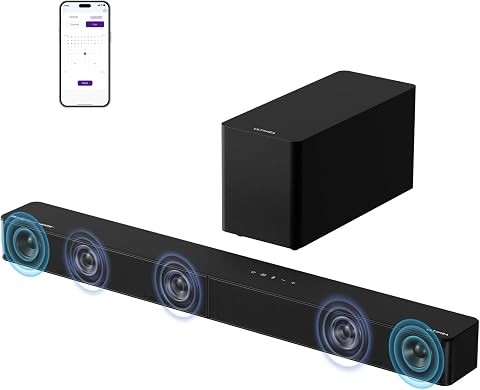 Ultimea 5.1CH Surround Sound Bar System with Dolby Atmos, Poseidon M60View on Amazon →
 - 5
 Fire TV Soundbar Plus (Newest Model) with Built-in Subwoofer, 3.1 Channel, Do…View on Amazon →
 - 6
 Sony S100F 2.0ch Soundbar with Bass Reflex Speaker, Bluetooth, and HDMI ARCView on Amazon →
 - 7
 Amazon Fire TV Soundbar, 2.0 Speaker with DTS Virtual:X and Dolby AudioView on Amazon →
 - 8
 Samsung B-Series Soundbar HW B400F 2.0 Ch with Built-in Subwoofer (2025 Model)View on Amazon →
 - 9
 ULTIMEA Sound Bar with Wireless Subwoofer, App Control, 2.1 ChannelView on Amazon →
 - 10
 Sound Bar for Smart TV with Bluetooth, ARC, Optical, AUX, Detachable Design, 80WView on Amazon →
Why 2026 Will Be a Turning Point for AI
The predicted innovations could transform multiple sectors, improving efficiency, safety, and decision-making. For consumers, this may mean more intuitive virtual assistants, safer autonomous vehicles, and personalized healthcare solutions. For industries, these advancements could lead to increased productivity and new business models.
However, the rapid development also raises concerns about ethical AI use, regulation, and job displacement. Understanding these innovations helps consumers and policymakers prepare for the societal shifts ahead.
Current State of AI Development and Trends
Over the past few years, AI has seen rapid growth, with breakthroughs in natural language processing, computer vision, and reinforcement learning. Major investments from technology firms and governments have fueled research, leading to the deployment of AI in everyday applications like virtual assistants, recommendation systems, and autonomous vehicles.
Industry analysts predict that by 2026, AI will reach a new level of generality, with prototypes capable of performing a wide range of tasks previously thought to require human intelligence. This evolution is driven by improvements in computing power, data availability, and algorithm sophistication.
“By 2026, we expect to see AI systems that can understand context and reason at levels comparable to human cognition, opening new frontiers in automation.”
— Dr. Jane Liu, AI researcher at MIT
Unconfirmed Aspects of the 2026 AI Outlook
While many innovations are projected based on current research trajectories, some developments are still in early stages or depend on breakthroughs that have not yet occurred. The timeline for achieving fully general AI remains uncertain, and regulatory frameworks are still evolving.
Additionally, the actual deployment and adoption rates of these technologies could vary significantly depending on technical, ethical, and market factors.
Next Steps for AI Development and Industry Adoption
Industry leaders and researchers will continue refining these innovations, with pilot projects and prototypes expected to emerge over the next 1-2 years. Regulatory bodies are also likely to propose guidelines to ensure safe deployment.
Monitoring these developments will be crucial, as early adoption phases could influence the broader trajectory of AI in society. Public and private sector collaboration will shape how these innovations are integrated into daily life.
Key Questions
Which AI innovation is most likely to impact consumers by 2026?
Advancements in natural language understanding and virtual assistants are expected to significantly improve consumer interactions with AI, making devices more intuitive and responsive.
Will AI reach human-level general intelligence by 2026?
Experts believe that while progress will be substantial, achieving fully human-like general AI by 2026 remains uncertain and is likely still several years away.
What are the main ethical concerns with upcoming AI innovations?
Concerns include AI decision-making transparency, bias mitigation, privacy, and potential job displacement. Policymakers and researchers are working on frameworks to address these issues.
How will these innovations affect the job market?
Some roles may become automated, but new opportunities in AI development, oversight, and related fields are also expected to emerge. The overall impact will depend on adoption and regulation.
Are there any risks associated with rapid AI development?
Yes, risks include unintended behavior, misuse, and ethical dilemmas. Ensuring robust safety measures and regulations will be critical as these technologies advance.
Source: ThorstenMeyerAI.com
Fall Picks
fall essentials
As an affiliate, we earn on qualifying purchases.