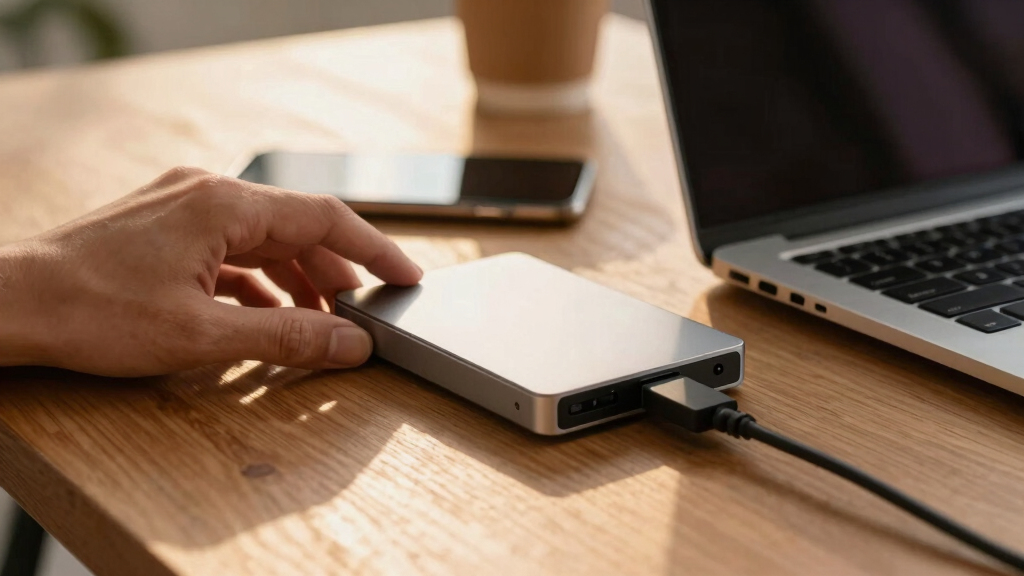
This guide explains how to choose and set up a portable external hard drive to expand your storage or back up data. It is designed for users new to external drives or those upgrading their current setup. Follow these steps to ensure a smooth, successful experience with your new device.

Get the latest gadgets delivered free — and shop member deals
- Fast, free delivery on millions of items
- Access to Prime Big Deal Days deals on October 6–7
- Prime Video, Amazon Music and more included

Seagate Portable 2TB External Hard Drive HDD – USB 3.0 for PC, Mac, PlayStation, & Xbox
- ✔ Digital Storage Capacity: 2 TB
- ✔ Hard Disk Interface: USB 3.0
- ✔ Connectivity Technology: USB
Seagate Portable 1TB External Hard Drive HDD – USB 3.0 for PC, Mac, PlayStation, & Xbox
- ✔ Capacity: 1TB
- ✔ Interface: USB 3.0
- ✔ Compatibility: PC, Mac, PS, Xbox

Western Digital 5TB Elements Portable External Hard Drive for Windows and Mac
- ✔ Digital Storage Capacity: 5 TB
- ✔ Hard Disk Interface: USB 3.0/2.0
- ✔ Connectivity Technology: USB
Difficulty: Beginner | Time: 30-60 minutes
What You’ll Need
Tools & Materials:
- Computer with USB or Thunderbolt port
- External hard drive
- Power adapter (if required)
- USB or data cable included with the drive
Knowledge:
- Basic understanding of computer file management
- Familiarity with connecting devices via USB or Thunderbolt
Check your computer’s available ports and compatibility with the external drive before purchase. Ensure your operating system is up to date for best compatibility.
Seagate Portable 2TB External Hard Drive HDD – USB 3.0 for PC, Mac, PlayStation, & Xbox
<p>This <strong>Seagate 2TB drive</strong> stands out for its broad compatibility, supporting Windows, Mac, and gaming consoles like PlayStation and Xbox. Its <strong>plug-and-play</strong> setup makes it remarkably user-friendly, and the 2TB capacity strikes a good balance for most users. Compared with the smaller 1TB option, it offers more space, but its <strong>larger 3.5-inch form factor</strong> can be less convenient for ultra-portability. Performance with USB 3.0 is solid, though it may not match newer standards like USB 3.2 or Thunderbolt.</p>
Pros:
- Ample 2TB storage capacity for backups and media
- Wide device compatibility including gaming consoles
- Easy plug-and-play setup with USB 3.0
Cons:
- Relatively bulky size due to 3.5-inch form factor
- No built-in encryption or advanced software
- Performance may vary depending on system
Best for: Users needing a versatile drive for multiple devices and moderate storage needs.
Not ideal for: Those prioritizing ultra-compact size or faster transfer speeds.
Bottom line: A reliable, versatile choice balancing capacity, compatibility, and ease of use for most users.
“A reliable, versatile choice balancing capacity, compatibility, and ease of use for most users.”
Seagate Portable 1TB External Hard Drive HDD – USB 3.0 for PC, Mac, PlayStation, & Xbox
<p>This <strong>Seagate 1TB drive</strong> is a solid choice for users who need basic, portable storage without breaking the bank. Its <strong>lightweight design</strong> makes it easy to carry, and compatibility spans Windows, Mac, and gaming consoles. However, the smaller capacity makes it less suitable for large media libraries, and reformatting might be required for Mac users. While it offers quick data transfer with USB 3.0, it lacks additional features like encryption or bundled backup software, which some users may miss.</p>
Pros:
- Compact, lightweight, and portable
- Easy plug-and-play setup
- Compatible with multiple devices including gaming consoles
Cons:
- Limited 1TB capacity may require frequent management
- Reformatting needed for Mac compatibility
- No included backup software or encryption
Best for: Casual users seeking portable backup or media storage on a budget.
Not ideal for: Power users with large libraries or those needing faster transfer speeds.
Bottom line: A budget-friendly, portable drive suitable for light backup needs and basic data access.
“A budget-friendly, portable drive suitable for light backup needs and basic data access.”
Western Digital 5TB Elements Portable External Hard Drive for Windows and Mac
<p>The <strong>Western Digital 5TB drive</strong> excels for users who need extensive storage for photos, videos, and backups. Its <strong>USB 3.2 Gen 1 connection</strong> ensures faster data transfer compared to older standards, making it suitable for large file transfers. The <strong>compact 2.5-inch form factor</strong> enhances portability, although its maximum transfer speed of approximately 50 MB/s may be a bottleneck for some workflows. The listed enclosure material as cotton seems off, which suggests limited info on durability or shock resistance.</p>
Pros:
- Massive 5TB capacity for extensive storage
- Fast data transfer with USB 3.2 Gen 1
- Compatible with Windows and Mac
Cons:
- Potentially slow transfer rate for large files
- Unclear durability and shock resistance features
- Enclosure material description may be inaccurate
Best for: Content creators and media enthusiasts with large storage needs.
Not ideal for: Users requiring the fastest transfer speeds or rugged durability.
Bottom line: Ideal for high-capacity storage needs, though transfer speed and durability should be considered based on use case.
“Ideal for high-capacity storage needs, though transfer speed and durability should be considered based on use case.”
As an Amazon Associate we earn from qualifying purchases.
Before You Start
Verify the external hard drive is compatible with your computer’s operating system. Read the manufacturer’s instructions for any specific setup or installation requirements. Keep your computer powered on and nearby for quick connection.
Step-by-Step Instructions
Step 1: Select a compatible external hard drive
Choose a drive with the appropriate storage capacity, connection type (USB 3.0, USB-C, Thunderbolt), and compatibility with your operating system. Consider factors like speed, durability, and whether it needs an external power source.
Tip:Match the drive’s connection type with your computer’s ports for faster data transfer.
Check: You have identified a drive that fits your storage needs and is compatible with your device.
Step 2: Connect the external hard drive to your computer
Plug the included USB or Thunderbolt cable into the drive and your computer’s port. If the drive has an external power supply, connect it and turn it on.
Tip:Use the cable that came with the drive for best compatibility. Avoid using damaged or low-quality cables.
Check: The drive appears as a new device or drive letter in your file explorer or disk management utility.
Step 3: Initialize and format the drive if necessary
Open your computer’s disk management tool (Disk Utility on Mac, Disk Management on Windows). Locate the new drive, right-click, and select ‘Initialize’ or ‘Format.’ Choose a file system (NTFS for Windows, APFS or HFS+ for Mac, exFAT for cross-platform use).
Tip:Formatting erases all data on the drive. Back up any needed files before proceeding.
Check: The drive is formatted and appears correctly in your file explorer, ready for data storage.
Step 4: Copy files to the external hard drive
Open your file explorer, select files or folders you want to back up or transfer, then drag and drop them onto the external drive icon or folder.
Tip:Avoid copying very large files in small chunks to prevent errors. Use the ‘Copy’ and ‘Paste’ commands for accuracy.
Check: Files are successfully copied, and their icons show the transfer progress. Verify files open correctly from the external drive.
Step 5: Eject the drive safely
Before disconnecting, click the ‘Eject’ icon next to the drive in your file explorer or system tray. Wait for confirmation that it is safe to remove.
Tip:Never unplug the drive while files are transferring to avoid data corruption.
Check: The drive disappears from your system or shows a ‘safe to remove’ message.
Common Mistakes to Avoid
- Disconnecting the drive without ejecting — Always eject the drive properly before unplugging to prevent data loss or corruption.
- Using incompatible or damaged cables — Use the original or high-quality cables supplied with the drive to ensure reliable connection and power.
- Formatting the wrong drive or deleting data unintentionally — Double-check drive labels and contents before formatting or deleting files. Back up important data beforehand.
Troubleshooting
Problem: Drive not recognized by computer
Solution: Try connecting to a different USB port or computer. Check device drivers and update OS if needed.
Problem: File transfer fails or is slow
Solution: Use a different cable, close other programs using system resources, and ensure the drive is properly formatted.
Problem: Drive shows as uninitialized or unallocated space
Solution: Open disk management, initialize the drive, and format it following instructions above.
What Success Looks Like
The external hard drive appears correctly in your file explorer with accessible storage space. Files can be copied, opened, and saved without errors. The drive safely ejects without data loss.
Next Steps
Regularly back up important data to your external drive. Keep the device in a safe, cool place. Update its firmware if applicable. Repeat the backup process periodically to maintain current copies.
Frequently Asked Questions
Can I use the external hard drive with multiple computers?
Yes, if the drive is formatted with a compatible file system like exFAT, it can be used across different operating systems. Remember to safely eject between uses.
How do I improve transfer speed?
Use a high-speed port (USB 3.0 or higher), avoid connecting through hubs, and ensure the cable and drive are in good condition.
Is it safe to store sensitive data on an external hard drive?
Storing sensitive data is safe if you encrypt the drive or files. Use encryption software for added security.
Halloween Picks
halloween
As an affiliate, we earn on qualifying purchases.