📊 Full opportunity report: Use A Glow-Up App To Keep Your Men's Skincare Routine Consistent on IdeaNavigator AI — validation score, market gap, and execution plan.

Get the latest gadgets delivered free with Prime
- Fast, free delivery on millions of items
- Prime Video, Amazon Music and more included
- Member-only deals all year
TL;DR
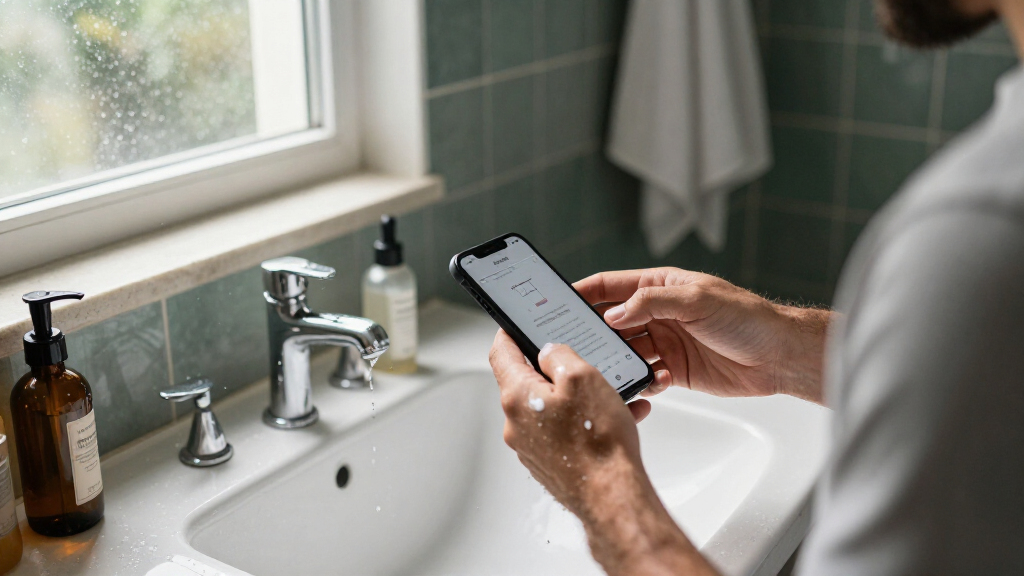
IdeaNavigator AI has outlined a product concept for men who want to track whether a new skincare routine is working. The proposal describes weekly guided selfies, routine logging and progress cards, but provides no evidence that an app has launched or that the concept has been tested.
IdeaNavigator AI has proposed a skincare tracking app for men that would use weekly guided selfies, routine logs and progress cards to help users judge whether their routines are working. The concept is aimed at men newly investing in skincare, but the proposal does not announce a product launch, provide test results or identify a company building the app.
According to IdeaNavigator AI’s proposal, the proposed first version would ask users to take guided selfies once a week and assess visible measures including skin clarity, texture and dark circles. It would pair those check-ins with routine logging and streaks, presenting progress in a format described as training metrics rather than conventional beauty language. These are suggested features, not confirmed capabilities of an available app.
IdeaNavigator AI frames the target user as a man who has recently started caring for his skin and wants a way to see whether his routine is making a difference. The proposal says some existing beauty apps may feel unwelcoming to this audience because of their design, tone or marketing. That is the proposal’s market rationale; it does not provide research or user interviews demonstrating how widespread the problem is.
The proposed business model combines a subscription with affiliate product recommendations linked to measured skincare gaps. IdeaNavigator AI also recommends testing the app’s presentation: compare a men’s-training brand identity with a neutral one, then measure conversion and retention across user segments. The proposal supplies no pricing, conversion figures, retention data or test outcomes.
Turning Routine Into Measurable Progress
The concept addresses a practical obstacle for people starting skincare: results can be gradual, and changes may be difficult to judge from memory. As IdeaNavigator AI’s proposal suggests, regular photos and a record of products used could give users a consistent reference point, while reminders and streaks could make it easier to keep up a routine. Whether those features improve adherence or users’ ability to assess results remains untested.
The proposal’s framing also reflects a product-design question: whether men who feel excluded by beauty-oriented branding would respond better to language associated with training and performance. That could affect who tries an app, but IdeaNavigator AI offers no evidence that branding alone would improve long-term use. A useful test would need to separate initial downloads or sign-ups from sustained engagement.
There are also consumer implications in tying product recommendations to photo-based assessments. If recommendations generate affiliate revenue, users would need clear disclosure and a way to understand how suggestions are selected. IdeaNavigator AI’s proposal does not explain how measurements would be validated, how images would be stored, or how the app would distinguish a visible change from lighting, camera angle or other conditions.
men's skincare routine tracker app
As an affiliate, we earn on qualifying purchases.
As an affiliate, we earn on qualifying purchases.
The Proposed First-Use Case
IdeaNavigator AI presents the idea as a narrow first-win workflow, rather than a broad grooming platform: serve one buyer, a man newly invested in skincare who wants proof of progress. The suggested feature set follows that focus, centering on repeatable check-ins and routine consistency instead of a wide catalogue of beauty tools.
The proposal describes men’s grooming technology as the market and points to looksmaxxing culture as a reason its intended audience may be receptive to metrics and gamification. It calls men’s skincare the fastest-growing grooming segment, but gives no figures, timeframe or comparison data to substantiate that market claim. The growth description should therefore be treated as IdeaNavigator AI’s rationale, not as independently demonstrated market data.
As a validation step, IdeaNavigator AI suggests presenting the same selfie-capture technology under two different brand approaches: one designed around men’s training and one with neutral branding. Comparing conversion and retention by segment could show whether positioning changes interest or continued use. The proposal does not report that this experiment has begun.
As an affiliate, we earn on qualifying purchases.
Evidence, Privacy and Product Status
IdeaNavigator AI identifies no released app or developer, and its proposal gives no launch timeline, prototype description or confirmation that the suggested features have been built. It is also unknown whether prospective users have been interviewed or whether any demand testing has taken place.
The proposal does not explain how selfie-based scores would be calculated or checked for consistency. It gives no information about image privacy, deletion controls, data security, accessibility or whether assessments would be presented as cosmetic tracking rather than medical guidance. The affiliate model is suggested, but the method for matching products to a user’s measurements and disclosing commercial relationships is not described.
Finally, the market-growth and branding arguments in the proposal are not accompanied by data. It reports no comparisons showing that training-oriented language attracts more men, or that streaks and progress cards lead to better routine consistency. Those points remain hypotheses to test.
guided selfie skincare app for men
As an affiliate, we earn on qualifying purchases.
As an affiliate, we earn on qualifying purchases.
Testing Before a Product Launch
IdeaNavigator AI proposes a positioning test comparing men’s-training branding with neutral branding around the same photo-capture workflow. Conversion and retention by audience segment would help assess whether the presentation changes sign-ups and ongoing use. The proposal gives no timetable, sample size or planned test operator.
Before a consumer launch, a team pursuing the concept would also need to decide how measurements are produced, explain the limits of photo comparisons and set clear rules for image handling. It would need to disclose how affiliate recommendations work and test whether users find the weekly process helpful rather than burdensome. These are unresolved product questions, not confirmed plans.
For now, the development is a product proposal, not a reported launch, according to IdeaNavigator AI’s published description. There is no announced release date or follow-up milestone. The clearest next evidence would be a named product or prototype, followed by published results from user and positioning tests.
men's skin health monitoring device
As an affiliate, we earn on qualifying purchases.
As an affiliate, we earn on qualifying purchases.
Key Questions
Has the men’s skincare tracking app launched?
No launch is reported. IdeaNavigator AI describes a product concept and suggested MVP features, but does not name a developer, give a release date or confirm that an app is available.
What would the proposed app track?
IdeaNavigator AI’s proposal describes an MVP using weekly guided selfies to track skin clarity, texture and dark circles. It would also let users log routines and view streaks and progress cards. These are proposed features, not confirmed functions in a released product.
How would the app make money?
IdeaNavigator AI suggests a subscription and affiliate product recommendations tied to measured skincare gaps. Its proposal does not provide prices or explain how recommendations would be selected or disclosed.
Has the idea been tested with users?
IdeaNavigator AI’s proposal includes no user-test results. It recommends comparing men’s-training branding with neutral branding and measuring conversion and retention, but does not say that the test has taken place.
Source: IdeaNavigator AI
Halloween Picks
halloween
As an affiliate, we earn on qualifying purchases.