
🔍 Read the full analysis: The Volume Bet Behind IBM’s On-Prem AI Strategy on ThorstenMeyerAI.com

Get the latest gadgets delivered free with Prime
- Fast, free delivery on millions of items
- Prime Video, Amazon Music and more included
- Member-only deals all year
TL;DR
IBM CEO Arvind Krishna argued on the company’s Oct. 21 earnings call that open-weight models can deliver about 90% of frontier performance at 10% to 25% of the token cost, making on-premises AI attractive to some enterprises. An Artificial Analysis comparison read Oct. 26 puts the strongest downloadable model at 80% of the leading proprietary model; the economics of buying hardware also depend heavily on how much it is used.
IBM CEO Arvind Krishna used the company’s Oct. 21 earnings call to argue that enterprises can run open-weight AI models on their own infrastructure at a fraction of frontier-model token costs, while retaining more control over data. The pitch matters to companies weighing cloud bills against buying and operating AI hardware, but a benchmark comparison available Oct. 26 puts the leading downloadable model at 80% of the top proprietary model, not 90%.
In the call’s question-and-answer session, Krishna said open-weight models could cost 10% to 25% as much per token as frontier models while being “90% as effective.” He said a large enterprise could start with two or three racks. Those figures are his characterization, not a result from a named benchmark. IBM has a commercial interest in on-premises infrastructure, including its AI hardware, so the cost and performance comparison should be read as a company claim.
For an independent comparison, the source report consulted the Artificial Analysis Intelligence Index, which applies the same ten evaluations to models and identifies whether weights are downloadable. In its Oct. 26 reading, Xiaomi’s MiMo-V2.6-Pro scored 46.3, against 57.6 for Anthropic’s Claude Opus 5.5, or about 80% of the leader. The report says that share was 51% at the end of 2024, though the absolute score gap grew from 7.5 to 11.3 points as both model categories advanced.
One possible exception is not yet available as an open model: Kimi K3.1 Pro scored 55.1, about 96% of Claude Opus 5.5, but its maker, Moonshot, had only promised to release the weights by Nov. 4. Until that release happens, the score does not establish that customers can download and run the model. The report also notes that model licences differ, so access to weights does not automatically mean unrestricted commercial use.
IBM's 90% claim, checked
Open weights reach 80% of the leader
Krishna says open-weight models are "90% as effective". On an independent index the best model you can download today reaches 80% of the best closed one, up from about half two years ago.
Best open model as a share of the best closed
Artificial Analysis Intelligence Index, current version, best downloadable vs. best proprietary model at each date.
What Krishna said
Illustrations from the earnings call, not a named benchmark.
- Late 2024"70" vs. "20 or 30"Krishna, Q3 call, 21 Oct · no named benchmark
- Late 2025"70 to 50"Krishna, Q3 call, 21 Oct · no named benchmark
- Now"90% as effective"Krishna, Q3 call, 21 Oct · no named benchmark
Top downloadable models today
Intelligence Index score and licence type. Read the licence before the leaderboard.
| Model | Index | Licence |
|---|---|---|
| MiMo-V2.6-Pro Xiaomi | 46.3 | MIT |
| DeepSeek V4.1 Flash 1017 DeepSeek | 45.1 | MIT |
| GLM-5.3 Z AI | 44.8 | own commercial licence |
| Step 5 Preview StepFun | 43.7 | own commercial licence |
| Muse Spark Open Meta | 38.9 | licence with conditions |
In points the gap did not shrink: 7.5 points at the end of 2024, 11.3 today. Closed models moved too.
Sources: Artificial Analysis, Intelligence Index v4.3.2 (read 26 Oct 2026), IBM Q3 2026 earnings call transcript (21 Oct 2026), Artificial Analysis on Kimi K3.1 Pro (23 Oct 2026).
Powered by Thorsten Meyer AI
The economics depend on steady use
IBM’s case is not simply that open models are cheaper. It is that an enterprise can exchange recurring cloud charges for the expense and operational work of running its own systems. That can appeal to organizations with large, sustained workloads or data-control requirements. Krishna cited banks and traders seeking to run AI “in a way that is sovereign,” without exposing underlying data or logs to an outside provider.
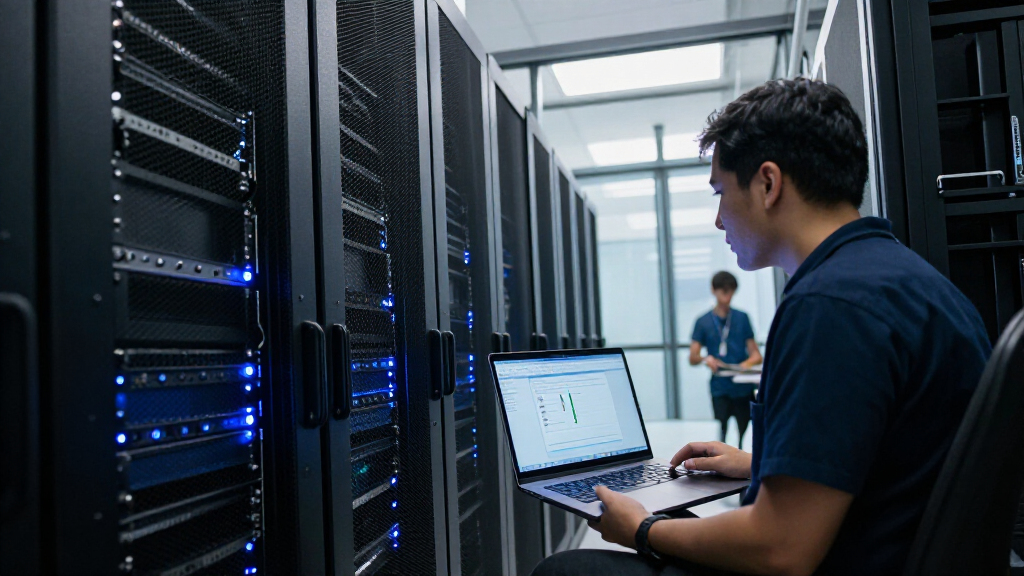
The purchase-versus-rental figures show why utilization matters. The source report gives a list price of $172,643 for an eight-GPU H200 server and an AWS rental price of $63.30 an hour for the same GPU class. Using those figures, it estimates the purchase cost is recovered in about 114 days at full utilization, but about 15 months at 25% utilization. These are simplified comparisons, not total-cost estimates: they exclude staffing, cooling and networking, and do not establish that the hardware will run at a given load.
Enterprises also need engineering capacity to manage kernels, networks and serving systems. Krishna acknowledged that this expertise can be a bottleneck outside the most sophisticated companies. For organizations with lower or unpredictable demand, a cloud service may remain easier to use even when its listed token price is higher.
Products Worth Considering

Jackery Explorer 2000 v2 Portable Power Station with Two 200W Solar Panels

Jackery Explorer 300 Portable Power Station, 292Wh

Sony WH-1000XM4C Wireless Noise-Cancelling Headphones, Black
As an affiliate, we earn on qualifying purchases.
IBM’s case and the benchmark record
Krishna described model progress with illustrative scores on the earnings call: a large gap in late 2024, a narrower one in late 2025, and then the “90% as effective” comparison. The Artificial Analysis series cited in the source report supports the direction of improvement in open models relative to proprietary leaders, but does not reproduce Krishna’s numbers. Its reported open-to-proprietary score shares were 51% at the end of 2024, 74% at the end of 2025, 68% at the end of June 2026 and 80% on Oct. 26. The source says these figures use the index’s current version, which makes comparisons over time dependent on that scoring framework.
Price comparisons are also not one-size-fits-all. The report says DeepSeek’s hosted V4.1 Flash 1017, whose weights it identifies as MIT-licensed, is priced at 3% to 6% of Claude Opus 5.5’s list price. It also cites OpenAI’s closed GPT-6 Luna at $0.10 per million input tokens and $0.50 per million output tokens. Those examples compare particular services and list prices; they do not establish that every open model, workload or deployment is cheaper once hardware and operating costs are included.
IBM made a separate claim in prepared remarks that its llm-d project can run large models at five to ten times lower cost. The source report says it could not independently verify that figure. Krishna’s proposal also fits IBM’s business interests: it sells infrastructure for enterprise workloads. The report notes that IBM’s mainframe revenue fell 20% in the quarter, according to The Register, but that figure alone does not establish how much the company’s AI strategy will affect future hardware sales.
Performance, licensing and total cost
The benchmark does not settle whether open models are “90% as effective” for a particular company. A composite index score is not a direct measure of performance on every task, and the source material does not provide a workload-by-workload comparison of quality, speed or reliability. It also does not establish that token-price savings translate into lower total costs after hardware, electricity, networking and staff are counted.
Kimi K3.1 Pro’s weights had not shipped as of the report’s Oct. 26 reading; Moonshot’s promised Nov. 4 date was still ahead. Its licence was also unpublished, according to the source. Other models have different terms, including custom or commercial licences. The source material does not establish whether every model it lists can be used freely for every commercial purpose.
IBM’s llm-d cost claim and Krishna’s estimate that open models deliver 90% of frontier performance remain company statements, not independently verified results in the supplied material. The server payback figures are likewise estimates based on stated list prices and assumed utilization, rather than a full operating-cost analysis. Nvidia had not commented on the reported GeForce firmware limitation workaround described in the source, which is separate from IBM’s enterprise strategy.
Model releases and enterprise deployments
The next near-term checkpoint in the source material is Moonshot’s promised Nov. 4 release of Kimi K3.1 Pro’s weights. If they arrive, buyers will still need to review the licence and determine what hardware and operating expertise the model requires. The benchmark comparison may also change as providers release new models and Artificial Analysis updates its index.
For IBM, the practical test is whether customers adopt on-premises systems and can keep them sufficiently utilized to justify the purchase. The supplied material does not name a new deployment milestone or quantify how much AI infrastructure demand IBM expects. Companies considering the approach will need to compare their own workload, data rules and staffing needs against cloud prices rather than treating the token-cost ratio as a complete estimate.
Key Questions
What did IBM’s CEO claim about open-weight AI?
On IBM’s Oct. 21 earnings call, Arvind Krishna said open-weight models can cost 10% to 25% as much per token as frontier models while being “90% as effective.” The source material presents this as his claim, not as a result from a named benchmark.
How close are downloadable models to the top proprietary model?
In the Artificial Analysis comparison read Oct. 26, 2026, Xiaomi’s MiMo-V2.6-Pro scored 46.3 versus 57.6 for Claude Opus 5.5, about 80% of the leading score. Kimi K3.1 Pro scored 55.1 but had not yet released its weights, according to the source report.
Does running AI on-premises always cost less?
No. The source’s hardware comparison estimates a faster payback when an H200 server runs at full load than at 25% utilization. It excludes staffing, cooling and networking, so it is not a full comparison of total ownership costs against cloud services.
Why might an enterprise choose on-premises AI?
Krishna cited data control and sovereignty as reasons banks and traders may prefer to run models on their own systems. The approach can also make sense for sustained workloads, but it requires hardware and technical staff to operate the systems.
What remains to be checked before using an open model?
Organizations need to check that the weights are actually available, review the model’s licence and commercial-use terms, and estimate performance and total operating costs for their workloads. A high benchmark score or low token price does not answer those questions on its own.
Source: ThorstenMeyerAI.com