TL;DR

Get the latest gadgets delivered free with Prime
- Fast, free delivery on millions of items
- Prime Video, Amazon Music and more included
- Member-only deals all year
A new smartphone feature uses LED lights combined with AI to detect hidden cameras. The development is based on trend signals and has attracted growing coverage, though details remain unconfirmed. This could impact personal privacy and security practices.
A new smartphone feature that uses the device’s LED flashlight combined with artificial intelligence is purportedly capable of detecting hidden cameras. This development has garnered significant attention amid ongoing privacy concerns, though official details and confirmation from manufacturers are not yet available.
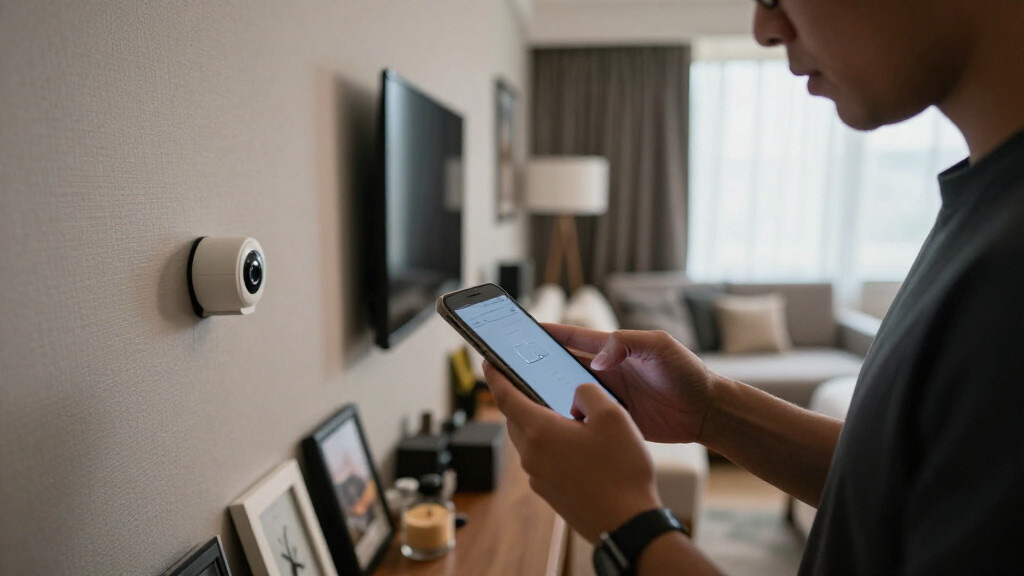
According to trend signals and early coverage, certain smartphone models now incorporate a system where the LED flash can be used in conjunction with AI algorithms to scan for reflective surfaces or lenses indicative of hidden cameras. The method reportedly involves illuminating areas and analyzing reflections or anomalies in real-time, helping users identify surveillance devices that might otherwise go unnoticed.
These claims are based on observed features in some recent software updates and patent filings, but no official product announcement or comprehensive technical documentation has been confirmed by the manufacturers. Experts suggest that AI-driven detection relies on pattern recognition to differentiate camera lenses from other reflective objects, potentially offering a new layer of privacy protection for users.
Interest in this technology appears to be driven by broader privacy debates and recent reports of covert surveillance, although the extent of its effectiveness and reliability remains under scrutiny. The trend signal indicates that coverage and speculation about such features are increasing across tech news outlets and social media, despite the lack of official confirmation.
Potential Privacy Enhancement with AI-Enabled Detection
This development could represent a significant step forward in personal privacy protection, offering individuals a tool to identify hidden cameras in private spaces such as hotel rooms, Airbnb rentals, or changing areas. If proven effective, it may influence privacy standards and consumer expectations for smartphone security features.
However, the lack of official confirmation and technical details means the actual impact remains uncertain. Critics and privacy advocates are cautious, emphasizing the need for independent testing and validation before widespread adoption or reliance.
In a broader context, this trend reflects increasing consumer demand for surveillance countermeasures amid rising awareness of covert recording and privacy violations. It also highlights how existing smartphone hardware can potentially be repurposed with AI to address emerging security concerns.
As an affiliate, we earn on qualifying purchases.
The concept of using smartphones to detect hidden cameras is not new, but recent spikes in coverage and search interest suggest a surge in public curiosity and concern. Historically, covert surveillance devices have posed privacy risks in private and semi-private spaces, prompting the development of specialized detection tools.
Over the past few years, various apps and gadgets claiming to detect hidden cameras have entered the market, often with mixed reviews regarding their effectiveness. The current trend signal indicates that smartphone manufacturers are exploring integrated solutions, possibly leveraging existing hardware like LEDs and advanced AI algorithms, to provide more accessible detection methods.
While some patents and prototype features hint at this direction, no major tech company has yet officially announced a product specifically combining LED and AI for camera detection. The interest appears to be driven by both consumer demand and broader societal debates about surveillance and privacy rights.
It remains unclear whether this technology will become mainstream or whether current claims will withstand independent testing and regulatory scrutiny.
LED flashlight hidden camera detection
As an affiliate, we earn on qualifying purchases.
As an affiliate, we earn on qualifying purchases.
Unconfirmed Details and Effectiveness of the Detection Method
It is not yet clear how effective the LED and AI combination truly is at detecting hidden cameras, or whether the feature is limited to specific device models or software versions. Official statements from manufacturers are absent, and independent testing has not yet been conducted or published.
Questions remain about the technology’s accuracy, false positive rates, and whether it can reliably distinguish between different reflective objects. The extent of its capabilities and limitations is still unknown, as is whether it can detect cameras behind walls or in concealed locations.
As an affiliate, we earn on qualifying purchases.
Awaiting Official Confirmation and Independent Testing Results
Manufacturers are expected to release official details or firmware updates that clarify the technology’s scope and reliability. Independent researchers and privacy advocates are likely to conduct testing to evaluate its effectiveness.
In the coming months, coverage may increase if the feature is rolled out widely or if further demonstrations are provided. Regulatory bodies and privacy groups may also scrutinize the technology’s claims and potential misuse.
Consumers should remain cautious and await verified information before relying on this feature as a definitive privacy safeguard.
surveillance camera detection device
As an affiliate, we earn on qualifying purchases.
As an affiliate, we earn on qualifying purchases.
Key Questions
It is currently unclear how reliable the detection is. Official details and independent testing are needed to confirm its effectiveness across different scenarios.
Does this technology require specific hardware or software updates?
Details are not yet confirmed, but it appears to involve utilizing the existing LED flash combined with AI algorithms, possibly through software updates.
Will this feature be available on all smartphones?
At this stage, it is uncertain whether the technology is limited to certain models or manufacturers. No official rollout has been announced.
Could this technology be used maliciously or for privacy violations?
While intended for privacy protection, any surveillance detection tool could potentially be misused. Regulatory and ethical considerations are still being discussed.
When can we expect official confirmation or product releases?
Manufacturers may provide updates in the coming months, but no specific timeline has been announced yet.
Source: hn
Halloween Picks
halloween
As an affiliate, we earn on qualifying purchases.