
🔍 Read the full analysis: OpenAI’s Compute Campuses: A New Label, Familiar Resource Questions on ThorstenMeyerAI.com

Get the latest gadgets delivered free with Prime
- Fast, free delivery on millions of items
- Prime Video, Amazon Music and more included
- Member-only deals all year
TL;DR
OpenAI confirmed the term “compute campuses” for infrastructure it is building, after reporting that the company was considering a broader public-relations campaign. The terminology is confirmed, but the campaign has not been announced by OpenAI. Questions about electricity costs, grid upgrades, water use and oversight of industry pledges remain unresolved.
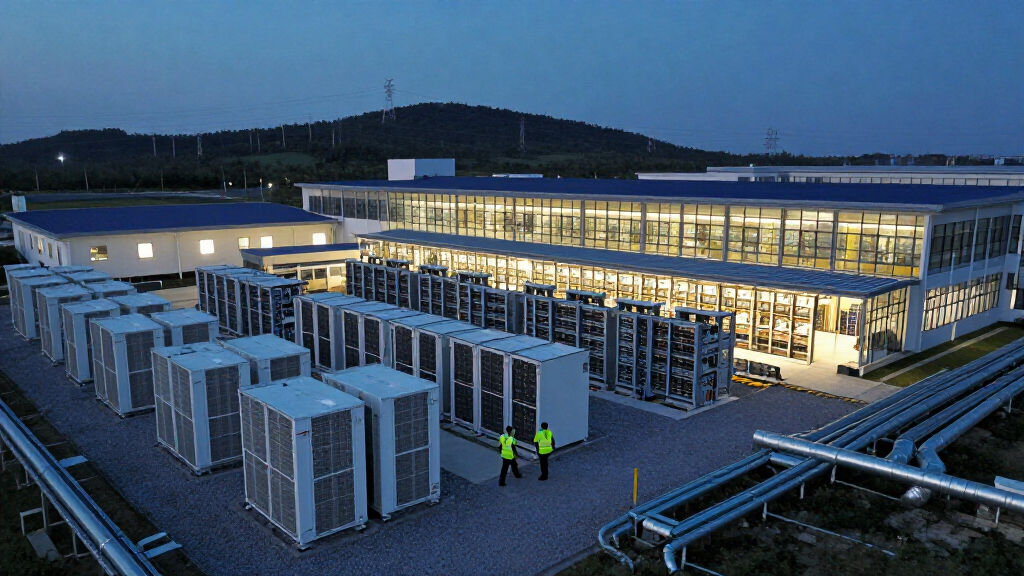
OpenAI has confirmed that it is using the term “compute campuses” for infrastructure it is building for artificial intelligence, a change that comes amid scrutiny of data centers’ demands on electricity, water and local communities. A wider post-midterm public-relations campaign was reported by Axios and relayed by TechCrunch, but OpenAI has not publicly announced that campaign.
An OpenAI spokesperson told Business Insider that “compute campuses” better describes “the scale and role of the infrastructure we’re building for AI.” The spokesperson also described the projects as “long-term investments in computing, energy infrastructure and skilled work,” according to Gizmodo’s account of the Business Insider report. OpenAI’s confirmation establishes its use of the term; it does not by itself show that the company has formally launched a naming campaign.
TechCrunch reported on November 1, citing Axios, that OpenAI was preparing a public-relations effort to begin after the U.S. midterm elections. TechCrunch’s account said that changing “data centers” to “AI compute campuses” was among ideas discussed by Chris Lehane, OpenAI’s chief global affairs officer. The source account says the original Axios report was not available to the writer, so details about the reported campaign rely on what TechCrunch reproduced.
The reporting frames the label change against questions about who will pay for power generation and grid upgrades, and how much water new facilities will use. OpenAI has made public commitments on energy costs, and it has signed a White House pledge alongside six other technology companies. Those commitments are not the same as evidence that costs are fully covered or that the promises are backed by a stated enforcement system.
The Bills Behind AI Infrastructure
The naming question matters because the infrastructure itself has material consequences for communities and electricity customers. A facility called a “compute campus” still requires power, grid connections and, depending on its design, water. Whether its operator pays the full costs of that demand can affect utility planning and the bills borne by other customers.
The source material cites a Pew Research Center survey of 10,548 U.S. adults, conducted July 20 to August 9, 2026. Half of respondents said data centers were mostly bad for home energy costs, up from 38% in January; 54% said they were mostly bad for the environment, up from 39%. Sixty percent said they would be not too or not at all comfortable with a new data center in their area. These figures measure public views, not the actual effect of any one project on rates or local resources.
That distinction is central to the debate. Large power-market figures can show pressure on the grid, but they do not establish that a particular facility caused a specific household bill increase. The new label may shape how the projects are described; it cannot answer who pays, what protections apply, or how local residents can verify the companies’ commitments.
Products Worth Considering

Samsung 34-Inch Odyssey G5 Ultra-Wide Curved Gaming Monitor

LG UltraGear 34GX90SA-W 34-inch WQHD Curved OLED Gaming Monitor

Samsung 27-inch Odyssey G5 QHD Gaming Monitor (G51F)
As an affiliate, we earn on qualifying purchases.
Pledges Meet Grid Pressures
OpenAI’s January 2026 “Stargate Community” plan said the company committed to “paying our own way on energy” so its operations would not increase electricity prices, according to wording quoted by Bisnow. On March 4, the White House announced a Ratepayer Protection Pledge signed by Amazon, Google, Meta, Microsoft, OpenAI, Oracle and xAI. Its fact sheet says signatories will bring or buy new generation, cover required power-delivery infrastructure upgrades and pay negotiated rates even if they do not use the electricity.
The stated terms do not specify a penalty, enforcement body, monitoring process or reporting requirement. The fact sheet describes the pledge as “a first step.” In an April 2026 report, the International Energy Agency said recent measures shift some financial risk away from utilities, while the extent of consumer protection remains less clear. It also said few U.S. states had legislated full cost recovery from data-center operators.
A separate snapshot comes from PJM, the grid operator serving more than 67 million people in 13 states and the District of Columbia. Its July 14, 2026, capacity auction for the 2028–29 delivery year cleared at the approved cap of $325 per megawatt-day, compared with $333.44 the year before, and was 6,831 megawatts short. The source material says PJM’s independent market monitor attributed $6.3 billion of a $16.4 billion total to data centers. Auction results indicate a constrained capacity market; they are not a direct calculation of any household’s data-center-related bill.
Promises Without Clear Enforcement
OpenAI has confirmed the term, but the source material does not establish that the company has launched a broader public-relations campaign. The campaign account comes from Axios reporting summarized by TechCrunch; OpenAI has not issued an official announcement of it in the reporting provided.
There is also no complete accounting here of how each proposed project’s electricity costs, grid upgrades or water use will be financed. OpenAI has said its largest planned site, in Pike County, Ohio, is expected to use water at a level comparable to an office building, but it plans to publish projections once the design is final. The design, the detailed water estimates and the timing for those projections are not supplied.
The source material also says OpenAI does not own data centers and that its partners carry the debt. A reported reduction in OpenAI’s funding target is not confirmed by the company. The available information does not specify the relevant financing terms or establish how those arrangements affect responsibility for infrastructure costs. More broadly, the White House pledge’s fact sheet identifies no reporting duty or enforcement mechanism, leaving how compliance will be checked unresolved.
Finally, the relationship between data-center development and residential electricity prices is disputed. The source material reports year-over-year residential price increases of 11.3% in Virginia and 10.4% in Ohio, but says the IEA found no simple state-level relationship. It also says the U.S. Energy Information Administration attributed PJM’s 41% wholesale price jump to weather, not data centers. Those figures do not settle the causes of individual bills or the effects of future projects.
Project Designs and Cost Disclosure
The clearest next information will come from project-level plans: final designs, electricity and water estimates, arrangements for new generation and grid upgrades, and disclosure of who pays for each item. For OpenAI’s Pike County proposal, its stated plan is to publish water projections after the design is final. The source material gives no publication date.
Readers can also watch for whether OpenAI makes a formal announcement about the reported communications campaign and whether the signatories or government officials publish details on monitoring the Ratepayer Protection Pledge. Until then, the company’s chosen label is confirmed, while the practical protections for host communities and utility customers remain a matter of commitments and incomplete project information.
Key Questions
What does OpenAI mean by “compute campuses”?
OpenAI told Business Insider that the term better describes the scale and role of the infrastructure it is building for AI. The source material does not describe it as a change to the facilities’ underlying power or water requirements.
Has OpenAI launched the reported public-relations campaign?
Not in the material provided. Axios’s report, summarized by TechCrunch, described a campaign that could start after the midterms. OpenAI confirmed the term, but no official launch of the wider campaign is reported.
Has OpenAI promised to pay for the energy its projects use?
OpenAI’s January 2026 Stargate Community plan said it would pay its own way on energy. The company also signed the White House Ratepayer Protection Pledge. The source material does not identify a penalty, enforcement body or reporting process for the pledge.
How much water will OpenAI’s Pike County site use?
OpenAI has said the planned site’s water use is expected to be comparable to that of an office building. It plans to release projections after the design is final; the detailed estimate is not yet available in the source material.
Do data centers directly explain recent household electricity price increases?
The source material does not establish a simple direct link. It cites residential price increases in Virginia and Ohio but also says the IEA found no simple state-level relationship. The figures do not identify how much any particular customer’s bill was affected by data centers.
Source: ThorstenMeyerAI.com