
TL;DR

Get the latest gadgets delivered free with Prime
- Fast, free delivery on millions of items
- Prime Video, Amazon Music and more included
- Member-only deals all year
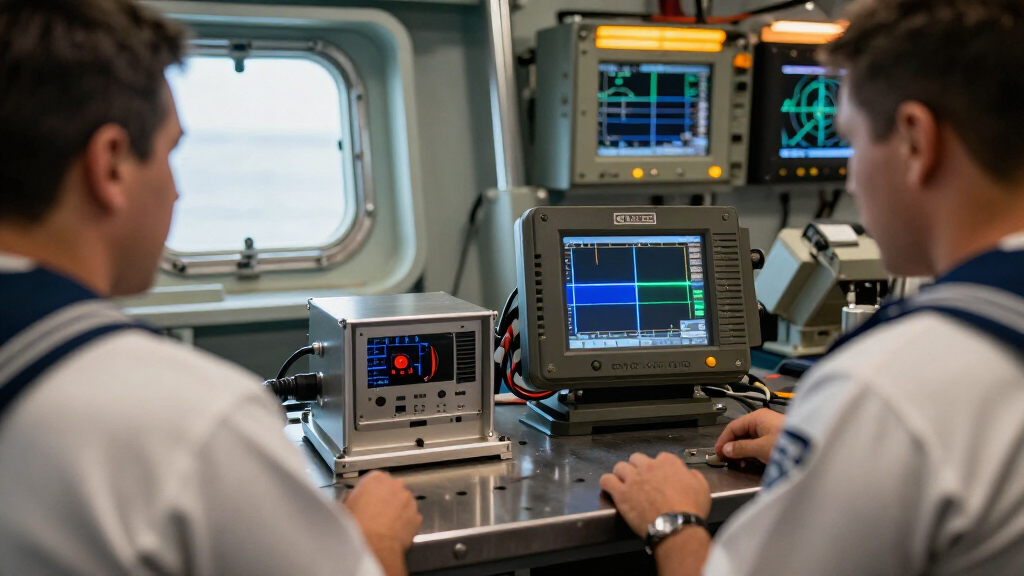
Infleqtion reported that its Tiqker optical atomic clock operated continuously aboard the U.S. Navy support vessel RV Merlin for more than two weeks during the Maritime Big Play Pacific exercise and in support of BARB-26. The test examined the clock at sea, including exposure to temperature changes and sustained vibration; the company says it could provide timing when GPS is unavailable or disrupted. The source does not report test results, accuracy measurements or a Navy decision to adopt the system.
Infleqtion says it operated its Tiqker optical atomic clock continuously aboard the U.S. Navy support vessel RV Merlin for more than two weeks during the Maritime Big Play Pacific exercise and in support of the Navy’s BARB-26 exercise. The at-sea demonstration evaluated the clock in maritime conditions, including temperature changes and sustained vibration, and is intended to inform possible future naval integration.
The company said the test took place in the Southern California operating area and ran continuously for over two weeks. MBP-P was sponsored by the Office of the Under Secretary of War for Research & Engineering, according to the announcement, and involved the U.S. Navy, U.S. Marine Corps and AUKUS partners from Australia and the United Kingdom. The demonstration also supported BARB-26, a Navy exercise focused on emerging subsea and seabed warfare capabilities.
Infleqtion described the trial as an opportunity to assess precision timing technology in an operational maritime setting and gather information for potential future integration. The company says Tiqker is a compact optical atomic clock that uses atomic optical transitions as a stable timing reference. It is designed to provide local timing without relying on GPS signals, which may be unavailable, jammed or spoofed.
The company says that independent timing could help synchronize communications, radar and other onboard systems. The source material does not provide measured performance results, a comparison with existing equipment, or an independent assessment by the Navy. It also does not say that the clock was used to direct operational activity during the exercises.
Timing Without GPS at Sea
Navigation and many military systems depend on accurate timing as well as position information. If a vessel or deployed force cannot rely on satellite signals, a local timing reference could help keep equipment synchronized. That is the potential operational value Infleqtion identifies for Tiqker: maintaining timing for communications and radar when GPS is disrupted.
The trial matters because a clock’s performance in a laboratory does not by itself establish how it will work aboard a moving vessel. Extended operation amid vibration and changing temperatures offers a way to examine those practical conditions. Still, the announcement reports the duration and environment of the test, not its results. It does not establish that Tiqker is ready for fleet deployment or that it can replace existing timing systems.
If further evaluations support the company’s claims, such equipment could contribute to timing resilience across ships and other platforms. That remains a potential application, not a confirmed Navy capability. The distinction is important: this was a demonstration and evaluation, while adoption, operational performance and procurement were not announced.
Products Worth Considering

DJI Mic 3 Wireless Microphone System (2 Transmitters, 1 Receiver, Charging Case)

EcoFlow DELTA 3 Classic Portable Power Station, 1024Wh, 1800W

Apple Watch SE 3 GPS 44mm Smartwatch
As an affiliate, we earn on qualifying purchases.
Earlier Tiqker Platform Trials
The RV Merlin demonstration follows previous trials of Tiqker that Infleqtion says took place at sea and in the air. In 2025, the clock was deployed aboard the UK Royal Navy’s uncrewed submarine testbed, XV Excalibur, where the company says it operated during multiple dives. In 2024, it took part in UK flight trials aboard QinetiQ’s RJ100 Airborne Technology Demonstrator, in collaboration with QinetiQ and BAE Systems.
Those earlier activities provide context for the latest test, but they do not establish that the clock has been adopted by either the UK or U.S. military. The current announcement focuses on operation aboard RV Merlin and the opportunity to assess the system during MBP-P and BARB-26. It does not detail how the new trial compares with the previous deployments or identify any follow-on contract.
“The Navy needs dependable timing to navigate, communicate and coordinate operations in the field.”
— Matthew Kinsella, CEO of Infleqtion
Performance Data Still Pending
Infleqtion’s announcement does not include accuracy figures, stability measurements or detailed test results. It is not clear how the clock performed during the temperature swings and vibration, what benchmarks were used, or whether the Navy independently verified the findings. The source also does not specify whether Tiqker was connected to operational ship systems or evaluated separately.
No Navy commitment to procure or deploy the system is reported. The announcement describes potential uses and a demonstration intended to inform future integration, but provides no schedule, funding details or named next test. The extent of participation by individual AUKUS partners in the clock evaluation is also not specified.
Further Evaluation and Integration
Infleqtion says the demonstration will provide operational data to support work toward possible integration into naval platforms. The source does not announce a next test date or a decision point for the Navy. Further public reporting would be needed to establish how Tiqker performed against defined requirements, whether the Navy plans additional trials, and whether any procurement process is underway.
For now, the confirmed development is the company’s report of a sustained at-sea test during two related exercises. Any future use in Navy communications, radar or navigation systems remains a stated capability goal rather than a confirmed deployment.
Key Questions
What did Infleqtion test?
It tested its Tiqker optical atomic clock, operating it aboard the Navy support vessel RV Merlin for more than two weeks, according to the company.
Which exercises involved the demonstration?
The demonstration took place during Maritime Big Play Pacific and also supported BARB-26, a Navy exercise focused on subsea and seabed warfare capabilities.
Why could an optical clock matter to the Navy?
Infleqtion says Tiqker could provide a local timing reference for systems such as communications and radar when GPS signals are unavailable, jammed or spoofed. The announcement does not establish that the Navy has adopted it.
Did the company release test results?
The announcement gives the test duration and conditions, including temperature changes and sustained vibration, but does not provide accuracy data, detailed performance results or independent Navy findings.
Will the Navy deploy Tiqker?
No deployment or procurement decision was announced. Infleqtion said the trial would gather data to advance possible future integration; whether the Navy will conduct further tests or adopt the system remains unclear.
Source: thequantuminsider.com