TL;DR

Get the latest gadgets delivered free — and shop member deals
- Fast, free delivery on millions of items
- Access to Prime Big Deal Days deals on October 6–7
- Prime Video, Amazon Music and more included
Google is contributing $1.2 million to Aguas Andinas to help line a 2.5-kilometer section of an irrigation canal in Chile’s Maipo River Basin. The company estimates the upgrade could save up to 7.4 million cubic meters of water annually over the project’s lifespan; implementation timing and the estimate’s measurement basis were not provided in its announcement.
Google is contributing $1.2 million to Chilean water utility Aguas Andinas to help line a 2.5-kilometer section of an irrigation canal in the Maipo River Basin, a watershed that supplies Santiago. Google says the concrete lining is intended to reduce seepage, protect water available for agriculture and improve water quality; it estimates the project could save up to 7.4 million cubic meters annually over its lifespan.
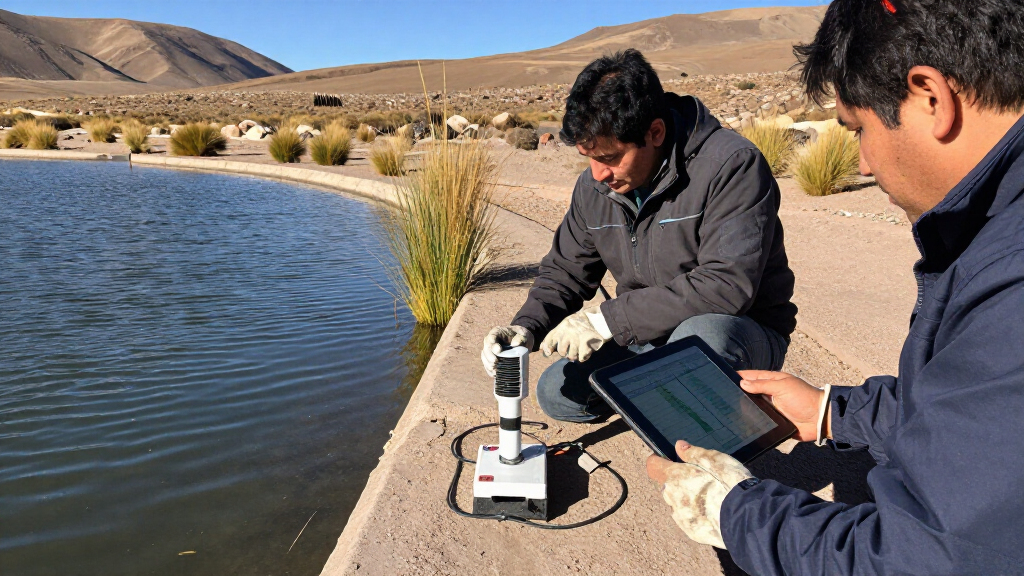
The work concerns the main canal of the Unidos de Buin Canal Association, known as ACUB, which currently runs as an unlined earthen channel. Google says its contribution will help fund a concrete lining across 2.5 kilometers. The company describes the intervention as an infrastructure upgrade intended to reduce water lost through seepage before it can be used for irrigation.
Google also says lining the canal should help limit sedimentation and erosion, with potential benefits for water quality. The company’s estimate is that the project could save up to 7.4 million cubic meters of water per year over its lifespan, equivalent to about 1.9 billion gallons annually. That figure is a projected maximum, not a reported result from completed work.
In the same announcement, Google said that in 2025 its water stewardship efforts replenished more water to the Maipo basin than was consumed by its Quilicura data center. The company did not provide figures for the data center’s consumption or the replenishment total in the supplied announcement, so the comparison cannot be independently quantified from that information alone.
Water for Buin and Santiago
The canal project links corporate water stewardship to local irrigation infrastructure in a basin that supplies Santiago. If the projected reductions in seepage are achieved, more water could remain available for agricultural use along the canal, while reduced erosion and sedimentation could support water quality. The potential value is particularly relevant in a watershed serving both urban and agricultural needs.
Google’s contribution is a defined financial commitment, but the company’s post does not state the total project cost or what share the $1.2 million represents. Nor does it establish how much water the upgraded section currently loses. The expected annual savings should therefore be read as a company-reported estimate, rather than a measured outcome or a guarantee of additional water reaching particular users.
As an affiliate, we earn on qualifying purchases.
Google’s Maipo Basin Commitment
Google frames the canal funding as part of a broader corporate commitment to replenish more water than it consumes and improve watershed health in communities where it operates. The Chile announcement ties that commitment to the Maipo River Basin and the company’s Quilicura data center, while naming Aguas Andinas as the recipient of the contribution.
The project’s stated focus is practical rather than basin-wide: upgrading a section of one irrigation canal. Concrete lining is intended to reduce seepage from the existing earthen channel. Google also identifies lower sedimentation and erosion as expected benefits. Its announcement does not describe other planned works in the basin or provide a broader water-management plan for the region.
“In 2025, our water stewardship efforts replenished more water to the Maipo River Basin than was consumed at our Quilicura, Chile data center.”
As an affiliate, we earn on qualifying purchases.
Schedule and Savings Unreported
Google’s announcement does not give a construction start date, completion date or detailed implementation schedule. It also does not say when the canal’s concrete lining will be finished, how progress will be reported or which organization will verify water savings.
The projected savings figure is presented as an estimate of up to 7.4 million cubic meters annually over the project’s lifespan. The post does not explain the calculation method, the length of that lifespan, the canal section’s current seepage rate or the conditions under which the maximum could be reached. The total project budget and Aguas Andinas’ role beyond receiving the contribution are also not specified.
The announcement provides no detailed figures for Google’s 2025 water consumption at Quilicura or replenishment in the Maipo basin. It is therefore not possible from the information supplied to assess the scale of that comparison, the project’s share of basin-wide water use or the extent of benefits to individual agricultural users.
erosion control for irrigation channels
As an affiliate, we earn on qualifying purchases.
As an affiliate, we earn on qualifying purchases.
Canal Work and Verification
The next practical milestone is the canal upgrade itself: 2.5 kilometers of the ACUB main canal are slated for concrete lining with support from Google’s contribution to Aguas Andinas. Google’s post does not state when construction will begin, so a schedule or further project details from the company, the utility or the canal association would clarify how the funding will be put to work.
After construction, reporting on the canal’s performance could show whether seepage, erosion and sedimentation decline as intended. Information about the measurement period and method would help readers compare actual water savings with the company’s estimate. The announcement does not specify whether such monitoring or public reporting is planned.
water conservation tools for agriculture
As an affiliate, we earn on qualifying purchases.
As an affiliate, we earn on qualifying purchases.
Key Questions
What is Google funding in Chile?
Google says it is contributing $1.2 million to Aguas Andinas to help fund concrete lining for a 2.5-kilometer section of the Unidos de Buin Canal Association’s main irrigation canal.
Where is the canal project located?
The canal is in the Maipo River Basin, a watershed that supplies Santiago. Google’s announcement identifies the canal association and the project length but gives no more precise construction location.
How much water could the upgrade save?
Google estimates savings of up to 7.4 million cubic meters per year over the project’s lifespan, or about 1.9 billion gallons annually. This is a projected maximum; the company did not provide a method or independent verification in the announcement.
When will construction begin?
No construction start or completion date was included in Google’s post. The timing remains unreported.
Has the project already saved water?
The announcement describes planned work and projected savings. It does not report that the canal lining has been completed or provide measured water savings from the project.
Source: rss
Fall Picks
fall essentials
As an affiliate, we earn on qualifying purchases.