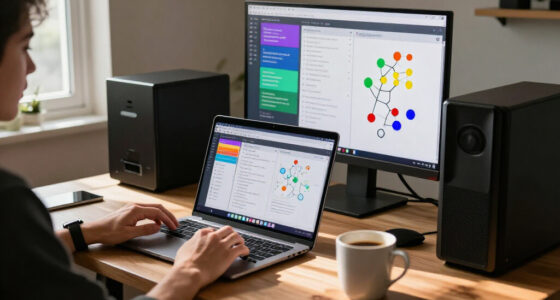
🔍 Read the full analysis: Gewerkton’s Rapid Relaunch: Rebuilding Its Look With AI Agents on ThorstenMeyerAI.com

Get the latest gadgets delivered free — and shop member deals
- Fast, free delivery on millions of items
- Access to Prime Big Deal Days deals on October 6–7
- Prime Video, Amazon Music and more included
TL;DR
Gewerkton, a construction-site documentation tool built by the publisher of the source report, replaced the look of its apps, Studio, icons and multilingual website on Oct. 2-3, 2026. AI coding agents carried out the implementation from approved plans, while Thorsten Meyer reviewed and released each part; the work included fixes for visual flaws and a pause in film production after a high job-failure rate.
Gewerkton, a construction-site documentation tool built by the publisher of the source report, replaced the look of its web and phone apps, Studio, icons and website on Oct. 2 and 3, 2026. Its builder, Thorsten Meyer, says AI coding agents implemented the changes from written plans he approved, while he reviewed and released each part—a case study in how a small software operation used agents for a broad redesign without handing them final release authority, as detailed in the original report.
The redesign, called HORIZON, reached the web app, iPhone and Android apps, Studio in light and dark modes, all 26 icons, and a website with 529 pages in 40 languages. Gewerkton reports that the web-app work replaced 281 hard-coded colour values with design tokens, restyled 47 cards and retained 11 deliberate colour exceptions. The phone app received the new look in version 0.5.0.
The website’s opening section was rebuilt around real product screens. The team uploaded 1,583 files and reports no upload errors. The associated film work involved 228 runs for five regions, including 222 regional versions, and eight help videos. The reported two-day execution began from an interim design draft made on Sept. 26; it did not start with a blank design on Oct. 2.
Meyer says the agents worked in a separate code copy on their own branch. Each stage required a human release before it was merged or delivered. Films showing the apps were held until Meyer approved the interface on Oct. 3, and paid film reruns needed his explicit approval. Apple also required Meyer, rather than an agent, to accept an updated Program License Agreement before the iPhone build could proceed.
FIELD REPORT · OCTOBER 2–3, 2026
Gewerkton’s Rapid Relaunch: Rebuilding Its Look With AI Agents
A two-day implementation brought the HORIZON design across Gewerkton’s apps, Studio, icons and multilingual website. AI coding agents carried out approved plans; builder Thorsten Meyer reviewed and released each stage.
01 / WHAT CHANGED
One design across every surface
The rollout updated the working product and its public-facing site, with distinct checks for app interfaces, visual assets and localized pages.
Web + mobile apps
The web app adopted HORIZON. The iPhone and Android apps received the new look in version 0.5.0.
Studio in two modes
Studio was restyled for both light and dark modes. The work also replaced 281 hard-coded colour values with design tokens, restyled 47 cards and retained 11 deliberate colour exceptions.
Icons and 529 pages
All 26 icons were refreshed. The 40-language website was updated, with its opening section rebuilt around real product screens.
02 / HOW RELEASES WORKED
Agents implemented. A person approved.
The account describes agent-assisted execution across multiple surfaces, while keeping review and release authority with the builder.
Decisions written down
Options and recommendations were prepared; Meyer says he approved the recommendations before implementation.
Agents worked in a branch
Coding agents used a separate code copy and their own branch to implement the approved changes.
Results inspected
Each stage was checked. Visual inspection found flaws automated tests had missed.
Human sign-off
Meyer released each part. Apple’s license agreement and paid film reruns also required his direct approval.
The agents performed implementation; the project account assigns approval and release decisions to Meyer. App films were held until he approved the interface on October 3.
03 / CHECKS & CORRECTIONS
Review caught what automation missed
Reported checks describe project activity, not an independent audit or proof of user outcomes.
Contrast adjusted before release
The original cobalt on a light background measured 4.38:1, below the team’s stated 4.5:1 working threshold under WCAG 2.1 AA. The team darkened it.
The report describes an internal working standard; it does not claim an external accessibility audit.
Icon tiles hid nearby labels
An initial icon set appeared on white tiles that obscured adjacent labels in dark mode. Meyer says no test caught the flaw. A visual review prompted a correction that went live that evening.
Automated recolouring masks missed red details in shadows and warm backlighting, and sometimes altered unrelated areas. The team reports cleaning 24 files and temporarily switching 10 regional versions to the European cut.
04 / REPORTED DELIVERY
Broad rollout, with open items
The project account reports sizeable production activity alongside known test failures and a paused film run.
228 runs across five regions
The work included 222 regional versions and eight help videos. Production paused after round nine: 208 of 228 runs were completed, while 38% of jobs were failing. The report says 76 failed jobs were not billed.
Eight tests remained failing
Eight tests across seven files did not pass. Gewerkton says six files fail the same way on the main branch; one failure depends on test order and passes alone. The report says the redesign neither caused nor fixed these issues.
The account mentions a figure of about $134 but cuts off before giving the cost breakdown. The total project cost and what that figure covers cannot be established from the supplied report.
05 / WHAT COMES NEXT
Follow-up remains part of the story
Reported next steps point to further fixes and evaluation after launch.
Version 0.5.1
Scheduled to address five major findings from an Android test on a Pixel 10a. None was described as a blocker. One issue: camera-screen buttons broke German words across lines after text size and padding increased.
Approved reruns passed review
Nine regional versions were later reshot with Meyer’s approval and passed visual checks. The report does not say when remaining versions will be replaced or provide a final accounting.
Outcomes are not yet known
The account provides no user-response data or evidence of better task completion, practical accessibility or business performance. Those results require follow-up.
06 / TRACEABILITY
How to read the claims
This is a first-party project account from Gewerkton’s builder, Thorsten Meyer, who also publishes the source report.
What changed?
Gewerkton says HORIZON reached its web and phone apps, Studio, all 26 icons and a 529-page website in 40 languages on October 2–3, 2026.
Did agents work independently?
No. Agents implemented written plans, while Meyer approved the plan, reviewed results and released each part. Some actions required his direct approval.
What can’t this report prove?
It is not an independent audit or controlled comparison. Reported speed and test totals alone do not establish lower costs, higher quality or user satisfaction.
Human Gates in an Agent-Led Redesign
The report offers a concrete account of AI agents being used for implementation across several product surfaces, rather than simply generating a visual mock-up. It also describes how approval, testing and release authority stayed with a person. That distinction matters to software teams considering agent-assisted work: the scale of the task was large, but the process described did not treat agent output as automatically ready to ship.
The examples also show why automated checks did not replace human inspection. A first set of icons appeared on white tiles that obscured nearby labels in dark mode, a problem Meyer says no test caught. A visual review prompted a correction that went live the same evening. For a tool used on construction sites, clarity across devices and display modes affects whether users can reliably read and record work; the source does not provide user-impact data or independent evidence of the redesign’s effect on usability.
There are limits to what the account establishes. It comes from Gewerkton’s builder and describes the company’s own project, not an independent audit or a controlled comparison of agent-led and human-led development. The reported delivery time and test totals are useful operational details, but do not by themselves show lower costs, improved quality or user satisfaction.
As an affiliate, we earn on qualifying purchases.
How the Two-Day Schedule Was Counted
Gewerkton is built in Iffeldorf, Bavaria, by Thorsten Meyer, who says he directs a fleet of coding agents from Codex and Claude. The source disclosure says the publisher builds Gewerkton and writes about what it learns. That relationship is relevant: the account is first-party reporting and its claims should be understood as the company’s own description.
The clock for the stated two days covers execution from an approved plan through the live website, not the design process from its beginning. The Sept. 26 interim draft informed the work. Before implementation, the plan listed open decisions, options and recommendations; Meyer says he approved the recommendations. When a plan did not hold up, the team logged the deviation and chose a conservative alternative.
One such change concerned colour contrast. The original cobalt against a light background measured 4.38:1, below Gewerkton’s stated working threshold of 4.5:1 under WCAG 2.1 AA. The colour was darkened to a reported 4.80:1. The source describes this as the company’s working standard; it does not report an external accessibility audit.
“The two days cover the execution, from the approved plan to the live website.”
— Gewerkton’s project account
As an affiliate, we earn on qualifying purchases.
Limits of the Reported Results
The source is a first-party account from the product’s builder. It does not provide independent verification of the test results, the delivery timeline, the film costs or the claimed absence of upload errors. It also does not say how users responded to the new design or whether it improved task completion, accessibility in practice or business performance.
Some tests remained failing: eight web-app tests across seven files did not pass. Gewerkton says six files fail in the same way on the main branch and one failure depends on test order and passes when run alone; the redesign neither caused nor fixed those issues, according to the report. The status and resolution of those tests after launch are not stated.
Film production was paused after round nine, when the source says 38 percent of jobs were failing and 208 of 228 runs had been completed. It says 76 failed jobs were not billed, but the supplied account cuts off after introducing a cost figure of about $134. It does not give the full cost breakdown, so the total project cost and what the figure covers cannot be established here.
multilingual website development tools
As an affiliate, we earn on qualifying purchases.
As an affiliate, we earn on qualifying purchases.
Version 0.5.1 and Film Corrections
Gewerkton’s stated next product step is version 0.5.1, which is scheduled to address five major findings from an Android test on a Pixel 10a. None was described as a blocker. One example was camera-screen buttons breaking German words across lines after the redesign increased text size and padding.
On the film side, the team used visual reviews to find recolouring errors that automated masks missed, including red in shadows or warm backlighting. The report says 24 files were cleaned and 10 regional versions with remaining red were temporarily switched to the European cut. Nine of those runs were later reshot with Meyer’s approval and passed visual checks. The source does not state when any remaining versions will be replaced or provide a final accounting of all film runs.
Further evaluation will depend on whether Gewerkton reports the fixes, the status of remaining tests and regional films, and any evidence about how the new design performs for users. Until then, the available account documents the implementation process and its reported checks, but not the longer-term results.
As an affiliate, we earn on qualifying purchases.
Key Questions
What did Gewerkton change?
Gewerkton says it applied the HORIZON design to its web and phone apps, Studio, all 26 icons and its 529-page website in 40 languages on Oct. 2-3, 2026.
Did AI agents make the redesign independently?
No. According to the project account, coding agents carried out implementation from written plans, but Thorsten Meyer approved the plan, reviewed results and released each part. Some actions, including accepting Apple’s license agreement and approving paid film reruns, required his direct approval.
What problems did the team find?
A visual review caught icon tiles that obscured labels in dark mode, while film recolouring masks missed some red details and sometimes altered unrelated areas. An Android test also found camera-screen buttons breaking German words across lines. The report says five major Android findings are scheduled for version 0.5.1.
Was the redesign independently tested?
The source reports internal test suites and visual checks, including 853 of 853 phone-app tests and 2,158 of 2,158 Studio tests passing. It does not identify an independent auditor. Eight web-app tests remained failing, with the company saying they were not caused by the redesign.
What does the reported two-day timeline include?
It covers execution from the approved plan to the live website on Oct. 2-3. Gewerkton says an interim design draft had already been made on Sept. 26, so the design work did not begin from scratch during those two days.
Source: ThorstenMeyerAI.com
Halloween Picks
halloween
As an affiliate, we earn on qualifying purchases.