
📊 Full opportunity report: Can Auto-Filing Ease The Paper Load In A Small Office? on IdeaNavigator AI — validation score, market gap, and execution plan.
TL;DR
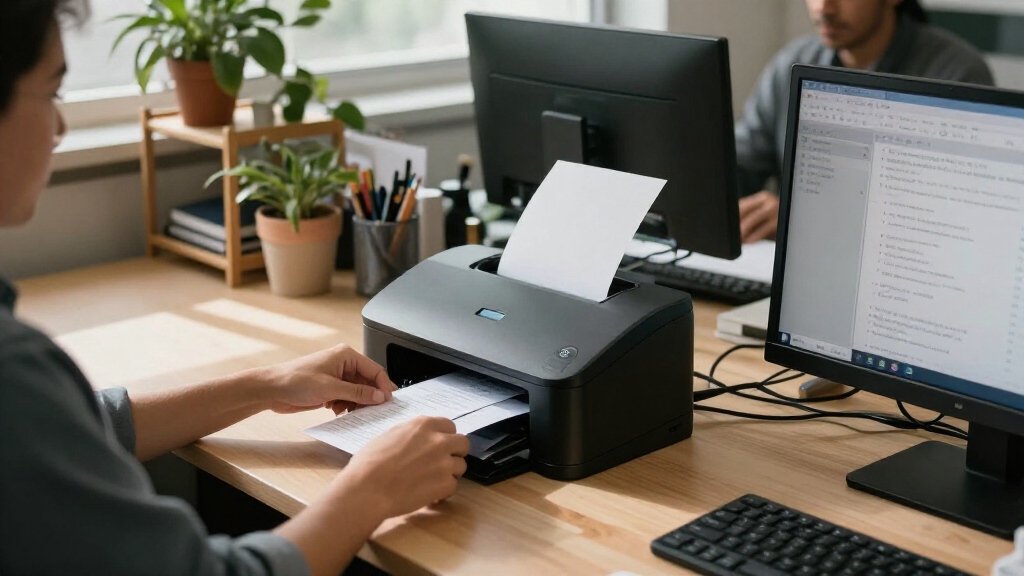
IdeaNavigator AI describes a proposed auto-filing scanner app that would turn phone photographs of office documents into searchable PDFs, suggest document types and filenames, and extract fields. The concept has not been shown to work in a completed trial; IdeaNavigator AI’s proposed one-week pilot with five small offices would test classification accuracy and willingness to pay.
IdeaNavigator AI has proposed a phone-based scanner app that would classify and name documents for small offices, addressing a common weakness of basic scanning tools: they can create digital images without making records easy to find. The concept remains a proposal, with IdeaNavigator AI suggesting a one-week pilot at five offices to test accuracy and whether users would pay for it.
According to IdeaNavigator AI’s proposal, the app is aimed at office managers at small nonprofits, clinics and law offices that handle paper intake forms, invoices and records. A user would photograph a stack of documents with a phone; the software would use optical character recognition to read text, suggest a document type and filename, and save searchable PDFs to a shared folder. The proposal gives an example filename combining an invoice label, date and vendor.
The idea addresses two separate tasks: digitizing paper and organizing the resulting files. IdeaNavigator AI says a generic scanner may capture pages but leave staff to name, sort and file them manually. The proposed product would automate some of that follow-up work, including extracting selected fields. The proposal establishes no product launch, working prototype, accuracy result or customer deployment.
IdeaNavigator AI proposes a monthly per-seat subscription with a page-volume limit and charges for additional usage. Its proposed evaluation would have five small offices scan a real backlog of 200 documents each during a one-week trial. The plan identifies correct auto-classification rates and users’ willingness to pay per seat as measures, but provides no results or detailed scoring method.
The Test Is Filing Accuracy
For a small office, a scan is useful only if staff can later locate the right record and trust that it has been filed correctly. If an app reliably recognizes common documents and gives them meaningful names, it could reduce repetitive sorting and make a paper backlog more searchable without requiring a dedicated IT team. That is the practical claim in IdeaNavigator AI’s proposal that a pilot would need to test, rather than simply whether a phone can photograph pages.
Errors could limit the benefit. A misclassified invoice, intake form or client record may take longer to find than a paper file, and incorrect extracted details could create extra review work. Offices would also need to know who can access the shared folder, how sensitive documents are handled, and whether staff must check each suggested filename before saving. IdeaNavigator AI’s proposal does not specify safeguards, review steps or integration with existing records systems.
The subscription plan also depends on whether the time saved justifies a recurring cost. A page cap and overage fees could fit organizations with predictable scanning needs, but IdeaNavigator AI provides no pricing, cost comparison or evidence of demand. For prospective users, the pilot’s value would hinge on both accuracy on real documents and a clear account of the work the tool leaves to staff.
document scanner app for small offices
As an affiliate, we earn on qualifying purchases.
As an affiliate, we earn on qualifying purchases.
From Scanning to Searchable Records
Small organizations often manage mixed paperwork with limited administrative and technical capacity. IdeaNavigator AI identifies offices holding invoices, intake forms and other records in filing cabinets as its proposed users. Turning these documents into images can preserve a digital copy, but it does not automatically create a consistent filing system or make the contents searchable.
The proposal points to optical character recognition (OCR) and layout-aware software as the means to read and classify photographed pages. It describes these tools as inexpensive and accurate enough to support the workflow, but supplies no benchmark, test results or comparison with existing scanning products. That assessment should be treated as IdeaNavigator AI’s rationale for trying the idea, not proof that the proposed app meets a particular accuracy standard.
IdeaNavigator AI’s suggested validation is deliberately limited: five offices, one week and a backlog of 200 documents per office. That would provide an initial practical test, but it would not by itself establish how the app performs across different document types, image quality, languages or longer-term filing habits. The proposal does not say which offices have agreed to participate.
searchable PDF scanner for business
As an affiliate, we earn on qualifying purchases.
As an affiliate, we earn on qualifying purchases.
Accuracy, Privacy and Demand
IdeaNavigator AI provides no pilot findings showing how often the app would classify documents correctly, extract fields accurately or produce useful filenames. Its plan does not define what counts as a correct classification, who would review the results, or how uncertain cases would be handled. It also does not report whether any offices have committed to testing the idea.
Data handling remains an open issue, particularly for clinics and law offices that may scan sensitive personal or client records. IdeaNavigator AI’s proposal does not specify whether processing would happen on the phone or through an external service, how files would be secured, how long images or extracted text would be retained, or who could access them. It also gives no product name, launch timetable, subscription price, page limit or evidence of customer willingness to pay.
auto filing document management software
As an affiliate, we earn on qualifying purchases.
As an affiliate, we earn on qualifying purchases.
A Pilot Would Set the Baseline
IdeaNavigator AI’s proposal names a one-week trial across five small offices as its next concrete step, with each office scanning 200 documents from an actual backlog. The test would record classification accuracy and ask whether participants would pay per seat. The proposal gives no start date or indication that recruitment has begun.
For results to help offices judge the concept, reporting would also need to clarify how documents are scored, how many require human correction, and whether performance differs by document type. Details on privacy, security, retention and shared-folder access would be needed before organizations handling confidential records could assess the workflow. Until such evidence is available, auto-filing remains an idea to validate, not a demonstrated replacement for manual filing.
Source: IdeaNavigator AI
office document classification app
As an affiliate, we earn on qualifying purchases.
As an affiliate, we earn on qualifying purchases.
Key Questions
What would the proposed auto-filing app do?
According to IdeaNavigator AI’s proposal, it would let a user photograph documents with a phone, then use OCR to read the pages, suggest a document type and filename, and save searchable PDFs to a shared folder. The concept has not been reported as a launched product.
Who is the app intended for?
IdeaNavigator AI’s proposal targets office managers at small nonprofits, clinics and law offices that handle paper records and may not have dedicated IT staff.
Has the app been tested?
IdeaNavigator AI provides no test results. Its proposed validation is a one-week pilot with five offices, each scanning a backlog of 200 documents.
How would the pilot measure success?
IdeaNavigator AI’s plan names correct auto-classification rates and willingness to pay per seat. It does not define the accuracy-scoring method or provide a target rate.
What remains unknown about privacy and pricing?
IdeaNavigator AI’s proposal does not specify how sensitive files would be processed, stored or protected. It also gives no subscription price, page-volume cap or overage rate.
Source: IdeaNavigator AI