📊 Full opportunity report: Virtual Reality In Manufacturing: Preparing Workers For Tomorrow's Challenges on IdeaNavigator AI — validation score, market gap, and execution plan.

Get the latest gadgets delivered free with Prime
- Fast, free delivery on millions of items
- Prime Video, Amazon Music and more included
- Member-only deals all year
TL;DR
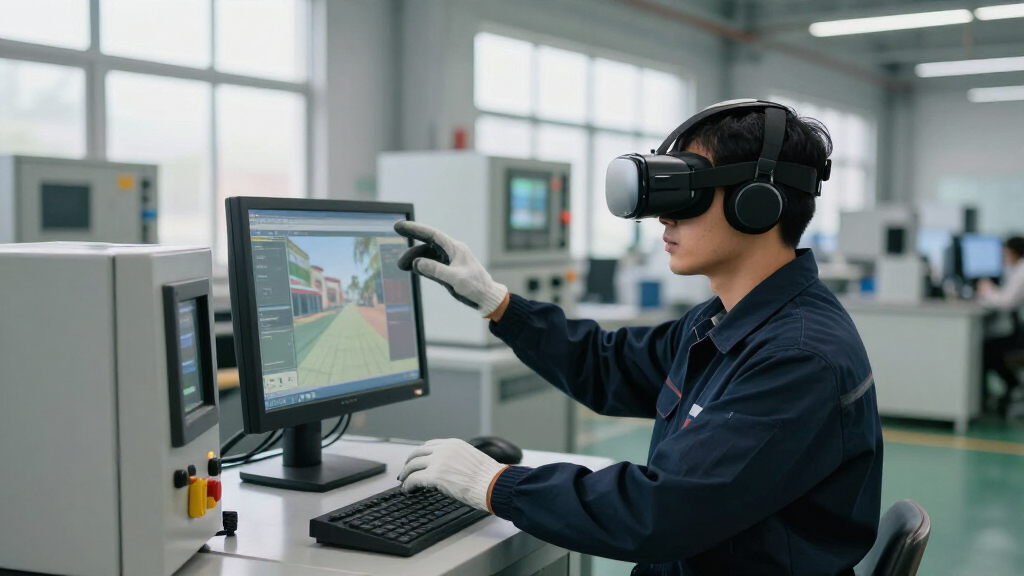
Manufacturers are testing virtual reality training modules to accelerate onboarding and improve safety. A pilot program using standalone headsets aims to measure effectiveness in reducing time-to-competency and hazard recognition. Success could reshape workforce development in manufacturing.
Manufacturing firms are beginning pilot programs using virtual reality (VR) modules to train workers on high-risk procedures, aiming to address the industry’s labor shortage and skills gap. This development is driven by the need for faster, safer onboarding, especially as hardware costs drop and immersive training markets grow. The initiative targets mid-to-large manufacturers responsible for safety and operational efficiency, with initial tests focusing on procedures like lockout/tagout and forklift safety.
The pilot programs involve deploying standalone VR headsets, such as Meta Quest devices, equipped with focused training modules on critical procedures. These modules are delivered via a cloud-based platform that tracks completion, scores hazard recognition, and assesses hazard-spotting accuracy for each worker. The goal is to compare VR training outcomes against traditional classroom methods, measuring metrics such as time-to-competency and hazard recognition scores.
According to industry sources, the pilot aims to demonstrate that VR can reduce onboarding time and improve safety preparedness. The initial test involves a small cohort of workers at one plant, with plans to expand based on results. The program also includes a dashboard for managers to monitor progress and identify areas for improvement. Hardware costs are minimized by using standalone headsets, which have become more affordable as the immersive training market expands at an estimated 20% CAGR.
Why VR Training Matters for Manufacturing Workforce Development
This initiative could significantly impact manufacturing by addressing the urgent labor shortage, which saw approximately 409,000 unfilled positions in the U.S. as of August 2025, and an anticipated need for 3.8 million new workers by 2033. Traditional training methods are slow, inconsistent, and pose safety risks on live equipment, often leading to higher costs and safety incidents. VR training offers a scalable, standardized, and safer alternative that can accelerate onboarding and improve hazard awareness.
Experts suggest that if successful, VR modules could become a core component of manufacturing workforce development, reducing training costs and increasing safety compliance. The technology’s ability to simulate dangerous scenarios without risk makes it especially valuable for high-risk procedures, potentially reducing incident rates and associated liabilities. The broader immersive enterprise training market, valued at over USD 14.5 billion in 2025, is expected to grow further, indicating strong commercial potential.
Meta Quest VR headset for training
As an affiliate, we earn on qualifying purchases.
As an affiliate, we earn on qualifying purchases.
Manufacturing Skills Gap and the Rise of VR Training
The manufacturing sector faces a critical skills gap, compounded by a significant labor shortage and an aging workforce. Traditional training methods—classroom instruction and on-the-floor demonstrations—are often slow, inconsistent, and costly, especially for dangerous or complex procedures. The need for rapid onboarding has become more urgent as the industry struggles to fill nearly 410,000 open positions in the U.S. alone, with projections indicating a requirement for millions of new workers in the coming decade.
Meanwhile, technological advances in XR (extended reality) hardware, such as standalone headsets from Meta and Pico, have lowered the barriers to deploying immersive training solutions. Cloud-native streaming and decreasing hardware costs enable scalable, remote, and standardized training modules. Industry analysts note that the immersive enterprise training market is expanding at approximately 20% annually, driven by demand for safety, compliance, and operational efficiency improvements.
Several pilot programs are underway, testing VR’s effectiveness for specific procedures like lockout/tagout and forklift safety. Early results are promising, with some manufacturers reporting faster onboarding and improved hazard recognition, though comprehensive data remains pending.
VR safety training modules for manufacturing
As an affiliate, we earn on qualifying purchases.
As an affiliate, we earn on qualifying purchases.
Uncertainties Surrounding VR Training Effectiveness
While early pilot results are promising, it is not yet clear how scalable or cost-effective VR training will be across diverse manufacturing environments. Data on long-term retention, impact on incident rates, and ROI are still being collected. Additionally, questions remain about worker acceptance, hardware durability, and integration with existing training programs.
Industry experts caution that further studies are needed to validate initial findings and determine best practices for deployment at scale. It is also uncertain how quickly manufacturers will adopt VR as a standard training tool, given the need for customization and potential logistical challenges.
standalone VR headsets for industrial use
As an affiliate, we earn on qualifying purchases.
As an affiliate, we earn on qualifying purchases.
Next Steps for VR Workforce Training Pilots
Manufacturers involved in the current pilots plan to complete their 60-90 day testing phases within the next few months. They will analyze data on time-to-competency, hazard recognition, and safety outcomes to assess VR’s effectiveness. Success metrics include statistically significant improvements over traditional methods and positive feedback from workers and supervisors.
If results are favorable, plans will be made to expand VR training to additional procedures and plants, potentially leading to broader industry adoption. Vendors will refine content libraries and dashboards based on pilot feedback, and further studies may explore long-term impacts on safety and productivity.
Industry analysts expect that, over the next year, more manufacturers will pilot or adopt VR modules, especially as hardware costs continue to fall and cloud-based solutions become more robust. Regulatory bodies and safety organizations may also begin to endorse VR training as part of compliance frameworks.
virtual reality training system for manufacturing
As an affiliate, we earn on qualifying purchases.
As an affiliate, we earn on qualifying purchases.
Key Questions
How does VR training compare to traditional classroom methods?
Early pilot results indicate that VR training can reduce onboarding time and improve hazard recognition accuracy, potentially outperforming traditional classroom methods in speed and safety awareness.
What procedures are being tested with VR modules?
Initial procedures include high-risk tasks such as lockout/tagout, forklift safety, and machine guarding, with plans to expand to other operational procedures based on pilot outcomes.
What are the main benefits of using standalone VR headsets?
Standalone headsets like Meta Quest significantly lower hardware costs and logistical complexity, enabling scalable deployment without requiring extensive infrastructure.
When will VR training be widely adopted in manufacturing?
It is uncertain; widespread adoption depends on pilot success, cost-effectiveness, worker acceptance, and integration with existing training programs, likely over the next 1-2 years.
Are there any risks or downsides to VR training?
Potential challenges include hardware durability, user acceptance, content customization, and ensuring long-term retention of skills, which are still being evaluated in ongoing pilots.
Source: IdeaNavigator AI
Fall Picks
fall essentials
As an affiliate, we earn on qualifying purchases.