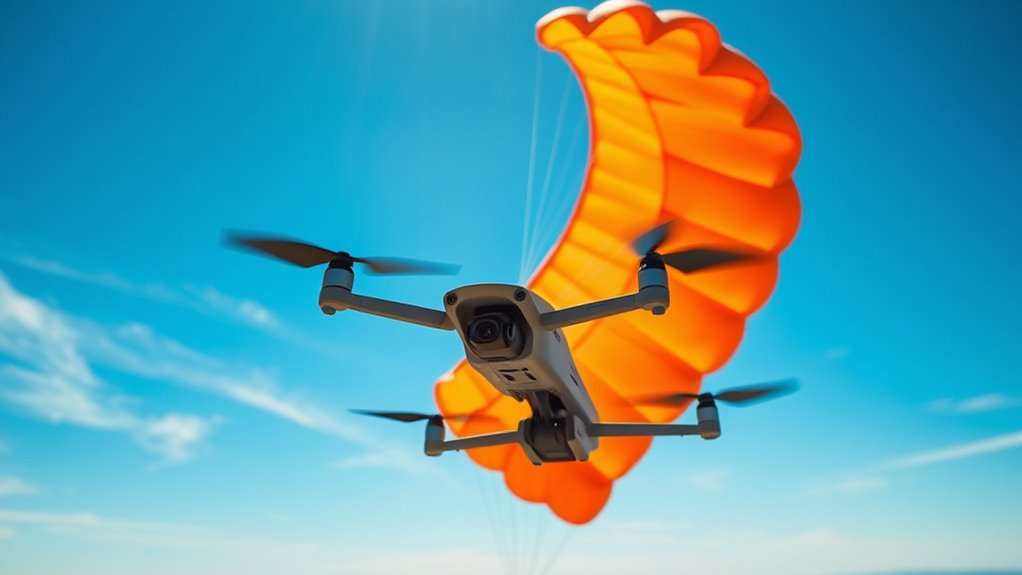

Drone parachutes are safety devices that deploy automatically or manually to slow your drone’s fall if it malfunctions or encounters obstacles. They use onboard sensors to detect sudden drops or erratic movement and quickly release a canopy that reduces impact damage, property harm, and potential injuries. Properly integrated, they can often save your drone from crashing. If you want to learn more about how these systems work and their benefits, keep exploring the details below.
Key Takeaways
- Drone parachutes deploy a canopy during malfunctions or obstacles to slow descent and prevent crashes.
- They activate automatically via onboard sensors or manually, ensuring quick response during emergencies.
- Proper installation and regular testing are vital to ensure parachutes function correctly when needed.
- Using parachutes reduces property damage, repairs, and enhances safety for operators and bystanders.
- Incorporating parachutes helps meet safety regulations and demonstrates responsible drone operation.
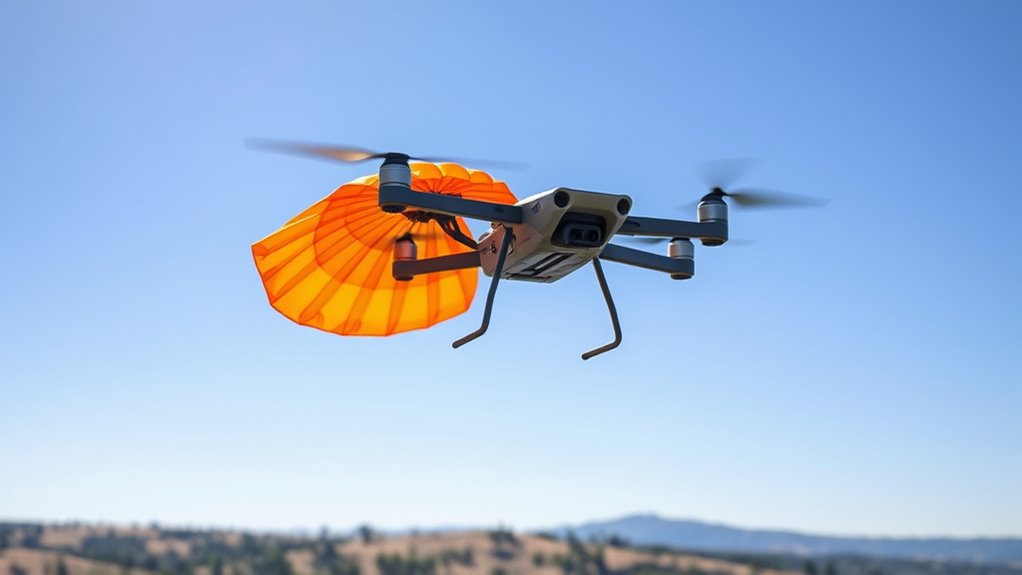
Drone parachutes are emerging as a vital safety feature to prevent crashes and damage, especially as drones become more prevalent in commercial and recreational use. As you consider equipping your drone with a parachute, it’s important to understand how these systems work and the regulatory considerations surrounding their use. Drone safety standards are evolving to include safety mechanisms like parachutes, which can dramatically reduce the risk of injury, property damage, and drone loss during an emergency. Many authorities now recognize the value of parachutes in mitigating risk, prompting manufacturers and regulators to develop guidelines that promote their integration.
Drone parachutes are becoming essential safety features that reduce risks during emergencies.
When your drone experiences a sudden malfunction, loss of control, or unexpected obstacle, the parachute system activates, deploying a canopy that slows the descent. This rapid response can mean the difference between a minor repair and a total loss. Most drone parachutes are designed to deploy automatically via onboard sensors that detect abnormal movements or a sudden drop in altitude. Some advanced systems allow manual deployment, giving you an added layer of control during critical moments. The key is ensuring the parachute deploys quickly and reliably to maximize protection.
Regulatory considerations play a significant role in whether you can legally fly a drone equipped with a parachute. Many jurisdictions are updating their drone safety standards to encourage or require safety features that minimize risks to people and property. In some cases, using a parachute can even help you comply with local regulations, especially in crowded or sensitive areas. However, it’s essential to stay informed about specific rules in your region. For example, some authorities might require certification or approval before installing certain safety systems or may have restrictions on automatic deployment mechanisms. Additionally, integrating drone safety standards into your setup can help ensure compliance and optimal performance.
In addition to legal requirements, you should also consider the manufacturer’s guidelines and industry best practices. Reputable drone safety standards suggest proper installation, regular maintenance, and testing of parachute systems to ensure they function correctly when needed. Incorporating a parachute into your drone setup not only enhances safety but also demonstrates responsible operation, which can be advantageous if you’re flying commercially or in regulated environments.
Frequently Asked Questions
Are Drone Parachutes Effective in High Wind Conditions?
Yes, drone parachutes can be effective in high wind conditions if they have strong wind resistance and quality parachute material. You should choose a parachute designed for durability and wind resistance to guarantee it deploys properly during gusts. Keep in mind, though, that extremely strong winds might still impact performance. Proper installation and choosing the right parachute material are key to maintaining safety and protecting your drone.
How Quickly Can a Drone Parachute Deploy During an Emergency?
Like a lightning strike, parachute deployment speed is lightning-fast, usually within milliseconds to a second during an emergency. This rapid response minimizes your drone’s damage, ensuring it can deploy almost instantly when needed. The emergency response time is vital; the quicker your drone’s parachute activates, the better it can protect your equipment. Modern systems are designed for swift deployment, giving you peace of mind in unexpected situations.
Do Drone Parachutes Add Significant Weight to the Drone?
You’ll find that drone parachutes do add some weight, but it’s usually minimal and carefully designed to keep the weight impact low. When considering payload considerations, you might notice a slight increase in overall weight, but it generally doesn’t compromise flight performance considerably. This small addition can be a worthwhile trade-off for added safety, especially if you often fly in risky environments or handle valuable equipment.
Are Drone Parachutes Reusable After Deployment?
Yes, drone parachutes are reusable after deployment, but it depends on the parachute material and deployment mechanism. Durable parachute fabrics like nylon or Kevlar withstand multiple uses, while the deployment mechanism guarantees safe, reliable recovery. Think of it like a trusty safety net that you can deploy again and again, saving your drone from crashes. Proper maintenance and careful handling help extend the parachute’s lifespan, making it a cost-effective safety feature.
What Maintenance Is Required for Drone Parachutes?
You should regularly perform parachute inspection to make certain it’s in good condition, checking for tears or damage. Conduct deployment testing to verify that it deploys correctly when needed. After each use, clean the parachute gently and store it in a dry, cool place. Proper maintenance helps maintain its functionality and longevity, ensuring your drone is protected and ready for any emergency deployment.
Conclusion
So, if you’re worried about losing your drone, a parachute might be your best bet. Studies show that drones equipped with parachutes can reduce crash damage by up to 90%. That means your pricey gear stays safer, and you save money in the long run. With technology advancing quickly, it’s worth considering this simple upgrade. Protect your investment and keep flying with confidence—parachutes could be the difference between a crash and a safe landing.