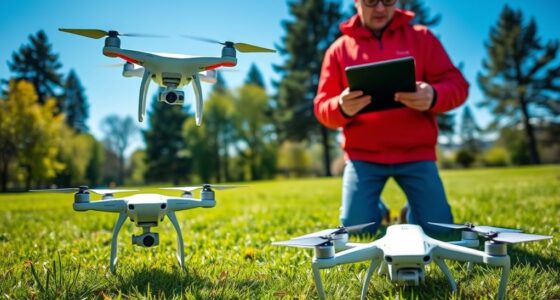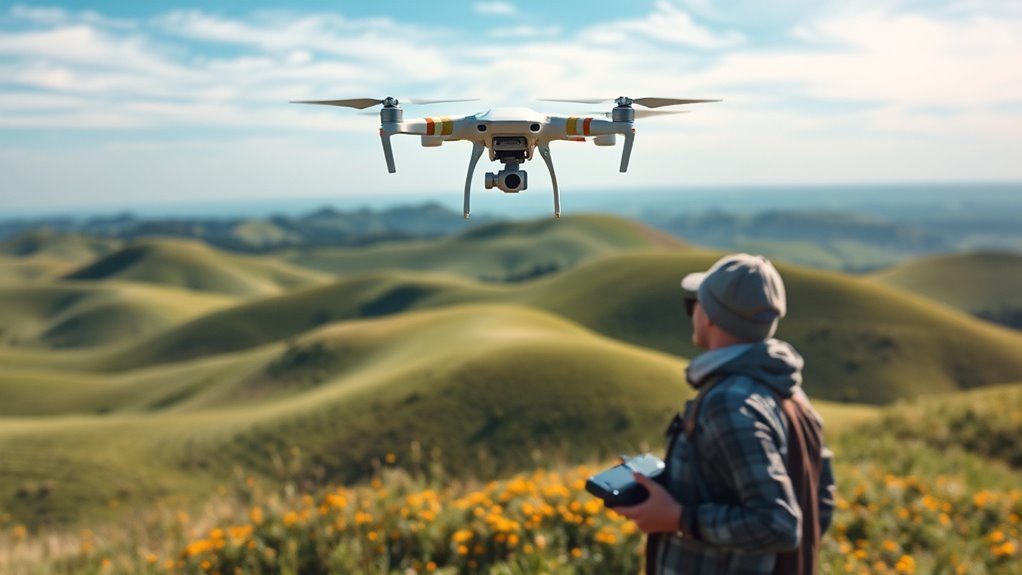

If you’re flying a drone for fun, you don’t need a license but must follow safety guidelines and register your drone if it weighs over 0.55 pounds. However, if you’re using your drone commercially or for profit, you need to obtain a Remote Pilot Certificate under Part 107, which involves passing an FAA test. To guarantee you’re compliant and understand all rules, keep learning about the differences and requirements.
Key Takeaways
- Recreational drone flyers do not need a license but must follow safety guidelines and register drones over 0.55 pounds.
- Commercial drone operators require a FAA Remote Pilot Certificate under Part 107.
- Part 107 license involves passing an FAA aeronautical knowledge test and TSA background check.
- Recreational flying is generally less regulated but still requires adherence to safety and local rules.
- Certification and licensing are essential only for commercial use, not for hobby or recreational flying.
Understanding Recreational Drone Regulations
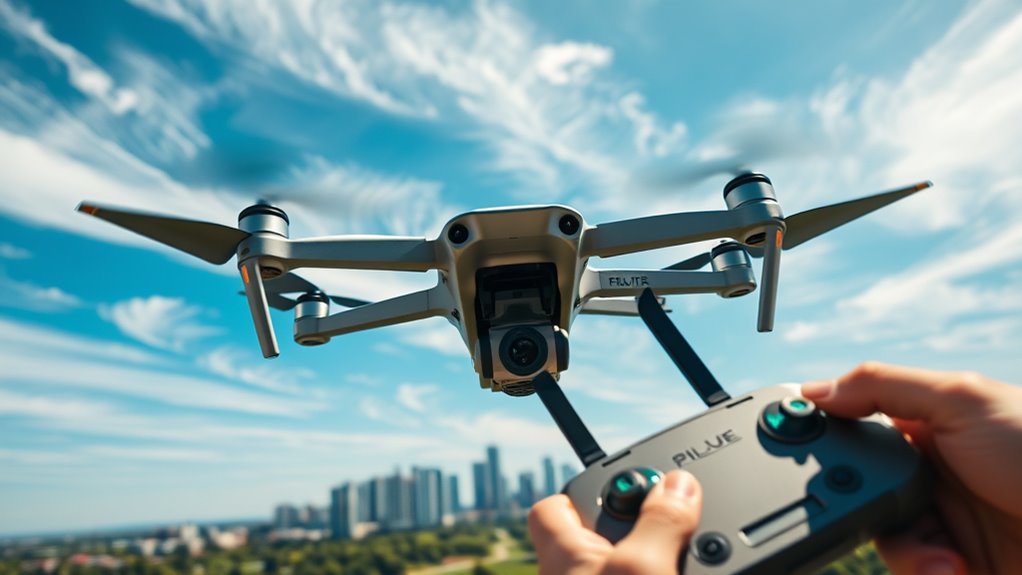
To fly a recreational drone legally, you need to understand the regulations set by authorities like the FAA. You’re responsible for your drone’s safety and compliance, which includes having drone insurance if required and practicing proper flight planning. Before each flight, check local rules and weather conditions to avoid fines or penalties. You should also keep your drone within visual line-of-sight and avoid flying over crowds or restricted areas. Proper flight planning helps prevent accidents and ensures you’re operating safely. While recreational flying has fewer rules than commercial use, understanding these basic regulations helps you stay legal and enjoy your hobby responsibly. Always stay updated on regulations to avoid unnecessary complications while flying your drone. Additionally, being aware of Feature Buddies and other safety resources can improve your awareness of best practices in drone operation, especially regarding safety regulations that are essential for compliant recreational flying. Staying informed through official sources can help you navigate evolving rules and maintain safe flying habits, including understanding the importance of compliance standards in drone operations. For example, understanding the role of airspace classifications can help you avoid restricted areas and fly more confidently.
What Is Part 107 and Who Needs It?
If you plan to fly a drone commercially, you’ll need to understand Part 107. It outlines the certification requirements you must meet and the operating restrictions you need to follow. Knowing these rules helps you stay legal and safe while using your drone for work. Additionally, understanding high standards for image quality can be important if you plan to use a drone for professional filming or surveying purposes. This knowledge is especially relevant if your work involves essential oils for professional use, as precision and compliance are crucial in such industries. Furthermore, familiarizing yourself with relevant regulations ensures you adhere to all legal requirements and operate your drone responsibly. Being aware of piercings and aftercare can also be beneficial if you’re involved in industries that require personal safety precautions and hygiene standards.
Certification Requirements
Understanding the certification requirements for drone pilots is essential before taking to the skies. If you plan to fly commercially under Part 107, you must obtain a Remote Pilot Certificate. This involves passing an FAA knowledge test covering rules, weather considerations, and safety procedures. Keep in mind:
- You need this certification if you’re using your drone for work or profit.
- You must be at least 16 years old.
- You should understand weather considerations to avoid accidents.
- Having drone insurance can be a wise safety net, especially when flying commercially.
- Using proper safety practices helps prevent accidents and ensures compliance with regulations.
If you’re flying recreationally, a certification isn’t required, but understanding these rules helps ensure safe, legal operations. Always stay informed on regulations to protect yourself and others while flying.
Operating Restrictions
Part 107 is the set of rules that governs commercial drone operations in the United States, and anyone flying a drone for work or profit must follow these restrictions. These operating rules include flying below 400 feet, maintaining visual line of sight, and avoiding flying over people or moving vehicles. You must also consider privacy concerns, making sure you don’t intrude on others’ privacy while capturing footage. Insurance requirements can also come into play, especially if your drone operation involves higher risks or commercial clients. These restrictions help keep your flights safe and legal, preventing accidents and legal issues. Following Part 107 ensures you operate responsibly and within the law, protecting both your interests and the privacy of others.
Key Differences Between Hobby and Commercial Flying
When flying a drone, your certification requirements and flight restrictions depend on whether you’re doing it as a hobby or for work. Hobby flying typically has fewer rules, while commercial use necessitates specific licenses and adherence to stricter guidelines. Understanding these key differences helps make certain you stay compliant and safe during your flights. Additionally, Free Floating principles can influence how you plan and execute drone operations in various environments.
Certification Requirements Vary
Certification requirements for flying a drone differ considerably depending on whether you’re a hobbyist or a commercial operator. If you’re flying recreationally, no formal certification is needed, but you must follow safety guidelines like maintaining visual line of sight. For commercial use under Part 107, you need to pass an aeronautical knowledge test, obtain a remote pilot certificate, and carry drone insurance. Key points include:
- Commercial pilots must have a valid Remote Pilot Certificate.
- They are required to keep their drone within visual line of sight at all times.
- Insurance is often recommended or required for commercial operations.
- Hobbyists face fewer regulations but still need to understand safety and privacy rules.
- Understanding Aviation Regulations helps ensure compliance and safe flying.
Flight Purpose Restrictions
Are you clear on how your drone’s flight purpose impacts the rules you must follow? If you’re flying recreationally, you generally stick to simpler regulations, but commercial flights under Part 107 face stricter airspace restrictions and operational limits. For instance, commercial operators often need special waivers for flying in controlled airspace and must follow specific safety protocols. Your flight purpose also affects your drone insurance requirements—recreational flyers may not need it, but commercial operators usually must carry liability coverage to protect against potential accidents. Knowing whether you’re flying for fun or business helps you avoid violations and ensures you’re compliant with FAA rules. Always check the specific regulations related to your drone’s purpose before taking off.
How to Obtain a Remote Pilot Certificate
Getting a Remote Pilot Certificate is a crucial step if you want to legally operate a drone for commercial purposes or beyond recreational flying. To obtain it, you must pass the FAA Part 107 exam, which covers key topics like aerial photography regulations and drone insurance requirements. Here’s what you need to do:
- Study the FAA’s Remote Pilot Study Guide thoroughly.
- Schedule and pass the FAA aeronautical knowledge test at an authorized testing center.
- Complete TSA security background checks.
- Submit an application through the FAA’s IACRA system and receive your certificate.
Requirements for Recreational Drone Users
Once you’ve secured your Remote Pilot Certificate for commercial use, it’s important to recognize that recreational drone flying comes with its own set of rules. As a recreational pilot, you must follow safety guidelines, understand airspace classifications, and avoid restricted areas. While you don’t need drone insurance by law, obtaining it can protect you from liabilities. Additionally, staying informed about airspace rules helps prevent violations and guarantees safe flying. Being aware of vetted guidelines for different airspace classes can further enhance your safety practices. Familiarity with airspace classifications helps ensure you operate within legal boundaries and maintain safe distances from other aircraft. Moreover, understanding the lifecycle and performance metrics of your drone can contribute to safer operation and maintenance. Regularly reviewing performance metrics can also help identify potential issues before they lead to accidents.
Responsibilities and Safety Guidelines for All Drone Pilots

Regardless of whether you’re flying for fun or work, you have a responsibility to prioritize safety and follow established guidelines. First, always check your local regulations and maintain visual line of sight. Second, consider getting drone insurance to cover potential damages or liabilities. Third, respect privacy concerns by avoiding flying over private property or capturing images without permission. Fourth, stay aware of your surroundings, especially near people, airports, or restricted areas. Additionally, understanding Gold IRA Markets can be beneficial if you’re considering investing in secure assets for your future. By following these guidelines, you protect yourself and others. Remember, safety isn’t just about avoiding accidents—it’s also about respecting others’ privacy and legal boundaries. Being responsible helps foster a positive drone community and ensures continued access to flying opportunities.
When and How to Register Your Drone
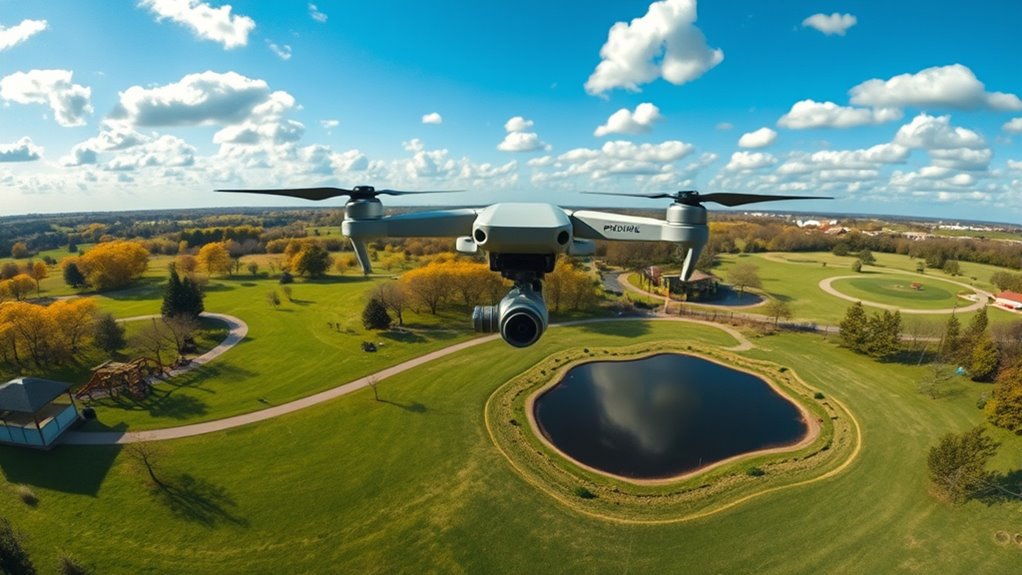
You need to register your drone if it weighs more than 0.55 pounds (250 grams) and less than 55 pounds (25 kilograms), including payloads like cameras or accessories. The drone registration process is straightforward and involves submitting your details to the FAA through their online system. During registration, you’ll receive a unique registration number that must be marked on your drone. This step is essential for compliance with federal regulations, especially if you’re flying under Part 107 or recreational rules. The licensing process for drone registration is quick and guarantees your drone is legally registered before flying. Remember, registration is valid for three years, so stay updated and renew as needed to avoid penalties. Additionally, understanding the different regulatory requirements for commercial and recreational drone use can help ensure you stay compliant with all applicable laws.
Penalties for Non-Compliance With Federal Regulations

Failing to comply with federal regulations for drone operation can lead to serious consequences. Enforcement penalties, fines, and citations are common punishments for violations. If you’re caught ignoring rules, you risk:
- Receiving substantial fines that can reach thousands of dollars.
- Facing citations that could lead to legal action.
- Having your drone confiscated or grounded.
- Potential criminal charges for severe violations.
- Understanding safety protocols is essential to prevent violations and ensure responsible operation. Ignoring airspace rules can significantly increase the likelihood of enforcement actions. Additionally, Rhythm Failure emphasizes the importance of adhering to regulations to maintain safe and enjoyable drone experiences. Staying informed about regulatory updates can help you avoid inadvertent violations and stay compliant with current laws. Maintaining awareness of airspace restrictions is crucial for avoiding accidental violations during flight. These enforcement penalties serve as a warning to stay compliant. Non-compliance undermines safety and airspace security, risking harm or interference. Always follow regulations to avoid costly fines and legal issues. Remember, federal authorities actively monitor drone activities, and penalties for violations are strict. Staying informed about rules helps you avoid penalties and ensures responsible drone operation.
Tips for Staying Legally Compliant While Flying
To stay legally compliant while flying your drone, it’s essential to familiarize yourself with current regulations and adhere to them consistently. Keep up with updates in drone technology, which can impact rules around altitude, no-fly zones, and registration. Always check for temporary flight restrictions before your flight. Investing in flight insurance can also provide financial protection if accidents occur. Additionally, maintain visual line of sight and avoid flying over people or private property without permission. Respect privacy laws and be mindful of local restrictions. Being proactive in understanding the rules and staying informed helps prevent violations. By doing so, you ensure safe, responsible drone flying and avoid penalties, making your flying experience enjoyable and legally compliant.
Frequently Asked Questions
Can I Fly a Drone Commercially Without a Part 107 License?
No, you can’t fly a drone commercially without a Part 107 license. If you’re operating for business purposes, you must register your drone with the FAA and follow flight restrictions, like avoiding controlled airspace and maintaining visual line-of-sight. Without the license, you risk fines and legal issues. So, obtaining your Part 107 guarantees you’re compliant and can legally perform commercial drone flights.
Are There State or Local Regulations Affecting Drone Flying?
Did you know over 80% of drone accidents involve local restrictions? You need to check state or local regulations before flying. Some communities have strict local restrictions or community ordinances that limit drone use, especially near airports, schools, or private properties. Always research local rules to avoid fines or penalties. Staying informed helps you fly responsibly and enjoy your drone adventures without legal issues.
How Do Weather Conditions Impact Drone Flight Safety?
Weather conditions greatly impact your drone flight safety. Weather hazards like rain, snow, or fog can reduce visibility and damage your drone’s electronics. Wind effects are especially dangerous; strong gusts can cause loss of control or crashes. Always check the weather forecast before flying, avoid flying in high winds, and be prepared to land immediately if conditions worsen to keep yourself and your drone safe.
What Are the Privacy Considerations When Operating a Drone?
When operating a drone, you need to be mindful of privacy concerns and data collection. You should avoid capturing images or videos of private property without permission to respect others’ privacy. Be transparent about what data you collect and how you use it, especially if sharing or storing footage. Staying aware of privacy laws helps prevent legal issues and maintains trust with people around you during your drone flights.
Is Insurance Required for Recreational Drone Use?
You don’t legally need drone insurance for recreational flying, but it’s highly recommended. Having drone insurance with liability coverage protects you if your drone causes damage or injury. It helps cover costs that could otherwise be expensive, giving you peace of mind while enjoying your hobby. While not mandatory, investing in drone insurance ensures you’re prepared for any accidents, making your recreational flying safer and more responsible.
Conclusion
Charting drone laws is like charting your own course through a vast sky—clear rules keep you soaring safely and freely. Whether you’re flying for fun or work, understanding the regulations is your compass, guiding you to avoid storms of penalties. Remember, each flight is a chance to respect the boundaries that protect everyone below. With knowledge and responsibility as your wings, you’ll always stay on the right path, reaching new heights safely and legally.