TL;DR

Get the latest gadgets delivered free with Prime
- Fast, free delivery on millions of items
- Prime Video, Amazon Music and more included
- Member-only deals all year
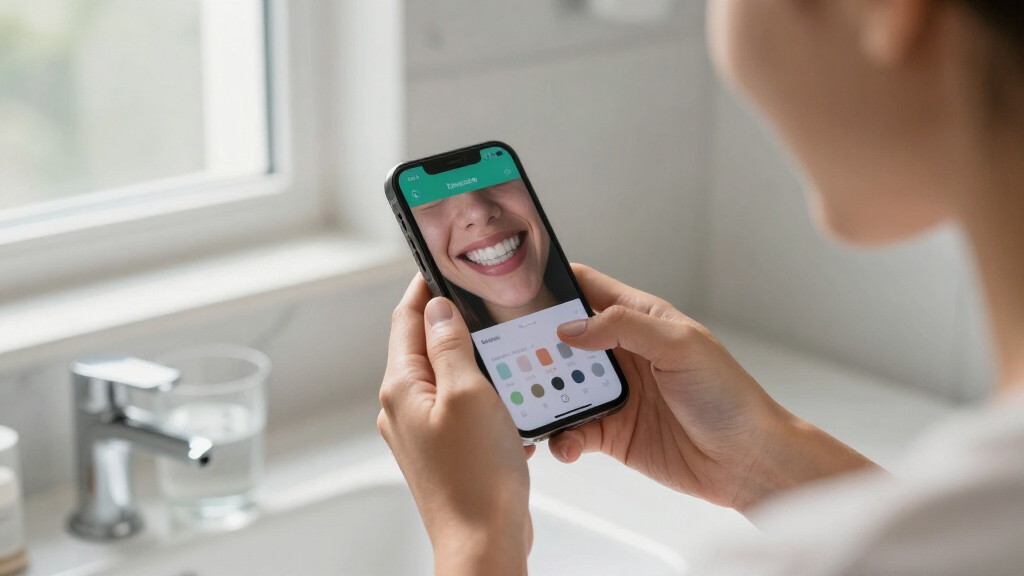
Researchers are developing a phone-based system that uses guided lighting and camera capture to measure tooth shade objectively. This innovation could improve home whitening effectiveness and reduce product cycling. Validation against dentist standards is underway.
Researchers are testing a phone-based shade measurement system designed to provide objective, calibrated assessments of tooth color for home whitening users. This development could address longstanding issues in consumer oral care, where users rely on subjective visual assessments and often cycle through multiple products without clear evidence of effectiveness.
The concept involves a guided-lighting photo flow within a mobile app that captures images of the user’s teeth using a smartphone camera. The app then compares the captured shade against established dental shade guides, such as the VITA scale, and plots progress over time. This allows users to see measurable improvements and identify which whitening products are most effective.
According to IdeaNavigator AI, the system aims to serve users who regularly switch between whitening strips, trays, and LED kits, providing an objective metric to guide their choices. The initial prototype is being tested with around fifty users, with plans to benchmark app scores against professional dentist readings to validate accuracy. The goal is to develop a subscription model combined with affiliate revenue from recommended products that demonstrate actual shade improvement.
Implications for Consumer Teeth Whitening Effectiveness
This innovation has the potential to significantly improve the home whitening experience by providing an objective, easy-to-use measurement tool. It could reduce consumer frustration caused by the current guessing game of visual shade assessment and help users identify which products truly deliver results. If validated, this technology could also create a new layer of accountability in the market, encouraging brands to produce more effective whitening solutions.
As an affiliate, we earn on qualifying purchases.
Background of Home Whitening Challenges and Measurement Gaps
Home teeth whitening has grown into a large consumer market, with products ranging from strips to LED devices. Despite widespread use, users lack reliable tools to objectively measure their progress. Currently, most rely on visual assessment in the bathroom mirror, which is subjective and often inaccurate. This leads to frequent product cycling, with consumers spending hundreds of dollars on ineffective treatments.
Professional dental practices use calibrated shade guides, such as the VITA scale, to assess tooth color accurately. However, replicating this calibration at home has been a challenge due to the variability of lighting conditions and camera quality. Recent advances in smartphone camera technology and guided lighting now make it feasible to approximate professional shade measurements, opening the door for consumer-grade solutions.
“Using guided lighting and calibrated imaging, we can now approximate dentist-level shade assessments with a smartphone.”
— an anonymous researcher
As an affiliate, we earn on qualifying purchases.
Uncertainties in Validation and User Adoption
It is not yet clear how accurately the app will correlate with dentist-grade shade readings across diverse user populations and lighting environments. The validation process involving fifty users is ongoing, and results are pending. Additionally, user acceptance of the technology and willingness to incorporate it into routine whitening is still uncertain, as is the potential for regulatory or clinical validation hurdles.
home teeth whitening kit with shade measurement
As an affiliate, we earn on qualifying purchases.
As an affiliate, we earn on qualifying purchases.
Next Steps in Development and Validation
The ongoing testing phase will compare app-generated shade scores with professional VITA readings to establish accuracy. Developers plan to refine the guided-lighting process for consistency and ease of use. Following validation, a broader user trial and market testing are expected, alongside development of subscription and affiliate revenue models. The ultimate goal is to launch a consumer-ready app that reliably tracks whitening progress and guides product choices.
As an affiliate, we earn on qualifying purchases.
Key Questions
How does the phone-based shade measurement work?
The system uses guided lighting within the app to illuminate teeth uniformly, then captures images with a smartphone camera. The app compares the shade against a calibrated dental scale and tracks changes over time.
Is this method as accurate as professional dental assessments?
Validation is ongoing, with initial tests comparing app scores to dentist readings. The goal is to achieve a strong correlation, but final accuracy results are not yet available.
Will this technology help me choose better whitening products?
Yes, if validated, the app could identify which products actually improve your tooth shade, reducing unnecessary cycling through ineffective options.
When will this technology be available to consumers?
Development is still in progress, with broader testing and validation expected in the coming months. A commercial release could follow after successful validation.
Are there any privacy concerns with using my phone camera for this?
Privacy considerations depend on app design; ideally, images are processed locally without uploading to servers. Developers are expected to prioritize user data security.
Source: IdeaNavigator AI
Halloween Picks
halloween
As an affiliate, we earn on qualifying purchases.