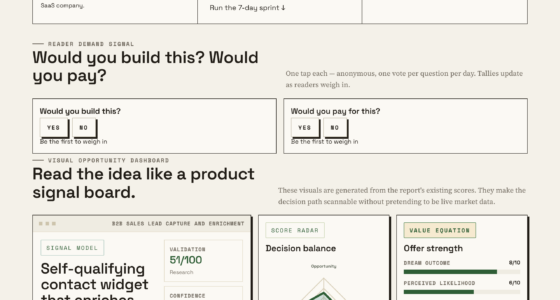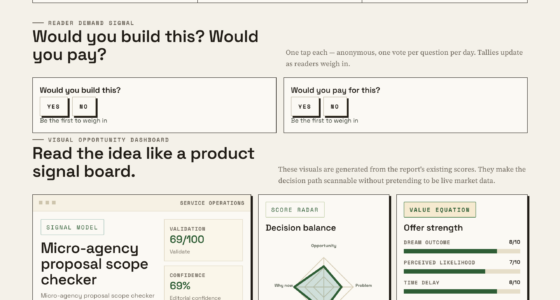
📊 Full opportunity report: A More Data-Led Approach To DTC Influencer Campaigns on IdeaNavigator AI — validation score, market gap, and execution plan.

Get the latest gadgets delivered free with Prime
- Fast, free delivery on millions of items
- Prime Video, Amazon Music and more included
- Member-only deals all year
TL;DR
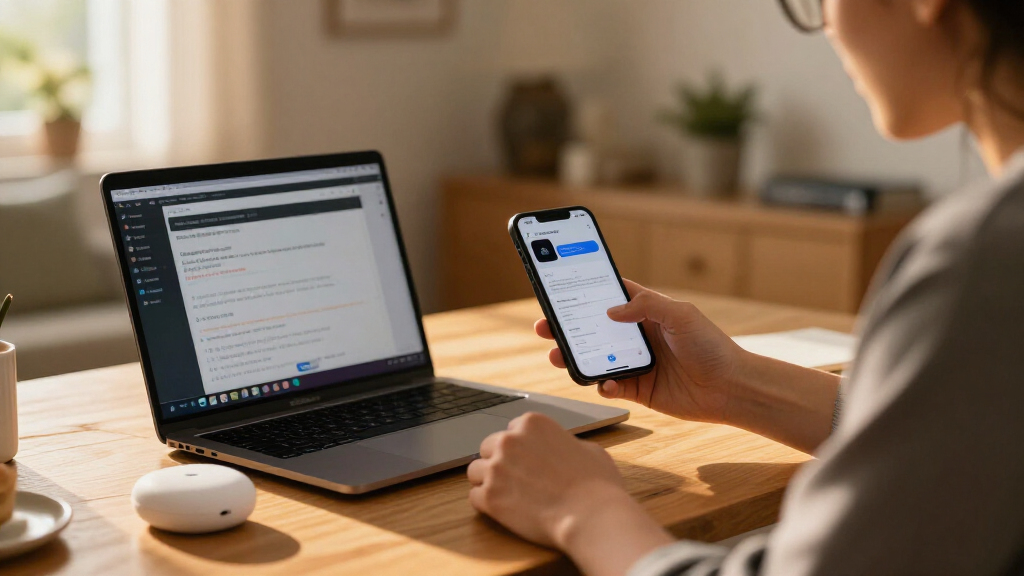
A proposed analytics workflow would help direct-to-consumer brands rank influencers for product launches using audience fit, engagement authenticity and available category sales history. The concept calls for testing predictions across 10 launches against attributed sales; no results or validated product are reported.
IdeaNavigator AI has outlined a proposed data-led workflow for direct-to-consumer brands selecting influencers for product launches. The tool would rank candidates using audience-fit signals, engagement authenticity and category conversion history where available, then test those rankings against sales attributed to each influencer across 10 launches.
The concept targets one defined buyer: a DTC brand preparing an influencer roster for a product launch. The problem identified is that brands may choose partners based on follower counts and subjective impressions, then learn only after a campaign which influencers were associated with sales. The proposal argues that this leaves brands paying for repeated trial and error without building consistent pricing or selection practices.
The suggested minimum product would take in information about a product and its target customer, assess candidate influencers and produce a ranked roster with suggested offer structures. Its proposed signals include audience fit, whether engagement appears authentic, and category conversion history when such information is available. The concept does not specify a scoring formula or explain how it would distinguish an influencer’s effect from other influences on a purchase.
For measurement, the proposal points to affiliate links, post-purchase surveys and Spark Ads data as possible sources of sales attribution. It says these signals are available across existing tools but are not aggregated in one place. The proposed business model is a subscription priced according to the volume of influencer rosters scored. No operating product, customer adoption, pricing figures or campaign results are reported.
Turning Launch Results Into Selection Data
If tested successfully, a scoring workflow could give marketing teams a more consistent basis for choosing launch partners and negotiating offers. A ranked roster might help teams compare candidates against the product and intended customer, rather than relying mainly on follower totals or informal judgments. The practical value would depend on whether its scores predict results better than a brand’s current selection process.
The proposal’s emphasis on comparing predictions with sales attributed to individual influencers addresses a recurring measurement challenge: campaign data can be spread across affiliate systems, surveys and advertising platforms. Bringing those signals together could make results easier to review across launches. But attributed sales are not necessarily proof of causation; customers may encounter multiple ads or other marketing before buying, and tracking methods can miss purchases.
The suggested test is also relevant to the proposed subscription model. Brands would need evidence that the rankings improve decisions enough to justify paying for scored rosters. Ten launches could offer an initial check, but the concept does not specify the range of products, campaign sizes or sales outcomes needed to establish that the approach works broadly.
influencer marketing analytics tools
As an affiliate, we earn on qualifying purchases.
As an affiliate, we earn on qualifying purchases.
The Proposed Ten-Launch Validation
The idea is framed as a narrow first-win workflow, not a general-purpose influencer platform: it is meant for one buyer planning one launch roster. That focus could make an initial test more manageable, since the product would be judged on a specific task—ranking potential partners before a campaign—rather than on a broad promise to improve all influencer marketing.
The proposed validation would score rosters for 10 launches before results are known, preserve those predictions, and compare them with realized per-influencer attributed sales. Sealing the predictions matters because it prevents rankings from being rewritten after outcomes are visible. The test would need clear definitions of a successful prediction and a consistent attribution method to make the comparison meaningful.
The concept identifies affiliate links, post-purchase surveys and Spark Ads data as inputs, but gives no details about integrations, data access or how conflicting measurements would be handled. Its premise is that useful signals already exist but remain fragmented across tools; whether those records can be combined reliably is a product question, not an established result.
influencer engagement authenticity checker
As an affiliate, we earn on qualifying purchases.
As an affiliate, we earn on qualifying purchases.
Key Questions Before the Test
No validation findings are provided. The proposal describes a test to run, not results from completed campaigns, and it does not report that a scoring tool is available to brands. It is therefore unclear whether the proposed signals can identify high-performing launch partners in advance or improve on simpler selection methods.
Important design details are also missing: how audience fit and engagement authenticity would be measured, what counts as category conversion history, and how the system would account for differences in product price, campaign budget, creator compensation and audience overlap. The proposal does not explain how it would handle incomplete or unavailable data, or how brands would verify that attributed purchases were credited consistently.
The suggested sample of 10 launches is a proposed validation scope, not evidence of a reliable result. The concept does not specify the brands or product categories involved, the duration of the test, a comparison group, or the performance threshold that would count as success. No subscription prices or paying customers are identified.
As an affiliate, we earn on qualifying purchases.
Measure Predictions Against Sales
The next step in the proposal is to score influencer rosters for 10 launches before campaigns begin, preserve the rankings, and compare them with realized sales attributed to each influencer. For the test to be interpretable, its operators would need to define the scoring inputs, attribution rules and success criteria in advance, then report where the rankings matched or diverged from results.
Further reporting would be needed to establish whether the workflow has been built, whether DTC brands are participating, and how the suggested subscription would be priced. Until those details and test results are available, the idea remains a product proposal rather than a demonstrated change in how brands run influencer campaigns.
sales attribution tools for influencer marketing
As an affiliate, we earn on qualifying purchases.
As an affiliate, we earn on qualifying purchases.
Key Questions
What is the proposed influencer-scoring tool?
It is a proposed workflow that would take product and target-customer information, assess candidate influencers using available signals and return a ranked launch roster with suggested offer structures.
What information would it use to rank influencers?
The concept names audience fit, engagement authenticity and category conversion history where available. It does not provide a detailed scoring method or specify how each signal would be verified.
Has the approach been proven to increase sales?
No results are reported. The proposed next step is to score rosters for 10 launches in advance and compare those predictions with attributed sales afterward.
How might the proposed product make money?
The concept suggests a subscription tiered by the number of rosters scored. No prices, customers or commercial performance are provided.
Source: IdeaNavigator AI
Halloween Picks
halloween
As an affiliate, we earn on qualifying purchases.