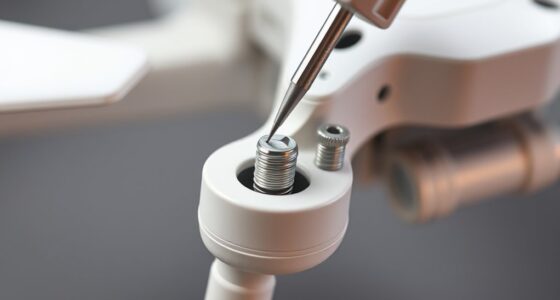
Your drone motor typically lasts between 200 and 300 flight hours, but this varies with maintenance, battery health, and propeller compatibility. Signs like unusual noises, vibrations, overheating, or decreased flight times mean it’s time to contemplate replacement. Regular inspections and proper care can extend motor life, but proactive changes ensure safety and performance. Want to learn more about optimizing your drone’s motor lifespan and spotting when it’s time for a swap? Keep going for expert tips.
Key Takeaways
- Drone motors typically last between 100 to 300 flight hours, depending on usage and maintenance.
- Signs of motor wear include overheating, unusual vibrations, strange noises, or inconsistent performance.
- Proper maintenance, including cleaning and ensuring propeller compatibility, can extend motor lifespan.
- Inconsistent battery power or degraded batteries increase motor strain, reducing lifespan.
- Proactive replacement is recommended when performance declines or signs of wear become evident to prevent failures.
Understanding how long your drone motor lasts is essential for maintaining peak flight performance. Your drone’s motor is the heart of its functionality, translating electrical energy into the mechanical motion that keeps it airborne. Over time, motors wear out, which can lead to decreased performance, reduced flight times, and potential crashes. To maximize your drone’s lifespan, you need to pay close attention to factors like battery efficiency and propeller compatibility, as these directly influence motor health and longevity.
Monitoring your drone’s motor health ensures optimal performance and longevity.
Battery efficiency plays a crucial role in motor lifespan. When your battery delivers inconsistent or insufficient power, your motor has to work harder, straining its components and accelerating wear. Using a properly matched battery ensures your motor receives a steady, reliable power supply, reducing unnecessary stress. If you notice your drone’s flight times are diminishing or it’s struggling to reach previous altitudes, it might be time to assess whether your battery is still operating efficiently. A degraded battery can cause voltage drops, forcing the motor to compensate by working harder, which shortens its lifespan over time. Regularly testing your battery’s health and replacing it when needed helps ensure the motor operates under optimal conditions, extending its service life.
Propeller compatibility also significantly impacts your motor’s durability. Using the wrong size or pitch propellers can cause imbalanced forces on the motor shaft, leading to vibrations and uneven wear. When you choose compatible propellers for your drone, you minimize unnecessary strain and vibrations, allowing the motor to function smoothly and efficiently. Mismatched propellers can cause your motor to overheat or run unevenly, which accelerates wear and increases the likelihood of failure. Always verify that your propellers are designed for your specific motor model and intended flight conditions. Properly matched propellers not only improve flight stability but also help distribute workload evenly across the motor coils, preventing premature degradation.
In addition to battery efficiency and propeller compatibility, regular maintenance is vital. Keep your motor clean and free of debris, and monitor for signs of overheating or unusual vibrations. Conducting a proper ventilation setup can help dissipate heat more effectively, prolonging motor life. If your motor starts making strange noises, runs intermittently, or shows visible signs of wear, it’s a clear indicator that it’s nearing the end of its lifespan. Replacing motors proactively before total failure can save you time and money in the long run and ensure your drone remains reliable.
Ultimately, understanding when to replace your drone motor depends on observing these indicators and maintaining compatible components. Proper care, paired with the right battery and propeller choices, can significantly extend your motor’s service life, keeping your drone flying smoothly and safely for many missions to come.
Frequently Asked Questions
How Do Environmental Conditions Affect Drone Motor Lifespan?
Environmental factors markedly impact your drone motor lifespan by accelerating motor degradation. Exposure to extreme temperatures, humidity, dust, and water can cause corrosion, overheating, and wear on the motor components. These conditions force your motor to work harder, reducing its efficiency and lifespan. To protect your drone, avoid harsh environments whenever possible, and regularly inspect and maintain your motors to minimize environmental damage and extend their operational life.
Can Upgrading Drone Motors Extend Their Operational Life?
Upgrading your drone motors can extend their operational life if you choose models with better motor cooling and guarantee battery compatibility. Improved cooling prevents overheating, reducing wear and tear, while compatible batteries provide consistent power, minimizing strain. You should also match motor specifications with your drone’s design. By doing so, you’ll enhance performance and longevity, helping your drone run smoothly and last longer during flights.
What Are Early Signs of Motor Failure in Drones?
Think of your drone’s motor as the heart of its flight. Early signs of failure include strange vibrations from propeller imbalance, reduced flight time due to battery degradation, and inconsistent motor response. You might notice the drone struggling to maintain altitude or jerking unexpectedly. Keep a close eye on these signs to catch issues early, ensuring your drone stays healthy and ready for flight.
How Does Usage Frequency Impact Motor Longevity?
Frequent drone usage accelerates motor wear because continuous operation causes more heat buildup, leading to motor overheating. This heat, if not managed with proper cooling, speeds up battery degradation and damages motor components. As you fly often, guarantee you allow sufficient cooling time between flights, and regularly check for signs of overheating. Proper maintenance helps extend your motor’s lifespan, even with frequent use.
Are There Specific Maintenance Routines to Prolong Motor Life?
You can prolong your drone motor’s life by following specific maintenance routines. Regularly perform lubrication routines to reduce friction and wear. Also, keep your motor clean by gently removing dust and debris with a soft brush or compressed air. These steps help maintain ideal performance and prevent overheating. Consistent maintenance ensures your motor stays in good condition longer, saving you time and money on replacements.
Conclusion
So, how long your drone’s motor lasts really depends on how you treat it. But here’s the catch—you might not notice the signs until it’s too late. Will your next flight be smooth, or will a sudden motor failure catch you off guard? Keep a close eye on performance and maintenance. Don’t wait until it’s too late—stay vigilant, and your drone will keep flying strong when it matters most.