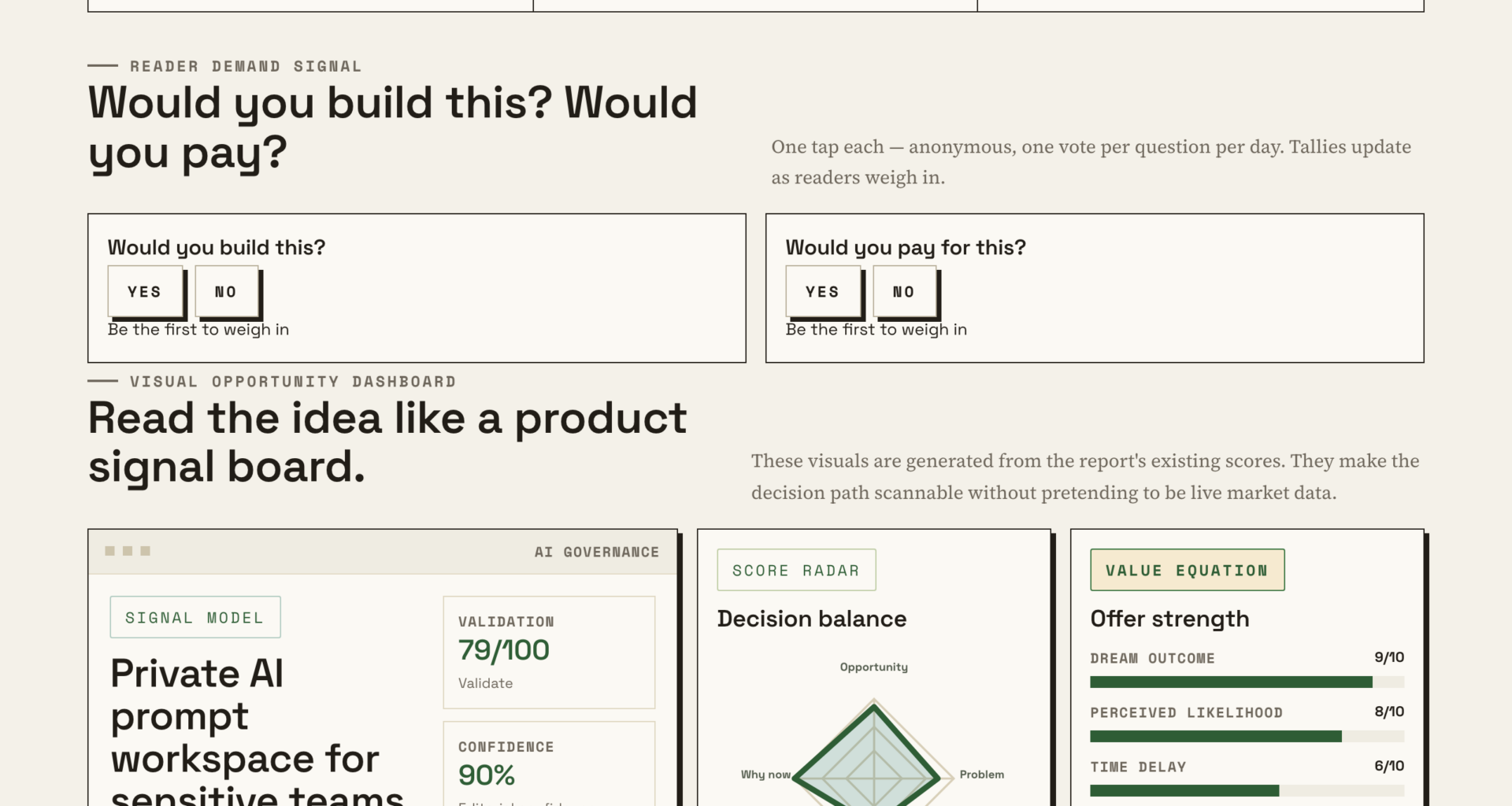

📊 Full opportunity report: Private AI Prompt Workspace For Sensitive Teams on IdeaNavigator AI — validation score, market gap, and execution plan.

Get the latest gadgets delivered free with Prime
- Fast, free delivery on millions of items
- Prime Video, Amazon Music and more included
- Member-only deals all year
TL;DR
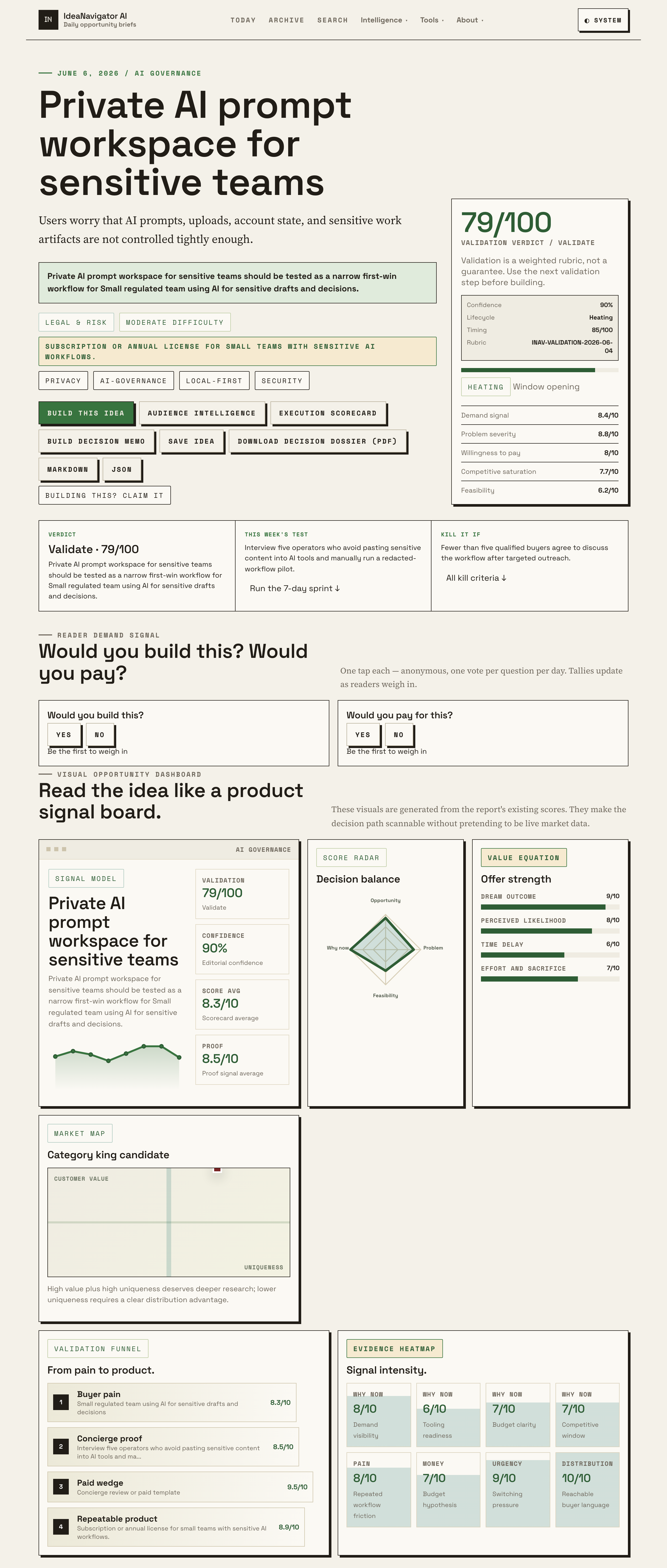
IdeaNavigator AI is piloting a private prompt workspace tailored for small teams managing sensitive data. This development aims to improve data control, review, and audit capabilities in AI workflows, addressing security concerns.
IdeaNavigator AI is testing a private, local-first prompt workspace designed specifically for small, regulated teams working with sensitive AI workflows. This development addresses concerns about data control, security, and auditability when using AI tools for sensitive drafts and decisions.
The new workspace aims to provide local storage of prompts, uploads, and artifacts, along with features such as redaction checklists, source notes, review status indicators, and exportable audit logs. This setup is intended for teams that need to maintain strict control over sensitive information while leveraging AI capabilities.
According to IdeaNavigator AI, the initial testing focuses on small teams that avoid pasting sensitive content directly into AI tools, instead preferring manual workflows with redactions. The company plans to validate the product through interviews with five operators who currently manage sensitive workflows manually, aiming to streamline and secure their processes.
Implications for Data Security in AI Workflows
This development is significant because it responds directly to the increasing demand for data governance and security in AI applications, especially among regulated or sensitive teams. By enabling local storage and auditability, it aims to reduce risks associated with data leaks, unauthorized access, and compliance violations, potentially setting a new standard for secure AI use in sensitive environments.
As an affiliate, we earn on qualifying purchases.
Growing Need for Secure AI Solutions in Regulated Fields
As AI adoption accelerates across industries with strict compliance requirements—such as legal, healthcare, and government sectors—teams face mounting challenges in maintaining data privacy and control. Currently, many organizations rely on cloud-based AI tools that may not meet their security standards, prompting a search for solutions that enable local data handling, review, and audit trails. This initiative by IdeaNavigator AI reflects broader market trends emphasizing AI governance and security.
“Teams handling sensitive data need tools that give them full control over prompts and artifacts, not just cloud-based solutions.”
— an anonymous researcher
As an affiliate, we earn on qualifying purchases.
Unconfirmed Aspects of the Workspace’s Capabilities
It is not yet clear how fully the workspace will integrate with existing AI tools or whether it will support all types of sensitive data workflows. The scope of features, such as automation of redaction or comprehensive audit logging, remains under development. Additionally, user acceptance and real-world effectiveness are still to be validated through pilot testing.
audit log software for sensitive data
As an affiliate, we earn on qualifying purchases.
As an affiliate, we earn on qualifying purchases.
Next Steps in Testing and Deployment
IdeaNavigator AI plans to conduct pilot tests with five small teams, gathering feedback on usability and security. Based on these results, the company may refine features and consider broader rollout. Further updates on product capabilities and availability are expected once testing concludes.
redaction checklist tool for AI workflows
As an affiliate, we earn on qualifying purchases.
As an affiliate, we earn on qualifying purchases.
Key Questions
Who is the target user for this private AI prompt workspace?
The primary users are small, regulated teams who handle sensitive drafts and decisions involving AI, such as legal, healthcare, or government teams requiring strict data control.
What features will the workspace include?
Features include local prompt storage, redaction checklists, source notes, review status indicators, and exportable audit logs to enhance security and auditability.
When will the workspace be generally available?
The product is currently in pilot testing; a broader release will depend on pilot outcomes and further development, with no specific date announced yet.
How does this address existing security concerns?
By enabling local data storage and detailed audit trails, it reduces reliance on cloud solutions, minimizing risks of data leaks and ensuring compliance with security standards.
Will this workspace support all types of AI workflows?
It is still under development, and support for all workflows, including automation and complex integrations, remains to be confirmed through ongoing testing.
Source: IdeaNavigator AI
Halloween Picks
halloween
As an affiliate, we earn on qualifying purchases.