
🔍 Read the full analysis: California’s New Laws And Microsoft’s School Pact: Rules For AI Oversight on ThorstenMeyerAI.com

Get the latest gadgets delivered free with Prime
- Fast, free delivery on millions of items
- Prime Video, Amazon Music and more included
- Member-only deals all year
TL;DR
Microsoft says its 31-page school AI agreement will be available to every US school district from November 1, 2026. It sets contractual limits on covered education AI, while new California and New York laws separately address workplace and health-care AI and chatbots used by children.
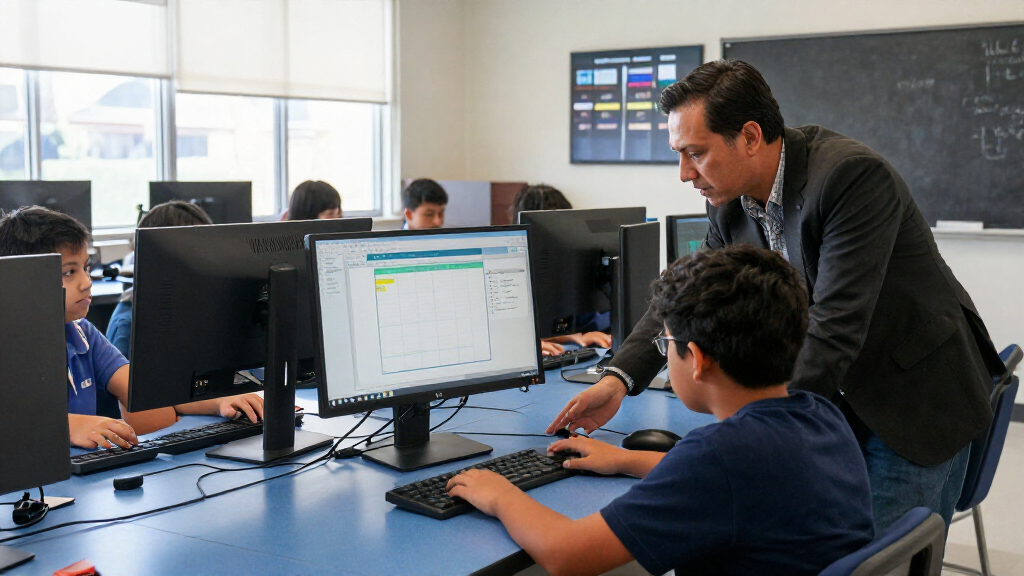
Microsoft says it is making a school AI contract available to every US school district from November 1, setting limits on how covered education products can use student data and make decisions. The contract is not a law or a blanket company policy: districts can adopt its terms in their Microsoft agreements. It arrives alongside new California laws on workplace and health-care AI and a New York law addressing chatbots used by children.
The 31-page Memorandum of Agreement was announced September 9 by the American Federation of Teachers and United Federation of Teachers with Microsoft. It is between Microsoft and the National Academy for AI Instruction, an educator-led training body announced by the AFT in 2025. The document includes empty signature spaces for other AI providers. Under the described arrangement, districts can incorporate its terms into their own contracts with Microsoft, giving them contractual remedies if those terms are breached.
For covered education products, the agreement bars use of student, teacher and administrator data to train, fine-tune, benchmark or otherwise improve AI models. It also restricts tracking, biometric collection and emotional inference, and bars companion-style features designed to foster attachment or dependency. AI systems may not make decisions about students or teachers without meaningful human review or prior approval. A narrow exception permits processing data to detect specified safety risks, including self-harm, abuse material and threats; that data cannot then be used for general model improvement.
The agreement also requires covered providers to report breaches within 72 hours and delete data from active systems within 180 days. Its scope has limits: the source says it covers products designed and marketed for education, while general-purpose productivity and workplace tools are excluded. Separately, California Gov. Gavin Newsom signed four laws on September 30: AB 1883 addresses worker emotion-reading and neural data; SB 947 bars discipline or firing decisions made by an algorithm alone; AB 1979 restricts AI from performing work legally reserved for licensed health professionals; and SB 951 requires layoff notices to disclose when AI replaced jobs. Most are set to take effect January 1, 2027, while SB 947 takes effect July 1, 2027.
Infographic 01 · The lines drawn this autumn
Seven weeks, one direction: a human stays in charge
From the school contract to state laws: what was signed when, and what the classroom standard actually requires.
- 2 Feb 2025EU: emotion inference banned at work and schoolAI Act Art. 5(1)(f), except medical or safety reasons
- 9 Sep 2026AFT, UFT and Microsoft announce the school standardA contract districts can add to their Microsoft agreements
- 30 Sep 2026California signs AB 1883, SB 947, SB 951, AB 1979Emotion AI at work, robot bosses, AI layoff notices, AI in clinics
- 28 Oct 2026New York signs its chatbot law for minorsS.9051B/A.10379C: no unsafe companion features for under-18s
- 1 Nov 2026Microsoft makes the standard available to all US districtsPer Microsoft’s fact sheet; districts “can add them”
- 1 Jan 2027Most California rules take effectAB 1883, AB 1979, SB 951
- 1 Jul 2027SB 947 becomes operativeHuman corroboration before AI-driven discipline or firing
What Microsoft’s classroom AI may not do
- Learn from students or teachers. No training on their data; de-identification is “not a loophole”.
- Track them. No keystroke logging, attention monitoring, long-term profiling or biometrics.
- Befriend them. No companion features designed to foster emotional attachment.
- Decide alone. No decisions without meaningful human review or prior approval.
Where it is narrower
- Scope: education products only. General-purpose productivity and workplace tools are excluded by definition.
- Opt-in or automatic: Microsoft says districts “can add” the terms; the agreement says “upon request within 90 days”.
- Exceptions: a narrow safety exception for training; the no-tracking list allows written approval by the school.
“Anything less than legally enforceable provisions is simply a wish list.”Randi Weingarten, AFT President, 9 September 2026
Sources: AFT/UFT/Microsoft release, 9 Sep 2026 · Standard MOA v1.0 · Microsoft fact sheet · Governor of California, 30 Sep 2026 · Governor of New York, 28 Oct 2026 · EU AI Act, Art. 5(1)(f). Effective dates for California follow the chaptered texts and the state’s default start date for regular-session bills.
Powered by Thorsten Meyer AI
Contracts Put School AI Limits in Reach
The school agreement could give districts a direct way to set conditions on education AI purchases, rather than relying only on general privacy promises from vendors. Its rules speak to concerns that affect students and educators directly: whether classroom data can feed model development, whether software can monitor behavior or inferred emotions, and whether consequential decisions receive human review. Because districts must incorporate the terms into contracts, the protections depend on adoption and on what products are covered.
The state laws take a different route. California’s measures impose statutory restrictions in defined workplace and health-care settings, while New York’s law addresses chatbot features for children. Together, the developments show how oversight is being shaped through both procurement contracts and legislation. They do not amount to a single nationwide AI rule, and each measure has its own scope, enforcement mechanism and start date.
Products Worth Considering

LG UltraGear 32GX850A-B 32-inch 4K UHD Glossy OLED Gaming Monitor

Samsung 32-inch Odyssey OLED G8 (G80SH) 4K QD-OLED Gaming Monitor

DJI Osmo Mobile 8 Gimbal with Mic Mini Transmitter, Infinity Black
As an affiliate, we earn on qualifying purchases.
Three Different Paths to Oversight
The Microsoft agreement is described as a memorandum between a training organization and a company, not a statute. A district that puts its terms into a Microsoft contract can seek contractual remedies, according to the source material. The document’s restrictions include a written-approval exception for some tracking-related practices, and it specifies that its student-data limits continue after a contract ends. Those provisions make the exact wording and adoption of the agreement important.
New York Gov. Kathy Hochul signed the children’s chatbot law on October 28, four days before Microsoft’s stated offer date. The source describes it as restricting unsafe companion features for minors and unverified users, including chatbots that present themselves as human or foster emotional dependency. The source does not provide the law’s full text or effective date. The measures in California and New York are laws; the school agreement is a contractual framework, so the three developments should not be treated as interchangeable protections.
““Anything less than legally enforceable provisions is simply a wish list.””
— AFT President Randi Weingarten
Adoption and Scope Still Matter
It remains unclear how many districts will adopt the terms, and whether the offer applies automatically or only after a district requests or incorporates the agreement. The source material describes that point inconsistently across Microsoft’s account, the agreement and press reports. The document’s coverage is also limited to AI products designed and marketed for education; it expressly excludes general-purpose productivity and workplace tools, leaving questions about products that cross those categories.
The source does not provide the full California or New York statutory text, enforcement details or all effective-date provisions. Nor does it establish how compliance will be monitored in practice. The contractual safety exception and written-approval provisions also mean that some permitted processing may depend on district decisions. These details will affect what protections students and workers receive day to day.
District Contracts and Law Start Dates
School districts can now decide whether to place the agreement’s terms in their Microsoft contracts and review which education products fall within its scope. District procurement teams and educators will need to assess data practices, tracking features, human-review procedures and any enabled agent functions against the document. The source says student-facing agent features that act outside a provider’s systems must be off by default unless an administrator enables them.
California’s listed laws are scheduled to take effect mainly on January 1, 2027, with SB 947 following on July 1, 2027. The next developments to watch are district adoption of the school terms, further details on how the laws will be applied, and whether other AI providers sign the agreement’s open signature spaces. No national legal standard is established by these developments.
Key Questions
Is Microsoft’s school AI agreement a law?
No. It is a memorandum intended to be incorporated into district contracts. Its enforcement would depend on contractual terms and the district’s agreement with Microsoft.
What does the agreement restrict?
For covered education AI products, it bars using student and educator data to improve AI models, restricts tracking and emotional inference, limits companion-style features, and calls for meaningful human review of decisions about students or teachers.
Does it cover every Microsoft AI product used in a school?
The source says the agreement applies to products designed and marketed for education and excludes general-purpose productivity and workplace tools. How borderline products are treated is not specified.
When do California’s AI laws take effect?
According to the source, most of the four laws signed September 30 take effect January 1, 2027. SB 947, concerning algorithm-only discipline or firing decisions, is scheduled to take effect July 1, 2027.
What did New York’s new law address?
Gov. Kathy Hochul signed a law on October 28 restricting unsafe companion features in chatbots used by minors and unverified users, according to the source. The supplied material does not state its effective date or full enforcement details.
Source: ThorstenMeyerAI.com