
📊 Full opportunity report: Software-Defined Warfare: How Ukraine’s Delta Turned the Battlefield Into a Shared, Real-Time Map on ThorstenMeyerAI.com — validation score, market gap, and execution plan.
Listen free for 30 days with Audible
Thousands of audiobooks and originals — cancel anytime.
Start your free trialAs an affiliate, we earn on qualifying purchases.
TL;DR
Ukraine has deployed Delta, a cloud-based, browser-accessible battlefield management system that fuses diverse intelligence sources in real time. This innovation exemplifies software-defined warfare, shifting advantage from hardware to software and data. Its deployment enhances Ukraine’s operational speed and resilience amid ongoing conflict.
Ukraine has officially deployed Delta, a cloud-native, browser-based battlefield management system that consolidates real-time intelligence from diverse sources, including drones, satellites, and civilian reports. The system enhances combat coordination and situational awareness, marking a shift toward software-defined warfare that reduces reliance on specialized hardware and increases operational resilience. This development reflects Ukraine’s efforts to improve battlefield data integration amid ongoing conflict, providing frontline troops with access to comprehensive operational information.
Delta is a collaborative effort involving Ukraine’s NGO Aerorozvidka, the Defense Ministry’s defense-technology innovation center, and the Ministry of Digital Transformation. It aggregates inputs from reconnaissance units, civilian officials, allied intelligence, and commercial sensors, all geolocated and mapped in real time. The system’s backend is hosted in the cloud outside Ukraine to mitigate risks from missile and cyber threats, while the client interface runs on standard devices such as phones, tablets, and laptops—eliminating the need for proprietary hardware.
Ukraine’s Defense Ministry reports that Delta has been used to identify approximately 1,500 enemy targets daily during recent operations near Kyiv, although this figure is self-reported and not independently verified. The system aims to reduce decision-making time by integrating reconnaissance, identification, and response, facilitating faster military actions. Its deployment aligns with broader efforts to develop open, interoperable, and agile military software, inspired by NATO initiatives and defense innovation practices.
Software-defined warfare: how Ukraine’s Delta turned the battlefield into a shared, real-time map
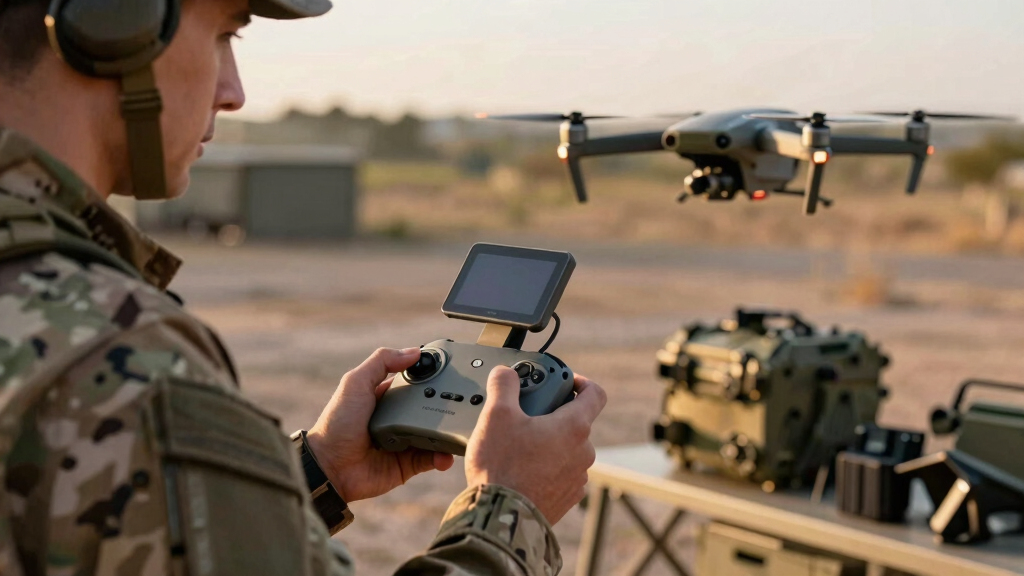
A soldier opens a browser and sees the fused war — drones, satellites, sensors and vetted reports on one live map. The backend is a cloud deliberately hosted abroad so a missile can’t take it down. The clearest case yet of treating warfare as software.
Optical sensors go blind in cloud & dark; an all-weather SAR radar layer — the kind VigilSAR produces — slots into a picture like this as one resilient, sovereign input. vigilsar.com · And note the paradox: to survive missiles & cyberattack, Ukraine hosted its crown-jewel cloud outside its own borders — trading physical sovereignty for operational survivability. Resilience through distribution.
Delta’s lasting lesson isn’t a piece of software — it’s a model of how to build: commodity clients, cloud backend, open standards, relentless iteration, fusion over hardware, and resilience through distribution. It’s why a wartime NGO out-shipped procurement bureaucracies on a fraction of the budget. The platform mattered less than the picture — and the picture is software. Own the fusion layer, own the sovereign feeds into it, and get it to the edge.
Implications of Software-Defined Warfare for Modern Militaries
Delta illustrates a shift toward data-centric and software-driven military operations, emphasizing rapid information processing and decision-making. Its deployment demonstrates how cloud-based systems can extend situational awareness to front-line units, potentially improving battlefield responsiveness and operational resilience. This approach challenges traditional defense IT models, which are often siloed and hardware-dependent, and may influence future military strategies worldwide. The use of external hosting also raises considerations regarding sovereignty and cybersecurity.
![DeskFX Free Audio Effects & Audio Enhancer Software [PC Download]](https://m.media-amazon.com/images/I/41fXbDohyuS._SL500_.jpg)
DeskFX Free Audio Effects & Audio Enhancer Software [PC Download]
- Audio Transformation: Enhance sound from speakers and headphones
- Sound Quality Improvement: Adjust audio with various effects
- Audio Control: Manage sound through hardware settings
As an affiliate, we earn on qualifying purchases.
As an affiliate, we earn on qualifying purchases.
Evolution of Ukraine’s Battlefield Tech and NATO-Inspired Initiatives
Ukraine’s adoption of Delta is part of a broader effort to improve interoperability and information sharing, influenced by NATO initiatives launched in 2017. The development process involved collaboration among NGOs, government agencies, and defense innovation units, reflecting a move away from traditional defense procurement methods. Previously reliant on isolated, hardware-heavy systems, Ukraine’s shift to a cloud-native, browser-based platform represents a modernization of its military software capabilities. Its deployment during ongoing conflict underscores Ukraine’s focus on operational adaptability and technological advancement.
“Delta is a significant step in how we see and respond to the battlefield, enabling faster decisions and broader access for our troops.”
— Mykhailo Fedorov, Ukraine’s Digital Transformation Minister

Police Drone & Pilot Detection Kit– Handheld Drone Detection & Tracking Tool | Real-Time Alerts for Law Enforcement, Event Security & Emergency Response | Portable Airspace Awareness Device
- Real-Time Drone Detection: Detects drones via remote ID signals instantly
- Portable & Compact Design: Handheld, lightweight, and easy to carry
- Immediate Threat Alerts: Provides instant notifications for quick response
As an affiliate, we earn on qualifying purchases.
As an affiliate, we earn on qualifying purchases.
Unverified Claims and Operational Security Limits
Many details regarding Delta’s operational capabilities remain classified, including its integration with drone operations and the full extent of its impact during ongoing combat. The reported figure of 1,500 targets identified daily is self-reported and has not been independently verified. The effectiveness of the system outside controlled scenarios is still under assessment. Additionally, hosting sensitive data outside Ukraine raises security considerations that are being addressed through cybersecurity measures.
As an affiliate, we earn on qualifying purchases.
Future Deployment, Testing, and International Interest
Ukraine intends to expand Delta’s deployment and improve its capabilities through ongoing testing and user feedback. International partners are reportedly studying Ukraine’s implementation for potential adaptation, and other militaries are monitoring its operational results. Further disclosures are expected as the system matures and its role in ongoing operations becomes clearer. The Ukrainian government is also working to enhance cybersecurity protections for the cloud-hosted components.
cloud-based military data terminal
As an affiliate, we earn on qualifying purchases.
As an affiliate, we earn on qualifying purchases.
Key Questions
How does Delta improve battlefield coordination?
Delta consolidates real-time data from multiple sources into a single platform, enabling quicker identification of enemy targets and facilitating coordinated responses across units.
Is Delta vulnerable to cyberattacks?
Hosting Delta’s cloud components outside Ukraine was intended to improve resilience against missile and cyber threats, though cybersecurity remains a key focus for ongoing protection.
Can other countries adopt similar systems?
Ukraine’s approach demonstrates a potential model for open, software-based battlefield management, and other militaries are studying its deployment for possible adaptation.
What are the risks of hosting sensitive data outside Ukraine?
While external hosting can enhance physical security, it also raises concerns regarding sovereignty and potential foreign access, which Ukraine is addressing through cybersecurity measures.
Will Delta be used in future conflicts?
Ukraine plans to continue deploying and refining Delta, and its development may influence future military software initiatives worldwide.
Source: ThorstenMeyerAI.com
Back to school Picks
back to school
As an affiliate, we earn on qualifying purchases.