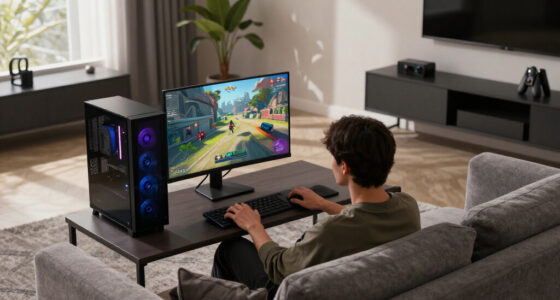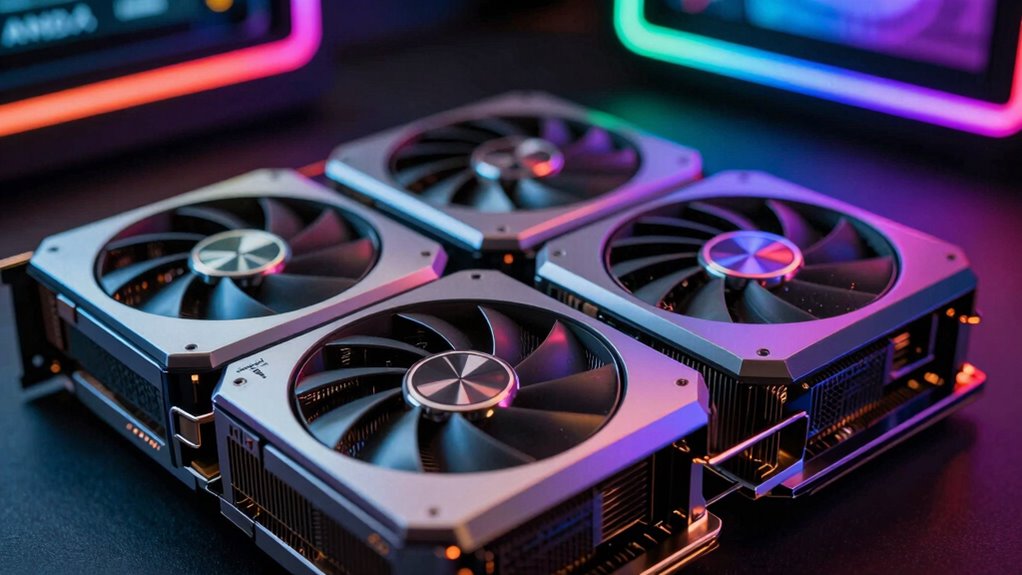
If you’re seeking an AMD GPU for VR, you’re likely balancing performance, price, and future-proofing. The AMD Radeon RX 9070 XT stands out as the best overall choice for high-fidelity VR, offering top-tier graphics and smooth gameplay. For budget-conscious buyers, the RX 7600 Challenger Pro provides solid performance without breaking the bank, while the RX 9060 XT Challenger offers a middle ground with ample VR capability. The main tradeoffs involve balancing raw power against cost, as higher-end models tend to be more expensive but deliver better immersion. Keep reading for the full breakdown to find the best fit for your setup.

Get the latest gadgets delivered free — and shop member deals
- Fast, free delivery on millions of items
- Access to Prime Big Deal Days deals on October 6–7
- Prime Video, Amazon Music and more included
Complete the kit



Key Takeaways
- The top-performing AMD GPUs for VR tend to be the RX 9070 XT series, offering the best balance of power and features for immersive experiences.
- Memory size (8GB vs 16GB) impacts VR performance, especially in demanding titles or future game releases.
- Higher-tier models like the RX 9060 XT and RX 9070 XT deliver smoother VR performance but come at a premium price.
- Budget options such as the RX 7600 Challenger Pro are capable for entry-level VR, but may struggle with newer, more demanding titles.
- Cooling solutions and card design influence long-term performance stability, making premium models with triple fans more reliable for extended VR sessions.
| ASRock Radeon RX 7600 Challenger Pro 8GB OC Graphics Card |  | Best Overall for High-Performance VR | Memory: 8GB GDDR6 | Boost Clock: 2695MHz | Game Clock: 2280MHz | VIEW ON AMAZON | See Our Full Breakdown |
| XFX Swift AMD Radeon RX 9070 XT Triple Fan White Gaming Edition with 16GB GDDR6 |  | Best for Demanding VR and Gaming with Massive Memory | Chipset: AMD RX 9070 XT | Memory: 16 GB GDDR6 | Boost Clock: 2970 MHz | VIEW ON AMAZON | See Our Full Breakdown |
| ASRock AMD Radeon RX 6600 Challenger D 8GB GDDR6 Graphics Card |  | Best for 1080p VR and Budget-Friendly Gaming | GPU Architecture: RDNA 2 | Memory: 8GB GDDR6 | Cooling: Dual-fan Challenger D | VIEW ON AMAZON | See Our Full Breakdown |
| ASRock Radeon RX 9060 XT Challenger 16GB OC Graphics Card |  | Best for 1440p VR and Future-Proofing | GPU: AMD Radeon RX 9060 XT | Memory: 16GB GDDR6 | Boost Clock: 3290 MHz | VIEW ON AMAZON | See Our Full Breakdown |
| MSI Gaming Radeon RX 6600 XT MECH 2X 8G OC Graphics Card |  | Best for Entry-Level VR with Overclocking | Memory: 8GB GDDR6 | GPU: Radeon RX 6600 XT | Memory Interface: 128-bit | VIEW ON AMAZON | See Our Full Breakdown |
| XFX Radeon RX 580 GTS XXX Edition 1386MHz OC+, 8GB GDDR5, VR Ready, Dual BIOS, 3xDP HDMI DVI AMD Graphics Card |  | Best Overall for VR Entry-Level and Mid-Range | GPU Clock: 1386MHz OC+ | Memory: 8GB GDDR5 | Display Outputs: 3x DisplayPort, HDMI, DVI | VIEW ON AMAZON | See Our Full Breakdown |
| XFX Speedster SWFT210 Radeon RX 7600 Graphics Card with 8GB GDDR6 |  | Best Value for Mid-Range VR Gaming | Chipset: AMD RX 7600 | Memory: 8GB GDDR6 | Cooling: Dual fan | VIEW ON AMAZON | See Our Full Breakdown |
| ASRock Radeon RX 7700 XT Challenger 12GB OC Graphics Card |  | Best High-Performance for Enthusiast VR and Gaming | Architecture: AMD RDNA 3 | Compute Units: 54 | Memory: 12GB GDDR6 | VIEW ON AMAZON | See Our Full Breakdown |
| XFX Swift AMD Radeon RX 9060 XT OC Triple Fan Gaming Edition with 16GB GDDR6 |  | Best for High-End VR with Massive Memory Buffer | Chipset: AMD RX 9060 XT | Memory: 16 GB GDDR6 | Cooling: Triple Fan | VIEW ON AMAZON | See Our Full Breakdown |
| XFX Swift AMD Radeon RX 9070XT Triple Fan Gaming Edition with 16GB GDDR6 |  | Best for High-Performance, Future-Proof VR | Chipset: AMD RX 9070 XT | Memory: 16 GB GDDR6 | Cooling: Triple Fan | VIEW ON AMAZON | See Our Full Breakdown |
| GIGABYTE Radeon RX 9070 XT Gaming OC 16G Graphics Card |  | Best for High-End VR Enthusiasts Seeking Peak Performance | GPU: Radeon RX 9070 XT | Memory: 16GB GDDR6 | Interface: PCIe 5.0 | VIEW ON AMAZON | See Our Full Breakdown |
| amd gpu for vr | Memory | Boost Clock |
|---|---|---|
| ASRock Radeon RX 7600 Challeng | 8GB GDDR6 | 2695MHz |
| XFX Swift AMD Radeon RX 9070 X | 16 GB GDDR6 | 2970 MHz |
| ASRock AMD Radeon RX 6600 Chal | 8GB GDDR6 | — |
| ASRock Radeon RX 9060 XT Chall | 16GB GDDR6 | 3290 MHz |
| MSI Gaming Radeon RX 6600 XT M | 8GB GDDR6 | — |
| XFX Radeon RX 580 GTS XXX Edit | 8GB GDDR5 | — |
| XFX Speedster SWFT210 Radeon R | 8GB GDDR6 | Up to 2655 MHz |
| ASRock Radeon RX 7700 XT Chall | 12GB GDDR6 | 2584 MHz |
| XFX Swift AMD Radeon RX 9060 X | 16 GB GDDR6 | Up to 3320 MHz |
| XFX Swift AMD Radeon RX 9070XT | 16 GB GDDR6 | 2970 MHz |
| GIGABYTE Radeon RX 9070 XT Gam | 16GB GDDR6 | — |
More Details on Our Top Picks
ASRock Radeon RX 7600 Challenger Pro 8GB OC Graphics Card
This card stands out for its AMD RDNA 3 architecture, which offers advanced ray tracing and AI acceleration—features that significantly enhance VR experiences with more realistic visuals and smoother performance. Compared with the RX 6600 XT, it provides higher frame rates and better future-proofing, but its large size and 550W power requirement may limit compatibility with smaller cases. The triple-fan cooling ensures quiet operation during intense VR sessions, making it ideal for gamers who want reliability without noise. However, the need for PCIe 4.0 and a robust power supply could be a hurdle for some builds.
Pros:- High-performance AMD RDNA 3 architecture with ray tracing and AI acceleration
- Triple-fan cooling system with quiet operation
- Supports high-resolution multi-display setups including 8K
Cons:- Requires a 550W power supply and ample chassis clearance
- Large size may not fit smaller cases
- Limited to PCIe 4.0 systems
Best for: High-end VR gamers with spacious cases and strong power supplies who seek top-tier visuals and performance.
Not ideal for: Users with compact builds or limited PSU capacity, since this card is large and power-hungry.
- Memory:8GB GDDR6
- Boost Clock:2695MHz
- Game Clock:2280MHz
- Stream Processors:2048
- Memory Interface:128-bit
- Ray Tracing:Yes
Our verdict“This card is best suited for enthusiasts with spacious builds looking for the best VR performance possible.”
XFX Swift AMD Radeon RX 9070 XT Triple Fan White Gaming Edition with 16GB GDDR6
The RX 9070 XT with 16GB GDDR6 memory is designed for users who push their VR setups with demanding titles or professional content creation. Its 2970 MHz boost clock offers a noticeable performance edge over more modest cards like the RX 6600 XT, especially in VR environments that benefit from larger memory buffers. While the triple fan cooling system helps manage heat during extended VR sessions, limited detailed specs and potentially high power consumption are tradeoffs. This card’s high memory capacity makes it ideal for future-proofing, but its size and power needs mean it’s best for high-end builds.
Pros:- Massive 16GB GDDR6 memory for demanding VR and content creation
- High boost clock of 2970 MHz for enhanced performance
- Effective triple fan cooling system
Cons:- Limited detailed specifications available publicly
- Potentially high power consumption
- No included accessories or bundled features
Best for: Power users running demanding VR applications, including professional content creators or gamers who prioritize memory capacity.
Not ideal for: Budget-conscious buyers or those with smaller systems, due to its size and power demands.
- Chipset:AMD RX 9070 XT
- Memory:16 GB GDDR6
- Boost Clock:2970 MHz
- Cooling:Triple Fan
- Display Outputs:DisplayPort 2.1a, HDMI 2.1b
- Dimensions:249 mm x 132 mm x 41 mm
Our verdict“This GPU is ideal for users who need maximum VR performance and memory capacity, accepting the higher power and size requirements.”
ASRock AMD Radeon RX 6600 Challenger D 8GB GDDR6 Graphics Card
This card, based on RDNA 2, delivers solid 1080p VR performance at a more accessible price point. Compared with the RX 7600 Challenger Pro, it sacrifices some future-proofing and ray tracing capabilities but remains a dependable choice for entry-level VR setups. Its dual-fan cooling keeps noise levels manageable, and multiple display outputs support versatile VR station configurations. However, its performance peaks at 1080p, so it may struggle with high-end VR titles or more demanding content.
Pros:- Reliable 1080p VR performance
- Dual-fan cooling for quieter operation
- Multiple display outputs support versatile setups
Cons:- Limited to 1080p performance, not suitable for high-end VR
- Not compatible with all older systems
- Less future-proof than newer architectures
Best for: Budget-conscious VR enthusiasts aiming for reliable 1080p experiences without the need for cutting-edge features.
Not ideal for: High-end VR users or those planning to upgrade to 4K VR, due to limited performance and older architecture.
- GPU Architecture:RDNA 2
- Memory:8GB GDDR6
- Cooling:Dual-fan Challenger D
- Display Outputs:1x HDMI 2.1, 3x DisplayPort 1.4
- Support:PCIe 4.0
- Dimensions:10.59 x 5.20 x 1.61 inches
Our verdict“This card makes sense for newcomers or budget-focused users seeking stable 1080p VR performance.”
ASRock Radeon RX 9060 XT Challenger 16GB OC Graphics Card
The RX 9060 XT with 16GB GDDR6 memory bridges the gap between high-end gaming and professional VR, offering a 3290 MHz boost clock and support for the latest display standards like DisplayPort 2.1a. Its RDNA 4 architecture enhances ray tracing and AI features, making it a compelling choice for demanding VR titles or creative workflows. Compared to the RX 7600 Pro, it offers more memory and newer features but demands a larger chassis (249 mm) and a robust power supply, which could be a drawback for some upgrades.
Pros:- High-performance RDNA 4 architecture with ray tracing
- Large 16GB GDDR6 memory for demanding VR content
- Supports latest display standards including DisplayPort 2.1a
Cons:- Requires a chassis with sufficient clearance (249 mm length)
- Needs a 550W power supply, which may be high for some systems
- Potentially higher cost due to advanced features
Best for: VR users who want 1440p performance with room to grow into newer, more demanding titles or applications.
Not ideal for: Compact builds or users with limited power capacity, due to its size and power requirements.
- GPU:AMD Radeon RX 9060 XT
- Memory:16GB GDDR6
- Boost Clock:3290 MHz
- Display Outputs:DisplayPort 2.1a, HDMI 2.1b
- Dimensions:249 mm x 132 mm x 41 mm
- Power Connector:1 x 8-pin
Our verdict“This GPU suits VR users aiming for 1440p performance and future-ready features, provided their system can accommodate its size and power needs.”
MSI Gaming Radeon RX 6600 XT MECH 2X 8G OC Graphics Card
The MSI RX 6600 XT MECH offers overclocking potential and VR readiness in a compact, efficient package. Its 8GB GDDR6 memory and overclocking support make it suitable for immersive gaming and VR at 1080p, especially in systems where size and power are limited. Compared to the RX 7600 Challenger Pro, it’s less powerful but more accessible for budget setups. Its support for FreeSync and moderate cooling design keeps noise and heat under control, although specific cooling noise levels are not detailed and it’s less suited for demanding VR titles.
Pros:- Overclocking support for extra performance
- VR ready for immersive experiences
- Supports FreeSync technology for tearless gaming
Cons:- Limited warranty due to renewed status
- Cooling and noise levels are not specified
- Performance may be limited in demanding VR titles
Best for: Budget-conscious VR gamers with small cases or limited power, seeking decent performance and upgrade options.
Not ideal for: High-end VR users or those aiming for 4K VR, since it may struggle with more demanding content and lacks newer architecture.
- Memory:8GB GDDR6
- GPU:Radeon RX 6600 XT
- Memory Interface:128-bit
- Outputs:DP, HDMI
- VR Ready:Yes
- Overclocking:Yes
Our verdict“This card is a practical choice for entry-level VR setups within smaller or budget-constrained systems.”
XFX Radeon RX 580 GTS XXX Edition 1386MHz OC+, 8GB GDDR5, VR Ready, Dual BIOS, 3xDP HDMI DVI AMD Graphics Card
The XFX Radeon RX 580 GTS XXX Edition stands out for offering a solid balance of VR readiness and performance at a competitive price. Its factory overclocked GPU and 8GB GDDR5 memory deliver enough power for most VR experiences, especially compared to lower-tier options like the AMD RX 7600. The dual BIOS and advanced cooling support prolonged gaming sessions but require a minimum 500W power supply, which could be a hurdle for some builds. Despite its efficiency, the potential for noise from inductors may bother sensitive users. Compared with more recent cards like the RX 7700 XT, this model trades some raw performance for affordability and proven stability in VR settings.
Pros:- Factory overclocked for improved gaming and VR performance
- VR ready with multiple display outputs
- Dual BIOS for versatility and safety
Cons:- Requires at least 500W power supply, limiting upgrade options
- Potential noise from inductors despite low-noise design
Best for: Budget-conscious gamers seeking reliable VR performance without spending on the latest hardware
Not ideal for: High-end enthusiasts aiming for ultra-high settings or future-proofing with top-tier specs
- GPU Clock:1386MHz OC+
- Memory:8GB GDDR5
- Display Outputs:3x DisplayPort, HDMI, DVI
- VR Ready:Yes
- Cooling Technology:High Performance Unibody Heatsink
- Additional Features:Dual BIOS, Radeon Chill, Ultra Low Noise XL Inductors
Our verdict“This card is ideal for VR users who want dependable performance at a reasonable price without bleeding-edge features.”
XFX Speedster SWFT210 Radeon RX 7600 Graphics Card with 8GB GDDR6
The XFX Speedster SWFT210 Radeon RX 7600 makes a compelling case for users seeking a balance between cost and capable VR performance. Its AMD RX 7600 chipset and 8GB GDDR6 memory provide a noticeable step up over entry-level cards like the RX 580, especially in newer VR titles. The dual fan cooling system helps maintain thermal stability during extended sessions, but the lack of detailed features means it might lack some of the durability or overclocking headroom found in higher-end options. This card is less feature-rich than the RX 7700 XT but excels in delivering modern graphics at a lower price point, making it suitable for gamers wanting good VR performance without overspending.
Pros:- Effective dual fan cooling system
- 8GB GDDR6 for modern gaming and VR
- Good performance boost over older models like RX 580
Cons:- Limited detailed features and overclocking options
- No price or customer ratings available, making value assessment difficult
Best for: Budget to mid-range VR gamers wanting reliable performance in newer titles
Not ideal for: Power users or those seeking the highest possible frame rates and future-proofing
- Chipset:AMD RX 7600
- Memory:8GB GDDR6
- Cooling:Dual fan
- Boost Clock:Up to 2655 MHz
Our verdict“This card suits VR enthusiasts who want modern features and decent performance without premium costs.”
ASRock Radeon RX 7700 XT Challenger 12GB OC Graphics Card
The ASRock Radeon RX 7700 XT Challenger is tailored for users demanding high-res VR experiences and gaming. Its AMD RDNA 3 architecture with 54 compute units and 12GB GDDR6 memory ensures excellent performance, surpassing the RX 7600 and RX 580 in both raw power and future-proofing. The high boost clock of 2584 MHz and support for DisplayPort 2.1 and HDMI 2.1 make it ideal for high-resolution, smooth VR gameplay. Compared to the RX 9060 XT, this model offers a more balanced feature set suitable for most high-end setups. However, its dual 8-pin power connectors and system compatibility considerations mean it’s best for users with recent, spacious builds.
Pros:- High boost clock and large VRAM for demanding VR content
- Supports cutting-edge display standards (DP 2.1, HDMI 2.1)
- Durable metal backplate and advanced cooling for long sessions
Cons:- Requires dual 8-pin power connectors, limiting compatibility
- May not fit smaller or older pre-built systems
Best for: Enthusiast gamers and content creators who need top-tier VR performance and high-resolution support
Not ideal for: Pre-builts with limited power supply or small cases that can’t accommodate dual 8-pin connectors
- Architecture:AMD RDNA 3
- Compute Units:54
- Memory:12GB GDDR6
- Boost Clock:2584 MHz
- Display Outputs:3 x DisplayPort 2.1, 1 x HDMI 2.1
- Power Connectors:2 x 8-pin
Our verdict“This GPU is a strong choice for serious VR users with recent, spacious systems seeking high-resolution, smooth experiences.”
XFX Swift AMD Radeon RX 9060 XT OC Triple Fan Gaming Edition with 16GB GDDR6
The XFX Swift RX 9060 XT OC offers a significant boost in VR and gaming performance with its 16GB GDDR6 memory and 3320 MHz boost clock. Its triple fan cooling system ensures thermal stability under demanding workloads, making it suitable for extended VR sessions and high-fidelity gaming. While the lack of detailed compatibility information might concern some, its high memory capacity outperforms most cards in this round, including the RX 7700 XT, in intensive VR scenarios. This card leans toward users who prioritize raw performance and large memory buffers over compatibility flexibility or power efficiency.
Pros:- Massive 16GB GDDR6 memory for demanding VR and multitasking
- Triple fan cooling maintains low temperatures during extended use
- High boost clock of up to 3320 MHz for peak performance
Cons:- High power consumption may require a robust power supply
- Limited information on additional features or overclocking support
Best for: Power users and enthusiasts running demanding VR applications and high-res content creation
Not ideal for: Budget-conscious users or those with smaller cases and limited power supplies
- Chipset:AMD RX 9060 XT
- Memory:16 GB GDDR6
- Cooling:Triple Fan
- Boost Clock:Up to 3320 MHz
Our verdict“This card is tailored for high-end VR setups demanding maximum memory and performance for extended, intensive use.”
XFX Swift AMD Radeon RX 9070XT Triple Fan Gaming Edition with 16GB GDDR6
The XFX Swift RX 9070XT exemplifies high-performance VR hardware with a 16GB GDDR6 buffer and a 2970 MHz boost clock. Its triple fan cooling system supports sustained high workloads, making it an excellent choice for gamers and creators pushing beyond standard VR limits. Compared to the RX 9060 XT, it offers slightly lower clock speeds but may benefit from architectural improvements and future compatibility. However, its large size and high power needs mean only users with spacious cases and robust power supplies will find it suitable. This card targets users who demand top-tier VR performance with an eye toward long-term relevance and high-res content.
Pros:- Massive 16GB GDDR6 for demanding VR and multitasking
- Triple fan cooling for sustained performance
- High boost clock of 2970 MHz for excellent gaming and VR output
Cons:- Large physical size may not fit all cases
- High power consumption demands strong power supply
Best for: VR enthusiasts and high-end PC builders seeking maximum performance and future-proofing
Not ideal for: Small form factor systems or budget builds with limited power capacity
- Chipset:AMD RX 9070 XT
- Memory:16 GB GDDR6
- Cooling:Triple Fan
- Boost Clock:2970 MHz
Our verdict“This GPU is suited for serious VR users with the space and power capacity to support top-tier, future-proof hardware.”
GIGABYTE Radeon RX 9070 XT Gaming OC 16G Graphics Card
This model stands out for its robust Radeon RX 9070 XT GPU paired with 16GB GDDR6 memory, making it ideal for demanding VR experiences where high frame rates and detailed visuals are essential. Compared to the XFX Swift AMD Radeon RX 9070XT Triple Fan Edition, the GIGABYTE version offers a more refined cooling system with WINDFORCE technology, which can help maintain performance during extended VR sessions. Its PCIe 5.0 support ensures faster data transfer, future-proofing the setup. However, its high power consumption and the need for a compatible high-capacity power supply might be limiting for some builds. The RGB lighting adds aesthetic flair but offers little functional benefit for VR. This card makes the most sense for users with a high-end PC build that prioritizes raw performance over cost.
Pros:- High-performance Radeon RX 9070 XT GPU capable of handling demanding VR titles
- 16GB GDDR6 memory ensures smooth rendering of complex scenes
- Supports PCIe 5.0 for faster data transfer and future upgrades
- Effective WINDFORCE cooling system maintains optimal thermal performance
Cons:- High power consumption requires a robust power supply
- Limited detailed specifications available, making precise performance predictions difficult
- Potentially high cost compared to other models with similar specs
Best for: Enthusiast gamers with powerful systems who want top-tier VR performance and aesthetic customization.
Not ideal for: Casual VR users or those on a budget, as its high power needs and premium price may not justify moderate performance gains.
- GPU:Radeon RX 9070 XT
- Memory:16GB GDDR6
- Interface:PCIe 5.0
- Cooling System:WINDFORCE
- Lighting:RGB
- Power Consumption:High (exact wattage unspecified)
- Support:VR Ready
Our verdict“This card is best suited for VR users with a high-end, ready-for-competition PC setup who prioritize performance and aesthetics over cost and power efficiency.”

How We Picked
To determine the best AMD GPUs for VR, I evaluated each card based on performance benchmarks relevant to VR, such as frame rates and latency. I also considered build quality, cooling solutions, and power efficiency to ensure these cards can sustain prolonged VR use without overheating or throttling. Price-to-performance ratio played a significant role, as I aimed to highlight options that offer the best value for different budgets. The rankings reflect a combination of raw power, usability, and future-proofing, helping buyers find an ideal match for their VR setup and expectations.Factors to Consider When Choosing Amd Gpu For Vr
Choosing the right AMD GPU for VR involves more than just raw specs. It’s essential to consider how the card will fit into your overall system, the types of VR titles you play, and your budget. To make an informed decision, focus on key factors like performance, memory, cooling, and compatibility. Understanding these elements helps avoid common pitfalls, such as underestimating power needs or overspending on features you won’t use.Performance and Frame Rates
VR demands high and stable frame rates to prevent discomfort and motion sickness. When selecting an AMD GPU, look for models that can consistently deliver 90Hz or higher in your preferred VR titles. The more powerful the card, the better it handles demanding environments and future games. However, keep in mind that performance also depends on your CPU, RAM, and VR headset specs, so ensure your entire system is balanced for optimal results.
Memory Size and Bandwidth
VR applications are increasingly memory-intensive, especially with higher resolutions and detailed assets. A GPU with at least 8GB of VRAM is generally recommended, but 16GB offers more headroom for upcoming titles and smoother multitasking. Memory bandwidth also affects how quickly data is transferred, influencing latency and frame consistency. Skimping on memory can lead to stuttering or lower visual fidelity, so prioritize higher memory capacity if you plan to upgrade your VR setup over time.
Cooling and Design
Extended VR sessions generate significant heat, making cooling solutions critical. Cards with triple-fan designs or advanced heatsinks tend to stay cooler and maintain performance longer. Overheating can cause throttling, reducing frame rates and increasing latency. While premium cooling adds to the cost, it pays off in stability and longevity, especially if you plan to use your VR headset regularly or over long periods.
Compatibility and System Balance
Before purchasing, verify that your PC’s power supply, motherboard, and case can accommodate the new GPU. VR-specific optimizations, like HDMI 2.1 or DisplayPort 1.4 support, ensure compatibility with the latest headsets. Additionally, pairing a high-end GPU with a modest CPU can create bottlenecks, so aim for a balanced setup to unlock the full potential of your AMD card in VR environments.
Price and Future-Proofing
While premium GPUs like the RX 9070 XT deliver exceptional performance, they come with a higher price tag. Consider your gaming and VR needs carefully—if you’re planning to upgrade frequently, investing in a higher-tier model might make sense. Conversely, if you’re on a budget, a mid-range card can still provide a solid VR experience, especially if you’re willing to compromise slightly on maximum settings or future-proofing. Remember, the most expensive card isn’t always the best value if your current system can’t fully leverage its capabilities.
Frequently Asked Questions
Can I use a lower-end AMD GPU for VR without sacrificing too much?
Yes, lower-end AMD GPUs like the RX 7600 Challenger Pro can handle VR, especially in less demanding titles or at lower resolutions. However, you might experience lower frame rates or reduced visual fidelity in more intensive VR experiences. For casual or entry-level VR gaming, these cards can be sufficient, but for smoother, more immersive sessions with recent titles, higher-tier models like the RX 9070 XT will provide a noticeably better experience.
Is VR performance more dependent on the GPU or the headset?
Both components play vital roles, but the GPU generally has a greater impact on VR performance. A powerful AMD GPU ensures high and stable frame rates, which are essential for comfort and immersion. The headset’s specifications, such as refresh rate and resolution, also matter, but even the best headset will underperform if paired with a weak GPU. For optimal VR experiences, match your GPU’s capabilities with your headset’s requirements.
How much VRAM do I need for high-quality VR gaming?
For most high-quality VR experiences, 8GB of VRAM is the minimum, but 16GB is preferable if you want to future-proof your setup and run the latest demanding titles smoothly. Higher VRAM helps manage larger textures and assets without stuttering or reduced performance. If you plan to upgrade your VR headset or play graphically intensive games, investing in a GPU with 16GB of VRAM can provide a more consistent and immersive experience.
Should I prioritize cooling or performance when choosing a GPU for VR?
Cooling is a key factor because VR sessions tend to be long and demanding. A GPU with effective cooling solutions, such as triple-fan designs, can sustain higher performance levels over extended periods without overheating. While high performance is crucial, neglecting cooling can lead to thermal throttling, which diminishes your VR experience. Striking a balance between performance and cooling capacity ensures a reliable, long-term VR setup.
Is it worth paying more for the latest AMD GPU for VR?
Investing in the latest AMD GPU can provide better performance, improved features, and more future-proofing, especially if you want to enjoy upcoming VR titles at high settings. However, the cost increase may not always be justified if your current system or budget limits capabilities. Consider your gaming habits, VR headset requirements, and whether a slightly older but still capable card could meet your needs at a better value. Upgrading only when necessary can help maximize your investment.
Conclusion
For most users seeking a balanced VR experience, the AMD Radeon RX 9070 XT offers the best overall performance, ensuring smooth gameplay and high visual fidelity. Budget-conscious buyers or newcomers to VR might start with the RX 7600 Challenger Pro, which provides decent performance at a lower price. Those who desire a premium, future-proof setup should consider the RX 9060 XT Challenger or the GIGABYTE RX 9070 XT Gaming OC. Ultimately, your choice should align with your budget, system compatibility, and how demanding your VR experiences are—pick accordingly to enjoy immersive, lag-free virtual worlds.
Evergreen bestsellers Picks
bestsellers
As an affiliate, we earn on qualifying purchases.