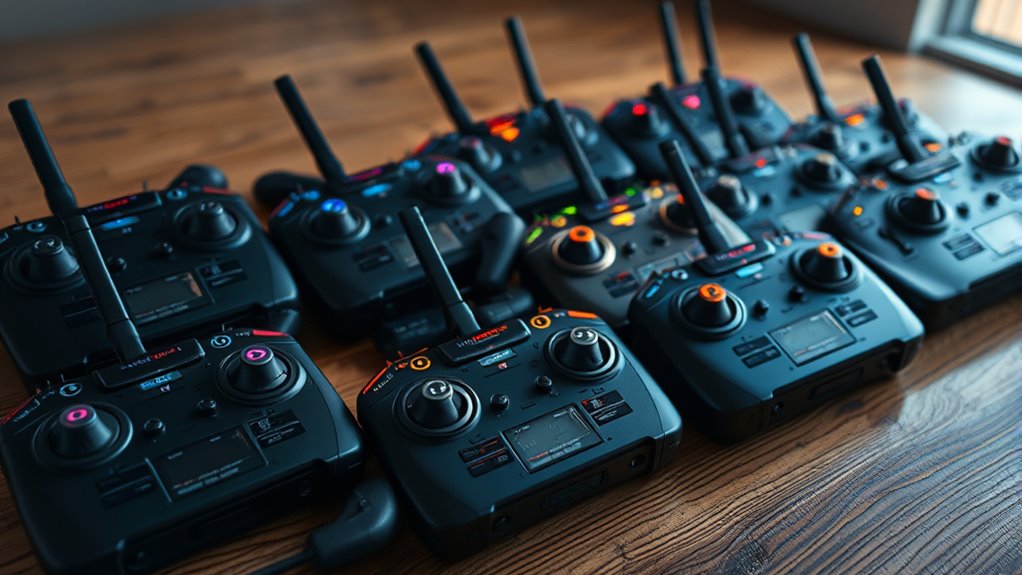

The right FPV radio transmitter is the one control link you will keep through every drone you build, so choosing well matters more than almost any other gear decision. For most pilots, the Radiomaster Pocket with hall gimbals and EdgeTX stands out as the best overall pick — it combines a full-size transmitter platform, reliable ExpressLRS, and premium stick feel at a mid-tier price. If you want the cheapest capable entry point, the BETAFPV LiteRadio 2 SE gets you flying and simming for very little, while the LiteRadio 4 ELRS adds a color screen, more channels, and a built-in battery for pilots who want room to grow. The main tradeoff in this category is between price and gimbal quality: budget radios use potentiometer sticks that wear and drift, while hall-effect gimbals stay precise for years. There is also a protocol split — Frsky D8 versus ExpressLRS — that determines which receivers you can bind to. Read on for the full breakdown of all eight radios and which one fits your flying style.

Get the latest gadgets delivered free — and shop member deals
- Fast, free delivery on millions of items
- Access to Prime Big Deal Days deals on October 6–7
- Prime Video, Amazon Music and more included
Complete the kit


Key Takeaways
- The Radiomaster Pocket lineup dominated the top of this comparison because hall-effect gimbals at its price point are otherwise unavailable — every other radio here under $60 uses potentiometer sticks that drift with wear.
- Half of this lineup (both T8L colors, the LiteRadio 3, and both LiteRadio 2 SE variants) targets entry-level buyers, which means the real decision for beginners is not whether to spend little, but which cheap radio avoids immediate replacement.
- The ExpressLRS versus Frsky D8 protocol split runs through this entire list: the D8-only LiteRadio 3 and LiteRadio 2 SE (D8) lock you into aging BETAFPV receivers, while every ELRS radio here binds to cheap, modern 2.4GHz receivers.
- The two Radiomaster T8L colorways are functionally identical — the choice between them is purely cosmetic — but both earn their spot for weighing around 204g while still shipping with hall gimbals, a rarity among screenless transmitters.
- The LiteRadio 4 ELRS is the only radio in this lineup with a color display and a 2000mAh built-in battery, making it the natural ‘one purchase, no upgrades’ choice despite costing more than the Pocket’s smaller siblings.
| BETAFPV LiteRadio 3 Radio Transmitter (Mode 2, Frsky D8) |  | Best Budget FrSky Option | Mode: Mode 2 | Protocols: Frsky D8, Frsky FCC D16, Futaba S-FHSS | Default Protocol: Frsky FCC D16 | VIEW ON AMAZON | See Our Full Breakdown |
| BETAFPV LiteRadio 4 ELRS Radio Transmitter 10-CH 2000mAh |  | Best for Simulator Training | Protocol: ExpressLRS (ELRS) | Output Channels: 10 | Battery: 1S 2000mAh LiPo (built-in) | VIEW ON AMAZON | See Our Full Breakdown |
| BETAFPV LiteRadio 2 SE Radio Transmitter (Mode 2, Frsky D8) |  | Best Ultra-Cheap Starter | Mode: Mode 2 | Weight: 7.04 ounces | Battery: 1000mAh 1S Lithium-Ion (built-in) | VIEW ON AMAZON | See Our Full Breakdown |
| Radiomaster T8L ELRS 2.4GHz Radio Transmitter (White) |  | Best Lightweight Travel Radio | Protocol: ExpressLRS (ELRS) 2.4GHz | Weight: 204g | Dimensions: 165 x 120 x 70mm | VIEW ON AMAZON | See Our Full Breakdown |
| Radiomaster Pocket ELRS Remote Controller with Hall Gimbal (EdgeTX) |  | Best Overall | Protocol: ExpressLRS (ELRS) | Firmware: EdgeTX 2.10.5 (preinstalled) | Channels: 16 | VIEW ON AMAZON | See Our Full Breakdown |
| Radiomaster Pocket Hall Gimbal Transmitter (ELRS-Charcoal) |  | Best Compact Full-Featured Radio | Firmware: EdgeTX (preinstalled) | Protocol: ExpressLRS (ELRS version) | Gimbals: Hall-effect | VIEW ON AMAZON | See Our Full Breakdown |
| BETAFPV LiteRadio 2 SE ELRS V3 Radio Transmitter | | Best Budget Sim Trainer | Protocol: ExpressLRS V3 | Battery: Built-in 1000mAh 1S, USB rechargeable | Runtime: Up to 8 hours | VIEW ON AMAZON | See Our Full Breakdown |
| RadioMaster T8L ELRS 2.4GHz Radio Transmitter (Blue) |  | Best Ultralight Travel Backup | Frequency: 2.4GHz | Protocol: ExpressLRS (ELRS) | Weight: 204g | VIEW ON AMAZON | See Our Full Breakdown |
| fpv radios transmitter | Protocol | Battery | Gimbals | Mode |
|---|---|---|---|---|
| BETAFPV LiteRadio 3 Radio Tran | — | — | — | Mode 2 |
| BETAFPV LiteRadio 4 ELRS Radio | ExpressLRS (ELRS) | 1S 2000mAh LiPo (built-in) | Advanced-coated anti-wear gimbal sensor | — |
| BETAFPV LiteRadio 2 SE Radio T | — | 1000mAh 1S Lithium-Ion (built-in) | — | Mode 2 |
| Radiomaster T8L ELRS 2.4GHz Ra | ExpressLRS (ELRS) 2.4GHz | — | Quad-bearing X5 Hall-effect nano gimbals | Mode 2 (default) |
| Radiomaster Pocket ELRS Remote | ExpressLRS (ELRS) | 2x 18650 (not included, unprotected flat-top required) | Hall-effect | Mode 2 (default, switchable to Mode 1) |
| Radiomaster Pocket Hall Gimbal | ExpressLRS (ELRS version) | 18650 compatible (not included) | Hall-effect | — |
| BETAFPV LiteRadio 2 SE ELRS V3 | ExpressLRS V3 | Built-in 1000mAh 1S, USB rechargeable | — | — |
| RadioMaster T8L ELRS 2.4GHz Ra | ExpressLRS (ELRS) | Battery cell not included | X5 Hall-effect nano, quad-bearing | — |
More Details on Our Top Picks
BETAFPV LiteRadio 3 Radio Transmitter (Mode 2, Frsky D8)
The LiteRadio 3 occupies a specific niche: it’s the cheapest way to get a genuine radio that binds to FrSky D8 and FCC D16 receivers, which still live inside plenty of whoops and micro quads. Compared with the LiteRadio 2 SE, it improves ergonomics and gives you more switches while keeping the same multi-protocol flexibility, plus simulator support across VelociDrone, Liftoff, TRYP, DRL, and DCL. The Xbox mode for Microsoft Flight Simulator is a nice bonus for desktop practice. What holds it back is fragility around the workflow — firmware versions must match between radio and receiver or binding simply fails, and powering it on before plugging in USB can disable the port entirely. Those quirks make it a poor gift for a total newcomer but a solid tool for a pilot who already knows the FrSky ecosystem.
Pros:- Binds to three legacy protocols (FrSky D8, FCC D16, Futaba S-FHSS) without external modules
- Works as a controller across major FPV simulators on desktop, Android, and tablet
- Xbox mode for Microsoft Flight Simulator on Windows
- Open-source BETAFPV Configurator V2 support on all major platforms
Cons:- Receiver and transmitter firmware versions must match exactly to bind — a common source of setup frustration
- Powering the radio on before USB connection can render the USB port non-functional
- No ExpressLRS support, limiting compatibility with modern receiver builds
Best for: Pilots with existing FrSky D8/D16 or Futaba S-FHSS receivers who want an inexpensive spare or trainer radio
Not ideal for: Anyone starting fresh in 2025 — new builds have moved to ExpressLRS, and this radio can’t talk to ELRS receivers at all
- Mode:Mode 2
- Protocols:Frsky D8, Frsky FCC D16, Futaba S-FHSS
- Default Protocol:Frsky FCC D16
- Firmware Updates:Supported via BETAFPV Configurator V2
- Configurator Platforms:Windows, macOS, Linux (Debian)
- Simulators:VelociDrone, Liftoff, TRYP, DRL, DCL
- Special Modes:Xbox mode for Windows Flight Simulator
Our verdict“A sensible budget pick only if your fleet already runs FrSky or Futaba receivers; otherwise look to an ELRS radio like the LiteRadio 4.”
BETAFPV LiteRadio 4 ELRS Radio Transmitter 10-CH 2000mAh
The LiteRadio 4 is built around one idea: getting stick time as cheaply and wirelessly as possible. Its Bluetooth joystick mode connects to simulators on PC, mobile, and tablet without a cable, and the dedicated Xbox mode pairs with DJI Virtual Flight — something no other radio in this lineup does, making it the closest thing to practicing in a DJI simulator with real hardware. Ten output channels, four-directional trim switches with center reset, and an anti-wear coated gimbal sensor push it well past the LiteRadio 2 SE in capability, and the 2000mAh battery with 15W fast charging covers full training days. The tradeoff is polish: gimbals and switches still sit below the Radiomaster Pocket in feel and precision, so freestyle pilots will outgrow it. As a training and ELRS starter tool, though, it punches above its weight.
Pros:- Bluetooth joystick mode enables cable-free simulator practice on PC, mobile, and tablet
- Xbox mode works with DJI Virtual Flight for realistic DJI-style training
- 10 channels plus 4-directional trim switches with center-tap reset
- 2000mAh battery with 15W fast charging delivers 4-8 hours of runtime
Cons:- Gimbal quality trails full-size radios like the Radiomaster Pocket for precision flying
- Compact form factor limits hand comfort during long sessions for larger hands
Best for: Beginners who want to log hours in FPV simulators — especially DJI Virtual Flight — before flying real ELRS-equipped drones
Not ideal for: Freestyle or racing pilots who need precision gimbals and premium switch feel — the Pocket delivers noticeably better control quality
- Protocol:ExpressLRS (ELRS)
- Output Channels:10
- Battery:1S 2000mAh LiPo (built-in)
- Runtime:4-5 hours at 100mW, 8+ hours at 25mW
- Charging:15W fast charge (~40 minutes)
- Connectivity:Bluetooth, Radio Frequency, USB
- Gimbals:Advanced-coated anti-wear gimbal sensor
- Configurator:BETAFPV Configurator V2 (Windows/macOS/Linux)
- Weight:15.2 ounces
Our verdict“The strongest simulator-first radio here — buy it to train wirelessly, not as your endgame freestyle transmitter.”
BETAFPV LiteRadio 2 SE Radio Transmitter (Mode 2, Frsky D8)
At 7 ounces, the LiteRadio 2 SE is the featherweight of this lineup and the lowest barrier to entry for a real FPV radio. Its 1000mAh battery runs up to 8 hours, it doubles as a USB joystick for Liftoff, DRL, and TRYP, and on-device joystick calibration means a beginner can set it up without touching a computer. Compared with the LiteRadio 3, you give up switches and ergonomics — only five buttons total — but gain a simpler, harder-to-break package. The protocol story is the catch: D16 here only binds with ACCST 1.x receivers like the XM+, so newer FrSky ACCST 2.0+ receivers simply won’t connect. If your goal is a cheap trainer for simulator laps and an old whoop, that’s fine. If you expect to grow into modern gear, the LiteRadio 2 SE ELRS version or the LiteRadio 4 makes more sense.
Pros:- Extremely light at 7.04 ounces with a comfortable beginner form factor
- Up to 8 hours of runtime from the built-in USB-charged 1000mAh battery
- On-device joystick calibration and firmware updates require no PC expertise
- Works as a USB joystick across desktop, Android, and tablet simulators
Cons:- D16 mode only binds ACCST 1.x receivers — no support for ACCST 2.0+ firmware
- Only five buttons, ruling out arm switches or advanced mixes
- Gimbal precision is the weakest in this lineup
Best for: First-time FPV pilots on a tight budget who mainly want simulator practice plus control of older D8/ACCST 1.x whoops
Not ideal for: Anyone planning to upgrade — five buttons and legacy-protocol limits make this a dead-end radio for advancing pilots
- Mode:Mode 2
- Weight:7.04 ounces
- Battery:1000mAh 1S Lithium-Ion (built-in)
- Battery Life:Up to 8 hours
- Protocols:Frsky D8, Frsky FCC D16, Frsky LBT D16, Futaba S-FHSS
- Button Quantity:5
- Simulator Support:Liftoff, TRYP, DRL, DJI Flight Simulator (Xbox mode)
Our verdict“The cheapest legitimate entry into FPV, as long as you accept it’s a trainer radio and not a long-term investment.”
Radiomaster T8L ELRS 2.4GHz Radio Transmitter (White)
At 204 grams, the Radiomaster T8L is the lightest full-grip radio in this roundup, yet it doesn’t cut corners where it counts: quad-bearing X5 hall-effect gimbals mean smooth, drift-free sticks with no mechanical wear — a genuine step up from the potentiometer-based gimbals on the LiteRadio 2 SE. One-click binding to any ExpressLRS receiver gets you flying in seconds, and the single USB-C port handles charging, firmware, and simulator duty. Setup happens through a browser-based Web-UI instead of a screen, which keeps weight down but means no onboard menus — a real limitation compared with the Radiomaster Pocket, which offers a backlit LCD and EdgeTX flexibility. Battery is also excluded, so factor that into the real cost. For a park-flyer or travel radio that disappears into a backpack, though, nothing here competes on portability.
Pros:- Hall-effect gimbals with zero mechanical wear at a low weight class
- 204g ultra-light build fits in any gear bag or backpack
- One-click ExpressLRS binding pairs with any ELRS receiver in seconds
- Single USB-C port covers charging, firmware updates, and simulator play
Cons:- No screen — all configuration requires a Chrome/Edge browser session
- Battery not included, adding cost and a separate purchase before first flight
- Fewer switches than the LiteRadio 4 limits complex setups
Best for: Micro-drone and fixed-wing pilots who want a barely-there radio for travel and quick park sessions with ELRS quads
Not ideal for: Pilots who want onboard tuning and telemetry — the screenless design forces browser-based configuration for every adjustment
- Protocol:ExpressLRS (ELRS) 2.4GHz
- Weight:204g
- Dimensions:165 x 120 x 70mm
- Gimbals:Quad-bearing X5 Hall-effect nano gimbals
- Configuration:Web-UI via Chrome/Edge browser
- Port:USB-C (charging, firmware, simulator)
- Mode:Mode 2 (default)
Our verdict“The pick when grams matter — buy it for travel and micro flying, skip it if you live in your radio’s menus.”
Radiomaster Pocket ELRS Remote Controller with Hall Gimbal (EdgeTX)
The Radiomaster Pocket is the most complete package in this lineup and my pick for best overall. It pairs hall-effect gimbals with EdgeTX 2.10.5 preinstalled, giving you 16 channels, sub-5ms latency, Lua scripts, and compatibility with TBS Crossfire modules — a level of flexibility none of the BETAFPV LiteRadios can match. Compared with the screenless T8L, the backlit LCD changes everything: you can adjust mixes, telemetry, and receiver settings field-side without a laptop. The removable stick ends, foldable antenna, and included carry pouch make it genuinely portable, and the metal throttle structure feels built to last. Two real irritants: batteries are not included, and it demands unprotected flat-top 18650 cells specifically — the wrong cells won’t work. It’s also heavier than the T8L, so ultralight travelers may still prefer that option.
Pros:- EdgeTX 2.10.5 preinstalled with Lua scripting, customization, and Crossfire compatibility
- 16 channels with hall-effect gimbals and under 5ms latency for precision flying
- Backlit LCD and LED switch indicators enable full field-side configuration
- Durable build with metal throttle structure, removable stick ends, and foldable antenna
Cons:- Batteries excluded, and only unprotected flat-top 18650 cells are compatible
- Heavier and larger than the Radiomaster T8L, reducing grab-and-go portability
- EdgeTX depth creates a steeper learning curve than BETAFPV’s simpler configurator
Best for: Pilots who want one radio that grows with them — from first ELRS quad through freestyle, racing, and even Crossfire long-range setups
Not ideal for: Buyers expecting a complete kit out of the box — you must source the correct unprotected flat-top 18650 batteries separately before the first flight
- Protocol:ExpressLRS (ELRS)
- Firmware:EdgeTX 2.10.5 (preinstalled)
- Channels:16
- Gimbals:Hall-effect
- Latency:<5ms
- Battery:2x 18650 (not included, unprotected flat-top required)
- Runtime:Up to 6 hours
- Charging:USB-C
- Mode:Mode 2 (default, switchable to Mode 1)
Our verdict“The most capable and future-proof radio in this roundup — buy it if you’re serious about staying in FPV, and just remember to order batteries.”
Radiomaster Pocket Hall Gimbal Transmitter (ELRS-Charcoal)
The Radiomaster Pocket earns its spot by squeezing genuine big-radio capability into a travel-friendly frame. Compared with the BETAFPV LiteRadio 2 SE, the Pocket pulls ahead with Hall-effect gimbals, a backlit LCD, and EdgeTX firmware, which means smoother stick feel and far more room to grow as a pilot. The foldable antenna and removable stick ends make it genuinely pocketable, and 18650 compatibility delivers long sessions without proprietary batteries. The external module bay accepts Nano-size modules, including TBS Crossfire, so long-range upgrades stay on the table later. The tradeoff is that the small chassis cramps the grips, and the battery ships separately, so the box isn’t flight-ready without one more purchase.
Pros:- Hall-effect gimbals deliver smooth, drift-free stick feel unusual at this size
- EdgeTX firmware offers deep customization far beyond beginner radios
- External module bay supports Nano modules and TBS Crossfire for future long-range flying
- Foldable antenna and removable stick ends make it truly pocketable
Cons:- 18650 battery not included, so it needs a separate purchase before first flight
- Compact chassis feels cramped for pilots with larger hands during long sessions
Best for: Intermediate pilots who want a portable primary radio with Hall gimbals and room to grow into long-range flying
Not ideal for: Pilots with larger hands or those wanting a true bind-and-fly starter kit out of the box, since no battery is included
- Firmware:EdgeTX (preinstalled)
- Protocol:ExpressLRS (ELRS version)
- Gimbals:Hall-effect
- Battery:18650 compatible (not included)
- Module Bay:External bay for RadioMaster Nano and TBS Nano modules
- Display:Backlit LCD screen
- Portability:Foldable antenna, removable stick ends
Our verdict“The Pocket is the pick if you want a small radio that behaves like a full-size transmitter instead of a stripped-down trainer.”
BETAFPV LiteRadio 2 SE ELRS V3 Radio Transmitter
This option stands out for one thing the others in this roundup don’t do as cleanly: doubles as a USB joystick for simulators. The LiteRadio 2 SE ELRS V3 works as a controller across VelociDrone, Liftoff, TRYP, and DRL on desktop, Android, and tablets, with an Xbox mode for the DJI Flight Simulator. Compared with the Radiomaster Pocket, it skips Hall gimbals and EdgeTX, but its built-in 1000mAh battery with USB charging means zero extra purchases — the Pocket needs a separate 18650. The catch is ELRS V3 firmware: it won’t bind to ELRS 2.X receivers, which trips up pilots mixing older gear. Gimbal quality is also its weakest link, and that matters most once you leave the sim.
Pros:- Full USB joystick mode works across major FPV simulators on PC, Android, and tablets
- Built-in 1000mAh battery charges over USB with low-power LED warning
- Up to 8 hours of runtime per charge
- BETAFPV Configurator V2 simplifies setup and firmware updates
Cons:- ELRS V3 firmware will not bind with ELRS 2.X receivers or TX modules
- Entry-level gimbals lack the precision and longevity of Hall-effect sticks
Best for: New pilots who plan to log simulator hours first and want a single affordable controller for both practice and a first whoop
Not ideal for: Pilots running older ELRS 2.X receivers or anyone who expects precise, drift-free gimbals for freestyle flying
- Protocol:ExpressLRS V3
- Battery:Built-in 1000mAh 1S, USB rechargeable
- Runtime:Up to 8 hours
- Simulator Support:VelociDrone, Liftoff, TRYP, DRL, DJI Simulator (Xbox mode)
- Platforms:Windows, macOS, Linux, Android, tablets
- Configuration:BETAFPV Configurator V2
Our verdict“Buy this as a sim trainer with real-transmitter duties as a bonus, not as your long-term primary radio.”
RadioMaster T8L ELRS 2.4GHz Radio Transmitter (Blue)
The RadioMaster T8L takes minimalism further than anything else here: at 204g with no screen at all, configuration happens entirely through a browser Web-UI over USB-C. That sounds like a limitation, but it makes the T8L the lightest way to carry Hall-effect quad-bearing gimbals into the field. Compared with its sibling, the Radiomaster Pocket, you give up the LCD and the external module bay but shed weight and complexity; compared with the LiteRadio 2 SE, the gimbals here are a clear class above. One-click ELRS binding and direct simulator connectivity over USB-C keep the workflow fast. The honest tradeoffs: no screen means a laptop or phone is required for any tuning change, and the battery cell isn’t included.
Pros:- At 204g, it is one of the lightest Hall-gimbal radios available
- Web-UI configuration needs no software installs beyond a Chrome or Edge browser
- One-click ExpressLRS binding pairs receivers in seconds
- USB-C handles charging, firmware updates, and simulator play through one port
Cons:- No onboard screen, so every configuration change requires a connected device
- Battery cell not included, adding a purchase before first use
Best for: Traveling pilots or experienced flyers who want a barely-there backup radio with proper Hall gimbals for quick flights
Not ideal for: Beginners who want to adjust rates or mixes at the field without carrying a phone or laptop
- Frequency:2.4GHz
- Protocol:ExpressLRS (ELRS)
- Weight:204g
- Dimensions:165 x 120 x 70mm
- Gimbals:X5 Hall-effect nano, quad-bearing
- Connectivity:USB-C (charging, firmware, simulator)
- Configuration:Web-UI via Chrome/Edge browser
- Battery:Battery cell not included
Our verdict“The T8L is for pilots who value grams and gimbal quality over self-contained tuning — a superb second radio, an awkward first one.”
How We Picked
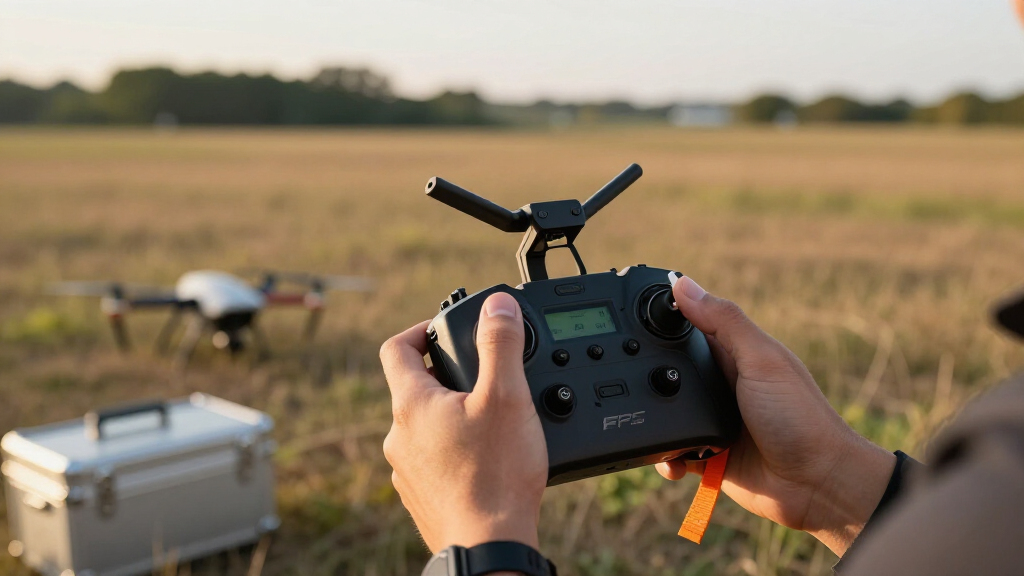
My ranking logic for these eight FPV radios and transmitters came down to four factors: gimbal technology, protocol support, usability, and long-term value. Hall-effect gimbals ranked above potentiometer sticks because they are the single biggest predictor of how a radio will feel two years from now — pots wear, drift, and require cleaning, while hall sensors are contactless and stay consistent. ExpressLRS support ranked above Frsky D8 because ELRS receivers are cheaper, the protocol is actively developed, and D8 is effectively legacy hardware at this point. On usability, I weighed EdgeTX firmware, simulator compatibility over USB, USB-C charging, and how navigable the radio is for a first-time pilot.
Value was judged on cost of ownership, not sticker price. A $30 radio that needs replacing in six months costs more than a $60 radio that lasts years, so the LiteRadio 2 SE earned a budget spot while the Pocket models took the top ranks. Screenless radios like the T8L were not penalized for lacking a display — many pilots prefer the lighter weight — but they were judged on whether they sacrifice anything else. Finally, I checked practical details that matter in daily use: battery type and charging method, physical size for transport, and whether the radio works out of the box with popular simulators.
| fpv radios transmitter | Mode | Protocol | Gimbals |
|---|---|---|---|
| BETAFPV LiteRadio 3 Radio Tran | Mode 2 | — | — |
| BETAFPV LiteRadio 4 ELRS Radio | — | ExpressLRS (ELRS) | Advanced-coated anti-wear gimbal sensor |
| BETAFPV LiteRadio 2 SE Radio T | Mode 2 | — | — |
| Radiomaster T8L ELRS 2.4GHz Ra | Mode 2 (default) | ExpressLRS (ELRS) 2.4GHz | Quad-bearing X5 Hall-effect nano gimbals |
| Radiomaster Pocket ELRS Remote | Mode 2 (default, switchable to Mode 1) | ExpressLRS (ELRS) | Hall-effect |
| Radiomaster Pocket Hall Gimbal | — | ExpressLRS (ELRS version) | Hall-effect |
| BETAFPV LiteRadio 2 SE ELRS V3 | — | ExpressLRS V3 | — |
| RadioMaster T8L ELRS 2.4GHz Ra | — | ExpressLRS (ELRS) | X5 Hall-effect nano, quad-bearing |
Factors to Consider When Choosing Fpv Radios Transmitters
Before committing to any of the eight radios above, it helps to understand the broader decisions that shape this category. The cheapest radio is rarely the cheapest path into FPV, and the most expensive one is not automatically the easiest to learn on.Potentiometer vs. Hall-Effect Gimbals
Gimbal type is the single biggest quality divider in budget FPV radios, and it is the spec most beginners overlook. Potentiometer gimbals use physical contacts that wear down with use, producing center drift, stickiness, and eventual jitter that shows up as twitchy hovering in the simulator and inconsistent flight on the real quad. Hall-effect gimbals measure stick position magnetically with no contact, so they hold their calibration for years and deliver smoother, more repeatable control. The catch is price: hall gimbals typically push a radio’s cost up by $25 to $50, which is exactly the gap you see between the LiteRadio 2 SE and the Radiomaster Pocket in this lineup. My advice for anyone who simulates daily is to pay for hall gimbals immediately — heavy simulator hours are precisely what wears out cheap pots fastest. If you fly casually a few times a month, a potentiometer radio is a defensible way to start.
ExpressLRS vs. Frsky D8 Protocol
The protocol your radio speaks determines which receivers you can bind to, and this choice has long-term consequences. ExpressLRS (ELRS) is open source, actively developed, and its receivers cost a few dollars each, which matters when you build multiple quads. Frsky D8 is an older protocol that still works fine for short-range cruising but has limited range headroom, slower update rates, and a shrinking receiver ecosystem. Several radios in this roundup ship in both D8 and ELRS versions at similar prices — always check the listing carefully, because buying the D8 version by mistake means either replacing receivers or replacing the radio. If you already own D8-based whoop kits, the D8 models make sense as a second radio. Everyone else should default to ELRS, since it is the direction the entire hobby has moved.
Screenless vs. Display Radio
Some pilots assume a radio without a screen is a lesser radio, but that framing misses the point. Screenless transmitters like the Radiomaster T8L exist because many pilots configure everything through a computer or phone and only need the radio for actual flying — dropping the screen cuts weight, cost, and one more component to break. A color display radio like the LiteRadio 4 lets you adjust rates, binds, and model settings at the field without carrying a laptop, which is genuinely convenient if you tune frequently. Beginners often benefit from a screen early on because it makes EdgeTX less intimidating, then stop needing it once their setup stabilizes. Think about where you will actually make adjustments. If the answer is ‘at my desk,’ a screenless radio saves money and grams.
Battery and Charging Setup
Power sounds boring until your radio dies mid-session or you realize you need a separate charger for it. Radios with built-in lithium batteries and USB-C charging, like the LiteRadio 4 and T8L, plug into the same cable as your phone and charge anywhere. Radios that take 18650 cells, like the Pocket, give you the option of swapping in fresh batteries for marathon sessions — but you need a dedicated 18650 charger and must buy cells separately, which some listings exclude. Radios powered by AA batteries are the cheapest to run but add weight and ongoing cost. Match the power system to how you fly: field pilots who travel light prefer internal USB-C cells, while simulator-heavy pilots benefit from swappable 18650s that never tie the radio to a cable.
Simulator Compatibility and Learning Path
Almost every serious pilot learns on a simulator before flying, and your radio is your simulator controller — so its USB behavior matters more than most spec sheets suggest. Every radio in this roundup connects to a PC for simulator use, but the experience differs: some mount as a standard joystick device instantly, while others require specific cable orientation or firmware settings that trip up newcomers. Before buying, confirm the radio works with your chosen simulator (Liftoff, Velocidrone, Uncrashed) and check whether it needs a particular driver on your operating system. There is also a learning-path argument here: spending your first two months on a cheap radio and a simulator is far more effective than spending that budget on a better drone. The radio you buy first does not need to be your forever radio — but as this lineup shows, spending slightly more up front often means it can be.
Size, Weight, and Travel
Transmitter size affects more than backpack space — it changes how you fly. A full-size radio gives you more hand real estate, more switch spacing, and better balance with a neck strap, which matters during long sessions. A compact radio like the Pocket or T8L fits in a jacket pocket, making it far more likely to come along on trips, and lighter radios reduce fatigue during marathon simulator evenings. Pilots with larger hands sometimes find compact radios cramped after an hour, while pilots with smaller hands often prefer them. If you travel to fly or practice sims away from home, weight and folded size should rank high on your list. If your radio lives on a desk strap at one flying field, prioritize gimbal feel over portability.
Frequently Asked Questions
Can I use one of these budget FPV radios as a simulator controller before I even own a drone?
Yes — in fact, that is one of the strongest arguments for buying a radio first. Every transmitter in this roundup connects to a PC over USB and works as a controller for popular simulators like Velocidrone, Liftoff, and Uncrashed. The LiteRadio series and Radiomaster models both register as standard HID joystick devices on Windows, so setup is usually plug-and-play with no drivers. This approach is smarter than buying a cheap console-style simulator controller, because you learn muscle memory on the exact sticks you will fly with later. If simulator practice is your main near-term goal, prioritize gimbal quality over protocol, since smoother sticks translate directly into better training. The Radiomaster Pocket’s hall gimbals make it a particularly good long-term sim controller.
What is the actual difference between the D8 and ELRS versions of the LiteRadio 2 SE?
Physically, they are nearly identical — same case, same stick feel, same 3-channel layout — but they speak completely different radio protocols. The D8 version binds to Frsky D8 receivers, which are limited to 8 channels and older technology with less range headroom and slower refresh rates. The ELRS V3 version speaks ExpressLRS, giving you access to cheap modern receivers, higher packet rates, and a protocol that is still receiving active development and updates. At similar prices, the ELRS version is the better buy for nearly everyone unless you specifically own a fleet of D8-based whoops already. The mistake to avoid is grabbing whichever version is in stock without checking — the listings look almost identical. Buying D8 by accident usually means buying all-new receivers down the road.
Is the Radiomaster Pocket worth the extra cost over the LiteRadio 3 or LiteRadio 4?
For most pilots, yes, and the reason comes down to gimbals and firmware. The Pocket runs EdgeTX, the open-source firmware used by serious pilots worldwide, so tutorials, model setups, and community support all transfer directly. It also ships with hall-effect gimbals, which the LiteRadio 3 lacks — meaning the Pocket’s sticks will feel the same in two years while the LiteRadio’s pots may drift with heavy use. The LiteRadio 4 counters with a color screen and built-in 2000mAh battery, which the Pocket (battery sold separately) does not match at its base price. If you value at-a-field adjustability and all-inclusive packaging, the LiteRadio 4 is a legitimate alternative. If you value stick precision and a platform you will never outgrow, the Pocket is the stronger long-term purchase.
Do I need a screen on my FPV transmitter as a beginner?
Not necessarily, and paying for one you will not use is a common beginner mistake. A screen helps when you are changing settings often — adjusting rates, rebinding receivers, or troubleshooting at the field — which is something new pilots do more frequently than experienced ones. That said, most configuration can be done once at a desk via USB, and screenless radios like the T8L are lighter, cheaper, and have one fewer component to fail. If you have a laptop handy and do not mind plugging in for changes, skip the screen and put the savings toward better gimbals. If you expect to tweak settings between flights at the park, a display radio like the LiteRadio 4 will save you genuine frustration. The honest answer is that most beginners use the screen heavily for the first month and rarely after that.
Why does the Radiomaster Pocket listing say battery not included, and what do I need to buy?
The Pocket is designed around replaceable 18650 lithium cells rather than a sealed internal battery, and Radiomaster ships it without them to keep the base price down and let you choose your own cells. You will need to purchase 18650 batteries separately, plus a compatible charger if you do not already own one — factor that into your total budget when comparing against radios like the LiteRadio 4, which includes its battery. The upside of this design is real: when the cells age, you replace them for a few dollars instead of the whole radio, and you can carry charged spares for all-day flying sessions. Make sure to buy quality cells from a reputable brand, since poor 18650s are a known fire and performance hazard. Once you add cells and a charger, the Pocket still typically undercuts full-size premium radios while outlasting them.
Conclusion
After comparing all eight radios, the recommendation comes down to what kind of pilot you are — or plan to become. For best overall, the Radiomaster Pocket with hall gimbals (ELRS) is the pick that balances price, precision, and longevity; it is the radio least likely to need replacing as your skills grow. For best value, the Radiomaster T8L ELRS delivers hall gimbals, EdgeTX, and a light 204g build at a budget price, with your choice of white or blue purely a matter of taste. For best for beginners, the BETAFPV LiteRadio 4 ELRS earns the spot with its color screen, built-in 2000mAh battery, and 10 channels — it removes setup friction at exactly the stage where frustration causes people to quit.
For pilots on the tightest budget, the LiteRadio 2 SE ELRS V3 is the smarter cheap option over its D8 sibling because it speaks the modern protocol, though both accept potentiometer gimbals as the tradeoff. The LiteRadio 3 (D8) and LiteRadio 2 SE (D8) remain reasonable only for pilots already invested in D8 receivers. Whatever you choose, treat the radio as your longest-lived piece of FPV gear: buy for the pilot you will be in a year, not the one you are today, and you will rarely regret the extra twenty dollars.
Fall Picks
fall essentials
As an affiliate, we earn on qualifying purchases.