
🔍 Read the full analysis: Fast, Easy Storage In Your Pocket: 13 Best Portable SSDs For 2027 on ThorstenMeyerAI.com

Get the latest gadgets delivered free with Prime
- Fast, free delivery on millions of items
- Prime Video, Amazon Music and more included
- Member-only deals all year
TL;DR
A buyer’s guide from ThorstenMeyerAI.com compares 13 portable SSD picks for 2027, emphasizing capacity, advertised speed, device compatibility and design. It recommends the Samsung T7 1TB as a balanced starting point while warning that the Samsung T9’s advertised speeds depend on a compatible USB 3.2 Gen 2×2 connection.
ThorstenMeyerAI.com’s original analysis compares 13 portable SSD picks for 2027, weighing capacity, advertised transfer speeds, connection requirements and design for different uses. The guide recommends the Samsung T7 1TB as a balanced option for everyday transfers, while noting that faster advertised figures on premium models depend on compatible devices and cables.
The guide’s central distinction is between a drive’s advertised maximum speed and the speed a buyer’s setup can actually use. Samsung’s T9 models in 1TB, 2TB and 4TB capacities advertise up to 2,000 MB/s, but the source says approaching that level requires a USB 3.2 Gen 2×2 host connection and a suitable cable. A USB-C socket by itself does not establish that the port supports that standard.
For buyers whose devices support USB 3.2 Gen 2, the guide points to the T7 or models advertising roughly 1,000–1,050 MB/s as potentially more practical matches, as discussed in this portable SSD guide. It also compares SanDisk’s standard Portable SSD options with its Extreme family, describing the latter as more suitable for buyers who value a tougher portable design. The source cautions that buyers should check the precise model and its listed specifications, as some listings under similar names and capacities show different speed claims.
Capacity is another dividing line in the list, a factor also considered in this portable SSD roundup. The source characterizes 500GB as a lighter-carry choice, while 1TB and 2TB models offer more room for active work; 4TB versions are aimed at larger photo, video or project libraries. It says the ranking weighs intended use and limitations, rather than assuming that a larger capacity automatically means better performance. The supplied material does not name all 13 models or provide a full ranked product table.
The 13 picks
- 1
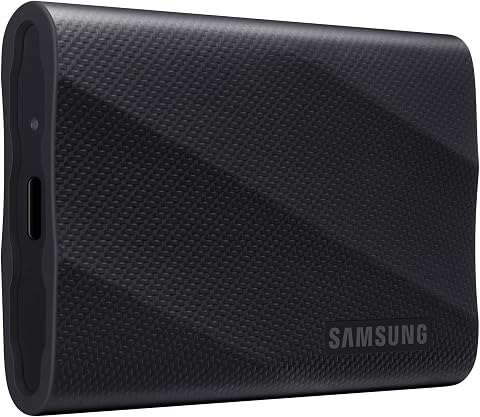 Samsung T9 Portable SSD 4TB, USB 3.2 Gen 2×2 External Solid State DriveView on Amazon →
- 2
 SanDisk Extreme Portable SSD, 4TB, Up to 2000MB/sView on Amazon →
- 3Samsung T9 Portable SSD 2TB, USB 3.2 Gen 2×2, Up to 2,000 MB/sView on Amazon →
- 4SanDisk Extreme Portable SSD, 2TB, Up to 2000MB/sView on Amazon →
- 5
 SanDisk Extreme 2TB Portable SSDView on Amazon →
- 6
 SanDisk 2TB Portable SSD, Up to 1000 MB/s Read Speed, BlackView on Amazon →
- 7Samsung T9 Portable SSD 1TB, USB 3.2 Gen 2×2, Up to 2,000 MB/sView on Amazon →
- 8SanDisk Extreme Portable SSD, 1TB, Up to 2000MB/sView on Amazon →
- 9
 Samsung T7 Portable SSD 1TB Titan Gray, USB 3.2 Gen 2, Up to 1,050MB/sView on Amazon →
- 10SanDisk 1TB Extreme Portable SSD, Up to 1050MB/sView on Amazon →
- 11SanDisk 1TB Portable SSD, Up to 1000MB/s Read Speed, BlackView on Amazon →
- 12SanDisk 500GB Portable SSD, Up to 1000MB/s Read Speed, BlackView on Amazon →
- 13
 SSK Portable SSD 500GB External Solid State Drive USB-C/USB-AView on Amazon →
Match the Drive to Your Devices
The guide’s practical point is that buyers may pay for speed their computer cannot use. A high advertised transfer rate is not a guarantee of everyday performance: the host port, cable, file sizes and workload all matter. Checking the device specifications before buying can help avoid spending extra on a speed tier that the setup cannot reach.
Capacity and durability also affect how useful a drive will be. A small SSD may be easier to carry but fill quickly with media projects, while a 4TB model may be unnecessary for documents and a modest active-work folder. A rugged-style product can suit frequent travel, but it does not make data loss impossible. The guide advises keeping another copy of important files rather than treating a portable SSD as the sole backup.
Products Worth Considering

DJI Osmo 360 Motorcycle Handlebar POV Combo

LG UltraGear 32GX850A-B 32-inch 4K UHD OLED Gaming Monitor

Samsung 27-Inch Odyssey OLED G6 QHD Gaming Monitor (G61SH)
As an affiliate, we earn on qualifying purchases.
How the Guide Compares SSDs
ThorstenMeyerAI.com says it ranked the drives by advertised speed, usable capacity, connection needs and portability, alongside how well each design suits likely workloads. It says the ranking favors balanced usefulness over headline speed and judges capacity variants according to the buyers they serve.
The source also says published speed figures should be treated as maximum claims, not guaranteed results. Transfers may vary with the computer, cable, file size and sustained workload. Its guidance asks buyers to verify the exact model—particularly where SanDisk listings appear similar—rather than relying on brand or capacity alone. The supplied text is a buying guide, not a report of independent laboratory testing, and gives no test results or prices.
“The Samsung T7 is the balanced starting point.”
— ThorstenMeyerAI.com guide
Details Buyers Still Need to Check
The supplied source material does not provide the names and specifications of all 13 individual picks, a complete ranking, prices, availability or a publication date. It therefore does not support a model-by-model assessment of every item promised by the title. The guide also does not provide independent benchmark results establishing how the drives perform under the same test conditions.
It is also unclear which exact SanDisk listings the source says show different speed claims. Buyers would need to check the specific product page and model number before purchase. The source offers general compatibility guidance but does not verify performance on particular computers, phones or tablets.
Check Listings Before Buying
Readers considering one of the drives should confirm the exact model, capacity, included cable and supported USB standard against their own device specifications. They should compare current prices and verify any protection claims in the listing for the specific product, rather than assuming details apply across an entire product family.
The source does not announce a later update or testing schedule. A fuller evaluation of all 13 picks would require the complete product list, current availability and comparable performance testing; until then, its recommendations are best read as buying guidance rather than a verified performance ranking.
Key Questions
Which portable SSD does the guide recommend as a balanced starting point?
The guide recommends the Samsung T7 1TB for everyday transfers, citing its USB 3.2 Gen 2 connection and balance of speed, capacity and compatibility.
Can every device reach the Samsung T9’s advertised 2,000 MB/s?
No. The source says approaching the T9’s advertised maximum requires a compatible USB 3.2 Gen 2×2 host connection and suitable cable. A USB-C connector alone does not confirm support for that speed.
How much portable SSD capacity should a buyer choose?
The guide describes 500GB as a lighter-carry option, 1TB or 2TB as roomier choices for active work, and 4TB as a fit for larger media or project libraries. The right capacity depends on the files a buyer expects to keep on the drive.
Does a rugged-style SSD protect files from loss?
No drive design can make data loss impossible. The guide says to check the specific model’s protection details and keep a second copy of important files elsewhere.
Source: ThorstenMeyerAI.com