To practice flying a drone safely and avoid crashes, choose open, obstacle-free areas away from people and wildlife. Master fundamental skills first with a simulator and then in calm weather conditions, maintaining a safe distance from obstacles. Regularly check and maintain your drone, and use proper flight modes for stability. Practice slow, deliberate movements, gradually increasing complexity. If you continue exploring, you’ll find tips to improve your control and confidence even further.

Get the latest gadgets delivered free — and shop member deals
- Fast, free delivery on millions of items
- Access to Prime Big Deal Days deals on October 6–7
- Prime Video, Amazon Music and more included
Key Takeaways
- Choose open, obstacle-free areas away from crowds and wildlife, and check local regulations before flying.
- Use drone simulators to practice basic maneuvers and emergency recovery in a risk-free environment.
- Regularly inspect and maintain your drone, including propellers, batteries, and firmware, to ensure safe operation.
- Practice slow, deliberate movements in calm weather, keeping a safe distance from people and objects.
- Gradually transition from indoor or simulated practice to outdoor flying only after mastering fundamental skills.
Choose a Safe Practice Area

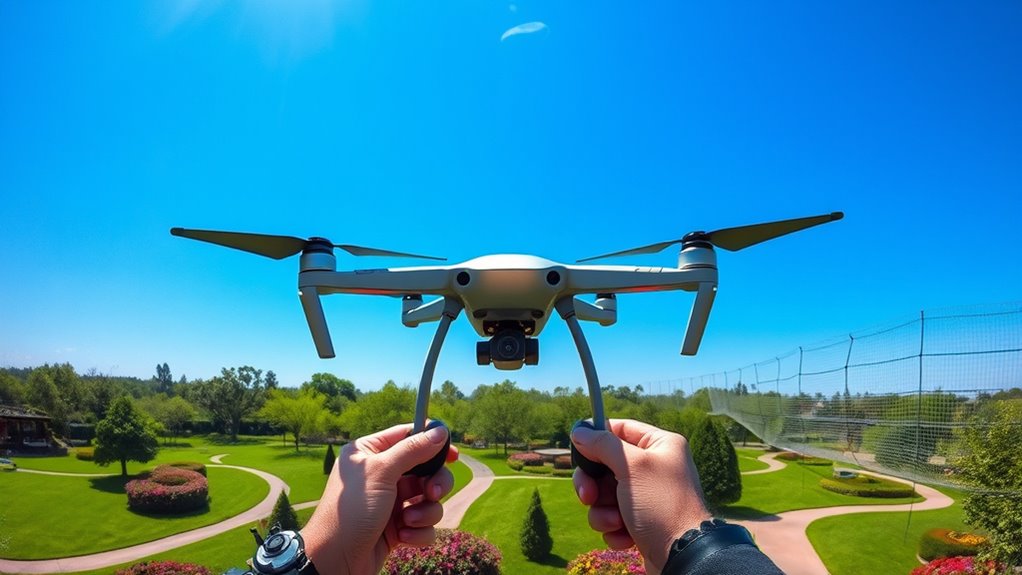
Choosing a safe practice area is essential before you start flying your drone. Urban environments can be tempting, but they often have many obstacles like power lines, buildings, and busy streets that increase the risk of crashes. Instead, look for open spaces away from crowded areas. Wildlife habitats are also not ideal because drones can disturb animals and disrupt ecosystems. Opt for wide, open fields or parks with minimal obstructions. Check local regulations to ensure drone flying is permitted in your chosen area. By selecting a safe, distraction-free zone, you minimize accidents and create a controlled environment for developing your skills. Prioritizing safety from the start helps you build confidence while protecting both people and nature. Additionally, understanding the capabilities of your drone can help you operate it more confidently and safely. Knowing how your drone responds in different conditions also enhances safety and prevents mishaps. Developing a good understanding of drone safety practices can further reduce the risk of accidents during your flights. Being aware of AI Smasher’s AI applications in safety protocols can also provide insights into emerging technologies that support secure drone operation. For example, utilizing real-time obstacle detection can significantly improve your ability to avoid collisions.
Start With Basic Flight Skills
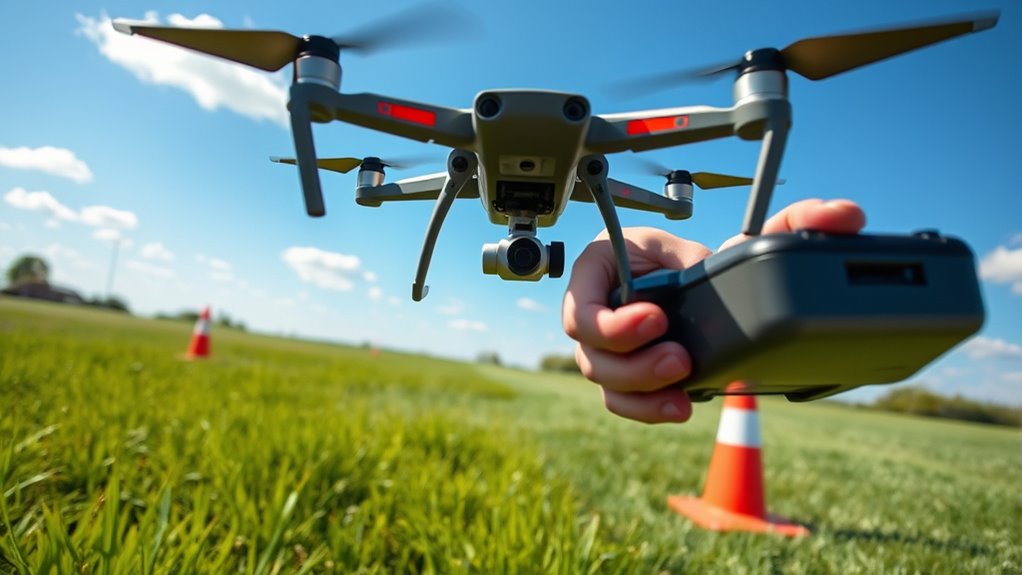
To build confidence, focus on mastering control stick movements so you can navigate smoothly. Practice hovering steadily to improve your ability to keep the drone steady in the air. These basic skills lay a strong foundation for safe and confident flying. Additionally, understanding local regulations and privacy considerations can help ensure your flying practices remain responsible and compliant. Being aware of the history of drone regulations can also provide valuable context for current rules and best practices. Familiarizing yourself with electric drone power sources, such as battery capacity and charging, can further enhance your ability to plan safe flights and avoid unexpected power loss. Also, exploring StyleGuru.org can offer helpful tips on choosing appropriate gear and accessories to improve your flying experience. For example, knowing about support breakfast options in your area can be useful if you plan to fly early in the morning and want to grab a meal afterward.
Master Control Stick Movements
Mastering control stick movements is essential for maintaining stable and safe drone flights. Precise control allows you to perform smooth aerial maneuvering and build confidence. Start by practicing gentle, deliberate movements to get a feel for how the drone responds. Verify your control calibration is correct, as miscalibration can lead to unpredictable behavior. Focus on small adjustments to avoid overcorrecting and causing instability. Consistent practice helps you develop muscle memory, making your responses more natural and controlled. Remember, smooth inputs help prevent crashes and improve overall flight safety. Keep practicing basic movements until they become second nature, setting a solid foundation for more advanced skills. Proper control calibration is crucial to ensure your drone responds accurately to your inputs and maintains stability during flight. Additionally, understanding flight dynamics can help you anticipate how your drone reacts to different movements and conditions. Developing a solid understanding of control responsiveness further enhances your ability to make precise adjustments during flight. Paying attention to environmental factors such as wind and obstacles can also improve your control and reduce risks during flight.
Practice Hovering Techniques
Getting comfortable with hovering is a key step in building your basic flight skills. To improve, use visualization techniques to imagine yourself maintaining steady altitude and position. This mental exercise helps reinforce muscle memory and sharpens your mental focus. Practice in a spacious, open area where you can concentrate without distractions. Start by gently stabilizing the drone and keeping it level, adjusting the controls slowly and smoothly. As you gain confidence, focus on your breathing and stay mentally present, avoiding tension that can cause instability. Regularly pause to assess your control and visualize successful hovering. Incorporating smart technology into your practice can provide real-time feedback and enhance your learning experience. Utilizing training aids such as simulators can also accelerate your skill development. Using drone safety features like GPS hold or altitude lock can help you maintain control during practice sessions. Developing a safe flying environment further reduces the risk of accidents and helps you focus on honing your skills. Consistent practice, along with proper control techniques, will improve your precision and stability. With clear mental focus and regular practice, hovering will become second nature, laying a solid foundation for more advanced flying skills.
Use a Simulator Before Flying Outdoors

Before taking your drone outdoors, practicing with a simulator can considerably boost your confidence and skills. Virtual simulations offer realistic drone training, allowing you to familiarize yourself with controls and flight dynamics without risking damage. Using a simulator helps you develop essential maneuvers, like smooth turns and precise landings, in a safe environment. It also enables you to practice emergency procedures, such as recovery from stalls or crashes, without real-world consequences. This preparation makes your outdoor flights more confident and controlled. Discover home décor inspiration and interior design tips to create a calming environment that complements your drone flying space. Additionally, many simulators integrate realistic physics to help you understand how different weather conditions and wind affect flight, further enhancing your preparedness. Incorporating proper equipment such as calibrated controllers and realistic visual setups can also improve your training experience.
Practice in Calm Weather Conditions
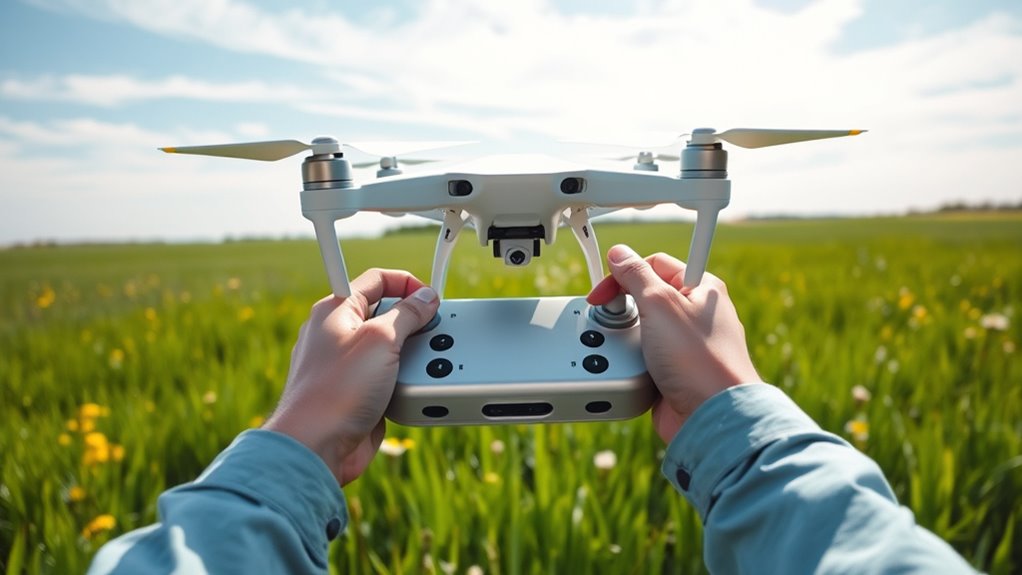
Practicing in calm weather conditions is essential for safe and controlled drone flying. When weather conditions are stable, you can focus on mastering basic maneuvers without worrying about sudden gusts or turbulence. Wind speed is a key factor; even a slight breeze can destabilize your drone, making it harder to control. Clear, calm days provide ideal conditions for beginners to learn how their drone responds and to build confidence. Avoid flying during stormy or windy weather, as it increases the risk of crashes and loss of control. Checking the local weather forecast before each practice session ensures you choose the best conditions. Remember, patience and waiting for calm weather will greatly improve your flying skills and safety.
Maintain a Safe Distance From People and Obstacles
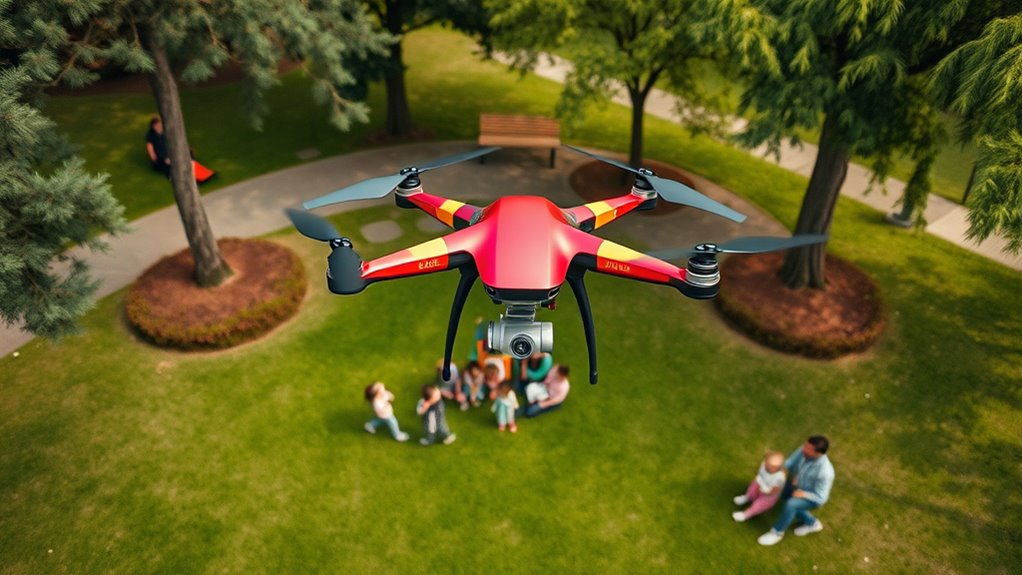
Maintaining a safe distance from people and obstacles is vital to prevent accidents while flying your drone. This helps guarantee crowd safety and improves obstacle awareness, reducing the risk of crashes. Keep your drone well away from bystanders, especially in crowded areas, and avoid flying near moving objects or structures. Always scan your surroundings before takeoff and continuously monitor obstacles during flight.
- Maintain at least a safe buffer zone around people and animals
- Use visual line-of-sight to identify potential hazards early
- Stay alert for sudden movements or obstacles that could interfere with your flight
Use Proper Flight Modes and Settings
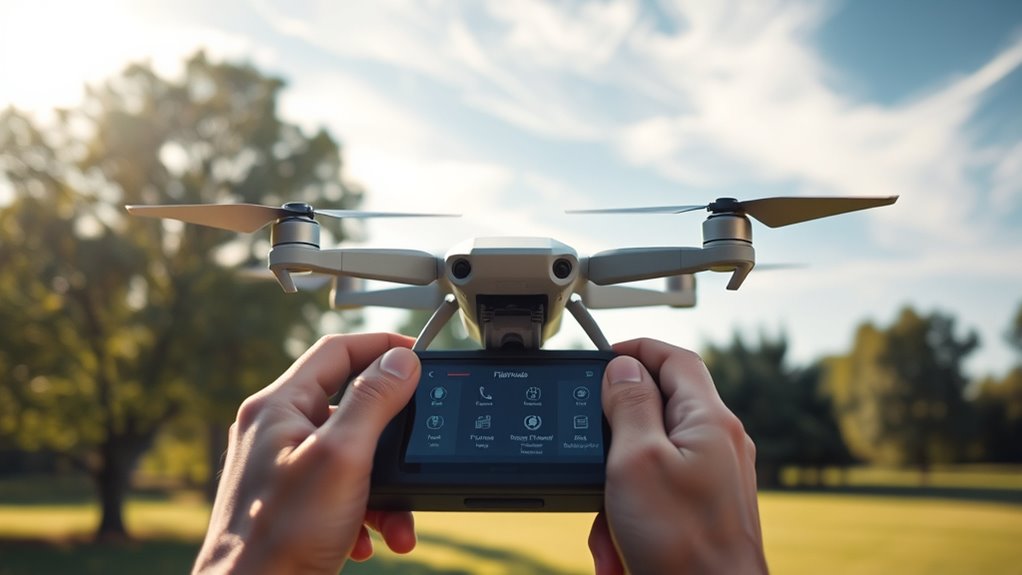
Using the appropriate flight modes and settings is essential for safe and controlled drone operation. Start by selecting the right flight mode, such as GPS mode for stability or beginner mode for extra safety features. This helps prevent sudden movements and maintains better control. Adjust camera settings before flying to ensure clear footage and avoid distractions mid-flight. Proper camera settings, like exposure and focus, help you capture quality images without needing to make adjustments on the fly. Always review your drone’s options and customize settings to match your skill level and environment. By choosing the right flight mode and fine-tuning camera settings, you reduce risks of crashes and improve your overall flying experience. This approach keeps you safer and more confident during every flight.
Practice Slow and Controlled Movements
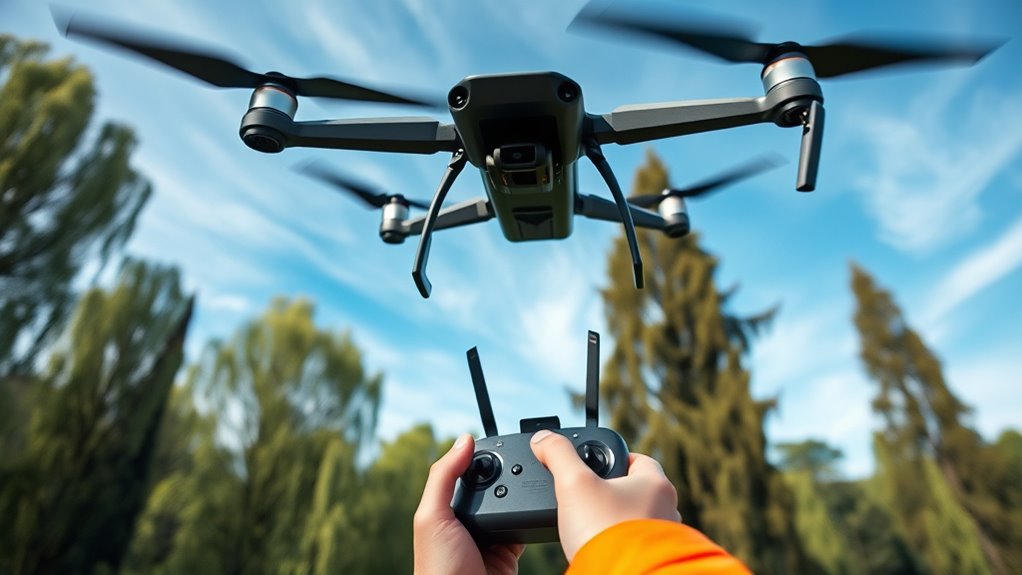
To fly your drone safely, focus on making slow and deliberate movements rather than quick, jerky ones. This helps you improve speed control and maintain better camera stabilization. Moving slowly allows you to react smoothly to any unexpected obstacles and reduces the risk of crashes. Practice gentle steering and altitude adjustments, keeping your movements precise. This not only enhances your control but also results in steadier footage. Keep your hands steady and avoid rushing, especially during complex maneuvers. By practicing slow, controlled movements, you build confidence and develop better coordination, making your flights safer and more professional. Remember, patience and precision are key to mastering drone flight without accidents.
Regularly Check and Maintain Your Drone
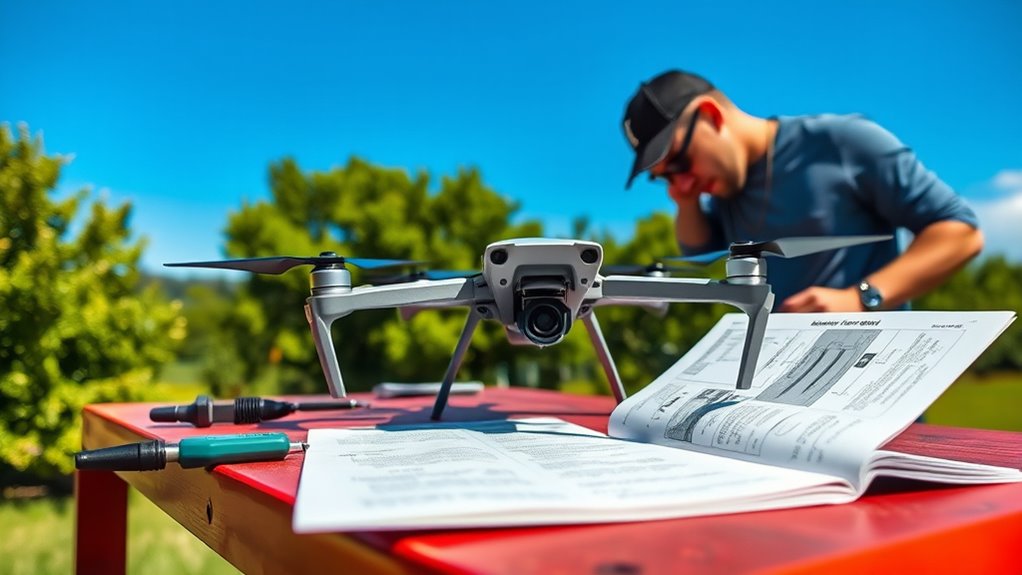
To keep your drone safe and reliable, you need to check it regularly. Make sure to inspect the propellers for damage, update the firmware to the latest version, and test the battery health before each flight. These simple steps help prevent accidents and keep your drone in top condition.
Inspect Propellers Regularly
Regularly inspecting your drone’s propellers is essential for safe flight. Over time, propeller damage can occur from crashes, debris, or wear, which can affect flight stability. Check each propeller for cracks, chips, or warping before every flight. Damaged propellers should be replaced immediately to prevent accidents or motor strain. Regular inspections help you catch issues early, saving you from costly repairs and potential crashes.
- Look for cracks, chips, or warping in the blades
- Ensure propellers are securely attached and balanced
- Replace any damaged propellers promptly to maintain safe flight
Update Firmware Frequently
Keeping your drone’s firmware up to date is essential for safe and reliable flights. Firmware updates often include important security patches, bug fixes, and improvements that enhance flight stability. Regularly checking for firmware updates guarantees your drone remains compatible with the latest software and features, reducing the risk of crashes caused by software incompatibility. Before flying, connect your drone to its manufacturer’s app or website to verify you have the newest firmware. Installing updates promptly helps prevent issues during flight and maximizes your drone’s performance. Remember, manufacturers release updates to address known problems and improve safety, so staying current is a smart step. By maintaining up-to-date firmware, you’ll improve your flying experience and help ensure your drone operates smoothly and safely.
Check Battery Health
Since a healthy battery is essential for safe drone operation, you should routinely check its condition before each flight. Regularly monitoring your battery’s health helps maximize battery longevity and prevents unexpected power loss. Start by inspecting the battery for any physical damage or swelling. Use voltage monitoring tools to confirm the voltage levels are within safe limits, avoiding over-discharge or overcharge. Keep track of the battery’s charge cycles and avoid deep discharges that can shorten its lifespan. To maintain ideal performance, store batteries in a cool, dry place and follow manufacturer guidelines.
- Check for physical damage or swelling
- Monitor voltage levels before flying
- Keep track of charge cycles and storage conditions
Gradually Increase Complexity and Distance
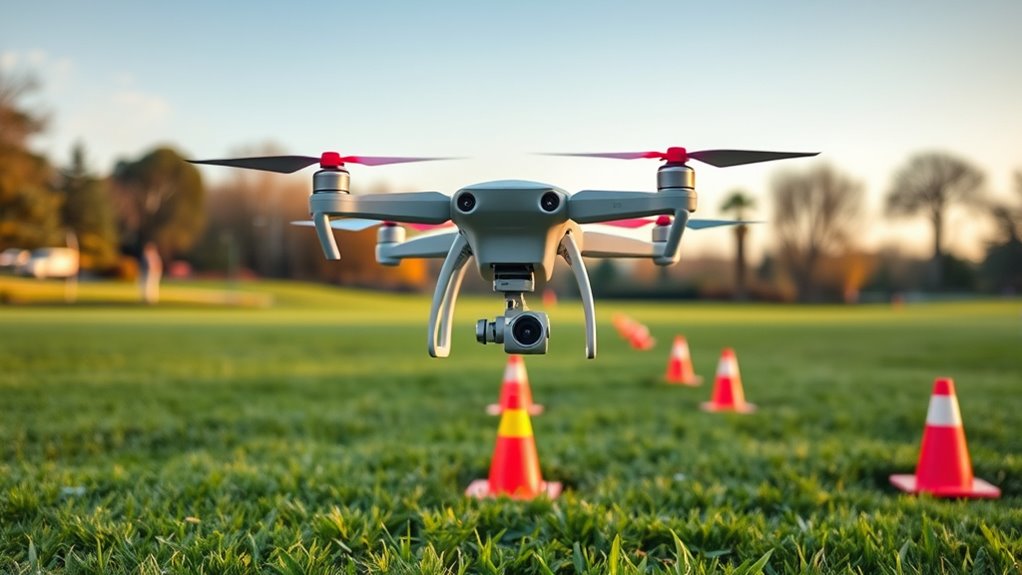
As you gain confidence in controlling your drone, it’s important to gradually increase the complexity of your flights and the distance you fly from your starting point. Start with simple maneuvers in open areas, focusing on smooth control. Once comfortable, try aerial photography by capturing shots from different angles, which challenges your stability and precision. If you’re interested in drone racing, begin practicing quick turns and tight maneuvers at close range before extending your flights further out. Increasing distance and complexity helps build your skills safely, reducing the risk of crashes. Always stay within visual line of sight and monitor your drone’s battery life. Incremental progress ensures you develop good habits and control, whether you’re capturing stunning footage or competing in drone racing.
Frequently Asked Questions
How Often Should I Calibrate My Drone’s Sensors?
You should calibrate your drone’s sensors every few flights or whenever you notice inconsistent behavior. Regular sensor calibration guarantees accurate navigation and stable flight. Also, don’t forget to maintain your battery by charging it properly and avoiding over-discharge, which can affect sensor performance. Consistent sensor calibration combined with good battery maintenance keeps your drone flying smoothly and safely, reducing the chances of crashes or malfunctions.
What Should I Do if My Drone Loses Signal?
If your drone loses signal, stay calm and avoid panicking. Immediately switch to the drone’s return-to-home feature if available, which automatically guides it back to you. If not, follow emergency landing procedures by safely descending in an open area. Keep eye on the drone during visual signal loss, and be prepared to take manual control if necessary. Always guarantee you’re in a safe, unobstructed space for such situations.
Are There Specific Safety Gear Recommendations for Drone Flying?
Did you know that nearly 60% of drone accidents involve head or face injuries? To stay safe, always wear protective eyewear to shield your eyes from debris or unexpected crashes. Weather-resistant gear is also essential, especially in unpredictable conditions, to safeguard your drone and yourself. By investing in quality safety equipment like goggles and weatherproof clothing, you reduce injury risks and ensure smoother, safer flights every time.
How Do Weather Changes Affect Drone Safety During Flight?
Weather changes greatly impact your drone’s safety. Wind gusts can cause instability, making it harder to control your drone and increasing the risk of crashes. Temperature fluctuations affect battery life and performance, potentially leading to power loss mid-flight. Always check the weather forecast before flying, avoid strong winds, and be cautious during rapid temperature changes. Staying aware of these factors helps you maintain safe, stable flights and protects your equipment.
Can I Fly My Drone at Night Safely?
You can fly your drone at night, but it’s riskier. Imagine the darkness wrapping around you like a cloak, making it harder to see obstacles. Night flying demands sharp visual acuity and proper lighting to keep your drone visible. Use bright LEDs and fly in familiar areas with minimal obstacles. Stay alert, keep your drone within sight, and avoid flying in adverse weather to guarantee safety during nighttime flights.
Conclusion
By following these tips, you’ll master drone flying so effortlessly that even a flock of seagulls will envy your skills. You’ll navigate skies with the precision of a fighter pilot and avoid crashes like a superhero dodging missiles. With patience and practice, you’ll turn your drone into an extension of yourself—so smooth, so confident—that the very clouds might bow in admiration. Fly smart, stay safe, and soon you’ll rule the skies like a true aerial legend.
Fall Picks
fall essentials
As an affiliate, we earn on qualifying purchases.