The best thermal imaging camera for most home and HVAC inspections is the Thermal Master Thor002, whose listed 512 × 384 resolution gives it the clearest detail on this shortlist. The FOXWELL HT280 stands out for a 320 × 240 display and PC analysis, while the TOPDON TC004 Mini offers a more compact 240 × 240 option. The main tradeoffs are image detail versus portability, on-device tools versus smartphone dependence, and added features versus ease of use. A higher resolution can help separate nearby temperature patterns, but it does not replace correct measurement technique or knowledge of emissivity and distance. Read on for the full comparison, selection criteria, and advice on matching a camera to your work.

Get the latest gadgets delivered free with Prime
- Fast, free delivery on millions of items
- Prime Video, Amazon Music and more included
- Member-only deals all year
Complete the kit



Key Takeaways
- The Thor002 has the highest stated resolution in this lineup: its 512 × 384 specification makes it the clearest-detail pick, though its extra capability may be unnecessary for occasional household checks.
- The FOXWELL HT280 and RT280 share a 320 × 240 LCD specification but not the same stated thermal resolution: the HT280 lists 260 × 260 TISR, while the RT280 lists 240 × 180 TISR, so buyers should distinguish display figures from thermal sensor figures.
- Several 240 × 240 options target different needs: the TOPDON TC004 Mini prioritizes a compact format, the H128 lists a 24-hour battery and IP65 protection, and the GT14S models emphasize light weight or image features.
- Temperature range alone is not a shortcut to better inspection: the HF96 and TOPDON TC004 list ranges reaching 1022°F, but resolution, measurement conditions, and the task itself matter just as much.
- Phone-connected and handheld designs serve different routines: the FLIR One Pro is made for compatible USB-C iPhones, while the dedicated handheld cameras in this list operate as standalone instruments.
| Thermal Camera with 240×240 Resolution for Home Inspection |  | Best for Tough Job Sites | Resolution: 240×240 | Refresh rate: 25Hz | Temperature range: -4°F to 1,022°F | VIEW LATEST PRICE | See Our Full Breakdown |
| FOXWELL HT280 Thermal Imaging Camera, 320×240 LCD, 260×260 TISR, Handheld Infrared Camera with Temp Alarm and PC Analysis |  | Best for Inspection Documentation | Thermal resolution: 260×260 TISR | Display: 2.8-inch LCD, 320×240 | Temperature range: -10°C to 500°C | VIEW LATEST PRICE | See Our Full Breakdown |
| BSIDE Thermal Imaging Camera 240 x 240 Resolution Handheld Infrared IR Camera with 15 Thermal Palettes and 320 x 240 Display for Home Inspection and HVAC |  | Best for Palette and Emissivity Control | IR resolution: 240×240 | Display: 2.4-inch TFT LCD, 320×240 | Temperature range: -20°C to 550°C (-4°F to 1,022°F) | VIEW LATEST PRICE | See Our Full Breakdown |
| TOPDON TC004 Mini Thermal Imaging Camera, 240 x 240 TISR Resolution |  | Best Compact Pick | Thermal resolution: 128×128 native; 240×240 TISR | Temperature range: -4°F to 842°F (-20°C to 450°C) | Field of view: 40° × 30° | VIEW LATEST PRICE | See Our Full Breakdown |
| GT24S 320×240 UIRA-IR Thermal Camera with Thermometer Mode |  | Best for High-Temperature Diagnostics | Sensor resolution: 256×192 | Enhanced resolution: 320×240 | Frame rate: 25Hz | VIEW LATEST PRICE | See Our Full Breakdown |
| H128 Handheld Thermal Camera, 240×240 TISR Resolution, 24h Battery Life, Infrared Camera with Temperature Alarm, -4℉ to 842℉ Temp Range, IP65 |  | Best for Long Inspection Days | Resolution: 240×240 TISR | Battery life: 24 hours | Temperature range: -4°F to 842°F | VIEW LATEST PRICE | See Our Full Breakdown |
| HF96 Thermal Camera with AI Scene Detection, Laser Pointer, -4°F to 1022°F |  | Best for Guided Anomaly Detection | Resolution: 240×240 | Thermal sensitivity: Below 50mK | Temperature range: -4°F to 1022°F | VIEW LATEST PRICE | See Our Full Breakdown |
| GT14S Thermal Imaging Camera with Thermometer Mode, Ultra-Lightweight 240g |  | Best Lightweight Pick | Weight: 240g | Temperature range: 4°F to 1022°F | Battery: 2500mAh rechargeable; up to 14 hours | VIEW LATEST PRICE | See Our Full Breakdown |
| TOPDON TC004 3.5-inch Thermal Imaging Camera, -4°F to 1022°F Temperature Range |  | Best for Detailed Image Capture | Display: 3.5 inches | Thermal resolution: 512×384 pixels | Temperature range: -4°F to 1022°F | VIEW LATEST PRICE | See Our Full Breakdown |
| Flir One Pro – Thermal Imaging Camera for iOS Smartphones (iPhone 15 and Newer with USB-C) |  | Best Smartphone-Connected Pick | Compatibility: iPhone 15 and newer with USB-C | Resolution: 480×360 super resolution from 160×120 | IR technology: Vivid IR with MSX merging | VIEW LATEST PRICE | See Our Full Breakdown |
| GT14S Thermal Imaging Camera with Edge Enhancement and Thermometer Mode |  | Best for Long Inspection Shifts | Measurement range: -4°F to 1022°F | Weight: 15.1 ounces | Battery life: Up to 14 hours | VIEW LATEST PRICE | See Our Full Breakdown |
| FOXWELL RT280 Thermal Imaging Camera, 320 x 240 LCD, 240 x 180 TISR |  | Best for Rugged, Documented Inspections | Display: 2.8-inch LCD | Resolution: 320 x 240 LCD; 240 x 180 TISR | Temperature range: -4°F to 1022°F | VIEW LATEST PRICE | See Our Full Breakdown |
| RIS ION Magic Thermal Camera, 320×240 QuadIR, Hot/Cold Spot Track, Live Temp |  | Best Phone-Connected Option | Resolution: 320×240 QuadIR | Temperature range: -4°F to 1112°F (-20°C to 600°C) | Accuracy: ±3.6°F | VIEW LATEST PRICE | See Our Full Breakdown |
| Thermal Master Thor002 Handheld Thermal Camera, 512 × 384 Resolution |  | Best for High-Detail Professional Inspection | Thermal resolution: 512 x 384 | Display: 3.5-inch 640 x 480 IPS | Visible-light camera: 2MP | VIEW LATEST PRICE | See Our Full Breakdown |
| Thermal Imaging Camera, Dual-Light Infrared Thermal Camera 240×240 TISR |  | Best for Guided Home Inspections | Resolution: 240 x 240 TISR | Thermal sensitivity: <40mK | Refresh rate: 25Hz | VIEW LATEST PRICE | See Our Full Breakdown |
| thermal imaging camera | Temperature range | Protection |
|---|---|---|
| Thermal Camera with 240×240 Re | -4°F to 1,022°F | IP54; drop resistant up to 6.6 feet |
| FOXWELL HT280 Thermal Imaging | -10°C to 500°C | IP54 |
| BSIDE Thermal Imaging Camera 2 | -20°C to 550°C (-4°F to 1,022°F) | — |
| TOPDON TC004 Mini Thermal Imag | -4°F to 842°F (-20°C to 450°C) | IP54 |
| GT24S 320×240 UIRA-IR Thermal | -4°F to 1,202°F | — |
| H128 Handheld Thermal Camera | -4°F to 842°F | IP65 |
| HF96 Thermal Camera with AI Sc | -4°F to 1022°F | — |
| GT14S Thermal Imaging Camera w | 4°F to 1022°F | — |
| TOPDON TC004 3.5-inch Thermal | -4°F to 1022°F | IP54 |
| Flir One Pro | 15°C–120°C | — |
| GT14S Thermal Imaging Camera w | — | — |
| FOXWELL RT280 Thermal Imaging | -4°F to 1022°F | IP54; drop resistance to 6.6 feet |
| RIS ION Magic Thermal Camera | -4°F to 1112°F (-20°C to 600°C) | — |
| Thermal Master Thor002 Handhel | -4°F to 1022°F | IP54; drop resistance up to 2 meters |
| Thermal Imaging Camera | -4°F to 1022°F | IP54 |
More Details on Our Top Picks
Thermal Camera with 240×240 Resolution for Home Inspection
This handheld camera is a practical pick for buyers who need a 240×240 thermal image and a body made for less-than-gentle inspection work. Its IP54 protection and 6.6-foot drop resistance suit routine checks around homes, vehicles, and circuits, while temperature alarms can help flag areas that merit a closer look. The stated range reaches 1,022°F, broader at the high end than the TOPDON TC004 Mini’s 842°F ceiling. That makes this model the more flexible fit for hot components, although its listed specs do not include the Mini’s 15-hour battery figure or the FOXWELL HT280’s PC analysis and large file storage. Six palettes keep viewing choices simple, but the interface may take practice, and the single lithium-ion battery adds a replacement consideration for buyers planning frequent use.
Pros:- 240×240 imaging resolution for viewing temperature patterns during inspections
- IP54 rating and drop resistance up to 6.6 feet for more demanding work areas
- Temperature alarms help identify readings that need attention
- Temperature range up to 1,022°F covers hotter targets than the TOPDON TC004 Mini
Cons:- Battery runtime and storage capacity are not specified in the supplied product data
- The interface may require a learning period for users new to thermal cameras
- Six palettes offer fewer viewing choices than the BSIDE camera’s 15
Best for: Home inspectors, maintenance workers, and DIY users who need a portable camera with drop and dust-and-water protection for varied routine checks.
Not ideal for: Users who need a documented long battery runtime, extensive image storage, or advanced PC analysis; those capabilities are more clearly specified on the FOXWELL HT280.
- Resolution:240×240
- Refresh rate:25Hz
- Temperature range:-4°F to 1,022°F
- Accuracy:Within 2%
- Field of view:50°
- Color palettes:6
- Protection:IP54; drop resistant up to 6.6 feet
- Power:1 lithium-ion battery
Our verdict“Choose this model for a durable, broad-range inspection camera, but look to the FOXWELL HT280 if PC analysis and defined storage matter more.”
FOXWELL HT280 Thermal Imaging Camera, 320×240 LCD, 260×260 TISR, Handheld Infrared Camera with Temp Alarm and PC Analysis
The FOXWELL HT280 suits buyers who need thermal images they can review and organize after the inspection, not just view on the camera. Its standout combination is 260×260 TISR thermal resolution, storage for over 20,000 images or videos, and USB PC analysis. That workflow gives it a documentation advantage over the BSIDE camera, whose supplied data specifies substantial image storage but not PC analysis. The HT280 also lists up to eight hours of battery life and a 50mK sensitivity, making it a capable option for building, HVAC, electrical, and vehicle work. There are limits: advanced analysis requires a Windows PC, not a Mac, and no tripod is included. Compared with the more rugged first pick, its strongest distinction is the analysis and storage package rather than a specified drop-resistance rating.
Pros:- 260×260 TISR thermal resolution supports detailed inspection images
- Stores over 20,000 images and videos for inspection records
- USB connectivity enables PC analysis on Windows
- Battery life is listed at up to eight hours
Cons:- Advanced analysis is not compatible with Mac computers
- A tripod is not included for steady, repeatable image capture
- No drop-resistance rating is specified in the supplied product data
Best for: Building inspectors, HVAC technicians, and maintenance teams who archive thermal images and can use a Windows computer for follow-up analysis.
Not ideal for: Mac users who need the camera’s advanced PC analysis, or field workers who need a listed drop-resistance rating or included tripod.
- Thermal resolution:260×260 TISR
- Display:2.8-inch LCD, 320×240
- Temperature range:-10°C to 500°C
- Thermal sensitivity:50mK
- Frame rate:25Hz
- Storage:Over 20,000 images/videos
- Battery life:Up to 8 hours
- Connectivity:USB
- Protection:IP54
Our verdict“Pick the HT280 when image archiving and Windows-based analysis are priorities, and choose a simpler camera if you do not need that workflow.”
BSIDE Thermal Imaging Camera 240 x 240 Resolution Handheld Infrared IR Camera with 15 Thermal Palettes and 320 x 240 Display for Home Inspection and HVAC
The BSIDE is the flexible pick for users who want to tailor how temperature patterns appear on screen. Its 15 thermal palettes give more viewing options than the six listed for the 240×240 Home Inspection camera, while adjustable emissivity from 0.01 to 1 lets knowledgeable users adapt readings to different surface materials. The 2.4-inch display and 240×240 sensor make it suited to home, HVAC, and electrical checks, and storage for 30,000 images supports a substantial inspection archive. It also provides data export, though the supplied details do not specify the same PC analysis workflow as the FOXWELL HT280. At 277g, it is heavier than the 198g GT24S, so prolonged handheld work may feel less comfortable. Its controls and emissivity settings reward familiarity rather than casual point-and-shoot use.
Pros:- 15 thermal palettes provide varied ways to view heat patterns
- Adjustable emissivity from 0.01 to 1 supports work with different surfaces
- Stores up to 30,000 images
- Rechargeable 2500mAh battery and compact listed dimensions
Cons:- At 277g, it is heavier than the 198g GT24S for prolonged handheld use
- IP54 protection is not intended for heavy rain or immersion
- Getting useful results from its settings may require thermal-imaging knowledge
Best for: DIY renovators and HVAC or electrical technicians who want many image palettes, adjustable emissivity, and room to save inspection images.
Not ideal for: Buyers who prioritize the lightest camera for extended handheld checks, or beginners who do not want to learn emissivity and thermal settings.
- IR resolution:240×240
- Display:2.4-inch TFT LCD, 320×240
- Temperature range:-20°C to 550°C (-4°F to 1,022°F)
- Thermal sensitivity:Less than 60mK
- Refresh rate:25Hz
- Field of view:50° × 50°
- Thermal palettes:15
- Image storage:Up to 30,000 images
- Weight:277g
Our verdict“Choose the BSIDE for palette choice, emissivity control, and image capacity, but favor the lighter GT24S if handheld comfort comes first.”
TOPDON TC004 Mini Thermal Imaging Camera, 240 x 240 TISR Resolution
The TOPDON TC004 Mini is the most clearly travel-oriented option here: its compact build pairs with a listed 15-hour battery life, so it suits rounds of spot checks without frequent charging. A 25Hz refresh rate, photo capture, and smart alerts cover common leak and electrical inspections. Its main tradeoff is the distinction between 128×128 thermal resolution and 240×240 TISR enhanced output; buyers should not read the enhanced figure as native sensor resolution. The GT24S lists a 256×192 native sensor and a higher maximum temperature of 1,202°F, so it is a stronger fit for hotter targets. The Mini tops out at 842°F and stores up to 8,000 photos, less than the BSIDE’s stated image capacity. It is a sensible portable tool, but less suited to extensive archiving or high-temperature work.
Pros:- Listed battery life of up to 15 hours supports long inspection days
- Compact design is suited to carrying between inspection locations
- Smart alerts and photo capture support quick checks and records
- IP54 rating and drop resistance up to 2 meters
Cons:- Native thermal resolution is 128×128; 240×240 is the enhanced TISR figure
- Temperature range tops out at 842°F, below the GT24S’s 1,202°F maximum
- Storage is limited to up to 8,000 photos compared with the BSIDE’s 30,000-image capacity
Best for: Mobile homeowners, repair workers, and inspectors who want a compact camera with long stated battery life for routine spot checks.
Not ideal for: Users inspecting targets above 842°F, needing extensive image storage, or prioritizing native sensor resolution over enhanced output.
- Thermal resolution:128×128 native; 240×240 TISR
- Temperature range:-4°F to 842°F (-20°C to 450°C)
- Field of view:40° × 30°
- Refresh rate:25Hz
- Battery life:Up to 15 hours
- Storage:512MB eMMC; up to 8,000 photos
- Drop resistance:Up to 2 meters
- Protection:IP54
Our verdict“Pick the TC004 Mini for portability and long stated runtime, but choose the GT24S for higher-temperature inspections or the BSIDE for more image storage.”
GT24S 320×240 UIRA-IR Thermal Camera with Thermometer Mode
The GT24S is the specialist choice when inspections may involve hotter equipment or when a user wants both thermal views and localized temperature measurements. Its 1,202°F upper limit exceeds the 1,022°F limit of the BSIDE and the 842°F ceiling of the TOPDON TC004 Mini. It also combines a 256×192 native sensor with UIRA-IR enhancement to 320×240, and NETD below 40mK is specified for thermal sensitivity. At 198g, it is lighter than the BSIDE’s 277g body, which can help during repeated handheld checks. The tradeoff is that its advanced modes and emissivity adjustment assume some familiarity with thermal imaging; it is less appealing as a casual, automatic point-and-shoot tool. Its 10-hour battery life is substantial, though shorter than the Mini’s listed 15 hours.
Pros:- Temperature range reaches 1,202°F, higher than the other reviewed cameras
- 256×192 native sensor enhanced to 320×240
- NETD below 40mK and adjustable emissivity
- Light 198g body with up to 10 hours of battery life
Cons:- Thermal and thermometer modes may take practice to use effectively
- Listed battery life is shorter than the TOPDON TC004 Mini’s 15 hours
- The supplied data does not specify image storage capacity or a protection rating
Best for: HVAC technicians, automotive troubleshooters, and maintenance professionals who need localized temperature readings and inspection of hotter components.
Not ideal for: Casual users who mainly need simple home spot checks, or buyers whose first priority is the longest stated battery runtime rather than temperature range.
- Sensor resolution:256×192
- Enhanced resolution:320×240
- Frame rate:25Hz
- Temperature range:-4°F to 1,202°F
- Thermal sensitivity:NETD < 40mK
- Weight:198g
- Battery capacity:2500mAh
- Battery life:Up to 10 hours
- Emissivity adjustment:Yes
Our verdict“Choose the GT24S for high-temperature diagnostics and localized readings, but the TC004 Mini is a better fit if maximum stated battery life matters more.”
H128 Handheld Thermal Camera, 240×240 TISR Resolution, 24h Battery Life, Infrared Camera with Temperature Alarm, -4℉ to 842℉ Temp Range, IP65
The H128 suits buyers who need a handheld thermal camera for long stretches away from a charger. Its 24-hour battery life is a clear advantage over the HF96, listed for up to 11 hours, while its 240×240 TISR imaging and 25Hz frame rate provide a solid foundation for routine inspections. A built-in temperature alarm can help flag readings that need attention, and IP65 protection plus a 6.56-foot drop-resistance rating make it better equipped for rough work than the more portable GT14S, whose durability details are not specified. The tradeoff is weight: at 1.03 pounds, it is not the lightest choice for overhead or all-day one-handed scanning. Its temperature ceiling is also lower than the HF96’s, so buyers checking hotter equipment may prefer that model.
Pros:- 24-hour battery life supports extended inspection sessions
- IP65 protection and 6.56-foot drop resistance suit demanding work areas
- Temperature alarm helps call attention to unusual readings
- 240×240 TISR resolution and 25Hz frame rate support clear, responsive imaging
Cons:- At 1.03 pounds, it can feel heavy during prolonged handheld use
- 842°F maximum is below the HF96 and GT14S limits
- Buyers need some familiarity with interpreting thermal images and temperature readings
Best for: Inspectors who spend full workdays checking buildings, equipment, or job sites and value long battery life with added dust and water protection.
Not ideal for: Buyers prioritizing a lightweight camera for overhead scanning, or technicians who routinely measure temperatures above 842°F.
- Resolution:240×240 TISR
- Battery life:24 hours
- Temperature range:-4°F to 842°F
- Temperature resolution:0.1°C
- Frame rate:25Hz
- Protection:IP65
- Drop resistance:6.56 feet
- Weight:1.03 pounds
Our verdict“Choose the H128 for long, rugged inspection days, but pick the lighter GT14S for easier extended handling or the HF96 for a higher temperature ceiling.”
HF96 Thermal Camera with AI Scene Detection, Laser Pointer, -4°F to 1022°F
The HF96 is a useful fit for buyers who want the camera to help sort through thermal scenes, not just display them. AI scene detection, automatic anomaly detection, and a laser pointer give inspections more guidance than the simpler temperature-alarm approach on the H128. Its 240×240 resolution and stated sensitivity below 50mK are aimed at revealing temperature differences, while a 50° field of view covers a broad area at once. The higher 1022°F ceiling also gives it more headroom than the H128 for hotter surfaces. There are limits: battery life is up to 11 hours, less than the H128 or GT14S, and it does not provide moisture readings. Firmware updates are also needed to access full feature functionality, adding setup work that buyers seeking a ready-to-go tool may want to avoid.
Pros:- AI scene and anomaly detection help direct attention to unusual heat patterns
- 1022°F maximum exceeds the H128’s 842°F limit
- Laser pointer and 50° field of view assist with locating and surveying targets
- Stores over 30,000 images in its 4GB storage
Cons:- Up to 11 hours of battery life is shorter than the H128 and GT14S claims
- No moisture readings are available
- Firmware updates are needed for full feature access
Best for: Home inspectors and maintenance technicians who want automated anomaly cues, laser targeting, and a broad temperature range in one handheld camera.
Not ideal for: Buyers who need moisture detection, the longest possible battery runtime, or a thermal camera that works with full functionality without firmware setup.
- Resolution:240×240
- Thermal sensitivity:Below 50mK
- Temperature range:-4°F to 1022°F
- Field of view:50°
- Battery life:Up to 11 hours
- Storage:4GB; over 30,000 images
- Weight:1.46 pounds
Our verdict“Pick the HF96 if guided anomaly detection and a high temperature ceiling matter more than maximum battery life or moisture readings.”
GT14S Thermal Imaging Camera with Thermometer Mode, Ultra-Lightweight 240g
At 240g, the GT14S is the easy choice here for buyers who regularly scan overhead, move between rooms, or carry a camera alongside other tools. Its dual thermal and thermometer modes make it more adaptable for temperature checks than a thermal-only workflow, while emissivity adjustment gives users a way to account for differences between surface materials. The 50° field of view and NETD below 50mK match the HF96’s listed sensitivity and field of view, and its up-to-14-hour battery claim outlasts the HF96. The main compromise is confidence about jobsite toughness: unlike the H128’s stated IP65 rating and drop resistance, this listing provides no waterproof, dustproof, or drop-protection details. Buyers also get fewer listed imaging specifics than with the TOPDON TC004, whose higher resolution is better suited to detailed image capture.
Pros:- 240g weight is suited to frequent carrying and extended handheld scanning
- Dual thermal and thermometer modes broaden its temperature-checking use
- NETD below 50mK supports detection of subtle temperature differences
- Up to 14 hours of battery life supports long inspection sessions
Cons:- No waterproof, dustproof, or drop-resistance rating is provided
- Detailed thermal resolution specifications are not listed
- Its maximum temperature of 1022°F is lower than the H128’s durability details make it a clearer fit for harsh sites
Best for: HVAC and automotive technicians, or home inspectors, who want a light camera for frequent handheld checks and value thermometer mode and adjustable emissivity.
Not ideal for: Field crews working in wet, dusty, or high-impact settings who need a stated protection rating, or buyers who prioritize detailed thermal resolution.
- Weight:240g
- Temperature range:4°F to 1022°F
- Battery:2500mAh rechargeable; up to 14 hours
- Sensor sensitivity:NETD < 50mK
- Field of view:50°
- Emissivity adjustment:Yes
- Additional features:Dual mode inspection, instant alerts, live tracking, edge-enhanced display
Our verdict“Choose the GT14S for lightweight, versatile scanning in controlled settings, but favor the H128 when documented ruggedness matters more.”
TOPDON TC004 3.5-inch Thermal Imaging Camera, -4°F to 1022°F Temperature Range
The TOPDON TC004 stands apart on imaging detail: its stated 512×384 thermal resolution is higher than the 240×240 sensors listed for the H128 and HF96, making it the more suitable pick when saved images need to show finer thermal patterns. A 3.5-inch display gives users more room to inspect results on the camera itself, and 64GB storage plus Wi-Fi supports keeping and transferring a large set of images and videos. Its 1022°F limit matches the HF96 and GT14S, while IP54 protection and 2-meter drop resistance provide useful field protection, though the H128 has a higher IP rating and a longer stated battery life. The TC004 runs for eight hours per charge, so extended shifts may call for charging breaks. Its larger body may also be less comfortable than the compact GT14S.
Pros:- 512×384 thermal resolution provides more image detail than the 240×240 H128 and HF96
- 3.5-inch display supports on-device image review
- 64GB storage and Wi-Fi simplify saving and transferring files
- IP54 rating and 2-meter drop resistance add field protection
Cons:- Eight-hour battery life is shorter than the H128, HF96, and GT14S claims
- Larger size may be tiring for extended handheld scanning
- The IP54 rating is below the H128’s IP65 protection
Best for: Inspectors who need higher-resolution thermal images, ample local storage, and a large screen for reviewing findings in the field.
Not ideal for: Technicians who need a lightweight camera for prolonged handheld use or who regularly work beyond an eight-hour session without charging access.
- Display:3.5 inches
- Thermal resolution:512×384 pixels
- Temperature range:-4°F to 1022°F
- Storage:64GB
- Drop resistance:2 meters
- Battery life:8 hours
- Connectivity:Wi-Fi
- Protection:IP54
Our verdict“Choose the TC004 when image detail and file handling outweigh a compact form and longer battery runtime.”
Flir One Pro – Thermal Imaging Camera for iOS Smartphones (iPhone 15 and Newer with USB-C)
The Flir One Pro takes a different approach from handheld units such as the TOPDON TC004: it connects to a compatible iPhone, keeping the camera small and light at 1.29 ounces and placing image review alongside phone-based inspection guides. Its Vivid IR and MSX merging combine thermal information with visible detail, which can help users identify where a heat pattern sits on a real surface. The listed 480×360 super-resolution output is derived from a 160×120 sensor, so it should not be read as the same native sensor resolution as the TC004’s stated 512×384. Its operating temperature range, 15°C to 120°C, is also much narrower than the H128 or HF96. Compatibility is limited to iPhone 15 and newer with USB-C, and the included AA battery adds a replacement step compared with the rechargeable handheld options.
Pros:- Compact 1.29-ounce design is easy to carry with a compatible phone
- Vivid IR and MSX merging connect heat patterns with visible surface details
- Inspection guides support structured troubleshooting
- Rated for a 1.5-meter drop
Cons:- Works only with iPhone 15 and newer models with USB-C
- 15°C to 120°C range is far narrower than the handheld H128 and HF96
- Uses an included AA battery rather than a rechargeable battery
Best for: iPhone 15 and newer USB-C owners who want a pocketable thermal camera with visual image merging and guided inspection workflows.
Not ideal for: Android users, owners of older or non-USB-C iPhones, and technicians who need to measure temperatures outside 15°C to 120°C.
- Compatibility:iPhone 15 and newer with USB-C
- Resolution:480×360 super resolution from 160×120
- IR technology:Vivid IR with MSX merging
- Temperature range:15°C–120°C
- Accuracy:±3°C or ±5%
- Drop resistance:1.5 meters
- Dimensions:2.6 x 1.3 x 0.6 inches
- Weight:1.29 ounces
- Battery:1 AA, included
Our verdict“Choose the Flir One Pro for a compact iPhone-based inspection setup, but select a dedicated handheld camera for wider temperature coverage or broader device compatibility.”
GT14S Thermal Imaging Camera with Edge Enhancement and Thermometer Mode
The GT14S suits inspectors who want a lightweight handheld camera for extended rounds, rather than a highly rugged unit or a phone-connected accessory. Its up-to-14-hour battery life outlasts the Thermal Master Thor002’s stated 10.5 hours, while the GT14S weighs just 15.1 ounces compared with the Thor002’s 3.12 pounds. That makes it easier to carry through a full day of spot checks. A -4°F to 1022°F range, adjustable emissivity, and hot/cold spot modes cover varied troubleshooting tasks; edge enhancement and seven palettes help interpret thermal patterns. The tradeoff is a less inspection-ready specification set: unlike the FOXWELL RT280, it has no stated IP54 protection, drop resistance, or image storage capacity. I’d choose it for mobile, routine work, not rough job sites.
Pros:- Up to 14 hours of battery life supports long inspection shifts.
- At 15.1 ounces, it is easier to carry than the heavier Thermal Master Thor002.
- Wide -4°F to 1022°F measurement range with emissivity adjustment and distance settings.
- Edge enhancement, hot/cold spot modes, alarms, and seven palettes aid anomaly checks.
Cons:- No waterproofing, drop-resistance, or ruggedness rating is provided.
- Thermal tools and adjustable settings may take practice for new users.
- Storage, image transfer, and analysis software capabilities are not specified.
Best for: HVAC and facilities technicians who need a light camera for long inspection rounds and varied temperature checks.
Not ideal for: Inspectors working in wet, dusty, or high-impact environments who need stated water and drop protection, or buyers who need documented image storage and PC analysis.
- Measurement range:-4°F to 1022°F
- Weight:15.1 ounces
- Battery life:Up to 14 hours
- Sensor sensitivity:NETD < 50mK
- Image frequency:25Hz
- Field of view:50°
- Color palettes:7 selectable
- Additional features:Edge enhancement, hot/cold spot modes, customizable alarms
Our verdict“Choose the GT14S for long, lightweight inspection shifts, but pick the FOXWELL RT280 if documented durability and PC-based image analysis matter more.”
FOXWELL RT280 Thermal Imaging Camera, 320 x 240 LCD, 240 x 180 TISR
The FOXWELL RT280 is the practical pick when an inspection needs to produce saved evidence, not just a quick visual check. Its 8GB of built-in storage holds more than 20,000 images, and PC software supports further analysis; that gives it a clearer documentation workflow than the GT14S, whose storage and analysis options are not specified. The RT280 also lists IP54 protection and 6.6-foot drop resistance, making it better suited to demanding electrical, plumbing, or mechanical work than less-protected handheld choices. Its 2.8-inch screen and 25Hz refresh rate support on-device scanning, while the stated 240 x 180 TISR resolution is the relevant enhanced thermal image figure. The catch: full analysis requires Windows, not Mac, and the interface may feel involved for casual home checks. I’d favor it for repeatable field reports over simple spot diagnosis.
Pros:- 8GB storage is specified for more than 20,000 images and videos.
- PC software supports post-inspection analysis.
- IP54 water resistance and 6.6-foot drop resistance suit tougher work environments.
- 320 x 240 LCD and 240 x 180 TISR are paired with a 25Hz frame rate.
Cons:- Full analysis features require a Windows PC; Mac is not supported.
- The interface may be complex for casual users.
- The 2.8-inch display is smaller than the 3.5-inch screen on the Thermal Master Thor002.
Best for: Electrical, HVAC, plumbing, and mechanical technicians who need to save many inspection images and review them on a Windows PC.
Not ideal for: Mac users who need the full PC analysis workflow, or homeowners seeking a simple camera for occasional checks.
- Display:2.8-inch LCD
- Resolution:320 x 240 LCD; 240 x 180 TISR
- Temperature range:-4°F to 1022°F
- Frame rate:25Hz
- Storage:8GB eMMC; over 20,000 images
- Field of view:50° x 38°
- Connectivity:USB Type-C
- Protection:IP54; drop resistance to 6.6 feet
Our verdict“Choose the RT280 for protected field use and a Windows-based image record, but skip it if you depend on Mac analysis or want a simpler home-inspection tool.”
RIS ION Magic Thermal Camera, 320×240 QuadIR, Hot/Cold Spot Track, Live Temp
The RISION Magic is the most flexible fit here for buyers who want thermal imaging on a device they already carry. Its USB-C connection works with iOS, Android, and Windows, unlike the FOXWELL RT280’s full analysis workflow, which is limited to Windows. QuadIR resolution, AI-enhanced detail, and spot, line, and area analysis give the RISION more diagnostic controls than a basic camera aimed at quick home checks. A -4°F to 1112°F range also reaches higher than the GT14S and RT280, which top out at 1022°F. That extra range is useful for hotter targets, though the listed ±3.6°F accuracy still matters when readings inform a repair decision. The downsides are no Mac support despite iOS compatibility, app registration, and a feature set that may be excessive for occasional leak checks.
Pros:- USB-C compatibility spans iOS, Android, and Windows devices.
- 320×240 QuadIR resolution with AI-enhanced detail supports more informative inspection images.
- Temperature range extends to 1112°F, above the 1022°F limit listed for the GT14S.
- Spot, line, and area analysis plus emissivity control support targeted diagnostics.
Cons:- Mac computers are not supported.
- App registration is required before use.
- ±3.6°F stated accuracy and the multi-tool feature set may be more than casual users need.
Best for: Technicians and automotive diagnosticians who want a compact USB-C thermal tool for compatible phones or Windows devices, with adjustable diagnostic analysis.
Not ideal for: Mac users, buyers who do not want app setup, or casual homeowners who need only occasional basic temperature checks.
- Resolution:320×240 QuadIR
- Temperature range:-4°F to 1112°F (-20°C to 600°C)
- Accuracy:±3.6°F
- Refresh rate:25Hz
- View angle:52° x 39°
- Connectivity:USB-C
- Compatibility:iOS, Android, and Windows; not Mac
- Analysis features:Hot/cold spot tracking; spot, line, and area analysis
Our verdict“Pick the RISION Magic if phone connectivity and flexible analysis matter most, but choose a standalone camera such as the FOXWELL RT280 if you want built-in storage and documented ruggedness.”
Thermal Master Thor002 Handheld Thermal Camera, 512 × 384 Resolution
The Thor002 leads this group when thermal image detail is the priority. Its 512 x 384 thermal resolution exceeds the RISION Magic’s 320×240 QuadIR and the RT280’s stated 240 x 180 TISR image resolution, giving inspectors more image information to examine across components and building surfaces. The 3.5-inch IPS display, 2MP visible-light camera, and 4X digital zoom help connect heat patterns to physical targets; voice notes and QR code management can also support organized field records. Its IP54 rating and 2-meter drop resistance add protection that the GT14S does not specify. The tradeoff is substantial: at 3.12 pounds, it is far heavier than the 15.1-ounce GT14S, and battery life is listed at up to 10.5 hours rather than the GT14S’s 14. Choose the Thor002 for detail and field tools, not minimum carry weight.
Pros:- 512 x 384 thermal resolution is higher than the listed resolution of the RISION Magic and FOXWELL RT280.
- 3.5-inch IPS display, 2MP visible-light camera, and 4X digital zoom add inspection context.
- IP54 protection and 2-meter drop resistance suit field work.
- 32GB storage, Wi-Fi, USB, voice notes, and QR code management support documentation.
Cons:- At 3.12 pounds, it is much heavier than the GT14S and can be tiring to carry.
- Up to 10.5 hours of battery life is shorter than the GT14S’s stated 14 hours.
- The array of analysis and documentation features may require training to use efficiently.
Best for: Building, electrical, and HVAC professionals who need detailed thermal images, visible-light context, and field documentation features in a standalone handheld.
Not ideal for: Users who carry a camera for long shifts and prioritize low weight, or buyers who need a lighter tool for occasional checks.
- Thermal resolution:512 x 384
- Display:3.5-inch 640 x 480 IPS
- Visible-light camera:2MP
- Temperature range:-4°F to 1022°F
- Accuracy:±3.6°F
- Sensitivity:40mK
- Battery and storage:5000mAh; up to 10.5 hours; 32GB
- Protection:IP54; drop resistance up to 2 meters
- Connectivity:Wi-Fi and USB
Our verdict“Choose the Thor002 when image detail and field documentation outrank weight, but select the GT14S for a lighter camera and longer stated battery life.”
Thermal Imaging Camera, Dual-Light Infrared Thermal Camera 240×240 TISR
This dual-light camera is geared toward people who need to connect a heat pattern with the visible feature causing it. Thermal and visual image fusion, intelligent scene modes, and smart temperature alerts can make home checks for leaks, insulation gaps, and electrical hot spots easier to interpret than a thermal-only scan. Its under-40mK sensitivity and 25Hz refresh rate support responsive viewing, while IP54 protection and 6.6-foot drop resistance offer a level of field protection not specified for the GT14S. The compromise is a 240×240 TISR resolution, below the Thor002’s 512 x 384 thermal resolution and the RISION Magic’s 320×240 QuadIR. At 1.76 pounds, it is also heavier than the GT14S. I’d choose it for guided home inspections, not for buyers whose work depends on maximum image detail or long handheld sessions.
Pros:- Dual-light fusion combines thermal patterns with visible imagery for easier location identification.
- Intelligent scene modes and temperature alerts can guide common home checks.
- Thermal sensitivity is listed as <40mK with a 25Hz refresh rate.
- IP54 protection and 6.6-foot drop resistance are specified.
Cons:- 240×240 TISR resolution is lower than the Thor002’s 512 x 384 thermal resolution.
- At 1.76 pounds, it is heavier than the GT14S for handheld use.
- Its listed features focus on inspection tasks rather than a broader set of diagnostic or connectivity tools.
Best for: Home inspectors and property owners checking for leaks, insulation gaps, and electrical issues who value visual context and guided scene modes.
Not ideal for: Professional users who need higher thermal resolution, long handheld inspection sessions, or broad diagnostic workflows beyond the listed inspection scenarios.
- Resolution:240 x 240 TISR
- Thermal sensitivity:<40mK
- Refresh rate:25Hz
- Temperature range:-4°F to 1022°F
- Storage:8GB
- Battery:3200mAh rechargeable
- Protection:IP54
- Drop resistance:6.6 feet
- Imaging features:Dual-light fusion, intelligent scene modes, smart temperature alerts
Our verdict“Choose this camera for guided home checks where visible context helps, but opt for the Thor002 if higher thermal detail is the priority.”
How We Picked
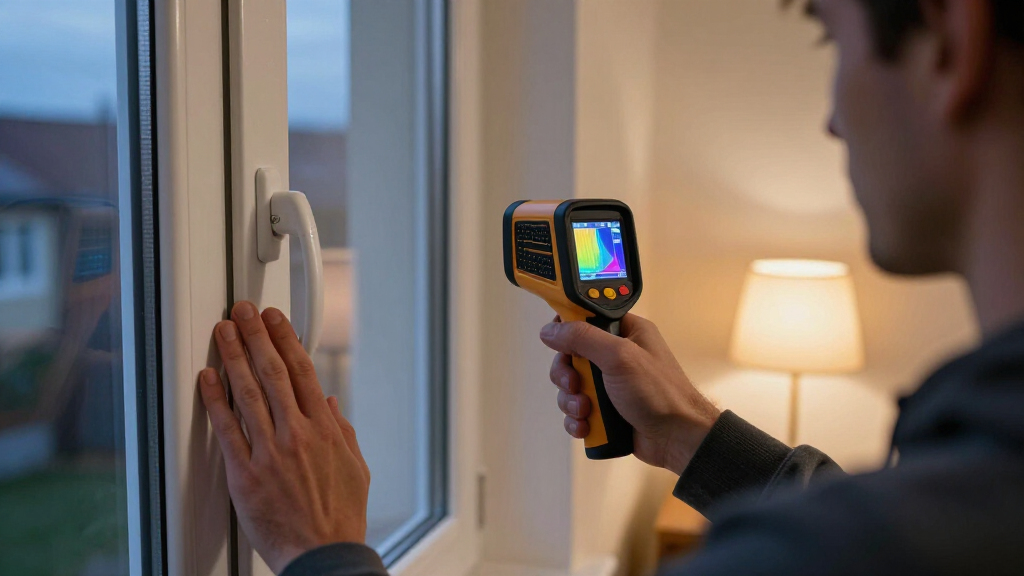
I compared the 15 listed cameras by the details that can change inspection results and day-to-day use: stated thermal resolution, displayed resolution where provided, temperature range, measurement and alarm tools, image features, battery and environmental protection, portability, and whether the camera depends on a smartphone. I treated sensor resolution and screen resolution as separate specifications rather than interchangeable measures, and I avoided assuming that a feature name alone proves accuracy or image quality.
The ranking favors cameras that appear most versatile for common inspection work, then gives distinct places to models that make a stronger case for a particular user or setting. The Thor002 leads on its stated 512 × 384 resolution; the FOXWELL HT280 follows for its combination of listed 260 × 260 TISR, larger stated display resolution, temperature alarm, and PC analysis. Compact, lower-resolution, phone-connected, and ruggedized options rank for their specific benefits rather than being treated as direct substitutes. Where product names or supplied specifications do not establish a performance detail, I do not infer it.
| thermal imaging camera | Protection |
|---|---|
| Thermal Camera with 240×240 Re | IP54; drop resistant up to 6.6 feet |
| FOXWELL HT280 Thermal Imaging | IP54 |
| BSIDE Thermal Imaging Camera 2 | — |
| TOPDON TC004 Mini Thermal Imag | IP54 |
| GT24S 320×240 UIRA-IR Thermal | — |
| H128 Handheld Thermal Camera | IP65 |
| HF96 Thermal Camera with AI Sc | — |
| GT14S Thermal Imaging Camera w | — |
| TOPDON TC004 3.5-inch Thermal | IP54 |
| Flir One Pro | — |
| GT14S Thermal Imaging Camera w | — |
| FOXWELL RT280 Thermal Imaging | IP54; drop resistance to 6.6 feet |
| RIS ION Magic Thermal Camera | — |
| Thermal Master Thor002 Handhel | IP54; drop resistance up to 2 meters |
| Thermal Imaging Camera | IP54 |
Factors to Consider When Choosing Thermal Imaging Cameras
Choosing a thermal camera starts with the inspection you need to make, not the longest feature list. These broader checks can help prevent mismatched expectations, particularly when comparing resolution claims, temperature ranges, and handheld versus phone-connected designs.
Match Thermal Resolution to the Size of the Problem
Thermal resolution determines how many measured points form the image, so it affects how clearly a camera can separate small or nearby heat patterns. A higher figure can be useful when checking crowded electrical panels, narrow pipes, or small areas of suspected heat loss from a distance. For broad scans of walls, floors, or HVAC equipment at close range, a lower-resolution camera may provide enough information. Do not confuse screen resolution with thermal sensor resolution: a sharper-looking display cannot add measured thermal detail that the sensor did not capture. Before buying, check the manufacturer’s specification for the sensor itself and compare it with your typical target size and working distance. If your work depends on precise identification of small defects, favor sensor detail over extra palettes or cosmetic display features.
Treat Temperature Range and Measurement Accuracy as Different Things
A camera’s stated temperature range describes the temperatures it can read, not how close each reading will be to the true surface temperature. A very wide range may be useful around hot machinery or equipment, but it can be unnecessary for routine home inspections. Measurement accuracy, repeatability, adjustable emissivity, and the effect of distance can matter more than the range’s upper limit. Shiny metal, reflective surfaces, glass, and mixed materials can produce misleading readings if they are measured without suitable technique. Check the full technical documentation for accuracy, emissivity adjustment, and any stated measurement conditions before relying on readings for decisions. For safety-sensitive electrical or mechanical work, treat thermal images as an inspection aid and follow the relevant professional procedures.
Choose Handheld or Phone-Connected Based on Your Workflow
A dedicated handheld camera keeps the screen, controls, and thermal sensor together, which can be simpler when moving between rooms or working away from a phone. A phone-connected model may be easier to carry and can fit a workflow that already relies on mobile apps for saving or sharing images. Its usefulness depends on phone compatibility, connector type, app support, and whether the phone can be used comfortably while holding the camera. Confirm that your exact device is supported; a product listing naming newer USB-C iPhones does not mean it will work with every iPhone or operating system. Also consider whether you need the camera to function when your phone battery is low or unavailable. Buyers who value a self-contained tool should favor a standalone handheld design, while mobile-first users may accept the extra compatibility checks.
Prioritize the Tools That Improve Your Inspection Routine
Temperature alarms, hot- and cold-spot tracking, laser pointers, image enhancement, palettes, and PC analysis can each help with a different task. Alarms can draw attention to a threshold, but the person inspecting still has to set a sensible threshold and interpret the result. A laser pointer can help identify a target area, though it does not show the camera’s exact measurement spot by itself. PC analysis can make it easier to review and document findings later, while palettes mainly change how temperature differences are displayed. Avoid paying attention to a long feature list without checking whether the tool supports your actual reporting or troubleshooting process. A smaller set of dependable controls may be easier to use repeatedly than a feature-rich interface that slows down routine scans.
Account for Battery Life, Protection, and Carrying Conditions
Battery life matters most when inspections involve long site visits, repeated scans, or limited access to charging. An advertised runtime, such as the H128’s stated 24 hours, is a specification to verify under the manufacturer’s test conditions rather than a guarantee for every use pattern. An IP rating can help indicate resistance to dust or water exposure, but it does not mean a camera is suitable for every harsh environment or safe to submerge. Lightweight construction can reduce fatigue during overhead checks, while a larger handheld body may be easier to grip or operate with gloves. Think through where the camera will be stored, how it will be charged, and whether it needs protection from drops or job-site debris. Those practical details can matter more over time than a rarely used display mode.
Buy for the Smallest Detail You Need to Find
A common mistake is buying the most feature-heavy camera when the job only requires locating broad temperature differences, or choosing an entry-level model when small defects must be distinguished. Paying more for resolution makes sense when inspection distance, target size, or documentation demands call for extra detail. It may not help much if the main challenge is surface reflectivity, poor access, or lack of training in interpreting thermal patterns. For occasional household checks, prioritize clear controls, useful temperature tools, and a form factor you will actually carry. For regular professional inspections, look beyond headline specifications to software workflow, stated measurement accuracy, support, and accessory availability. If a listing omits a specification that matters to your work, seek manufacturer documentation before making the purchase.
Frequently Asked Questions
Is a 320 × 240 display the same as a 320 × 240 thermal sensor?
No. A display specification describes the screen, while thermal sensor resolution describes the number of thermal measurement points used to form the image. This distinction matters in this roundup: the FOXWELL HT280 lists a 320 × 240 LCD and 260 × 260 TISR, while the FOXWELL RT280 lists a 320 × 240 LCD and 240 × 180 TISR. A larger screen can make an image easier to view but does not create additional thermal detail. When comparing cameras, look for the stated sensor or infrared resolution and check whether any enhanced resolution is native or processed.
Will a camera with a 1022°F maximum reading work better for home inspection?
Not automatically. A higher maximum reading can be useful for hot equipment, but most residential checks focus on comparatively moderate temperature differences. A broad temperature range does not tell you the camera’s measurement accuracy, sensitivity to small differences, or ability to resolve a small target. For home inspection, those details and your technique may matter more than the maximum temperature. Compare the full measurement specifications with the surfaces and equipment you expect to inspect, and avoid treating a high limit as proof of superior overall performance.
Should I choose a smartphone thermal camera or a standalone handheld model?
Choose a phone-connected camera if compact carry and a mobile-based image workflow suit your routine, and confirm compatibility with your exact phone, connector, and operating system first. The FLIR One Pro in this list is specified for iOS smartphones, including iPhone 15 and newer models with USB-C, so it should not be assumed to fit every phone. A standalone camera is a better fit if you want an integrated screen and controls or need to work without relying on a phone. Also weigh battery use, app support, and how you plan to save or share inspection images. The best format is the one that removes friction from your usual work rather than adding another device dependency.
Are thermal imaging cameras reliable for finding electrical or insulation problems?
They can help reveal temperature patterns that suggest a problem, but a thermal image is not a diagnosis by itself. A warm electrical connection, for example, may need follow-up testing, and insulation gaps can be difficult to interpret when indoor and outdoor conditions do not create a useful temperature difference. Reflective materials, airflow, recent equipment use, and measurement distance can affect what the camera shows. Use a camera with enough sensor detail for the size of the target and follow suitable inspection practices for the system being checked. For potentially hazardous faults, use a qualified professional and the appropriate electrical or building diagnostic tools.
When is it worth paying more for higher resolution?
Higher resolution is most useful when you need to separate small features, inspect from farther away, or document patterns with more visible detail. The Thor002’s listed 512 × 384 resolution gives it a clear specification advantage over the 240 × 240 models, but that advantage may not matter for quick scans of large surfaces at close range. Extra resolution also cannot fix inaccurate technique, reflective surfaces, or an unsuitable measurement distance. Before spending more, define the smallest area you need to identify and the distance from which you will inspect it. If those needs are modest, a simpler camera with useful alarms or a more convenient form factor may be the better fit.
Conclusion
For the best overall detail, I would choose the Thermal Master Thor002, based on its highest stated resolution in this group. For a feature-rich value-oriented alternative, the FOXWELL HT280 combines listed TISR, temperature alarms, and PC analysis, while buyers who want an entry-level-style compact pick can compare the TOPDON TC004 Mini with other 240 × 240 options. For premium image detail, the Thor002 is the standout on the supplied specifications; for beginners, I would favor a straightforward standalone handheld with controls and measurement tools that match the job rather than paying for features they will not use. The H128 is a specific fit for buyers prioritizing its stated long battery life and IP65 rating, and the FLIR One Pro suits compatible iPhone users who prefer a phone-based setup. Match the sensor resolution and workflow to your target size and inspection conditions, then verify any technical specification that your work depends on.
Halloween Picks
halloween
As an affiliate, we earn on qualifying purchases.