Among these RGB gaming headsets with surround sound, I’d choose the Razer Kraken V3 X as the best overall for its USB connection, RGB lighting, and virtual surround positioning. The Corsair Void RGB Elite Wireless stands out for players who want wireless freedom, while the HyperX Cloud II is a strong wired alternative for buyers who care more about familiar surround features than RGB. The main tradeoffs are wired reliability versus wireless convenience, platform compatibility, and whether lighting or audio controls justify extra setup. Surround sound is virtual on these headsets, so results can vary with the game and device. Read on for the full breakdown and help matching a headset to your setup.

Get the latest gadgets delivered free with Prime
- Fast, free delivery on millions of items
- Prime Video, Amazon Music and more included
- Member-only deals all year
Complete the kit


Key Takeaways
- The Kraken V3 X is the most balanced RGB-and-surround pick among the named models, while the Cloud II is a more straightforward wired choice without RGB being its defining feature.
- Wireless options split by connection flexibility: the Corsair Void RGB Elite Wireless emphasizes wireless PC use, while several listed alternatives advertise both 2.4GHz and Bluetooth or long battery life.
- USB models and 3.5 mm models do not offer the same feature access. RGB and virtual surround controls commonly depend on USB connections and supported software, so connector choice can affect the experience.
- Several listings make broad platform claims, but feature support may differ by device. Check connection type and surround compatibility before assuming every advertised mode works on a console, Switch, or phone.
- RGB is a visual feature, not a measure of positional accuracy. Buyers should prioritize fit, connection stability, and platform-compatible audio processing over lighting when game cues matter most.
| HyperX Cloud II Wired Gaming Headset with 7.1 Virtual Surround Sound, Red | 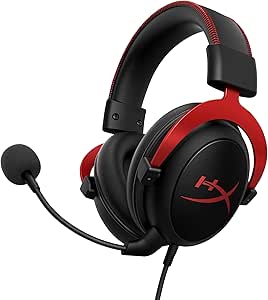 | Best for Long Sessions | Connectivity: Wired; USB and headphone jack | Driver size: 53 mm | Frequency response: 15–25 kHz | VIEW LATEST PRICE | See Our Full Breakdown |
| Wireless Gaming Headset, 7.1 Surround Sound, 2.4GHz USB Gaming Headphones with Bluetooth 5.4, 100H Battery, ENC Noise Canceling Mic, RGB Light, Wireless Headset for PC PS5 PS4 Mac Switch (Black-Blue) |  | Best for Wireless Flexibility | Connections: 2.4GHz USB dongle, Bluetooth 5.4, and 3.5 mm cable | Surround sound: 7.1 surround sound; platform availability not specified | Wireless latency: Listed as 5 ms or less over 2.4GHz | VIEW LATEST PRICE | See Our Full Breakdown |
| Razer BlackShark V2 X Gaming Headset |  | Best Lightweight Pick | Weight: 240 g | Driver size: 50 mm | Driver coating: Titanium-coated | VIEW LATEST PRICE | See Our Full Breakdown |
| Logitech G432 Wired Gaming Headset |  | Best for Positional Audio Controls | Connectivity: USB DAC and 3.5 mm cable | Driver size: 50 mm | Audio: DTS Headphone:X 2.0 surround sound | VIEW LATEST PRICE | See Our Full Breakdown |
| FIFINE H13BP Wired USB Gaming Headset |  | Best RGB Controls Pick | Connection: Wired USB-A | Driver size: 50 mm | Surround sound: 7.1 | VIEW LATEST PRICE | See Our Full Breakdown |
| Ordtop GS400 Ultra Wireless Gaming Headset |  | Best for Multi-Device Flexibility | Connections: 2.4GHz wireless, Bluetooth, USB, 3.5mm wired | Compatibility: PC, PS4, PS5, Nintendo Switch, Xbox One with 3.5mm jack, and mobile devices | Drivers: 40mm | VIEW LATEST PRICE | See Our Full Breakdown |
| Razer Kraken V3 X Wired USB Gaming Headset |  | Best for Lightweight PC Sessions | Connection: Wired USB-A | Weight: 285 g | Drivers: 40 mm TriForce | VIEW LATEST PRICE | See Our Full Breakdown |
| Ozeino Gaming Headset for PC, PS4, PS5, Xbox, Switch, Laptop, and Mobile |  | Best for 3.5mm Console Setups | Connection: Wired 3.5mm jack | Compatibility: PC, PS4, PS5, Xbox One, Xbox Series X/S, Switch, laptop, and mobile devices with 3.5mm jack | Surround sound: Listed as 7.1; product description also refers to stereo surround | VIEW LATEST PRICE | See Our Full Breakdown |
| Wired Gaming Headset with Virtual 7.1 Audio and RGB Lighting |  | Best for Convenient Mic Controls | Model: GD-900 | Connection: Wired 3.5mm audio jack | Driver size: 50 mm | VIEW LATEST PRICE | See Our Full Breakdown |
| Corsair Void RGB Elite Wireless Gaming Headset, White |  | Best for PC Wireless Surround | Connectivity: 2.4 GHz wireless via USB adapter | Compatibility: PC and PS4 | Drivers: 50 mm neodymium | VIEW LATEST PRICE | See Our Full Breakdown |
| MARVO HG8959 Wired RGB Gaming Headset with Microphone |  | Best for Flexible Wired Compatibility | Connectivity: Wired; USB and 3.5 mm jack | Surround sound: Virtual surround sound | Driver size: 50 mm | VIEW LATEST PRICE | See Our Full Breakdown |
| Valorise UG-08S Wireless Gaming Headset with 7.1 Surround Sound |  | Best for Multi-Mode Wireless Use | Connectivity: 2.4 GHz USB/Type-C dongle, Bluetooth 5.4, and 3.5 mm | Surround sound: Virtual 7.1 | Battery life: 45–100 hours, depending on mode and settings | VIEW LATEST PRICE | See Our Full Breakdown |
| EKSA E1000 USB Gaming Headset with Microphone |  | Best for Simple USB Setup | Connection: Wired USB | Audio: 7.1 surround sound | Driver type and size: Dynamic, 50 mm | VIEW LATEST PRICE | See Our Full Breakdown |
| Wireless Gaming Headset for PC PS5 PS4 Mac Switch 7.1 Surround Sound 100-Hr |  | Best for Long Battery Claims | Connectivity: 2.4 GHz USB/Type-C dongle, Bluetooth 5.4, and 3.5 mm | Surround sound: 7.1 virtual surround sound | Battery life: 45 hours in 2.4 GHz mode with RGB and microphone on; up to 100 hours in Bluetooth mode with RGB and microphone off | VIEW LATEST PRICE | See Our Full Breakdown |
| RGB gaming headsets with surround sound | Microphone | Compatibility | Surround sound | Driver size |
|---|---|---|---|---|
| HyperX Cloud II Wired Gaming H | Detachable, noise-cancelling | — | Virtual 7.1 on PC and Mac; stereo on PS4, Xbox One, Nintendo Switch, and mobile devices | 53 mm |
| Wireless Gaming Headset | Retractable omnidirectional ENC noise-reduction mic | — | 7.1 surround sound; platform availability not specified | — |
| Razer BlackShark V2 X Gaming H | HyperClear cardioid | PC, Mac, PS4, Xbox One, and Nintendo Switch | Software-enabled 7.1 on Windows 10 64-bit | 50 mm |
| Logitech G432 Wired Gaming Hea | 6 mm flip-to-mute boom mic | PC, Mac, mobile devices, PlayStation 5, PlayStation 4, and Nintendo Switch | — | 50 mm |
| FIFINE H13BP Wired USB Gaming | Detachable, with mute and noise-cancelling features | — | 7.1 | 50 mm |
| Ordtop GS400 Ultra Wireless Ga | ENC noise-cancelling | PC, PS4, PS5, Nintendo Switch, Xbox One with 3.5mm jack, and mobile devices | — | — |
| Razer Kraken V3 X Wired USB Ga | Bendable HyperClear cardioid | Windows PCs and laptops | 7.1 on Windows 10 64-bit | — |
| Ozeino Gaming Headset for PC | 360° rotatable, noise-cancelling | PC, PS4, PS5, Xbox One, Xbox Series X/S, Switch, laptop, and mobile devices with 3.5mm jack | Listed as 7.1; product description also refers to stereo surround | 50 mm listed in product details |
| Wired Gaming Headset with Virt | Adjustable directional boom with flip-to-mute | PS5, PS4, Xbox Series X|S, Xbox One, Nintendo Switch, PC, Mac, and compatible mobile devices | — | 50 mm |
| Corsair Void RGB Elite Wireles | Omnidirectional, flip-up mute with LED indicator | PC and PS4 | 7.1 on PC | — |
| MARVO HG8959 Wired RGB Gaming | — | PS4, PS5, Nintendo Switch, Xbox controllers, PCs, laptops, and mobile devices | Virtual surround sound | 50 mm |
| Valorise UG-08S Wireless Gamin | Retractable omnidirectional ENC noise-canceling | PS5, PS4, PC, Mac, Nintendo Switch, phones, and tablets; see microphone and wireless limitations | Virtual 7.1 | — |
| EKSA E1000 USB Gaming Headset | 120° adjustable, noise-reducing | Windows 7/8/10 PCs, PS4, PS5, laptops, and USB audio devices | — | — |
| Wireless Gaming Headset for PC | Retractable omnidirectional ENC noise-canceling; one-touch mute | PS5, PS4, PC, Mac, phones, tablets, and Nintendo Switch; wireless and microphone limitations apply | 7.1 virtual surround sound | — |
More Details on Our Top Picks
HyperX Cloud II Wired Gaming Headset with 7.1 Virtual Surround Sound, Red
The Cloud II is the comfort-first choice here: its memory foam cushions, padded headband, and aluminum frame suit long gaming sessions better than the heavier FIFINE H13BP. Its USB sound card enables virtual 7.1 on PC and Mac, while the 3.5 mm connection keeps stereo audio available across consoles and mobile devices. That distinction matters: surround sound is not available on every platform, so console players should not expect the same spatial processing as PC players. The detachable noise-cancelling mic is handy when you want to use the headset for listening without a boom in the way. Unlike the Logitech G432, this model does not list RGB lighting, so it fits buyers who value comfort and surround capability over a lit-up setup. Xbox One use may need a separate headset adapter.
Pros:- Memory foam ear cushions and padded headband support longer wear
- USB sound card provides virtual 7.1 surround sound on PC and Mac
- Aluminum frame adds durability
- Detachable noise-cancelling microphone
Cons:- Virtual 7.1 is limited to PC and Mac
- Xbox One may require a separate Microsoft headset adapter
- No RGB lighting is specified
Best for: PC and Mac players who want virtual surround sound and cushioned comfort for extended sessions, with stereo fallback for console use.
Not ideal for: Buyers who want RGB lighting or virtual surround sound on consoles; Xbox One players who do not want to source a separate adapter.
- Connectivity:Wired; USB and headphone jack
- Driver size:53 mm
- Frequency response:15–25 kHz
- Surround sound:Virtual 7.1 on PC and Mac; stereo on PS4, Xbox One, Nintendo Switch, and mobile devices
- Microphone:Detachable, noise-cancelling
- Ear cushions:Memory foam
- Frame:Aluminum
- Warranty:2 years
Our verdict“Choose the Cloud II if PC or Mac surround sound and comfortable long-session wear matter more than RGB lighting or wireless freedom.”
Wireless Gaming Headset, 7.1 Surround Sound, 2.4GHz USB Gaming Headphones with Bluetooth 5.4, 100H Battery, ENC Noise Canceling Mic, RGB Light, Wireless Headset for PC PS5 PS4 Mac Switch (Black-Blue)
This wireless model stands apart from the wired HyperX Cloud II and Logitech G432 by combining 2.4GHz, Bluetooth 5.4, and a 3.5 mm connection. Its stated 7.1 mode and RGB lighting add the roundup’s wireless-oriented take on the surround-and-lighting brief, though the supplied details do not specify which platforms support 7.1. The battery claim also depends on settings: up to 100 hours is listed for Bluetooth with the lights and mic off, while 2.4GHz use with RGB and the microphone enabled is listed at 45 hours. That is still a useful spread for players who want fewer charging interruptions, and the headset can be used while charging. The tradeoff is platform complexity: wireless is not supported on Xbox Series, and Switch microphone support is listed as invalid. Check your intended connection before choosing it.
Pros:- Three connection options: 2.4GHz wireless, Bluetooth 5.4, and 3.5 mm
- RGB lighting with steady and gradient modes
- Battery claims vary by mode, with up to 100 hours listed for Bluetooth use with lights and mic off
- Retractable noise-reducing microphone and one-touch mute
Cons:- Wireless function is not compatible with Xbox Series
- Switch microphone support is listed as invalid
- Listed battery life drops to 45 hours for 2.4GHz use with RGB and microphone enabled
Best for: Players who switch between PC or PlayStation gaming and Bluetooth mobile listening, and want wireless play, RGB lighting, and long stated battery life.
Not ideal for: Xbox Series owners, Switch players relying on the headset microphone, and buyers who need clearly specified 7.1 support across platforms.
- Connections:2.4GHz USB dongle, Bluetooth 5.4, and 3.5 mm cable
- Surround sound:7.1 surround sound; platform availability not specified
- Wireless latency:Listed as 5 ms or less over 2.4GHz
- Battery life:45 hours in 2.4GHz mode with RGB and microphone on; up to 100 hours in Bluetooth mode with both off
- Microphone:Retractable omnidirectional ENC noise-reduction mic
- Lighting:RGB, with steady and gradient modes
- Ear cushions:Memory sponge with breathable fabric
- Listed compatibility:PS5, PS4, PC, Mac, phones, tablets, and Nintendo Switch; wireless not compatible with Xbox Series
Our verdict“Pick this headset for flexible wireless connections and RGB, but skip it if Xbox Series support or dependable Switch chat is a requirement.”
Razer BlackShark V2 X Gaming Headset
At 240 g, the BlackShark V2 X is the lighter-feeling wired alternative to the 390 g FIFINE H13BP, making it a sensible fit for players who dislike added weight during long sessions. Its 50 mm titanium-coated drivers and software-enabled 7.1 aim to add positional cues, but that surround mode is restricted to Windows 10 64-bit; elsewhere, the 3.5 mm connection provides a simpler cross-platform stereo setup. Breathable foam cushions and closed earcups help limit outside sound, while the cardioid mic is designed to focus on your voice. Unlike the Cloud II, this model does not include a USB sound card for surround, and RGB lighting is not listed. It makes more sense for a lightweight, understated setup than for buyers prioritizing illuminated styling or surround effects on console.
Pros:- Lightweight 240 g over-ear design
- 50 mm titanium-coated drivers
- Software-enabled 7.1 surround on Windows 10 64-bit
- Cardioid microphone and breathable foam cushions
Cons:- 7.1 surround is limited to Windows 10 64-bit
- Xbox One may require a separate stereo adapter
- No RGB lighting is specified
Best for: Windows 10 64-bit gamers who want a lightweight wired headset with software-enabled surround and a voice-focused microphone.
Not ideal for: Console players seeking 7.1 surround, buyers who want RGB lighting, or anyone unwilling to rely on a specific Windows software setup.
- Weight:240 g
- Driver size:50 mm
- Driver coating:Titanium-coated
- Audio connection:3.5 mm jack
- Surround sound:Software-enabled 7.1 on Windows 10 64-bit
- Microphone:HyperClear cardioid
- Ear placement:Over-ear
- Compatibility:PC, Mac, PS4, Xbox One, and Nintendo Switch
Our verdict“Choose the BlackShark V2 X if low weight and Windows-based surround matter more than RGB or platform-wide virtual 7.1.”
Logitech G432 Wired Gaming Headset
The G432 earns its place for players who want a recognizable surround format and straightforward chat controls. Its DTS Headphone:X 2.0 is aimed at positional audio, while the USB DAC and 3.5 mm cable provide two ways to connect—more setup flexibility than the single 3.5 mm link on the Razer BlackShark V2 X. The flip-to-mute boom mic makes muting a quick physical action, and the rotating ear cups are useful when taking a break between matches. There are limits: DTS processing requires Logitech G HUB software, and the wired connection keeps you tethered. The product information does not list RGB lighting, so it is a stronger match for buyers prioritizing surround and usability than for anyone building a visibly illuminated headset setup. Compatibility includes several platforms, but surround processing depends on supported software and connection.
Pros:- DTS Headphone:X 2.0 positional surround audio
- USB DAC and 3.5 mm connection options
- 6 mm flip-to-mute boom microphone
- Rotating ear cups turn up to 90 degrees
Cons:- DTS Headphone:X 2.0 requires Logitech G HUB software
- Wired connection limits movement
- No RGB lighting is specified
Best for: PC gamers who want DTS positional audio, a quick flip-to-mute mic, and the choice of USB DAC or 3.5 mm connection.
Not ideal for: Wireless players, buyers who want RGB lighting, or those who prefer surround sound without installing Logitech G HUB.
- Connectivity:USB DAC and 3.5 mm cable
- Driver size:50 mm
- Audio:DTS Headphone:X 2.0 surround sound
- Microphone:6 mm flip-to-mute boom mic
- Ear placement:Over-ear
- Ear cup rotation:Up to 90 degrees
- Compatibility:PC, Mac, mobile devices, PlayStation 5, PlayStation 4, and Nintendo Switch
- Color:Black
Our verdict“Choose the G432 if DTS positional audio and a convenient flip-to-mute mic outweigh wireless freedom and RGB styling.”
FIFINE H13BP Wired USB Gaming Headset
The H13BP is the clearest choice here for buyers who want RGB lighting and 7.1 surround in one wired USB headset. Its 11 lighting modes offer more visual variation than the Logitech G432, while the inline controller gives direct access to EQ modes, volume, game/chat balance, and microphone mute. That game/chat control is a practical advantage for players who regularly adjust the mix mid-session instead of relying on software menus. The tradeoff is a heavier 390 g build, notably more than the 240 g Razer BlackShark V2 X, and its USB-A connection narrows device compatibility. It supports Windows, Mac, PS4, and PS5, but not Xbox or PS controllers. The detachable mic and memory foam cushions add flexibility, though this is best for a desk setup rather than someone seeking a light or broadly compatible headset.
Pros:- 7.1 surround sound with RGB lighting in 11 modes
- Inline controller includes EQ, volume, game/chat balance, and mic mute
- Memory foam ear cushions and adjustable headband
- Detachable microphone with mute and noise-cancelling features
Cons:- At 390 g, it is heavier than the Razer BlackShark V2 X
- USB-A connection limits compatibility with other devices
- Not compatible with Xbox or PS controllers
Best for: PC and PlayStation players who want RGB effects, 7.1 audio, and easy inline control of game/chat balance and EQ.
Not ideal for: Xbox players, users who need compatibility with PS controllers, or gamers who prioritize a lightweight headset or wireless use.
- Connection:Wired USB-A
- Driver size:50 mm
- Surround sound:7.1
- Lighting:RGB with 11 modes
- Cable length:7.55 ft
- Weight:390 g
- Microphone:Detachable, with mute and noise-cancelling features
- Compatible platforms:Windows, Mac, PS4, and PS5
- Warranty:1 year
Our verdict“Pick the H13BP for a feature-rich RGB desk setup with handy inline audio controls, provided its weight and USB platform limits suit your setup.”
Ordtop GS400 Ultra Wireless Gaming Headset
The Ordtop GS400 Ultra is the most adaptable pick here for players who switch between a console, computer, and phone. Its 2.4GHz wireless, Bluetooth, USB, and 3.5mm connections cover more situations than the USB-only Razer Kraken V3 X, while virtual 7.1 support and RGB lighting keep it aligned with this roundup. The stated wireless latency under 20 ms suits responsive play, and battery life reaches 35–40 hours with lighting off. The tradeoff is that RGB cuts that figure to 15–20 hours, so the visual effect comes with more frequent charging. Xbox One connection also depends on a 3.5mm jack. I’d choose it for versatility, not for a claim of surround sound that works identically on every device.
Pros:- Four connection methods suit a varied device setup
- Virtual 7.1 support and RGB lighting fit the roundup brief
- Up to 35–40 hours of battery life with RGB off
- ENC microphone and memory foam ear cushions
Cons:- RGB lighting reduces stated battery life to 15–20 hours
- Xbox One use requires a controller with a 3.5mm audio jack
- Virtual 7.1 support may vary with the connected device
Best for: Players who move between compatible PCs, PlayStation consoles, Switch, and mobile devices and want wireless plus wired connection options.
Not ideal for: Xbox One players without a controller’s 3.5mm audio jack, or RGB users who want long battery life without charging often.
- Connections:2.4GHz wireless, Bluetooth, USB, 3.5mm wired
- Compatibility:PC, PS4, PS5, Nintendo Switch, Xbox One with 3.5mm jack, and mobile devices
- Drivers:40mm
- Audio:Virtual 7.1 support
- Microphone:ENC noise-cancelling
- Wireless latency and range:Under 20ms; up to 55 ft
- Battery life:35–40 hours with RGB off; 15–20 hours with RGB on
- Recharge time:2 hours
- Warranty:2 years
Our verdict“Choose the GS400 Ultra if connection flexibility matters more than keeping RGB on between charges.”
Razer Kraken V3 X Wired USB Gaming Headset
For a PC player who wants RGB and Windows 7.1 surround without adding wireless charging to the routine, the Kraken V3 X is the focused choice. At 285 g, it is lighter than the listed Corsair Void RGB Elite Wireless at 16 hours of battery life, and its breathable fabric and memory foam cushions are designed for extended sessions. Razer’s 40 mm TriForce drivers are tuned across highs, mids, and lows, while Chroma lighting lets players coordinate the headset with a PC setup. The limitation is its narrow connection and platform range: it uses USB-A and is specified for Windows PCs and laptops, with 7.1 listed for Windows 10 64-bit. Unlike the Ordtop GS400 Ultra, it cannot switch to Bluetooth or a 3.5mm cable.
Pros:- 285 g design is suited to long gaming sessions
- 7.1 surround sound specified for Windows 10 64-bit
- Customizable Razer Chroma RGB lighting
- Breathable fabric and memory foam ear cushions
Cons:- USB-A wired connection only
- Compatibility is limited to Windows PCs and laptops
- 7.1 surround sound is limited to Windows 10 64-bit
Best for: PC gamers who prioritize a lightweight wired headset, breathable cushions, and Windows-based virtual surround sound.
Not ideal for: Console, Mac, Switch, or mobile players, and anyone who needs wireless or a 3.5mm connection.
- Connection:Wired USB-A
- Weight:285 g
- Drivers:40 mm TriForce
- Surround sound:7.1 on Windows 10 64-bit
- Microphone:Bendable HyperClear cardioid
- Lighting:Razer Chroma RGB
- Ear cushions:Breathable fabric and memory foam with leatherette
- Compatibility:Windows PCs and laptops
- Warranty:2 years
Our verdict“Pick the Kraken V3 X for a lightweight, RGB-equipped Windows gaming setup; skip it if you need broad device support.”
Ozeino Gaming Headset for PC, PS4, PS5, Xbox, Switch, Laptop, and Mobile
The Ozeino’s clearest appeal is 3.5mm compatibility across several gaming platforms, including PlayStation, Xbox, Switch, PC, and mobile devices with the required jack. That makes it a more natural fit for console hopping than the USB-only Razer Kraken V3 X. It pairs its listed 7.1 surround sound with RGB lighting, breathable over-ear pads, and a rotatable noise-cancelling microphone. The source also describes its audio as stereo surround, so I would not treat the 7.1 label as proof of identical positional audio on every platform. PC users need the included 1-to-2 3.5mm splitter for separate audio and microphone jacks; older Xbox One controllers may need an extra adapter. Its straightforward wired design avoids battery concerns, but offers no wireless option.
Pros:- 3.5mm connection supports a broad range of listed gaming devices
- RGB lighting adds visible color to a gaming setup
- Rotatable noise-cancelling microphone
- Breathable over-ear pads and adjustable headband
Cons:- PC setup requires a 1-to-2 3.5mm splitter
- Older Xbox One controllers may need an additional adapter
- No wireless connection, and surround sound behavior may vary by device
Best for: Console players who use a 3.5mm headset jack and want RGB lighting, a rotatable mic, and one wired headset for several devices.
Not ideal for: Players seeking wireless play, or PC users who want a simple single-plug setup without a splitter.
- Connection:Wired 3.5mm jack
- Compatibility:PC, PS4, PS5, Xbox One, Xbox Series X/S, Switch, laptop, and mobile devices with 3.5mm jack
- Surround sound:Listed as 7.1; product description also refers to stereo surround
- Driver size:50 mm listed in product details
- Microphone:360° rotatable, noise-cancelling
- Lighting:RGB
- Ear cushions:Breathable protein over-ear pads
- Weight:0.3 kg
- Cable setup:PC may require a 1-to-2 3.5mm audio splitter
Our verdict“Choose the Ozeino for a simple wired, multi-console setup, provided your devices support its 3.5mm connection.”
Wired Gaming Headset with Virtual 7.1 Audio and RGB Lighting
This headset puts practical controls ahead of connection flexibility: its directional boom mic flips to mute, and inline controls keep adjustments close at hand. The 2.4 m braided cable gives a wired setup some reach, while memory foam cushions and a self-adjusting headband are intended to help during longer sessions. Its 50 mm drivers, virtual 7.1 audio, and USB-powered RGB make it a feature-rich fit for this roundup. Compared with the Ozeino, it specifies the quick flip-to-mute function and a braided cable, but its 3.5mm connection still leaves surround sound dependent on compatible devices. RGB also needs USB power, which can mean an extra connection alongside audio. I’d favor it when easy muting matters more than a streamlined cable setup.
Pros:- Flip-to-mute directional microphone enables quick callout privacy
- 2.4 m braided cable provides room to move around a setup
- Memory foam cushions and self-adjusting headband
- Listed virtual 7.1 audio and USB-powered RGB
Cons:- RGB lighting requires a separate USB power connection
- Virtual 7.1 audio is available only on compatible devices
- Wired 3.5mm connection limits freedom of movement
Best for: Players who want a wired multi-platform headset with quick microphone muting and enough cable length for a desktop or console setup.
Not ideal for: Buyers seeking wireless play, or those who want RGB without connecting a separate USB power source.
- Model:GD-900
- Connection:Wired 3.5mm audio jack
- Driver size:50 mm
- Audio:Virtual 7.1 on compatible devices
- Cable length:2.4 m braided
- Microphone:Adjustable directional boom with flip-to-mute
- Lighting:RGB powered through USB
- Compatibility:PS5, PS4, Xbox Series X|S, Xbox One, Nintendo Switch, PC, Mac, and compatible mobile devices
- Weight:15.8 ounces
Our verdict“Pick this model if quick mic muting and a long braided cable matter more than wireless convenience.”
Corsair Void RGB Elite Wireless Gaming Headset, White
The Corsair Void RGB Elite Wireless is the most focused wireless PC surround option in this group: its 2.4 GHz USB adapter connection pairs with 7.1 sound specified for PC, while customizable RGB adds the visual component. The 50 mm neodymium drivers cover a stated 20 Hz–30,000 Hz range, and microfiber mesh with memory foam is designed for extended wear. A flip-up microphone with an LED mute indicator makes mute status easy to check. Compared with the Ordtop GS400 Ultra, the Corsair has a narrower device range and up to 16 hours of battery life, but its feature set is centered on PC gaming rather than multiple connection types. PS4 is also listed as compatible; the available information does not establish equivalent 7.1 support there.
Pros:- 2.4 GHz wireless connection via USB adapter
- 7.1 surround sound specified for PC
- Customizable RGB lighting and flip-up mic with LED mute indicator
- Microfiber mesh and memory foam earpads
Cons:- Battery life is listed at up to 16 hours
- 7.1 surround sound is specified for PC, not PS4
- USB adapter connection limits compatibility with other devices
Best for: PC gamers who want 2.4 GHz wireless, RGB lighting, and PC-specific 7.1 surround with a visible microphone mute indicator.
Not ideal for: Players who need Bluetooth, wired fallback, broad console support, or longer battery life than the stated 16 hours.
- Connectivity:2.4 GHz wireless via USB adapter
- Compatibility:PC and PS4
- Drivers:50 mm neodymium
- Surround sound:7.1 on PC
- Frequency response:20 Hz–30,000 Hz
- Wireless range:Up to 40 ft
- Battery life:Up to 16 hours
- Microphone:Omnidirectional, flip-up mute with LED indicator
- Earpads and warranty:Microfiber mesh and memory foam; 2-year warranty
Our verdict“Choose the Corsair for PC-focused wireless surround and RGB, but opt for the Ordtop if you need more connection options or longer battery life.”
MARVO HG8959 Wired RGB Gaming Headset with Microphone
The MARVO HG8959 is a sensible pick for players who want RGB and virtual surround sound without committing to one connection type. Its USB and 3.5 mm connections cover PCs and compatible consoles, controllers, and mobile devices, giving it broader wired flexibility than the USB-only EKSA E1000. The 50 mm drivers and closed-back over-ear design are aimed at an immersive gaming presentation, while the memory foam cushions and adjustable headband suit longer sessions. A braided cable adds durability, but it does not change the central tradeoff: this is a wired headset, so movement is limited compared with the wireless Valorise UG-08S. The listed specs do not identify a platform-specific surround processing system, so buyers should treat its virtual surround as a general feature rather than a guaranteed console-wide experience.
Pros:- USB and 3.5 mm connections offer wider wired-device flexibility than the EKSA E1000.
- Virtual surround sound and RGB lighting suit an immersive gaming setup.
- Memory foam cushions and an adjustable headband support longer wear.
- Braided cable and a two-year warranty add practical durability support.
Cons:- The wired connection restricts movement compared with the wireless Valorise UG-08S.
- The provided specs do not clarify which devices support its virtual surround processing.
- Using USB versus 3.5 mm may involve different features across compatible devices.
Best for: Players switching between a PC and devices with a 3.5 mm headset connection who prefer one wired RGB headset.
Not ideal for: Gamers who want wireless freedom or need clearly specified surround-sound support tailored to a particular console.
- Connectivity:Wired; USB and 3.5 mm jack
- Surround sound:Virtual surround sound
- Driver size:50 mm
- Design:Over-ear, closed-back
- Compatibility:PS4, PS5, Nintendo Switch, Xbox controllers, PCs, laptops, and mobile devices
- Cable:Braided
- Color:White
- Warranty:2 years
Our verdict“Choose the MARVO HG8959 if you want RGB and virtual surround with both USB and 3.5 mm wired options, and do not need wireless freedom.”
Valorise UG-08S Wireless Gaming Headset with 7.1 Surround Sound
The Valorise UG-08S is the most connection-flexible option here: it combines 2.4 GHz wireless, Bluetooth 5.4, and 3.5 mm wired audio with virtual 7.1 surround sound and RGB lighting. That makes it better suited than the wired MARVO HG8959 to someone who moves between a gaming setup and mobile listening. Its stated battery life ranges from 45 to 100 hours, depending on mode and settings, and it can be used while charging. Those advantages come with platform caveats: Xbox Series wireless is unsupported, PS5 wireless requires the dongle, and the microphone is unavailable in the listed Nintendo Switch compatibility mode. Compared with the USB-focused EKSA E1000, this is the more adaptable headset, but buyers should check their exact connection and microphone needs before choosing it.
Pros:- Three connection options cover wireless gaming, mobile Bluetooth, and wired use.
- Virtual 7.1 surround sound and RGB lighting match the roundup’s gaming focus.
- Stated battery life varies up to 100 hours by mode and settings.
- Retractable microphone, one-touch mute, and memory foam cushions add convenience.
Cons:- Wireless function is not compatible with Xbox Series consoles.
- PS5 wireless use requires the 2.4 GHz dongle rather than Bluetooth.
- Microphone is unavailable in the listed Nintendo Switch compatibility mode.
Best for: PC, PlayStation, and mobile players who want to switch among dongle wireless, Bluetooth, and wired connections.
Not ideal for: Xbox Series players seeking wireless audio, or Switch users who need the headset microphone in the listed compatibility mode.
- Connectivity:2.4 GHz USB/Type-C dongle, Bluetooth 5.4, and 3.5 mm
- Surround sound:Virtual 7.1
- Battery life:45–100 hours, depending on mode and settings
- Charging time:2–3 hours
- Wireless range:Up to 40 feet
- Microphone:Retractable omnidirectional ENC noise-canceling
- Compatibility:PS5, PS4, PC, Mac, Nintendo Switch, phones, and tablets; see microphone and wireless limitations
- Color:Black and white
Our verdict“Pick the UG-08S if you want RGB, virtual 7.1, and multiple connection modes across supported devices, but verify its platform-specific limitations first.”
EKSA E1000 USB Gaming Headset with Microphone
The EKSA E1000 focuses on a straightforward PC or USB-console setup: plug it into a USB audio port and use its 7.1 surround sound and 50 mm drivers without managing wireless modes. Its adjustable, noise-reducing microphone is a practical advantage for team chat, and the 2.2 m cable gives more reach than a short desk connection might. Against the multi-connection MARVO HG8959, though, the EKSA is less versatile: it is USB-only and does not work through game controllers. That restriction makes it a poor fit for controller-based console play, even though PS4 and PS5 are listed as compatible through USB. The supplied product details do not mention RGB lighting, so it is a less direct match for buyers prioritizing illuminated styling alongside surround sound.
Pros:- Plug-and-play USB connection keeps setup simple on compatible devices.
- 7.1 surround sound and 50 mm drivers support an immersive gaming audio setup.
- Adjustable noise-reducing microphone is suited to team communication.
- 2.2 m cable and adjustable headband offer practical room to position and fit the headset.
Cons:- USB-only connection rules out use through game controllers.
- No RGB lighting is specified, making it less aligned with RGB-focused setups.
- Wired use offers less freedom of movement than the Valorise UG-08S.
Best for: PC gamers and PS4 or PS5 players who can connect directly through USB and want a simple wired 7.1 setup.
Not ideal for: Controller-based console players, or buyers who specifically want RGB lighting and multiple connection types.
- Connection:Wired USB
- Audio:7.1 surround sound
- Driver type and size:Dynamic, 50 mm
- Impedance:32 ohm
- Microphone:120° adjustable, noise-reducing
- Cable length:2.2 m
- Compatibility:Windows 7/8/10 PCs, PS4, PS5, laptops, and USB audio devices
- Warranty:2 years
Our verdict“Choose the EKSA E1000 for a direct USB 7.1 setup on a PC or compatible console, not for controller use or RGB styling.”
Wireless Gaming Headset for PC PS5 PS4 Mac Switch 7.1 Surround Sound 100-Hr
This listing describes the same Valorise UG-08S feature set as the other wireless Valorise entry: 2.4 GHz dongle, Bluetooth 5.4, 3.5 mm audio, RGB lighting, and virtual 7.1 surround. Its standout buying point is the stated 45–100-hour battery range, with the longer figure tied to Bluetooth use with RGB and microphone off; the 2.4 GHz mode with both enabled is listed at 45 hours. That distinction matters for gamers who want lights and voice chat active during play. Compared with the wired EKSA E1000, this headset trades the simplicity of USB for more connection choices and freedom of movement. The familiar limitations remain: Xbox Series wireless is unsupported, PS5 wireless needs the dongle, and Switch microphone support is listed as invalid.
Pros:- 2.4 GHz, Bluetooth 5.4, and 3.5 mm connections provide several ways to connect.
- Virtual 7.1 surround sound and selectable RGB lighting suit gaming setups.
- Battery life is listed at 45–100 hours depending on connection and settings.
- Supports use while charging and includes a retractable microphone with one-touch mute.
Cons:- The 100-hour figure depends on Bluetooth mode with RGB lighting and microphone off.
- Xbox Series wireless is unsupported, and PS5 wireless requires the 2.4 GHz dongle.
- The listing marks microphone use as invalid for Nintendo Switch compatibility.
Best for: Wireless PC or PlayStation players who value long stated battery life and want RGB, virtual 7.1, and wired fallback.
Not ideal for: Xbox Series owners seeking wireless play, or Switch players who require microphone support in the listed mode.
- Connectivity:2.4 GHz USB/Type-C dongle, Bluetooth 5.4, and 3.5 mm
- Surround sound:7.1 virtual surround sound
- Battery life:45 hours in 2.4 GHz mode with RGB and microphone on; up to 100 hours in Bluetooth mode with RGB and microphone off
- Charging time:2–3 hours
- Wireless range:Up to 40 feet
- Microphone:Retractable omnidirectional ENC noise-canceling; one-touch mute
- Compatibility:PS5, PS4, PC, Mac, phones, tablets, and Nintendo Switch; wireless and microphone limitations apply
- Audio latency:5 ms listed
- Design:Over-ear with breathable fabric and memory sponge cushions
Our verdict“Choose this Valorise listing if you want wireless RGB gaming with virtual 7.1 and understand that battery life and compatibility vary by mode.”

How We Picked
I ranked these 14 options around the promise in the title: RGB lighting paired with surround-oriented gaming audio. I weighed the clarity of the listed connection and audio features, whether the headset appears suited to wired or wireless play, stated platform reach, microphone features, and practical usability. A clear, well-defined setup earned more weight than a long list of claims that leaves connection or compatibility unclear.
The order also reflects tradeoffs rather than a feature count. Models with a recognizable mix of USB audio, RGB, and virtual surround sit ahead of headsets whose standout feature is only wireless convenience or a broad compatibility claim. I treat the HyperX Cloud II and Razer BlackShark V2 X as useful comparison picks, but their listings do not make RGB a central feature. Product names and supplied descriptions do not establish independent sound quality or real-world battery performance, so buyers should verify those details and current device support before choosing.
Factors to Consider When Choosing RGB Gaming Headsets With Surround Sound
Before choosing from this group, I’d match the headset to the device and play style first, then treat surround processing and RGB as features that need to work with that setup. These broader checks can prevent common mismatches that a spec list alone may not reveal.
Match the Connection to Your Main Device
Start with the device you use most, not the widest compatibility claim on a product listing. USB headsets can provide access to lighting controls and software-based audio features, but a console or phone may not support every function available on a PC. A 3.5 mm connection can be easier to move between devices, though it may not carry USB-dependent RGB or surround controls. Wireless models also differ: a 2.4GHz dongle is usually the gaming-focused link, while Bluetooth can serve phones or other everyday devices. If you plan to switch between both, check whether the headset supports simultaneous connections or requires you to reconnect manually. Treat compatibility as feature-by-feature, not as a simple yes-or-no label.
Understand What Virtual Surround Can—and Cannot—Do
Virtual 7.1 processing attempts to create directional cues through stereo headset drivers; it does not add physical speakers around your head. The effect depends on the headset, software, game audio, and platform, so a surround label alone does not predict how accurately you will locate footsteps. Some games already provide strong spatial audio, and adding another processing layer can make the sound less natural. Check whether the feature is built into the headset, enabled through PC software, or limited to certain connections. For competitive play, compare positional clarity with a clean stereo mode rather than assuming more channels are always better. For story-driven games, a wider or more cinematic presentation may matter more than precise direction cues.
Decide Whether RGB Is Worth the Extra Setup
RGB can coordinate a gaming setup or make a headset more visible on camera, but it rarely improves game audio. Lighting may rely on USB power or companion software, which can limit its use when the headset is plugged into a controller or mobile device. Wireless users should check whether lighting affects runtime and whether it can be dimmed or switched off. A headset with simpler lighting controls may be easier to live with than one that depends on software you do not want running. If the headset will be used away from a desk, prioritize comfort and battery needs over illumination. Choose RGB for the look you want, not as evidence of better surround sound.
Treat Battery Claims as a Use-Case Question
Long battery-life claims are useful only when they match your habits and the conditions behind the figure. Lighting, microphone use, wireless mode, and volume can all affect runtime, so the advertised maximum may not describe everyday use. Ask whether you can keep playing while charging and whether the headset supports a wired fallback if its battery runs low. A wired model avoids charging altogether, which can suit long sessions at a fixed desk. Wireless flexibility may be worth the charging routine for players who move around or dislike a cable. Compare convenience over a typical week, not just the largest battery number in a product title.
Prioritize Fit and Microphone Needs
Comfort depends on headband pressure, earcup shape, weight, and heat buildup, none of which can be inferred reliably from RGB or surround specifications. If you wear glasses or play for long sessions, look for fit information and a return policy that lets you judge pressure in practice. Microphone noise reduction can help with background sounds, but it does not guarantee natural voice quality or eliminate room noise. Consider whether the mic is detachable, flip-to-mute, or fixed if you also plan to use the headset for calls. A clear mic and comfortable seal can matter more to team play than a lighting effect. Avoid choosing on feature count alone when fit is a daily-use concern.
Know When Paying More Makes Sense
Paying more is most defensible when it adds a feature you will use often, such as a reliable wireless link, stronger platform flexibility, or controls that make audio easy to adjust. It is less persuasive when the difference is primarily lighting or a surround label that your main device cannot access. Confirm the warranty, replaceable parts, software support, and connection options before treating a higher-spec listing as a long-term upgrade. Buyers who play on one PC may get more practical value from a direct USB headset than from wireless features they rarely use. Console households may benefit more from a headset that works simply through the controller than from PC-focused lighting tools. Let your device and routine set the ceiling for what extra features are worth.
Frequently Asked Questions
Will virtual 7.1 surround work on every console listed?
Not necessarily. A headset can connect to a console while some of its advertised surround processing or RGB controls remain unavailable, particularly if those features depend on PC software or USB. Check the exact connection supported by your console and whether the surround mode is processed by the headset, the console, or a companion app. A 3.5 mm connection may pass stereo audio even when the listing promotes virtual surround for PC. If you play across several platforms, confirm each feature separately for each device. Compatibility claims should not be read as a promise that every feature works everywhere.
Is a wireless headset a better choice than a wired RGB headset for gaming?
Wireless is better when cable freedom or movement matters more than charging and connection simplicity. A 2.4GHz dongle is generally the relevant mode to check for gaming, while Bluetooth may be useful for phones but can behave differently for latency and device support. Wired models avoid battery management and can be a simpler fit for a fixed desk setup. RGB may also depend on a USB connection, so check whether it stays available in the mode you intend to use. Choose based on your play space and devices rather than assuming wireless is an automatic upgrade.
Does RGB lighting drain a wireless gaming headset’s battery?
Lighting uses power, so it can affect runtime, though the size of the effect varies by headset and lighting settings. Product titles that advertise long battery life may not clarify whether the figure assumes RGB is off, so look for the manufacturer’s test conditions. If you play long sessions, check whether lighting can be dimmed or disabled and whether the headset works while charging. You can also decide that lighting matters most at a desk and turn it off when battery life takes priority. A wired RGB headset avoids this particular battery tradeoff.
Should I choose a headset with a 3.5 mm plug or USB?
Choose 3.5 mm when broad, simple connection to controllers and portable devices is your priority. USB can be a better match for PC features such as software controls, RGB settings, or virtual surround, but those functions may not carry over to every console. Some headsets offer more than one connection method, while others depend on a single interface. Before buying, check whether the cable or adapter needed for your setup is included and whether the headset retains its key features through that connection. The right connector is the one that supports your actual devices, not just the one with more listed features.
Which features should I prioritize for competitive games?
Prioritize a comfortable fit, dependable connection, clear microphone, and positional cues that remain easy to interpret in your chosen games. Virtual surround can help some listeners but may sound less natural or interfere with a game’s own spatial processing, so compare it with stereo if possible. A stable wired connection may suit a stationary setup, while a low-latency 2.4GHz link may suit someone who wants wireless play. RGB is secondary unless lighting is part of your setup or streaming presentation. Do not choose by a 7.1 label alone; compatibility and how clearly you can distinguish cues matter more.
Conclusion
For the best overall balance among the listed options, I’d start with the Razer Kraken V3 X, especially for a PC player seeking USB audio, RGB, and virtual surround in one wired headset. For a wireless setup, the Corsair Void RGB Elite Wireless is my premium-leaning pick; compare it with the listed 2.4GHz-and-Bluetooth models if multi-device flexibility or long stated battery life matters more. The HyperX Cloud II is a practical value-minded choice for buyers who want a familiar wired surround feature set and can live without RGB as a core feature. For beginners, a straightforward wired USB option such as the EKSA E1000 may be easier to set up than a multi-mode wireless headset, though device compatibility still needs checking. If your specific need is broad device switching, focus on the wireless listings that name both 2.4GHz and Bluetooth; if you mainly play on console, choose by confirmed connection and feature support rather than lighting or surround claims.