
🔍 Read the full analysis: The 13 Leading AI Automation Software Tools For 2026 on ThorstenMeyerAI.com

Get the latest gadgets delivered free with Prime
- Fast, free delivery on millions of items
- Prime Video, Amazon Music and more included
- Member-only deals all year
TL;DR
In 2026, the AI automation landscape features 13 top tools that excel in integration, scalability, and usability. These solutions support diverse workflows, from testing to network operations, shaping future automation strategies.
In 2026, the AI automation software landscape is dominated by 13 leading tools that are reshaping how organizations automate complex workflows. For a detailed overview, see the original analysis. These solutions are distinguished by their ability to integrate seamlessly with existing systems, support scalability, and cater to diverse technical needs. This development is significant for businesses seeking to enhance efficiency, reduce manual effort, and accelerate deployment cycles.
The top 13 AI automation tools for 2026 include a mix of general-purpose platforms and specialized solutions. Notably, platforms like Google AI Studio stand out for building scalable workflows, while others such as Spec-Driven AI Testing excel in testing automation. These tools are evaluated based on their integration capabilities, ease of use, scalability, and overall value. Many support APIs, CI/CD pipelines, and multiple programming languages, enabling broad applicability across industries.
Pricing models vary, with premium options offering extensive features suitable for large enterprises, whereas smaller teams can leverage more accessible, user-friendly solutions. Support and community engagement are also key factors, with highly supported platforms providing active documentation and user forums to facilitate onboarding and troubleshooting. The overall trend indicates a focus on combining AI agents with minimal coding to enable rapid automation development across platforms. This aligns with insights from 2026 Automation & AI: Essential Tools For Modern Businesses.
The 13 picks
- 1
 Software Testing with Generative AIView on Amazon →
 - 2
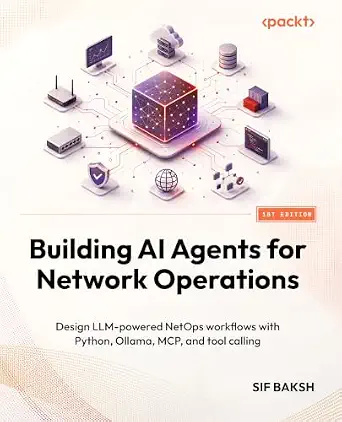 Building AI Agents for Network Operations: Design LLM-powered NetOps workflow…View on Amazon →
 - 3
 40 Python Programming Projects for AI Agents and AutomationsView on Amazon →
 - 4
 The Claude Code Operating Model: Build Scalable AI Coding Systems with Skills…View on Amazon →
 - 5
 Spec-Driven AI Engineering: Build Reliable Software from Requirements to Code…View on Amazon →
 - 6
 Building Agentic AI Systems: A Step-by-Step Guide to Creating LLM-Powered AI…View on Amazon →
 - 7
 AI for Quality Assurance and Software Testing: The Practitioner’s Complete Gu…View on Amazon →
 - 8
 Building Intelligent Applications with Claude AI: A Practical Guide to Creati…View on Amazon →
 - 9
 Spec-Driven Software Testing with AI: Build Reliable Test Suites from Specifi…View on Amazon →
 - 10
 Mastering Claude AI: The Complete Practical Guide to Prompt Engineering, Proj…View on Amazon →
 - 11
 Claude AI Automation & Monetization: Build AI-Powered Systems, Automate Workf…View on Amazon →
 - 12
 Google AI Studio Guide 2026: Master Google AI Studio to Build Intelligent AI…View on Amazon →
 - 13
 Agentic Coding with Claude Code (5-in-1): A Practical Developer’s Handbook fo…View on Amazon →
Why These Tools Shape Future Automation Strategies
The selection of these 13 tools reflects a shift toward AI-driven automation that emphasizes integration, scalability, and accessibility. For organizations, adopting these solutions can lead to faster development cycles, improved testing accuracy, and more efficient network management. This evolution in automation technology is crucial for staying competitive in rapidly changing digital environments, reducing operational costs, and enabling innovation.
Evolution of AI Automation in 2026
Over the past few years, AI automation tools have transitioned from niche solutions to essential components of enterprise IT and development workflows. Early solutions focused on simple task automation, but recent advancements have enabled complex, multi-layered workflows that support AI agents, cloud integration, and real-time data processing. The current landscape reflects a mature ecosystem where tools are evaluated based on their ability to handle large-scale, diverse tasks with minimal manual intervention.
Leading up to 2026, notable developments include the rise of API-first platforms, increased support for low-code/no-code interfaces, and enhanced security features. Companies like Google, Microsoft, and emerging startups continue to innovate, pushing the boundaries of automation capabilities. The emphasis remains on creating flexible, scalable, and user-friendly solutions that cater to both technical and non-technical users.
Remaining Questions About Long-Term Adoption
While the current top 13 tools are highly regarded, it remains unclear how their features will evolve over the next few years, especially regarding AI model updates, security enhancements, and integration with emerging technologies like quantum computing. Additionally, the long-term cost-effectiveness and adaptability of these platforms for small versus large organizations are still being evaluated. Further research and user feedback will clarify their sustained relevance and performance.
Upcoming Developments and Industry Shifts
In the coming months, expect continued innovation in AI automation, including new features focused on security, user experience, and cross-platform compatibility. Vendors will likely release updates that improve scalability and ease of integration, while industry standards for AI safety and ethics will influence platform development. Organizations should monitor these trends to optimize their automation strategies and ensure compatibility with future technological advancements.
Key Questions
How do I choose the best AI automation tool for my organization?
Evaluate your specific needs based on ease of use, scalability, integration capabilities, and budget. Consider starting with platforms that offer free trials or tiered pricing, and prioritize tools with active support and community resources.
Are these tools suitable for small teams or individual developers?
Yes, many of the top tools are designed with user-friendly interfaces and minimal coding requirements, making them accessible for small teams and individual users. Look for solutions that offer templates, drag-and-drop features, and affordable pricing.
Can these AI automation tools integrate with existing development pipelines?
Most leading tools support integration with popular development environments, APIs, and CI/CD platforms such as Jenkins, GitHub, and Docker. Verify compatibility during evaluation to ensure seamless workflow automation.
What are the main factors to consider when evaluating AI automation tools?
Key factors include ease of use, customization options, scalability, integration support, cost, and the availability of support resources. Prioritize tools that align with your current infrastructure and future growth plans.
Source: ThorstenMeyerAI.com
Halloween Picks
halloween
As an affiliate, we earn on qualifying purchases.