
📊 Full opportunity report: VR Trends And The RayNeo GT Max: A Match For The Future on IdeaNavigator AI — validation score, market gap, and execution plan.

Get the latest gadgets delivered free with Prime
- Fast, free delivery on millions of items
- Prime Video, Amazon Music and more included
- Member-only deals all year
TL;DR
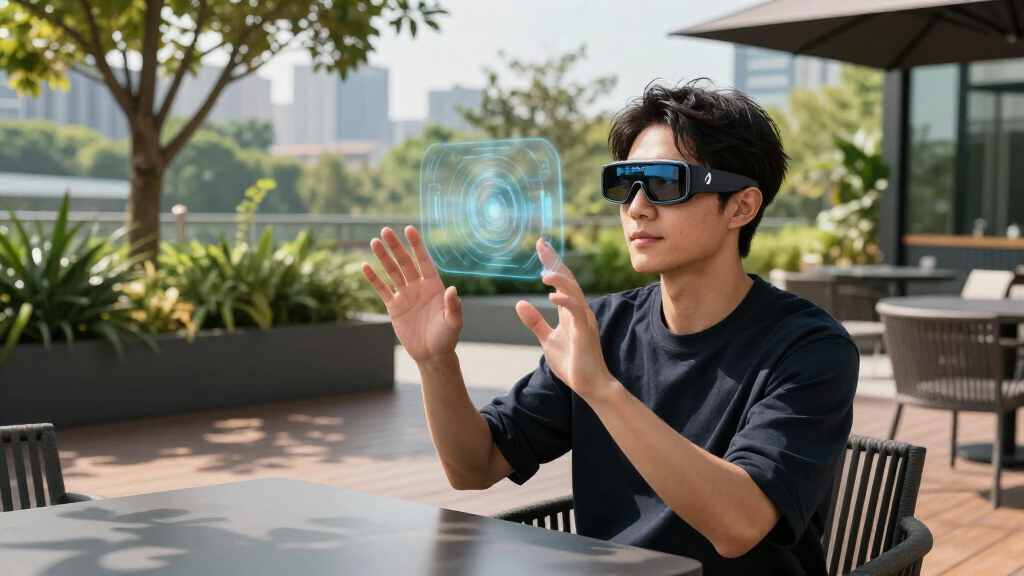
The RayNeo GT Max smart glasses are gaining attention as a top contender in VR technology, especially for operators needing quick, filtered updates. Its potential aligns with emerging VR trends, signaling a shift toward more integrated, real-time data solutions.
The RayNeo GT Max smart glasses have attracted notable interest as a leading device in the evolving virtual reality landscape, especially for operators who require rapid, role-specific data updates. Confirmed by recent tests and early reviews, the device is seen as a promising tool for professionals needing real-time situational awareness, reflecting broader VR trends toward integrated, wearable technology.
Testers and industry observers have highlighted the RayNeo GT Max as potentially the best smart glasses of 2026 so far, citing its advanced display capabilities, lightweight design, and seamless connectivity. The device is designed to deliver real-time signals and alerts directly into the user’s field of view, making it particularly suitable for operators in fields such as defense, security, and emergency response, where quick decision-making is critical.
According to an anonymous tester, the RayNeo GT Max could serve as a ‘narrow first-win workflow’ for operators who must act swiftly on fast-moving developments. Its signal monitoring features are tailored to filter relevant information from vast data streams, reducing information overload and enabling faster responses. The device’s compatibility with existing communication and data systems is also seen as a key strength.
While initial impressions are positive, detailed performance metrics and long-term durability tests are still pending. Industry insiders note that the device’s success will depend on how well it integrates with broader VR and AR ecosystems, as well as its ability to adapt to rapidly changing operational environments.
Emerging VR Devices Shape Operational Workflows
The RayNeo GT Max’s potential to deliver immediate, filtered data directly into the user’s view positions it as a significant step forward in VR technology for operational use. This aligns with current trends toward wearable, real-time information systems that enhance decision-making in high-stakes environments. Its adoption could influence how industries like defense, security, and emergency management approach situational awareness, emphasizing speed and precision.
As VR and AR technologies continue to mature, devices like the RayNeo GT Max exemplify the shift toward integrated, role-specific solutions that reduce cognitive load and improve response times. This development underscores the importance of hardware that can seamlessly blend into existing workflows, offering both mobility and immediacy.
VR smart glasses for professional use
As an affiliate, we earn on qualifying purchases.
As an affiliate, we earn on qualifying purchases.
VR Industry Trends Toward Real-Time, Wearable Tech
The VR industry has seen a steady move toward wearable devices that provide real-time data, especially in professional and operational contexts. Recent years have seen a surge in smart glasses and AR headsets designed for fieldwork, with emphasis on lightweight design, durability, and connectivity. Major tech companies and startups alike are investing in solutions that enable users to access critical information hands-free, supporting faster decision-making and situational awareness.
In 2023, the focus has shifted toward devices capable of filtering relevant signals from large data streams, reducing information overload. The RayNeo GT Max fits within this trend, promising a compact, user-friendly interface that can be integrated into existing operational systems. Its emergence reflects a broader industry push to combine VR, AR, and AI-driven data analysis for enhanced field performance.
Previous developments include the introduction of AR glasses with limited signal filtering and durability, but the current wave aims for more specialized, role-specific hardware. The success of these devices hinges on their ability to deliver actionable insights quickly and reliably in demanding environments.
As an affiliate, we earn on qualifying purchases.
Long-Term Performance and Ecosystem Integration Unclear
While early feedback is promising, it remains unclear how well the RayNeo GT Max will perform over extended use, particularly regarding durability, battery life, and software stability. Additionally, its integration with existing VR and AR ecosystems is still in development, and compatibility with various operational platforms has not been fully demonstrated.
Further testing and field trials are needed to confirm whether the device can sustain high performance in demanding environments and whether it can be scaled for widespread adoption across different industries.
As an affiliate, we earn on qualifying purchases.
Upcoming Field Tests and Industry Adoption Trials
The next steps include comprehensive field testing by industry operators, scheduled for late 2023 and early 2024. These trials will evaluate the RayNeo GT Max’s durability, signal accuracy, and integration capabilities in real-world scenarios. Industry stakeholders are also expected to assess user feedback and operational impact during these trials.
Manufacturers and developers are likely to release firmware updates and new features based on initial findings, aiming to improve performance and expand ecosystem compatibility. Widespread adoption will depend on the outcomes of these tests and the device’s ability to meet industry-specific needs.
As an affiliate, we earn on qualifying purchases.
Key Questions
What makes the RayNeo GT Max different from other smart glasses?
The RayNeo GT Max offers advanced signal monitoring, real-time filtering, and a lightweight, durable design tailored for operational environments, setting it apart from earlier or less specialized devices.
When will the RayNeo GT Max be available for widespread use?
While early tests are promising, full commercial availability is expected after comprehensive field trials and ecosystem integration testing, likely in mid to late 2024.
What industries are most likely to benefit from this technology?
Defense, security, emergency response, and other high-stakes operational fields stand to benefit most from the RayNeo GT Max’s real-time, role-specific data delivery capabilities.
Are there any known limitations of the device so far?
Initial feedback indicates that long-term durability, battery life, and seamless software integration are still under evaluation, with these factors determining broader adoption.
Source: IdeaNavigator AI
Halloween Picks
halloween
As an affiliate, we earn on qualifying purchases.