
TL;DR

Get the latest gadgets delivered free with Prime
- Fast, free delivery on millions of items
- Prime Video, Amazon Music and more included
- Member-only deals all year
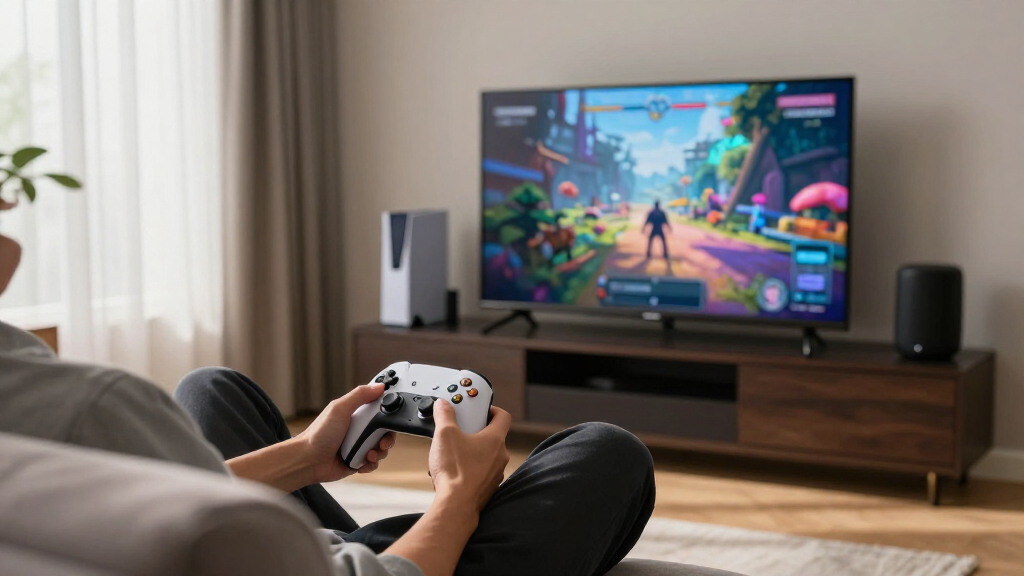
In 2026, nine advanced AI technologies are significantly changing the gaming landscape. These innovations include real-time NPCs, personalized content, and adaptive difficulty, impacting both players and developers.
In 2026, nine AI technologies are fundamentally reshaping the gaming industry, enhancing realism, personalization, and interactivity. For a detailed overview, see the top AI breakthroughs of 2026. These developments are confirmed by industry reports and expert analyses, highlighting a major shift in how games are created and experienced.
Among the confirmed innovations are AI-powered non-player characters (NPCs) capable of real-time adaptive behavior, enabling more immersive and unpredictable gameplay experiences. Developers are increasingly leveraging machine learning algorithms to generate dynamic, personalized content tailored to individual players, as confirmed by industry insiders. Learn more about AI’s impact on gaming in the original analysis.
Additionally, AI-driven tools are automating aspects of game design, such as environment creation and narrative development, reducing production times and costs, according to recent industry reports. For more on gaming hardware, see the top gaming motherboards of 2026. These technologies are also improving accessibility by adapting difficulty levels in real time, making games more inclusive.
While these advancements are well-documented, some claims about the full potential of AI in gaming remain speculative, with ongoing research and development still in progress to refine these systems.
The 9 picks
- 1
 Logitech G502 Lightspeed Wireless Gaming Mouse – BlackView on Amazon →
 - 2
 GravaStar Mercury M2 Wireless Gaming Mouse with 26,000 DPI, PAW3395DM Sensor,…View on Amazon →
 - 3
 Razer Basilisk V3 X HyperSpeed Wireless Gaming Mouse, BlackView on Amazon →
 - 4
 Logitech G305 Lightspeed Wireless Gaming Mouse – BlackView on Amazon →
 - 5
 Logitech G305 Lightspeed Wireless Gaming Mouse – BlueView on Amazon →
 - 6
 AOC GM401 Wireless RGB Gaming Mouse, 12000 DPI, Rapid-Fire Shortcut, 70HrsView on Amazon →
 - 7
 Logitech G305 Lightspeed Wireless Gaming Mouse – WhiteView on Amazon →
 - 8
 Redragon M810 PRO Wireless RGB Gaming Mouse 10000 DPIView on Amazon →
 - 9
 T-DAGGER Wireless Gaming Mouse – USB Cordless PC Accessories with LED Backlit…View on Amazon →
How AI Innovations Are Reshaping Player Experiences
The integration of these nine AI technologies in 2026 signifies a major shift in the gaming industry. They enhance realism, personalization, and accessibility, which can lead to more engaging and inclusive gaming experiences. For developers, these tools reduce production costs and enable faster content updates, fostering innovation and competition. For players, this means more dynamic, tailored gameplay, and potentially longer-lasting engagement with games.
Evolution of AI in Gaming Leading Up to 2026
Over the past decade, AI has gradually integrated into gaming, from simple procedural generation to complex NPC behaviors. In recent years, advancements in machine learning and deep neural networks have accelerated this trend, with industry leaders investing heavily in AI-driven tools. By 2025, prototypes of adaptive NPCs and personalized content platforms demonstrated promising results, setting the stage for the widespread adoption seen in 2026.
Previous efforts focused on enhancing graphics and storylines, but the current wave centers on creating more intelligent, autonomous systems that respond to player actions in real time, driven by rapid technological progress and increased computational power.
Unconfirmed Aspects of AI’s Future in Gaming
While the current AI technologies are well-documented, the long-term implications and full capabilities of these systems remain uncertain. It is not yet clear how widespread adoption will be across different game genres and platforms, or how quickly regulatory and ethical considerations will evolve to govern AI use in gaming.
Further research is needed to understand potential drawbacks, such as AI bias, over-reliance on automation, and impacts on employment within the industry.
Next Steps for AI Integration in Gaming
Industry stakeholders are expected to focus on refining these AI systems, addressing ethical concerns, and expanding their application across genres. Upcoming conferences and developer showcases in late 2026 will likely highlight new AI tools and case studies demonstrating their effectiveness. Additionally, regulatory bodies may begin establishing guidelines for ethical AI use, shaping future development and deployment.
Key Questions
What are the most impactful AI technologies in gaming in 2026?
The most impactful include real-time adaptive NPCs, personalized content generation, and AI-assisted game design tools, which enhance realism, engagement, and development efficiency.
How will AI change the way players experience games?
AI will enable more personalized, unpredictable, and immersive experiences, making games feel more like dynamic worlds that respond uniquely to each player.
Are there concerns about AI’s role in gaming?
Yes, concerns include AI bias, ethical considerations, and potential job displacement in game design, which are currently subjects of ongoing debate and regulation.
When can we expect wider adoption of these AI technologies?
Wider adoption is expected to accelerate in 2027 and beyond, as developers refine these systems and industry standards are established.
Will AI make traditional game development obsolete?
AI is more likely to augment rather than replace traditional development, automating routine tasks and enabling new creative possibilities.
Source: ThorstenMeyerAI.com
Columbus Day / Indigenous Peoples' Day Picks
long weekend sales
As an affiliate, we earn on qualifying purchases.