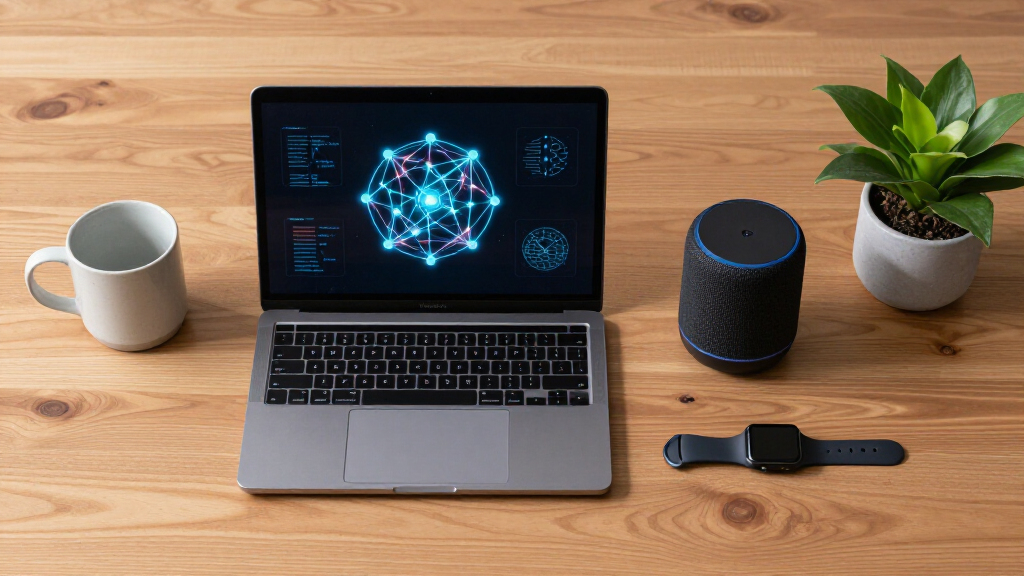

📊 Full opportunity report: 10 AI Technologies That Will Drive Change In 2026 on ThorstenMeyerAI.com — validation score, market gap, and execution plan.

Get the latest gadgets delivered free — and shop member deals
- Fast, free delivery on millions of items
- Access to Prime Big Deal Days deals on October 6–7
- Prime Video, Amazon Music and more included
TL;DR
In 2026, ten emerging AI technologies are poised to reshape industries, from autonomous systems to advanced natural language processing. Experts highlight their potential impact, though some developments remain in early stages.
Ten AI technologies are expected to drive significant change across industries in 2026, according to industry forecasts and expert analysis. These innovations include advances in autonomous systems, natural language processing, and AI-powered healthcare, among others. The development of these technologies could reshape how businesses operate, how consumers interact with digital services, and how critical sectors like healthcare and transportation evolve.
Industry experts predict that by 2026, breakthroughs in autonomous vehicles and robotics will enable safer, more efficient transportation and logistics. Meanwhile, natural language processing (NLP) tools are expected to become more sophisticated, enabling more natural and context-aware interactions between humans and machines.
In healthcare, AI-driven diagnostics and personalized treatment plans will likely become standard, improving patient outcomes and reducing costs. Additionally, generative AI applications are forecasted to revolutionize content creation, from media to software development. Other technologies include advances in edge AI for real-time data processing and AI chips designed for energy efficiency and high performance.
The 10 picks
- 1
 ASUS ROG Strix G16 (2025) Gaming Laptop, 16” ROG Nebula Display, NVIDIA GeFor…View on Amazon →
 - 2
 Lenovo Legion 5 15IRX10 Gaming Laptop with 15.1" WQXGA OLED, Intel Core i9 14…View on Amazon →
 - 3
 MSI Katana 15 HX 15.6” QHD+ Gaming Laptop with Intel Core i9-14900HX and NVID…View on Amazon →
 - 4
 ASUS ROG Strix G16 Gaming Laptop, NVIDIA RTX 5060, 32GB DDR5-5600, 1TB SSDView on Amazon →
 - 5
 Acer Predator Helios Neo 18 AI Gaming Laptop with Intel Core Ultra 9 and NVID…View on Amazon →
 - 6
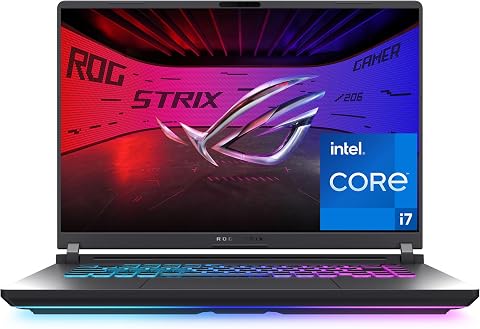 ASUS ROG Strix G16 (2025) Gaming Laptop, 16” FHD+ 165Hz, NVIDIA GeForce RTX 5…View on Amazon →
 - 7
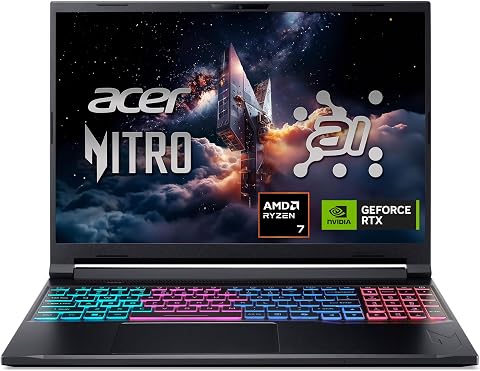 Acer Nitro V 16S AI Gaming Laptop with AMD Ryzen 7 2600, NVIDIA GeForce RTX 5…View on Amazon →
 - 8
 ASUS ROG Strix G16 (2025) Gaming Laptop, 16” FHD+ 165Hz, NVIDIA GeForce RTX 5…View on Amazon →
 - 9
 Alienware 16 Aurora Gaming Laptop with RTX 5050 and Intel Core i7View on Amazon →
 - 10
 KAIGERR Gaming Laptop, 24GB DDR5, 512GB NVMe SSD, AMD Ryzen 7, 16.0 inch Wind…View on Amazon →
Implications of AI Innovation in 2026
The anticipated emergence of these ten AI technologies in 2026 underscores their potential to transform multiple sectors, including transportation, healthcare, entertainment, and manufacturing. Their integration could lead to increased efficiency, new business models, and enhanced user experiences. However, these advancements also raise questions around ethical use, data privacy, and regulatory oversight, which will need to be addressed as adoption accelerates.
Recent Trends and Developments Leading to 2026
Over the past few years, rapid progress in machine learning, computational power, and data availability has propelled AI capabilities forward. Major tech companies and startups alike have invested heavily in R&D, resulting in increasingly sophisticated models and hardware optimized for AI workloads. The push toward autonomous systems and smarter NLP tools has been particularly notable, setting the stage for the innovations expected in 2026.
Previous milestones include the deployment of large language models, advances in computer vision, and the commercialization of AI-powered robotics. These developments indicate a trajectory toward broader and more impactful AI integration across industries, with 2026 poised as a pivotal year for widespread adoption.
“The next few years will see breakthroughs in edge AI and AI hardware, enabling real-time processing on devices with limited power, which is crucial for IoT and mobile applications.”
— John Davis, CTO of InnovateAI
Uncertainties Surrounding AI Adoption in 2026
While forecasts are optimistic, several uncertainties remain. The pace of regulatory developments, ethical considerations, and public acceptance could influence how quickly these technologies are adopted. Additionally, technical challenges in scaling certain AI systems and ensuring safety and fairness are still being addressed. It is not yet clear how these factors will shape the actual rollout and integration of these technologies in 2026.
Next Steps for Industry and Regulators
As 2026 approaches, industry leaders and policymakers are expected to focus on establishing standards, regulations, and ethical guidelines to manage AI deployment responsibly. Continued investment in research and development will be critical, along with pilot projects and collaborations to test these technologies at scale. Monitoring these developments will be essential to understanding their real-world impact and addressing emerging challenges.
Key Questions
Which AI technology is most likely to impact daily life in 2026?
Natural language processing and autonomous systems are expected to have the most immediate impact, enabling more intuitive digital interactions and safer transportation options.
Are there any risks associated with these AI advancements?
Yes, potential risks include ethical concerns, data privacy issues, and the possibility of unintended biases in AI systems. Regulatory frameworks are still evolving to address these challenges.
Will these AI technologies be accessible globally?
Access will vary depending on regional infrastructure, regulatory environments, and economic factors. While some innovations may be widespread, others could remain limited to developed markets initially.
How soon can we expect these AI technologies to become mainstream?
Many of these technologies are expected to see significant adoption by 2026, but full mainstream integration may take longer, depending on regulatory approval, technological maturity, and societal acceptance.
Source: ThorstenMeyerAI.com
Fall Picks
fall essentials
As an affiliate, we earn on qualifying purchases.