
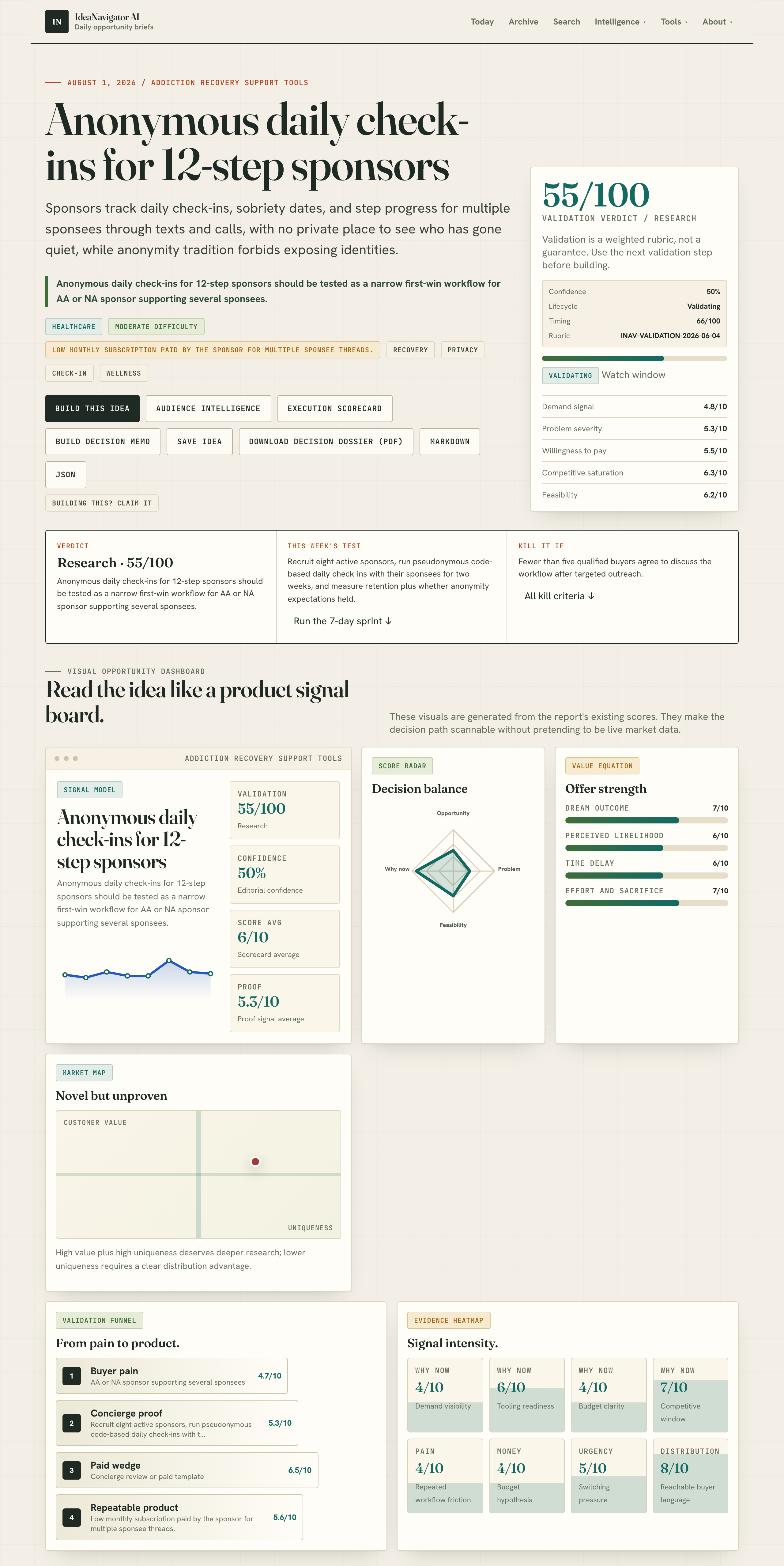
📊 Full opportunity report: Anonymous daily check-ins for 12-step sponsors on IdeaNavigator AI — validation score, market gap, and execution plan.
TL;DR
A prototype for anonymous daily check-ins is being tested for 12-step sponsors supporting multiple sponsees. The system aims to enhance privacy and streamline tracking, with initial validation planned.
An anonymous daily check-in system for 12-step sponsors supporting multiple sponsees is being tested as a potential solution to privacy and tracking challenges within recovery programs. For more on daily check-ins, see Postpartum Maternal Recovery: Daily Check-ins At A Glance. The initiative aims to create a private, pseudonymous platform that allows sponsors to monitor daily check-ins without exposing identities, addressing longstanding confidentiality concerns.
The proposed system involves a pseudonymous check-in thread where sponsors invite sponsees via one-time codes. Sponsees would then log daily sobriety status with a simple green or red indicator and an optional note, without revealing real names or phone numbers. This approach seeks to provide a private, secure alternative to current messaging methods, which often leak personal information.
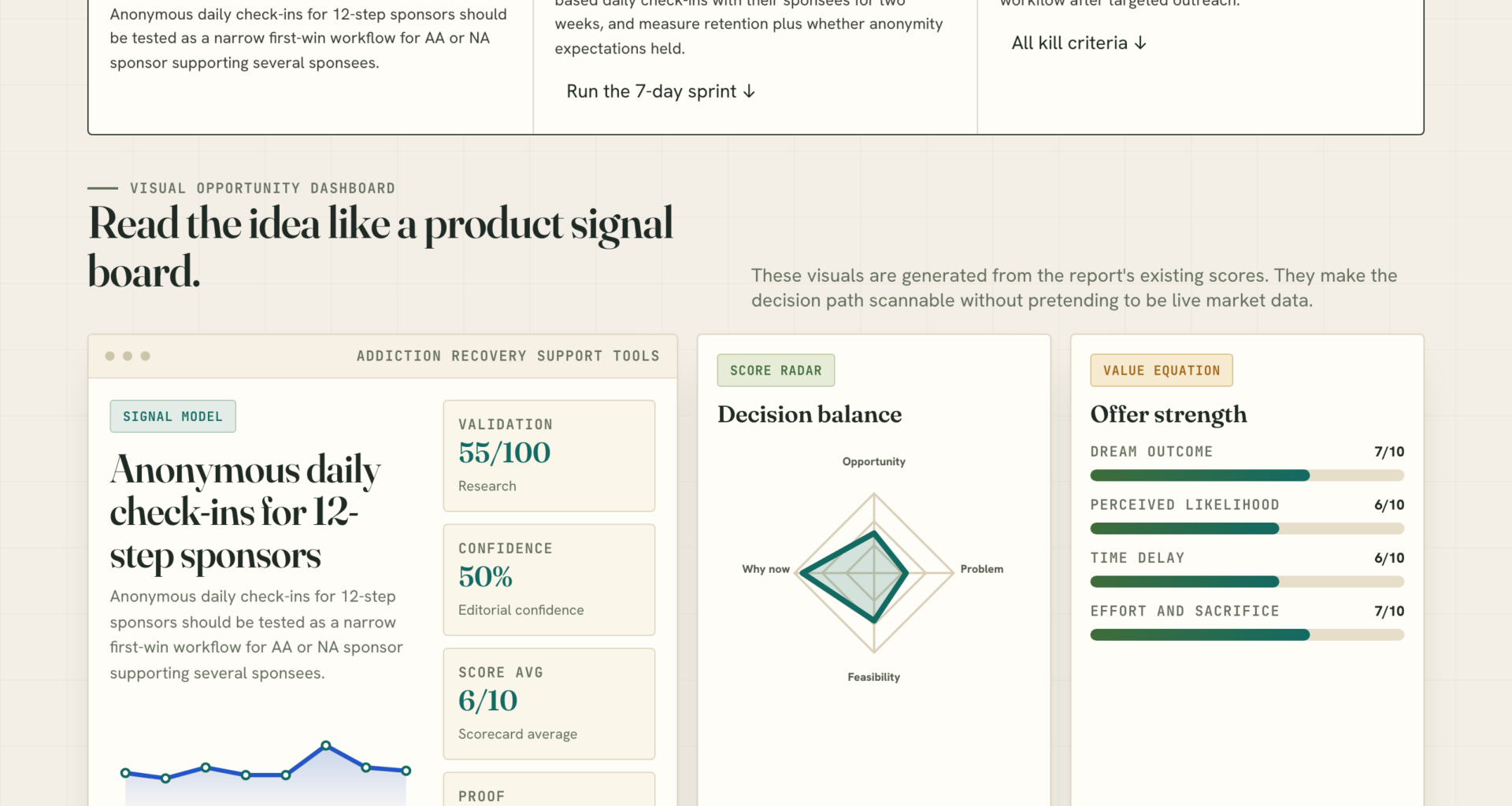
According to an anonymous researcher involved in the project, the prototype will be tested with eight active sponsors over a two-week period. The goal is to measure retention rates and verify whether the system maintains the expected level of anonymity. The platform would operate on a low monthly subscription model paid by sponsors managing multiple sponsees.
Recovery support tools are increasingly moving onto mobile devices, but existing messaging apps and habit trackers often compromise anonymity, conflicting with the core traditions of twelve-step programs. This initiative aims to bridge that gap by offering a dedicated, privacy-focused solution.
Potential Impact on Privacy and Support Structures
This development could significantly improve privacy for individuals in recovery, reducing fears of exposure and stigma. By enabling anonymous check-ins, sponsors can better support multiple sponsees without risking personal data leaks. If successful, this system might influence how digital tools are integrated into recovery programs, aligning technology with traditional confidentiality principles.
As an affiliate, we earn on qualifying purchases.
Growing Need for Confidentiality in Digital Recovery Tools
As mobile recovery support becomes more prevalent, concerns about privacy breaches have increased. Current solutions, such as standard messaging apps, often reveal personal contacts or real names, which can discourage honest communication. The shift toward digital platforms has prompted innovators to seek secure, anonymous alternatives that respect the traditions of twelve-step programs.
Past efforts to digitize sponsor-sponsee interactions have faced challenges related to privacy and ease of use. This new prototype represents a targeted response to these issues, focusing on simplicity and confidentiality to encourage consistent engagement.
“The goal is to create a private, pseudonymous environment that supports daily check-ins without compromising identities.”
— an anonymous researcher
privacy-focused recovery support tools
As an affiliate, we earn on qualifying purchases.
As an affiliate, we earn on qualifying purchases.
Unconfirmed Aspects of System Effectiveness and Adoption
It is not yet clear how well the system will perform in real-world settings or whether sponsors and sponsees will adopt it widely. The effectiveness of maintaining anonymity over longer periods and in diverse contexts remains to be tested. Additionally, the impact on existing support habits and trust levels is still unknown.
12-step sponsor sponsee tracking app
As an affiliate, we earn on qualifying purchases.
As an affiliate, we earn on qualifying purchases.
Next Steps for Validation and Potential Expansion
The prototype will undergo a two-week pilot with eight sponsors, with results informing further development. Success could lead to broader testing, refinement of features, and potential commercialization. Stakeholders are also expected to evaluate user feedback regarding ease of use and privacy assurance.
As an affiliate, we earn on qualifying purchases.
Key Questions
How does the anonymous check-in system protect user privacy?
The system uses one-time codes and pseudonymous identifiers, avoiding the storage of real names or phone numbers, thus preventing personal data leaks.
Can this system support multiple sponsees per sponsor?
Yes, the design is specifically aimed at sponsors managing several sponsees, with separate threads for each to maintain privacy and organization.
Will this replace existing messaging apps used in recovery support?
It is intended as a specialized alternative that offers enhanced privacy, not necessarily replacing current tools but providing a secure option for daily check-ins.
Is this system available for general use now?
No, it is currently in a testing phase with a small group of sponsors and will require further validation before wider release.
What are the main challenges for implementing this system?
Ensuring long-term privacy, encouraging consistent use, and integrating with existing support workflows are key challenges currently being addressed.
Source: IdeaNavigator AI