

📊 Full opportunity report: OpenAI’s 2026 Data Infrastructure: Shaping The Future Of Business AI on ThorstenMeyerAI.com — validation score, market gap, and execution plan.
Open a free Amazon Business account
Business pricing, bulk buying and tax-exempt orders.
Create a free accountAs an affiliate, we earn on qualifying purchases.
TL;DR
OpenAI announced a comprehensive 2026 data infrastructure plan that emphasizes data control, security, and enterprise integration. The strategy includes new products like Company Knowledge, Frontier, and Secure MCP Tunnel, marking a shift toward more governed AI agents for business use. Details on deployment and data handling are still emerging.
OpenAI has unveiled a comprehensive 2026 data infrastructure strategy that emphasizes strict data control, security, and enterprise system integration, marking a significant evolution in business AI capabilities. The company confirms it does not automatically train its models on customer data from ChatGPT Business, Enterprise, Healthcare, Edu, or API use, maintaining a focus on data privacy and governance for enterprise clients.
OpenAI’s new product suite includes Company Knowledge, which allows AI to search across internal applications like Slack, SharePoint, and GitHub, and Frontier, which assigns individual identities and permissions to AI agents, enabling secure, role-based interactions within enterprise environments. The Secure MCP Tunnel further enhances security by connecting private or on-premises systems without exposing internal servers to the internet.
OpenAI states that its privacy commitment covers the inputs and outputs of these products, with explicit distinctions between data processed for training and data used solely for inference, safety, or storage. The company emphasizes that, by default, customer data is not used for model training unless explicitly opted in, and data retention varies depending on the product and use case.
Enterprise data governance · July 2026
Inside OpenAI’s Enterprise Data Stack
What happens to company data when ChatGPT and AI agents search internal apps, run tools and work across private systems.
Applies to covered business products and the API; explicit opt-in can change the rule.
Storage at rest for eligible Enterprise and Edu customers.
Europe, United States and UAE for eligible configurations.
Eligible customers can apply for Modified Abuse Monitoring or Zero Data Retention.
01 · Four separate questions
“No training” is not “no storage”
A credible review separates model training, service processing, data retention and access control.
Training
Used to improve future models?
OpenAI says business data is not used for training by default. Explicitly shared feedback may be used when a customer opts in.
Default · ExcludedProcessing
Handled to produce an answer?
Prompts, files and retrieved context must be processed for inference, safety checks and the requested tools to work.
Required for the serviceRetention
Stored after processing?
The answer varies by plan, feature, endpoint, chat settings, synchronized index and approved data-retention control.
Configuration dependentAccess
Who can retrieve or act?
Workspace roles, app permissions, agent identity and tool policies determine what context is visible and what actions are allowed.
Permission controlled02 · The new enterprise stack
From protected chat to governed agents
OpenAI’s recent products add internal search, agent identity, private connectivity and execution.
October 2025
Company Knowledge
Searches across connected apps, respects source permissions and returns citations to original material.
RetrieveFebruary 2026
OpenAI Frontier
Builds and manages AI coworkers with separate identities, explicit permissions, guardrails and feedback.
GovernMay 2026
Secure MCP Tunnel
Connects supported products to private or on-prem MCP servers without a public server endpoint.
ConnectJuly 2026
ChatGPT Work
Works across apps and files, runs multi-hour assignments and turns goals into finished deliverables.
ActJuly 2026
OpenAI Presence
Deploys production voice and chat agents across customer-facing and internal operational workflows.
Operate2026 control layer
Compliance + Review
Provides prompts and responses for oversight; auto-review can inspect important actions before execution.
ObserveThe strategic shift
More context → more useful agents → more governance required
03 · Connected data flow
Permissions travel with the user
ChatGPT should retrieve only what the authenticated user or agent identity may already access.
Identity
User or AI coworker
Permission
Role + source ACLs
Retrieval
Apps + private tools
AI inference
Answer, artifact or action
Where new state can appear
Chat history
Conversations, files, memory and custom GPT content follow workspace retention settings.
Policy controlledSynced index
App data with sync can be indexed to accelerate answers. Region support must be checked.
App dependentAPI state
Abuse logs, stored responses, files and containers have endpoint-specific lifecycles.
Endpoint dependentThird parties
Remote MCP servers and other tools apply their own retention and security policies.
Separate processor04 · Location controls
Storage residency ≠ inference residency
The region used to save covered content can differ from the region where GPU inference runs.
Data residency · Storage at rest
- Europe (EEA + Switzerland)
- India
- United States
- Japan
- United Kingdom
- Singapore
- Canada
- South Korea
- Australia
- United Arab Emirates
Chats · files · memory · custom GPTs · analysis artifacts · image inputs and outputs
Inference residency · GPU execution
- Europe
- United States
- United Arab Emirates
05 · Claims vs. operational reality
What each control actually answers
06 · Enterprise buyer checklist
Govern the workflow, not only the model
For every deployment, record the complete chain of access, state and accountability.
- Product, model and exact enabled features
- Retention setting for every endpoint
- Connected sources and synchronized indexes
- Storage region and inference region
- User or agent identity and allowed actions
- Third-party processors and audit coverage
Implications of OpenAI’s 2026 Data Infrastructure for Business AI
This development signifies a major shift toward more secure, governed, and enterprise-friendly AI systems. The new infrastructure allows companies to leverage AI more deeply within their internal workflows while maintaining strict control over data privacy and security. It also sets a new standard for how AI providers handle sensitive business data, impacting trust, compliance, and operational efficiency in enterprise AI deployments.

The Developer's Playbook for Large Language Model Security: Building Secure AI Applications
As an affiliate, we earn on qualifying purchases.
As an affiliate, we earn on qualifying purchases.
Background of OpenAI’s Enterprise Data Strategy Development
Over the past year, OpenAI has transitioned from focusing solely on protected chatbot services to developing a layered enterprise AI stack. Key milestones include the introduction of Company Knowledge in October 2025, which enables AI search across internal data sources, and the February 2026 announcement of Frontier, a managed AI agent system with explicit identities and permissions. The May 2026 release of Secure MCP Tunnel addresses security concerns around connecting internal systems to AI services, completing a comprehensive approach to enterprise AI governance.
This evolution reflects OpenAI’s intent to balance AI innovation with robust data governance, responding to enterprise demands for security, compliance, and control over sensitive information.

Scaling AI: The AI Governance and Security Playbook for Executives
As an affiliate, we earn on qualifying purchases.
As an affiliate, we earn on qualifying purchases.
Unresolved Aspects of OpenAI’s 2026 Data Infrastructure
It remains unclear how widely adopted these new products will be across different industries and what specific compliance standards they will meet globally. Details about the exact data retention policies for all enterprise interactions, and how OpenAI will handle potential data breaches or misuse, are still emerging. Additionally, the effectiveness of the security measures like the Secure MCP Tunnel in preventing sophisticated attacks has yet to be independently verified.
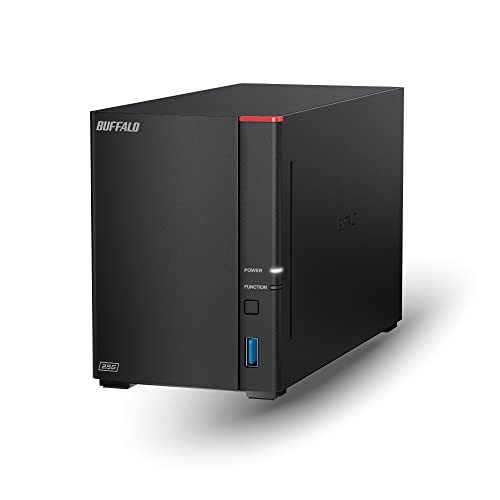
BUFFALO LinkStation 720 8TB 2-Bay Home Office Private Cloud Data Storage with Hard Drives Included/Computer Network Attached Storage/NAS Storage/Network Storage/Media Server/File Server
- Enhanced Performance and Compatibility: Up to 7x faster, MacOS 26 support
- Shared Network Storage: Connect to router for multi-device access
- Subscription-Free Cloud: Store and access files without fees
As an affiliate, we earn on qualifying purchases.
As an affiliate, we earn on qualifying purchases.
Next Steps for OpenAI’s Enterprise Data Strategy Implementation
OpenAI is expected to continue refining its enterprise products, with upcoming updates likely to clarify data handling policies and security features. The company may also expand its customer base and integration capabilities, emphasizing compliance and security certifications. Industry observers will watch for real-world deployment results and independent audits to verify the robustness of these new systems.

The Agentic Enterprise with MCP: A Comprehensive Guide to Building Secure, Scalable, and Interoperable AI Agents with the Model Context Protocol
As an affiliate, we earn on qualifying purchases.
As an affiliate, we earn on qualifying purchases.
Key Questions
Will OpenAI’s new infrastructure compromise data privacy?
OpenAI states that its infrastructure emphasizes strict data control, with default policies not to use customer data for training unless explicitly authorized. Data is encrypted at rest and in transit, but enterprise clients should review specific product terms for detailed privacy assurances.
How do these new products improve enterprise AI security?
Products like the Secure MCP Tunnel and Frontier enable secure, role-based AI interactions within internal systems, reducing attack surfaces and ensuring that AI actions are governed by explicit permissions and boundaries.
What industries will benefit most from OpenAI’s 2026 data infrastructure?
Industries with sensitive data needs, such as healthcare, finance, and government, are likely to benefit most due to enhanced security, control, and compliance features built into OpenAI’s new enterprise offerings.
Source: ThorstenMeyerAI.com
Pool season Picks
robotic pool cleaners
As an affiliate, we earn on qualifying purchases.