A red light therapy mask can be a worthwhile at-home investment for fine lines, dullness, and mild acne — but the category is crowded with near-identical listings that differ in ways that matter: wavelength depth, face-versus-neck coverage, corded versus wireless design, and whether the LEDs sit close enough to your skin to actually deliver a dose. The Shark CryoGlow stands out as my best overall pick because it pairs red light therapy with under-eye cooling, something no other mask here offers. The iRestore LED Face Mask takes the premium slot with 360 LEDs and full tri-wavelength coverage, while the RENPHO hits the sweet spot of proven design and wireless convenience for most budgets. The main tradeoff you’ll face is coverage versus comfort: face-and-neck masks treat more area but feel bulkier, while compact face-only masks are easier to wear for a full 10-minute session. Keep reading for the full breakdown of all 15 masks and which one fits your skin goals.

Get the latest gadgets delivered free with Prime
- Fast, free delivery on millions of items
- Prime Video, Amazon Music and more included
- Member-only deals all year
Complete the kit



Key Takeaways
- Masks combining 660nm red light with 850nm near-infrared consistently offered deeper anti-aging benefits than single-wavelength or 7-color models, which is why dual-wavelength picks dominated the top of the ranking.
- The Shark CryoGlow’s under-eye cooling plates make it the only mask here that addresses puffiness and dark circles mechanically rather than only with light — a genuine differentiator in an otherwise homogeneous category.
- Several listings in this roundup are functionally identical (same 4 modes, same 850nm diodes, different brand names), so I ranked them on secondary factors like battery life, controller design, and neck coverage rather than claimed features.
- Face-and-neck masks like the LX300 and M09 delivered noticeably better value per treatment area, but every one of them sacrificed portability and session comfort compared with face-only wireless masks.
- FDA-cleared options were rare in this lineup — only the blue-light acne mask and a handful of others carry clearance — which matters if you’re treating active acne rather than pursuing general anti-aging.
| wavytalk Red Light Therapy Mask for Face, Glow Time LED Face Mask 850nm NIR |  | Best Overall | LED Chips: 456 high-purity LEDs | Power Density: 40mW/cm² | Wavelengths: 630nm red, 850nm NIR, 415nm blue, 590nm amber | VIEW ON AMAZON | See Our Full Breakdown |
| Red Light Therapy Mask for Face & Neck, Wireless LED Face Mask, 4 Modes |  | Best for Face-and-Neck Coverage | Light Beads: 680 total (100 face + 70 neck chip carriers, 4 LEDs each) | Coverage: Face, neck, and upper chest | Wavelengths: 630nm red, 460nm blue, 605nm amber, 850nm NIR | VIEW ON AMAZON | See Our Full Breakdown |
| Red Light Therapy for Face, 7 Colors LED Face Mask, Cordless |  | Best for Beginners | Light Modes: 7 color modes | Design: Cordless, rechargeable | Session Length: 10–15 minutes | VIEW ON AMAZON | See Our Full Breakdown |
| INIA Red Light Therapy Mask for Face, 850nm NIR, Red/Blue LED Light 4 Modes |  | Best for Power and Customization | LED Chips: 220 high-energy chips | Power Density: Up to 105mW/cm² | Modes: Red-L (620nm), Red-H (630nm), Blue (460–470nm), Red+Blue (460–630nm) | VIEW ON AMAZON | See Our Full Breakdown |
| American Wellness Authority LX300 Red Light Therapy Face Mask with Neck Attachment |  | Best FDA-Cleared Premium Setup | FDA Clearance: 510(k) cleared for home use | LED Chips: 432 (face) + 456 (neck) = 888 total | Wavelength Modes: 8 | VIEW ON AMAZON | See Our Full Breakdown |
| Shark CryoGlow LED Face Mask, Red Light Therapy, Under-Eye Cooling, FW312PL |  | Best Premium Pick | Light types: Red, Blue, Deep Infrared | Special feature: InstaChill under-eye cooling with 3 chill levels | Treatment modes: 4 (Better Aging, Skin Clearing, Skin Sustain, Under-Eye Revive) | VIEW ON AMAZON | See Our Full Breakdown |
| Red Light Therapy for Face, FDA-Cleared Blue Light Mask for Acne (MICEYLIVE) |  | Best for Acne-Prone Skin | Light modes: 3 (Anti-Acne, Anti-Fine Line, Rejuvenation) | Wavelengths: 415nm blue, 630nm red, 850nm NIR, 590nm amber | LED count: 432 LED chips | VIEW ON AMAZON | See Our Full Breakdown |
| Red Light Therapy Mask for Face & Neck, 850nm NIR & 660nm Red LED, 4 Modes (INTEO) |  | Best Face-and-Neck Coverage | Coverage area: Face, neck, and upper chest | LED count: 680 LEDs | Wavelengths: 660nm red, 850nm NIR, 600nm amber, 460nm blue | VIEW ON AMAZON | See Our Full Breakdown |
| Red Light Therapy for Face, 4 Modes, Wireless 2000mAh Remote |  | Best Cordless Convenience | Wavelengths: 630nm red, 850nm NIR, 600nm amber, 460nm blue | Light modes: 4 | Intensity levels: 3 adjustable | VIEW ON AMAZON | See Our Full Breakdown |
| RENPHO Red Light Therapy Mask for Face, 204 LEDs, 3 Modes, Wireless LED Mask |  | Best for Beginners | Light modes: 3 (Red, Blue, Red + Infrared) | Wavelengths: 620nm red, 460nm blue, 850nm infrared | LED count: 204 LED beads | VIEW ON AMAZON | See Our Full Breakdown |
| Qynera Red Light Therapy for Face & Neck, 850nm NIR LED Face Mask (M09) |  | Best for Full-Body Versatility | LED count: 584 LEDs | Wavelengths: 7 color modes + 850nm near-infrared | Battery: 3000mAh rechargeable, up to 240 minutes use | VIEW ON AMAZON | See Our Full Breakdown |
| Red Light Therapy for Face LED Infrared Facial Mask (Gold) |  | Best Budget Starter Pick | LED count: 120 LED beads | Primary wavelength: 630nm red light | Modes: 7 targeted settings + 1 auto color-cycling mode | VIEW ON AMAZON | See Our Full Breakdown |
| INIA Red Light Therapy Mask for Face, 850nm NIR, Red/Blue LED Light 4 Modes | 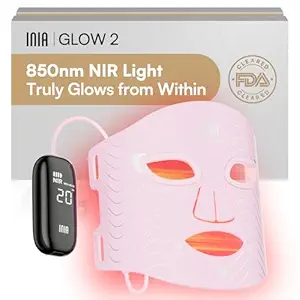 | Best Power Output | LED count: 220 LED chips | Energy output: Up to 105mW/cm² | Wavelengths: 620nm, 630nm, 460–470nm blue, 460–630nm combo, plus 850nm NIR | VIEW ON AMAZON | See Our Full Breakdown |
| Red Light Therapy for Face and Neck, 7 Colors LED Mask, Rechargeable |  | Best Cordless Convenience | Primary wavelength: 630nm red light | Modes: 7 targeted settings + automatic color cycling | Coverage: Full face and neck | VIEW ON AMAZON | See Our Full Breakdown |
| iRestore LED Face Mask for Youthful Skin |  | Best Premium Brand Pick | LED count: 360 LEDs | Wavelengths: Red 635nm, infrared 830nm, blue 415nm | Session length: 10 minutes, 3–5 times per week | VIEW ON AMAZON | See Our Full Breakdown |
| red light therapy mask | Battery | Wavelengths |
|---|---|---|
| wavytalk Red Light Therapy Mas | 2500mAh, USB-C (5V/1A charger required, not included) | 630nm red, 850nm NIR, 415nm blue, 590nm amber |
| Red Light Therapy Mask for Fac | 2000mAh magnetic wireless controller, USB-C | 630nm red, 460nm blue, 605nm amber, 850nm NIR |
| Red Light Therapy for Face | — | — |
| INIA Red Light Therapy Mask fo | 2600mAh rechargeable controller | — |
| American Wellness Authority LX | — | — |
| Shark CryoGlow LED Face Mask | — | — |
| Red Light Therapy for Face | — | 415nm blue, 630nm red, 850nm NIR, 590nm amber |
| Red Light Therapy Mask for Fac | 2000mAh rechargeable via Type-C | 660nm red, 850nm NIR, 600nm amber, 460nm blue |
| Red Light Therapy for Face | 2000mAh USB-C rechargeable remote | 630nm red, 850nm NIR, 600nm amber, 460nm blue |
| RENPHO Red Light Therapy Mask | 2 interchangeable magnetic control units, ~40 minutes each | 620nm red, 460nm blue, 850nm infrared |
| Qynera Red Light Therapy for F | 3000mAh rechargeable, up to 240 minutes use | 7 color modes + 850nm near-infrared |
| Red Light Therapy for Face LED | 40-minute charge, 90-minute runtime | — |
| INIA Red Light Therapy Mask fo | 2600mAh rechargeable controller | 620nm, 630nm, 460–470nm blue, 460–630nm combo, plus 850nm NIR |
| Red Light Therapy for Face and | 40-minute charge, 90-minute cordless use | — |
| iRestore LED Face Mask for You | — | Red 635nm, infrared 830nm, blue 415nm |
More Details on Our Top Picks
wavytalk Red Light Therapy Mask for Face, Glow Time LED Face Mask 850nm NIR
This option stands out for its balanced combination of power and coverage: 456 LED chips at 40mW/cm² is enough output to feel like a serious device, while the soft liquid silicone build keeps 20-minute sessions comfortable. Compared with the INIA mask, which pushes higher raw power but uses fewer chips, the wavytalk spreads energy more evenly across the T-zone and U-zone, which matters if patchy results are your worry. The three combined-wavelength modes (anti-acne, anti-fine-line, and rejuvenation) are more purposeful than the 7-color approach of the cordless 7 Colors mask, where extra modes mostly add gimmick value. Tradeoffs: the charger isn’t included, the safety-locked battery demands a specific 5V/1A adapter, and clinical claims are brand-reported rather than independently verified.
Pros:- 456 LEDs at 40mW/cm² deliver strong, even full-face coverage
- Combined-wavelength modes target acne, fine lines, and radiance specifically
- Soft silicone with light-sealing eye pads allows multitasking
- Flexible 10/15/20-minute session options fit varied routines
- 2500mAh battery supports multiple sessions per charge
Cons:- Requires a specific 5V/1A charger that isn’t included
- Clinical result claims are brand-funded, not independently verified
Best for: Buyers who want one device covering both acne and anti-aging with salon-grade power density and even full-face coverage
Not ideal for: Anyone who wants a plug-and-play unboxing — you’ll need to source the correct 5V/1A charger separately
- LED Chips:456 high-purity LEDs
- Power Density:40mW/cm²
- Wavelengths:630nm red, 850nm NIR, 415nm blue, 590nm amber
- Modes:3 combined-wavelength modes
- Timer Options:10, 15, or 20 minutes
- Battery:2500mAh, USB-C (5V/1A charger required, not included)
- Material:Soft liquid silicone with light-sealing eye pads
Our verdict“The most complete all-rounder here for people treating both breakouts and fine lines who don’t mind hunting down the right charger.”
Red Light Therapy Mask for Face & Neck, Wireless LED Face Mask, 4 Modes
Most masks in this roundup stop at the jawline; this one extends treatment to the neck and upper chest, which is where early aging often shows first. With 680 total light beads split between face and neck panels, it out-covers the LX300’s neck attachment while staying fully wireless — the magnetic detachable battery means no cords dangling during a session, a real advantage over the American Wellness Authority LX300, which requires a wired remote. The tradeoff for that coverage is dilution: energy spread across more area means each zone gets less intensity than the face-only INIA or wavytalk masks. Four single-wavelength modes (red, blue, amber, NIR) are solid but lack the combined protocols of the INIA. The larger two-panel design also makes it bulkier to store and travel with than a face-only mask.
Pros:- Covers face, neck, and chest with 680 total light beads
- Truly wireless magnetic battery with no cords during use
- Flexible 10–30 minute timer range with auto shut-off
- 2000mAh controller runs roughly a week of sessions per charge
Cons:- Light output spread across two panels dilutes intensity per area versus face-only masks
- Single-wavelength modes lack the combined anti-acne/anti-aging protocols of rivals
Best for: Users whose concerns extend below the jawline — neck lines, chest redness, or decolletage firming
Not ideal for: Travelers and minimalists — the two-panel face-plus-neck design is bulkier than any face-only mask here
- Light Beads:680 total (100 face + 70 neck chip carriers, 4 LEDs each)
- Coverage:Face, neck, and upper chest
- Wavelengths:630nm red, 460nm blue, 605nm amber, 850nm NIR
- Modes:4 light modes
- Timer Options:10, 15, 20, 25, or 30 minutes
- Battery:2000mAh magnetic wireless controller, USB-C
- Runtime:~120 minutes per charge
Our verdict“The pick for anyone who wants neck and chest treated in the same session without fighting a wire.”
Red Light Therapy for Face, 7 Colors LED Face Mask, Cordless
This model makes the most sense for someone curious about light therapy but not ready to commit to a protocol-driven device. The 7-color system invites experimentation — red for radiance, blue for blemishes, plus modes for tone and texture — without demanding you understand wavelength science first. Compared with the INIA or wavytalk masks, the spec sheet is vague: no LED count, no power density, and no published wavelengths, which tells you this is a comfort-first, lifestyle device rather than a clinical workhorse. The ergonomic contour and adjustable strap make it genuinely pleasant to wear, and the fully cordless design beats tethered options like the LX300 for reading or working during sessions. The honest tradeoff is performance ambiguity — if measurable acne or wrinkle reduction is the goal, a specified-power mask will serve you better.
Pros:- Fully cordless design allows free movement during sessions
- 7 light modes encourage experimentation across multiple skin concerns
- Lightweight, contoured build with adjustable strap suits most face shapes
- Simple 10–15 minute sessions fit easily into daily routines
Cons:- No published LED count, wavelengths, or power density to evaluate efficacy
- Marketing-heavy description with no clinical data behind claims
Best for: First-time users who want an easy, comfortable introduction to LED masks and value flexibility over clinical specs
Not ideal for: Results-driven buyers chasing specific outcomes like wrinkle or acne reduction — no published wavelengths or power figures to judge efficacy
- Light Modes:7 color modes
- Design:Cordless, rechargeable
- Session Length:10–15 minutes
- Fit:Ergonomic contour with adjustable strap
- Build:Lightweight premium materials
- Use Case:At-home radiance and complexion support
Our verdict“A low-pressure entry point for skincare newcomers — just don’t expect salon-grade results from unspecified hardware.”
INIA Red Light Therapy Mask for Face, 850nm NIR, Red/Blue LED Light 4 Modes
Where the wavytalk mask spreads 40mW/cm² across a full-face array, the INIA concentrates up to 105mW/cm² through 220 high-energy chips — the highest output in this batch — paired with an optional NIR boost on every mode. That makes it better suited to experienced users chasing faster results on stubborn concerns, though higher intensity means shorter, more disciplined sessions. The four modes plus separate NIR button give more genuine customization than the 7 Colors mask’s preset colors, since you can layer near-infrared onto whichever visible mode your skin needs that week. Compared with the LX300, it matches INIA’s mode flexibility while skipping the neck coverage — a fair trade if your concerns are facial only. Drawbacks: fewer chips means less uniform coverage than the wavytalk, and the brand recommends up to daily use, which demands real schedule commitment.
Pros:- Up to 105mW/cm² output — the strongest power density in this lineup
- Optional NIR layering on all four modes for true customization
- Precise 10/20/30-minute timer with auto shut-off
- 2600mAh rechargeable controller supports frequent use
Cons:- 220 chips means less even coverage than 400+ chip rivals like the wavytalk
- Recommended 3–7 sessions weekly is a demanding schedule
Best for: Experienced LED users who want maximum energy delivery and fine control over wavelengths for targeted treatment
Not ideal for: Casual users planning occasional sessions — high output and a 3–7x weekly protocol demand consistency to justify the design
- LED Chips:220 high-energy chips
- Power Density:Up to 105mW/cm²
- Modes:Red-L (620nm), Red-H (630nm), Blue (460–470nm), Red+Blue (460–630nm)
- NIR:850nm, independently activatable
- Timer Options:10, 20, or 30 minutes
- Battery:2600mAh rechargeable controller
- Recommended Use:3–7 sessions weekly, 10–30 minutes each
Our verdict“The intensity-first choice for committed users who want to tune every session rather than just press one button.”
American Wellness Authority LX300 Red Light Therapy Face Mask with Neck Attachment
This is the only mask in this batch that is FDA 510(k)-cleared for home use, which changes the calculus for buyers who care about regulatory backing for acne and skin-appearance claims — no other product here, including the wavytalk with its brand-funded clinicals, can say the same. The 888 total LEDs across face and neck panels rival the 680-bead face-and-neck mask while adding 8 wavelengths and 5 intensity levels, the widest tuning range in the roundup. The tradeoffs are real: the wired remote tethers you during sessions, unlike the fully wireless INTEO or INIA options, and like every LED mask here, visible results require 2–3 consistent weekly sessions over multiple weeks. For buyers who prioritize cleared-for-acne credibility over cordless convenience, that wire is a reasonable price.
Pros:- FDA 510(k)-cleared for home acne treatment and skin appearance improvement
- 888 total LEDs deliver the most complete face-and-neck coverage here
- 8 wavelength modes and 5 intensity levels offer unmatched tuning
- 50,000-hour LED lifespan and 1-year warranty back long-term use
Cons:- Requires a wired remote connection during every session
- Results demand weeks of consistent 2–3x weekly use
Best for: Buyers who want FDA-cleared acne treatment with regulatory documentation, full face-and-neck coverage, and deep customization
Not ideal for: Anyone who wants to move freely or multitask — the wired remote must stay connected throughout each session
- FDA Clearance:510(k) cleared for home use
- LED Chips:432 (face) + 456 (neck) = 888 total
- Wavelength Modes:8
- Intensity Levels:5
- Timer:10–30 minutes with auto shut-off
- Charging:USB Type-C rechargeable
- LED Lifespan:50,000 hours
- Warranty:1 year
- Material:Food-grade silicone
Our verdict“The most credible and configurable pick in the lineup — ideal if FDA clearance matters more to you than cordless freedom.”
Shark CryoGlow LED Face Mask, Red Light Therapy, Under-Eye Cooling, FW312PL
Nothing else in this lineup does what the CryoGlow does: it pairs red, blue, and deep infrared light with built-in under-eye cooling pads at three chill levels. That InstaChill feature sets it apart from capable but conventional masks like the RENPHO Red Light Therapy Mask, which handles fine lines and acne well but offers nothing for puffy, tired under-eyes. Shark backs its claims with third-party clinical testing on 119 participants and FDA clearance, plus four dermatologist-developed treatments that keep sessions short — six minutes for the Better Aging mode. The tradeoff is structure: this is a rigid mask with clip-on chill pads and a remote, so it feels less travel-friendly than the flexible silicone options here, and the cooling hardware means more pieces to keep track of. For buyers who want med-spa versatility rather than a single-purpose light mask, this pick makes the most sense.
Pros:- Unique temp-controlled under-eye cooling with three chill levels, unavailable on any other mask in this roundup
- FDA-cleared with independent third-party clinical testing across four treatment modes
- Short 4–8 minute treatment sessions fit easily into a daily routine
- Four dermatologist-developed modes cover aging, acne, maintenance, and under-eye revival
Cons:- Rigid mask construction is heavier and less portable than flexible silicone rivals
- Multiple components (chill pads, remote, charging cable) add setup complexity
- No neck or chest coverage, unlike extended masks such as the INTEO face-and-neck model
Best for: Skincare enthusiasts who want a multi-treatment device that addresses fine lines, acne, and under-eye puffiness in one session
Not ideal for: Travelers and minimalists — the rigid frame, clip-on chill pads, and remote make it bulkier to pack and store than foldable silicone masks
- Light types:Red, Blue, Deep Infrared
- Special feature:InstaChill under-eye cooling with 3 chill levels
- Treatment modes:4 (Better Aging, Skin Clearing, Skin Sustain, Under-Eye Revive)
- Session length:4–15 minutes depending on mode
- Clearance:FDA-cleared
- Clinical testing:Independent third-party study with 119 participants
- Charging:USB-C
- Includes:Mask, clip-on chill pads, remote, USB-C cable
Our verdict“This is the pick for buyers who want the most treatment versatility and clinical backing, provided they don’t need a travel-friendly or neck-covering device.”
Red Light Therapy for Face, FDA-Cleared Blue Light Mask for Acne (MICEYLIVE)
While most masks here treat aging as the headline, this MICEYLIVE option is built around breakout control first. Its dedicated Anti-Acne mode combines 415nm blue light with 630nm red — the specific pairing dermatology devices use for inflammatory acne — and it carries FDA 510(k) clearance for both acne and wrinkle treatment, a claim most budget masks in this roundup can’t make. Compared with the RENPHO mask, which also offers a blue-light acne mode, this one adds a 590nm amber rejuvenation mode and doubles the LED count to 432 chips at 40mW/cm², giving denser, more consistent coverage across the jawline and nasolabial folds where breakouts cluster. Sessions run 10–20 minutes three to five times weekly, which is a bigger time commitment than the Shark CryoGlow’s 8-minute clearing mode. The eye pads are a nice inclusion but sit loosely compared with integrated eye shields on rivals.
Pros:- FDA 510(k)-cleared specifically for inflammatory acne and wrinkle treatment
- 432 LEDs at 40mW/cm² deliver dense, even full-face coverage
- Three targeted modes including amber light for skin tone balance
- Flexible 10/15/20-minute session options with eye protection and travel bag included
Cons:- Requires 3–5 sessions per week, a heavier schedule than shorter-treatment rivals
- Firmer focus on acne means weaker anti-aging emphasis than infrared-heavy masks
- Separate eye pads are less convenient than built-in eye shields
Best for: Teen and adult acne sufferers who want a drug-free, acid-free approach to breakouts with clinical credibility
Not ideal for: Anyone focused mainly on anti-aging — the wavelength mix prioritizes acne, and shorter-wavelength blue light does little for deep lines
- Light modes:3 (Anti-Acne, Anti-Fine Line, Rejuvenation)
- Wavelengths:415nm blue, 630nm red, 850nm NIR, 590nm amber
- LED count:432 LED chips
- Power density:40mW/cm²
- Session options:10, 15, or 20 minutes
- Recommended use:3–5 times per week
- Clearance:FDA 510(k)-cleared for acne and wrinkles
- Material:Soft medical-grade silicone
Our verdict“The strongest choice in this lineup for acne-first buyers who still want wrinkle coverage, as long as they can commit to a frequent session schedule.”
Red Light Therapy Mask for Face & Neck, 850nm NIR & 660nm Red LED, 4 Modes (INTEO)
Most masks here stop at the jawline, but the INTEO extends its 680 LEDs down through the neck and upper chest — two areas where early aging often shows first and where rivals like the RENPHO offer no coverage at all. Its four wavelengths (850nm infrared, 660nm red, 600nm amber, 460nm blue) match the flexibility of the similar wireless model from Product 9’s category, but the larger treatment area is the differentiator. The magnetic wireless battery pack keeps cables out of the way, and the timer range stretches to 30 minutes for longer sessions. Those longer treatments are the flip side of the big footprint: this mask demands more of your week than quick-session devices like the Shark CryoGlow. Fit can also be finicky — anchoring a flexible silicone panel across three zones takes strap adjustment that a face-only mask never requires.
Pros:- 680 LEDs cover face, neck, and upper chest in a single device
- Four wavelengths including 850nm near-infrared for deeper anti-aging work
- Cordless magnetic battery design with USB-C charging
- Flexible timer settings from 10 to 30 minutes with auto shut-off
Cons:- Larger coverage area means longer, more frequent sessions than compact rivals
- Getting a secure, even fit across three zones requires careful strap adjustment
- Heavier and less packable than face-only silicone masks
Best for: Users in their 30s and beyond who want to treat décolletage and neck lines alongside their face in one device
Not ideal for: Buyers with limited time — full face-plus-neck sessions of 10–30 minutes several times a week add up quickly
- Coverage area:Face, neck, and upper chest
- LED count:680 LEDs
- Wavelengths:660nm red, 850nm NIR, 600nm amber, 460nm blue
- Light modes:4
- Battery:2000mAh rechargeable via Type-C
- Timer settings:10, 15, 20, 25, 30 minutes
- Recommended use:3–4 times per week, 10–20 minutes
- Material:Soft flexible silicone with adjustable straps
Our verdict“The obvious pick if neck and chest coverage matters as much as your face, though time-strapped users may prefer a quicker face-only option.”
Red Light Therapy for Face, 4 Modes, Wireless 2000mAh Remote
This mask’s whole pitch is true wireless freedom: a rechargeable remote communicates with the mask without any wired tether, so users can fold laundry or do yoga mid-session. Compared with the INTEO face-and-neck mask, which also runs on a 2000mAh battery, this model trades coverage area for mobility — it’s face-only, lighter, and easier to live with around the house. The four-wavelength lineup (850nm infrared, 630nm red, 600nm amber, 460nm blue) plus three adjustable intensity levels gives it more fine-tuning than the RENPHO, which locks you into three preset modes with no intensity control. The honest weakness is LED density: 90 LEDs producing 360 light points trails the 432-chip MICEYLIVE considerably, so coverage is adequate rather than dense, and there’s no FDA clearance backing the treatment claims.
Pros:- Fully wireless remote operation with no cable between controller and mask
- Four wavelengths plus three intensity levels for genuine customization
- Five timer options from 10 to 30 minutes with automatic shut-off
- Soft silicone build with integrated strap and light-blocking eye covers
Cons:- Only 90 LEDs (360 beads), noticeably fewer than the MICEYLIVE’s 432 chips
- No FDA clearance or clinical data supporting its claims
- Face-only coverage with no neck option
Best for: Multitaskers who want to wear a mask while doing chores, yoga, or evening routines without being tethered to an outlet
Not ideal for: Results-focused buyers who want maximum LED density or FDA-cleared claims — this mask prioritizes convenience over raw output
- Wavelengths:630nm red, 850nm NIR, 600nm amber, 460nm blue
- Light modes:4
- Intensity levels:3 adjustable
- LED configuration:360 LED beads / 90 LEDs
- Battery:2000mAh USB-C rechargeable remote
- Timer settings:10, 15, 20, 25, 30 minutes
- Design:Wireless, soft silicone, adjustable strap, eye covers
Our verdict“The right choice for anyone who values moving freely during sessions more than having the densest LED array or regulatory clearance.”
RENPHO Red Light Therapy Mask for Face, 204 LEDs, 3 Modes, Wireless LED Mask
For a first foray into red light therapy, the RENPHO keeps things refreshingly simple: three preset modes, a fixed 10-minute auto-timer, and no wavelength charts to decode. Mode one targets fine lines with 620nm red, mode two handles mild-to-moderate acne with 460nm blue, and mode three combines red and 850nm infrared for both concerns at once. Compared with the MICEYLIVE acne mask, the session logic is far less demanding — one automatic 10-minute cycle versus choosing among 10/15/20-minute sessions three to five times a week — which matters for habit-building. The standout practical touch is two interchangeable magnetic control units, so one can charge while the other runs, though each lasts only about 40 minutes. At 204 LEDs it’s mid-pack on density, and the fixed timer with no intensity adjustment will frustrate experienced users who’ve outgrown presets.
Pros:- Dead-simple three-mode operation with automatic 10-minute timer
- Two magnetic control units allow continuous use while one recharges
- 204 LEDs wrap the full face with even light distribution
- Slim, lightweight silicone design with adjustable straps travels well
Cons:- Fixed 10-minute timer with no session-length or intensity customization
- Each control unit provides only about 40 minutes of battery life
- Face-only coverage and no amber wavelength option
Best for: First-time LED mask buyers who want a set-it-and-forget-it routine with zero setup decisions
Not ideal for: Experienced users who want session-length control, intensity adjustment, or neck coverage — the fixed 10-minute timer caps flexibility
- Light modes:3 (Red, Blue, Red + Infrared)
- Wavelengths:620nm red, 460nm blue, 850nm infrared
- LED count:204 LED beads
- Timer:Automatic 10-minute shutoff
- Battery:2 interchangeable magnetic control units, ~40 minutes each
- Design:Cordless, ultra-slim flexible silicone, adjustable head straps
Our verdict“The most approachable entry point in this roundup for building a consistent light-therapy habit without wading through settings.”
Qynera Red Light Therapy for Face & Neck, 850nm NIR LED Face Mask (M09)
Most masks in this lineup stop at the jawline, but the Qynera M09 is built for people who want one device to cover everything from décolletage to legs. The extension strap converts the mask into a wrap for the back, abdomen, and arms, which no other pick here — including the iRestore LED Face Mask, a strictly facial device — can do. Its neck-to-chest panel addresses the zone most masks ignore, and the 3000mAh battery runs far longer per charge than the 90-minute runtime of the Gold infrared mask. With 584 LEDs and an invisible 850nm near-infrared channel, it also out-specs the 120-bead budget options on raw coverage. The tradeoff: with 7 modes, 5 timers, and 3 intensity levels, it’s fiddlier to operate than simpler picks, and the silicone-and-strap format means sessions take planning rather than being grab-and-go.
Pros:- Convertible design treats face, neck, chest, and body with one device
- 3000mAh battery delivers up to 4 hours of use per charge
- 584 LEDs with 3 intensity levels for even, dense light coverage
- 850nm near-infrared plus 7 modes covers a wide range of skin concerns
Cons:- More complex operation than single-mode masks — 7 modes and 5 timers take learning
- Body-wrap use requires repositioning mid-session, so full-body treatments take longer
Best for: Buyers who want light therapy beyond the face — neck, chest, and body — from a single rechargeable device
Not ideal for: Anyone wanting a quick, minimal facial-only routine — the multi-zone setup and mode selection add complexity a face-only user never needs
- LED count:584 LEDs
- Wavelengths:7 color modes + 850nm near-infrared
- Battery:3000mAh rechargeable, up to 240 minutes use
- Coverage:Face, neck, chest; convertible to body use
- Intensity levels:3 adjustable
- Timer:10/15/20/25/30 minutes
- Material:Skin-safe silicone with adjustable strap
- Accessories:Extension strap, protective eye covers
Our verdict“This pick makes the most sense for anyone who wants a full-body light therapy system rather than a face-only mask.”
Red Light Therapy for Face LED Infrared Facial Mask (Gold)
For a first dip into red light therapy without a big commitment, the Gold infrared mask covers the fundamentals: 630nm red light, a magnetic neck attachment, and fully cordless operation. It’s noticeably lighter on engineering than the INIA mask — 120 LEDs versus 220 — so energy delivery per session is lower, but the one-touch controls and lack of wires or a remote make it friendlier for beginners who’d rather not study a mode chart. The eighth automatic color-cycling mode is a nice simplification: press once and let it run through all settings. Compared with the similarly spec’d 7-color face-and-neck mask, this one’s advantage is the included neck piece and gift-ready packaging. The real tradeoff is stamina and power — a 90-minute battery and 120 beads mean shorter effective sessions and less depth than higher-output rivals.
Pros:- One-touch operation with no remote or wires to manage
- Detachable magnetic neck piece included at an accessible level
- 8th auto-cycling mode removes guesswork for beginners
- Lightweight, adjustable fit works across face shapes
Cons:- 120 LEDs deliver noticeably less irradiance than higher-end masks
- 90-minute battery life means frequent recharging with regular use
Best for: First-time users who want a simple, cordless face-and-neck mask to test whether red light therapy fits their routine
Not ideal for: Experienced users chasing stronger results — the 120-LED output lags well behind 220-plus-chip masks
- LED count:120 LED beads
- Primary wavelength:630nm red light
- Modes:7 targeted settings + 1 auto color-cycling mode
- Neck attachment:Detachable magnetic neck device
- Battery:40-minute charge, 90-minute runtime
- Design:Cordless, ergonomic, adjustable strap
- Includes:Neck device, USB cable, manual, two head straps
Our verdict“A sensible entry point for curious beginners who value simplicity over maximum power.”
INIA Red Light Therapy Mask for Face, 850nm NIR, Red/Blue LED Light 4 Modes
The INIA mask is the irradiance pick of this batch. Its 220 LED chips push up to 105mW/cm² — an energy figure most consumer masks don’t publish — and the dual-wavelength design pairs 630nm red with 850nm near-infrared that INIA claims penetrates roughly twice as deep. Where the Qynera M09 wins on versatility and body coverage, INIA focuses everything on the face: a tighter mode set (4 wavelengths plus optional NIR) that serious users can actually work into a routine. The 2600mAh controller with 10/20/30-minute timers and auto shutoff keeps sessions consistent, which matters because results hinge on regularity. It’s not as plug-and-play as the Gold starter mask, and blue light at 460nm means this isn’t purely an anti-aging tool — it’s a mixed-treatment device. Buyers wanting only red/NIR may find the blue modes redundant.
Pros:- Up to 105mW/cm² output — among the strongest energy delivery in this lineup
- Dual 630nm red + 850nm NIR wavelengths for surface and deeper skin support
- 2600mAh controller with programmable 10/20/30-minute timers and auto shutoff
- 4 wavelengths including blue light for blemish-prone skin
Cons:- Focused facial-only coverage — no neck or body option
- Mode-plus-NIR combinations add setup complexity before each session
Best for: Results-focused users who want documented high energy output and precise session control for consistent weekly routines
Not ideal for: Casual or occasional users — the power and mode customization go unused if you’re not committed to 3–7 sessions a week
- LED count:220 LED chips
- Energy output:Up to 105mW/cm²
- Wavelengths:620nm, 630nm, 460–470nm blue, 460–630nm combo, plus 850nm NIR
- Modes:4 light modes with optional NIR activation
- Battery:2600mAh rechargeable controller
- Timer:10, 20, or 30 minutes with auto shutoff
- Recommended use:3–7 sessions per week, 10–30 minutes each
Our verdict“The strongest choice here for disciplined users who care about measured power output over frills.”
Red Light Therapy for Face and Neck, 7 Colors LED Mask, Rechargeable
This 7-color mask earns its spot on ease of living rather than raw specs. A 40-minute charge yields 90 minutes of cordless runtime, and the lightweight, ergonomic shell with a single adjustable strap makes it a device you can genuinely wear while reading or commuting — the same grab-and-go quality as the Gold mask, but with an added magnetic neck attachment in the box for face-plus-neck sessions the Gold model can’t fully match on coverage claims. Compared with the RENPHO 204-LED mask, it’s less about output and more about flexibility: 7 targeted modes plus an auto-cycling option let you switch goals nightly without reprogramming anything. The honest tradeoff is depth — 630nm red light with no near-infrared channel means it can’t reach the deeper skin layers that the INIA or Qynera masks target with 850nm wavelengths, so firming results may come slower.
Pros:- Fully cordless with 90-minute runtime from a 40-minute charge
- Magnetic neck attachment extends treatment below the jawline
- 7 modes plus auto color cycling for varied nightly routines
- Lightweight ergonomic design with a secure universal fit
Cons:- No near-infrared wavelength, limiting penetration compared with 850nm rivals
- LED density and output are modest relative to higher-end picks
Best for: Multitaskers and travelers who want a wearable, wire-free mask for relaxing sessions on the go
Not ideal for: Buyers prioritizing deep-tissue anti-aging work — the absence of near-infrared limits penetration depth
- Primary wavelength:630nm red light
- Modes:7 targeted settings + automatic color cycling
- Coverage:Full face and neck
- Battery:40-minute charge, 90-minute cordless use
- Design:Lightweight, ergonomic, adjustable strap
- Neck attachment:Magnetic, detachable
- Includes:LED mask, neck attachment, USB-C cable, head strap, manual
Our verdict“Best for people who will actually wear a mask regularly if it’s effortless, rather than those chasing maximum power.”
iRestore LED Face Mask for Youthful Skin
iRestore brings something the other four can’t: two decades of light-therapy R&D and a dermatologist-recommended US brand standing behind the device. That matters for buyers who weigh credibility and safety as heavily as specs. Its 360 LEDs across three wavelengths — 635nm red, 830nm infrared, and 415nm blue — put it behind only the Qynera’s 584 LEDs in raw count, but ahead of the Gold and 7-color masks in depth thanks to the infrared channel. Sessions are refreshingly short at 10 minutes, 3–5 times a week, and the dual-strap rigid design hovers off the face and shields the eyes, so it doubles as true multitasking time — unlike silicone masks that press against the skin. The rigid form is also its drawback: it’s less packable than flexible masks, and there’s no neck or body coverage. It’s also a face-only specialist in a roundup full of face-and-neck combos.
Pros:- Triple-wavelength coverage: 635nm red, 830nm infrared, 415nm blue
- 360 LEDs with 2X power claim for firming and tone correction
- 10-minute sessions, 3–5 times per week — one of the shortest time commitments here
- Eye-shielding rigid design allows safe multitasking during sessions
Cons:- Face-only coverage with no neck attachment included
- Rigid construction is bulkier to store and travel with than flexible silicone masks
Best for: Buyers who want a scientifically backed, brand-established device with short efficient sessions and eye-safe design
Not ideal for: Anyone wanting neck or body treatment — this is strictly facial, and the rigid frame travels less easily than silicone masks
- LED count:360 LEDs
- Wavelengths:Red 635nm, infrared 830nm, blue 415nm
- Session length:10 minutes, 3–5 times per week
- Design:Rigid dual-strap mask that hovers over the face
- Eye protection:Blocks direct light from eyes
- Skin compatibility:Suitable for sensitive, dry, and oily skin; unisex
- Brand background:20+ years R&D, US-based, dermatologist-recommended
Our verdict“The pick for buyers who pay for brand trust and proven wavelengths over versatility or body coverage.”
How We Picked
I evaluated each mask against four factors that actually determine whether you’ll see results. Light output came first: I favored masks combining 660nm red and 850nm near-infrared wavelengths, the combination most studied for collagen stimulation, over generic multi-color arrays where most colors are cosmetic. Coverage and fit came second — LED count, proximity of diodes to the skin, and whether the mask treats the neck, where aging often shows first. Usability was third: wireless operation, session timers, controller ergonomics, and whether eye cutouts make a 10-minute session tolerable. Finally, I weighed build quality and verifiability, giving credit to established brands with consistent specs and penalizing listings with vague claims.
The ranking logic is straightforward: masks that deliver clinically relevant wavelengths across meaningful surface area rank highest, with comfort and convenience breaking ties. Premium picks earned their spots through genuine additions — the iRestore’s 360-LED density, the Shark CryoGlow’s cooling function — rather than branding alone. Budget picks ranked well only when they matched the core specs of pricier rivals, not simply because they cost less.
Factors to Consider When Choosing Red Light Therapy Mask
Before picking a mask, it helps to understand what actually drives results — and where marketing tends to obscure the picture. These are the factors I’d weigh before buying any red light therapy mask.Wavelengths: The Spec That Matters Most
Nearly every claim a mask makes traces back to its wavelengths, and this is where cheap masks cut corners. 630–660nm red light targets the skin’s surface for tone and texture, while 830–850nm near-infrared penetrates deeper to reach where collagen is actually produced. A mask with only one of the two is doing half the job. The 7-color masks common in this category look versatile, but most dermatology research supports only red, near-infrared, and blue light — the other colors are largely decorative. If anti-aging is your goal, prioritize dual-wavelength masks even if it means fewer modes overall.
Irradiance and LED Count: Why Brightness Beats Buzzwords
Two masks can claim identical wavelengths and produce very different results depending on irradiance — the actual energy delivered to your skin. Few budget listings publish this number, which is itself a warning sign. LED count is a rough proxy: a mask with 200+ well-placed diodes will generally outperform one with 60–100, though diode quality matters too. A common mistake is assuming a longer session compensates for weak output; under-dosed light simply doesn’t trigger the cellular response, no matter how long you sit under it. Established brands like iRestore and RENPHO publish their specs, which makes their claims easier to trust.
Coverage Area: Face Only Versus Face and Neck
The neck is one of the first places visible aging appears, yet many masks stop at the jawline. Face-and-neck designs like the LX300 and M09 treat more area per session, which improves long-term value if you’ll actually use both pieces. The tradeoff is real, though: combined units are heavier, harder to store, and more awkward during a session — and a bulky mask you skip is worth less than a comfortable one you use daily. If you’re diligent about neck cream and mainly want facial results, a face-only wireless mask is the more practical buy. Be honest about your habits before paying extra for coverage you might ignore.
Wired Versus Wireless: The Convenience Factor
A cord sounds trivial until you’re ten minutes into a session and want to check your phone or walk to the kitchen. Wireless masks with onboard batteries — typically 2000mAh, delivering 2–4 hours of sessions per charge — make daily consistency dramatically easier, and consistency is the single biggest determinant of results. Corded masks often deliver steadier power output, which matters if your sessions are short and dose-sensitive. My advice: choose wireless unless you’ll only ever use the mask seated at a vanity. Also check how the controller attaches; detachable remotes are easier to replace than integrated controls that fail and brick the whole mask.
Regulatory Clearance and Brand Trust
In this category, FDA clearance is rare enough to be meaningful — it indicates the manufacturer submitted actual evidence rather than copying a competitor’s listing. This matters most if you’re treating active acne with blue light, where dosing accuracy affects outcomes. For general wellness use, clearance is a nice-to-have rather than a requirement, but it’s a useful filter for separating genuine manufacturers from resellers of white-label masks. Look for a company with a real website, published specs, and a warranty measured in years rather than a 30-day return window.
Session Comfort and Eye Protection
You’ll be wearing this mask for 10–20 minutes a session, several times a week, for months — comfort is not a minor detail. Masks with soft silicone construction conform to facial contours and keep diodes close to the skin, while rigid plastic shells leave gaps that reduce dose on the cheeks and forehead. Eye protection varies widely: some masks include built-in shielding, others leave you squinting at bright LEDs, which makes sessions unpleasant enough to quit. Weight distribution matters too, especially for face-and-neck units. If you can’t tolerate wearing it, the best specifications in the world won’t produce results.
Frequently Asked Questions
Do I need 850nm near-infrared, or is standard red light enough?
If your priority is fine lines and firmness, near-infrared is worth insisting on. The 850nm wavelength penetrates past the skin’s surface to reach the dermis, where collagen and elastin are produced, while 660nm red light works more superficially on tone and texture. Masks with only red light can still improve radiance, but you’re getting half the mechanism for anti-aging purposes. In this lineup, the dual-wavelength masks — the INIA, M09, and the 850nm face-and-neck models — are the ones I’d shortlist for wrinkle concerns. Near-infrared light is invisible to the eye, so don’t worry if half the diodes appear to be off during use; that’s normal.
Are 7-color LED masks better than masks with fewer modes?
Usually not, despite the marketing. Of the typical seven colors, only red, near-infrared, and blue light have meaningful research support for skin — blue specifically for acne-causing bacteria. The remaining colors are largely cosmetic additions that inflate the feature list without adding clinical value. A focused mask with three well-executed modes will typically outperform a seven-color mask with weak output in each mode. Choose a 7-color model only if you specifically want blue light for breakouts alongside red light for aging, and treat the extra colors as a bonus rather than a reason to buy.
How long until I see results from a red light therapy mask?
Set realistic expectations before you buy, because this is the most common reason people abandon light therapy. Most users notice improved radiance and texture within 4–8 weeks of consistent use — typically 10-minute sessions, three to five times per week. Deeper changes like softened fine lines usually take 8–12 weeks or longer, since collagen remodeling is a slow biological process. Skipping sessions has an outsized effect because the benefits are cumulative. If you know you’re inconsistent with routines, prioritize comfort and convenience features — wireless operation, a light mask, easy cleaning — over raw specs, because adherence will drive your results more than any spec sheet.
Is it worth paying more for the Shark CryoGlow or iRestore?
It depends on what problem you’re actually trying to solve. The Shark CryoGlow’s under-eye cooling addresses puffiness and dark circles in a way no light wavelength can, so if morning eye bags are part of your complaint, it genuinely does two jobs. The iRestore’s 360-LED array delivers higher density than most rivals, which matters if you want maximum dose per minute and don’t mind a premium price. But if your goal is straightforward red light therapy for general anti-aging, the INIA or RENPHO covers the same wavelengths for less. Paying more makes sense when the added feature solves a problem you have — not when it’s simply a bigger brand name.
Can I use a red light therapy mask if I have active acne?
Red light alone has mild anti-inflammatory benefits, but for active breakouts you want blue light, ideally paired with red — blue light targets the bacteria involved in acne while red calms inflammation. The FDA-cleared blue light mask in this lineup is the most purpose-built option, though the INIA masks with combined red and blue modes also work well. Avoid wearing any mask over broken or irritated skin, and clean the mask surface between uses, since a warm LED surface against oily skin can harbor bacteria. If your acne is cystic or severe, see a dermatologist first; home light therapy works best for mild to moderate breakouts and as a maintenance treatment after prescription care.
Conclusion
After comparing all 15 masks, the right pick depends less on specs and more on how you’ll actually use it. For the best overall, the Shark CryoGlow earns it with dual-functionality — red light therapy plus under-eye cooling — that no rival in this lineup matches. The iRestore is my best premium pick for buyers who want maximum LED density and a trusted brand standing behind the device. For best value, the RENPHO wireless mask delivers proven wavelengths and cordless convenience without premium pricing. Beginners should start with the INIA red/blue mask: simple four-mode operation, sensible wavelengths, and an easy entry point before committing to a face-and-neck system. For specific needs, choose the M09 or LX300 if neck coverage is a priority, the FDA-cleared blue light mask for acne, and a 7-color wireless model if you want versatility on a tight budget. Whatever you choose, consistency over months — not the price tag — will determine your results.
Fall Picks
fall essentials
As an affiliate, we earn on qualifying purchases.