
📊 Full opportunity report: Waves, Not a Wall: Inside DeepMind’s Map From AGI to Superintelligence on ThorstenMeyerAI.com — validation score, market gap, and execution plan.
Open a free Amazon Business account
Business pricing, bulk buying and tax-exempt orders.
Create a free accountAs an affiliate, we earn on qualifying purchases.
TL;DR
DeepMind researchers released a comprehensive report mapping the progression from AGI to superintelligence, emphasizing the importance of understanding scaling, paradigm shifts, and self-improvement. The report highlights both opportunities and significant challenges in reaching superintelligence.
DeepMind researchers unveiled a detailed framework outlining the potential pathways from artificial general intelligence (AGI) to superintelligence (ASI) in a 57-page report posted to arXiv on June 10, 2024. The report emphasizes the importance of understanding how AI could surpass human-level capabilities and the challenges involved in this transition, marking a significant step in AI safety and future planning.
The report, authored by fourteen researchers including Shane Legg and Marcus Hutter, introduces a conceptual map that charts four primary pathways from AGI to ASI: scaling, paradigm shifts, recursive self-improvement, and multi-agent collectives. It is not an experimental paper but a framework designed to guide future research, focusing on how AI might evolve beyond human capabilities.
The authors define superintelligence as systems that outperform large groups of human experts across nearly all domains—an expansion beyond narrow AI systems like AlphaFold or AlphaGo. They argue that continuous improvements in compute power, driven by declining hardware costs, increased investment, and more efficient algorithms, could enable rapid scaling of AI models, potentially reaching a thousand times more effective compute within five years.
The report highlights significant barriers, such as data limitations, verification challenges for self-improving systems, and physical and economic constraints, which could slow or prevent the emergence of superintelligence. The authors explicitly state that ASI would not be omniscient or omnipotent, citing fundamental physical and logical limits like the speed of light and Gödel’s incompleteness theorem.
Waves, not a wall: the road past AGI
A 57-page DeepMind report maps how AI might keep advancing after human-level AGI. Its headline: the future may not be one big “step change,” but a series of transformative waves — under enormous uncertainty.
A careful, sober map that resists both doom and rapture — and refuses to promise the usual singularity miracles. But it’s a position paper from a party with a stake in the destination, anchored to its own authors’ theory, and it deliberately brackets the economics, labor, and how humans fit in — the part that matters most. Useful terrain map; drawn by people who own the land.
Implications for AI Safety and Future Research
This framework underscores the importance of understanding how AI might evolve toward superintelligence, which has profound implications for AI safety, regulation, and strategic planning. Recognizing the pathways and barriers helps policymakers, researchers, and industry leaders prepare for potential future scenarios, whether they lead to transformative benefits or existential risks.
The report’s emphasis on multiple pathways—scaling, paradigm shifts, recursive improvement, and collective systems—illustrates that the transition is complex and likely to involve parallel developments. This complexity complicates efforts to predict or control superintelligence, making ongoing research and monitoring critical.

ELECROW CrowPi 3 AI Learning & Development Station with Raspberry Pi 5 16GB
- Complete Raspberry Pi 5 16GB Kit: Includes Raspberry Pi 5 and CrowPi 3 for AI projects
- Touchscreen and Audio Features: 4.3-inch touch display, camera, microphone for interaction
- Built-in Sensors and Modules: 41 sensors for easy sensor and AI visual projects
As an affiliate, we earn on qualifying purchases.
As an affiliate, we earn on qualifying purchases.
Background on AI Progress and Theoretical Foundations
The report builds on prior work in AI theory, notably the Legg-Hutter universal intelligence measure, which formalizes intelligence as performance across all computable tasks. It reflects a growing consensus that exponential growth in compute and algorithmic efficiency could accelerate AI development significantly. Previous milestones include the achievements of narrow AI systems like AlphaFold, which demonstrate rapid progress but are limited in scope.
The authors situate their framework within ongoing debates about AI safety, emphasizing that reaching superintelligence is not guaranteed and faces substantial technical and practical hurdles. The report’s grounding in formal theories of intelligence marks a deliberate attempt to move beyond speculative discussions to a more structured understanding of future possibilities.
“Our framework aims to provide a clear map of how AI might evolve beyond human-level intelligence and what barriers stand in the way.”
— Shane Legg
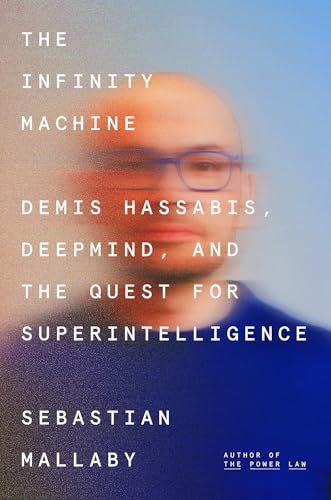
The Infinity Machine: Demis Hassabis, DeepMind, and the Quest for Superintelligence
As an affiliate, we earn on qualifying purchases.
As an affiliate, we earn on qualifying purchases.
Uncertainties in Pathways and Barriers to Superintelligence
While the report maps four potential pathways to superintelligence, it acknowledges significant uncertainties about which routes will dominate or whether multiple pathways will develop simultaneously. The effectiveness of self-improvement loops, the impact of data limitations, and the influence of physical and economic constraints remain uncertain and are active areas for future research.
Additionally, the authors do not assign likelihoods or timelines to these pathways, emphasizing that the emergence of superintelligence is not guaranteed and depends on many unpredictable factors.

HPE NVIDIA Tesla V100 32GB HBM2 PCIe 3.0 x16 Passive GPU Computational Accelerator for AI Machine Learning HPC Deep Learning 699-2G500-0216-400 (Renewed)
- Architecture: NVIDIA Volta GV100 architecture with CUDA cores
- CUDA Cores: 5120 CUDA cores for high-performance computing
- Tensor Cores: 640 Tensor Cores for AI and deep learning
As an affiliate, we earn on qualifying purchases.
As an affiliate, we earn on qualifying purchases.
Next Steps in Research and Policy Development
Researchers are expected to explore each pathway in greater detail, particularly focusing on the technical feasibility of recursive self-improvement and paradigm shifts. Policymakers and industry leaders will likely monitor developments closely, considering safety measures and regulatory frameworks to manage potential risks.
Further work will also involve empirical testing of the barriers identified and developing safety protocols for AI systems approaching superintelligence. The report calls for a coordinated, multidisciplinary effort to understand and steer AI development responsibly.

Introduction to AI Safety, Ethics, and Society
As an affiliate, we earn on qualifying purchases.
As an affiliate, we earn on qualifying purchases.
Key Questions
What are the main pathways from AGI to superintelligence?
The report identifies four pathways: scaling, paradigm shifts, recursive self-improvement, and multi-agent collectives.
What are the biggest barriers to reaching superintelligence?
Major barriers include data exhaustion, verification challenges, physical and economic constraints, and fundamental limits like the speed of light and logical incompleteness.
Does the report suggest superintelligence is inevitable?
No, the authors explicitly state that superintelligence is not guaranteed and depends on overcoming significant technical and practical barriers.
How does this framework impact AI safety efforts?
It provides a structured way to think about future AI developments, helping researchers and policymakers identify risks and prioritize safety research as AI approaches superintelligence.
When might superintelligence emerge?
The report does not specify timelines, emphasizing that the transition is highly uncertain and dependent on future technological breakthroughs and research directions.
Source: ThorstenMeyerAI.com
College move-in / dorm season Picks
dorm essentials
As an affiliate, we earn on qualifying purchases.