
📊 Full opportunity report: The Twelve Real Complaints About AI Tools in 2026 — A Reddit, Twitter, and GitHub Synthesis on ThorstenMeyerAI.com — validation score, market gap, and execution plan.
Listen free for 30 days with Audible
Thousands of audiobooks and originals — cancel anytime.
Start your free trialAs an affiliate, we earn on qualifying purchases.
TL;DR
In 2026, users across Reddit, Twitter, and GitHub report persistent issues with AI tools, including rate limit overuse, declining context quality, and hallucinations. These complaints reveal significant deployment challenges despite vendor claims of rapid capability improvement.
In 2026, users across platforms such as Reddit, Twitter, and GitHub are raising consistent complaints about AI tools, citing faster-than-expected rate limit depletion, declining context window quality, and unanticipated model behaviors. These issues are causing frustration among paying customers and challenge vendor claims of rapid capability improvements, highlighting a disconnect between marketing narratives and real-world deployment.
The most prominent complaint involves rate limits being exhausted faster than advertised. For example, an issue on Anthropic’s GitHub, filed April 1, 2026, documented that session quotas were depleted in as little as 19 minutes during demand surges, due to bugs and intentional throttling. Users reported that prompts consuming 3-7% of session quotas, with some experiencing full depletion within an hour, especially with models like Opus 4.6.
Another widespread concern is the degradation of context window quality well before the models’ stated limits. A GitHub bug report detailed that at 20% of the 1 million token window, models like Claude Code exhibited reasoning failures, circular logic, and forgotten decisions, which worsened as context usage increased. Users noted that these issues impair the productivity and reliability of AI tools in complex tasks.
Additional complaints include hallucination rates not declining as projected, with users observing persistent factual inaccuracies. Status pages often remain silent during incidents affecting large user bases, eroding trust. These recurring problems are documented through thousands of upvotes, bug reports, and official statements from vendors, indicating systemic deployment and reliability issues.
Twelve complaints.
One pattern.
AI tools in 2026 are more useful than ever and less reliable than their marketing implies. Both are true.
Documented sources only — Anthropic GitHub Issue #41930, the AMD Senior Director’s 6,852-session telemetry, the GPT-5 model-picker backlash, Cursor’s June 2025 billing change, the sycophancy-to-pushback paradox. The user-side reality check companion to the marketing-side capability stories.
6,852 sessions. 73% collapse.
An AMD Senior Director of AI filed a GitHub issue on April 2, 2026 with telemetry from three months of stable internal engineering work. The same model number, the same engineering workload, dramatic measurable degradation.
Twelve complaints. Three severity tiers.
Every complaint below has either a documented thread, an acknowledged vendor incident, or measurable telemetry behind it. No complaints based on vague vibes.
One issue. Four causes.
Community investigation identified four overlapping root causes hitting simultaneously. Anthropic confirmed peak-hour throttling on March 26 only after substantial public pressure. No blog post. No email. No status page entry.
Twelve complaints. Five causes.
The structural pattern beneath the surface complaints. Each cause connects to multiple complaints, and each affects deployment velocity in different ways.
AI tools in 2026 are simultaneously the most powerful productivity tools available and unreliable enough that significant fractions of paying users are systematically frustrated. Both are true. The vendor narrative emphasizes the first; the user narrative emphasizes the second; the deployment trajectory depends on which stays true longer.
Structural Deployment Frictions Limit AI Effectiveness
The pattern of complaints reveals that despite rapid capability development at the vendor level, real-world deployment faces significant operational hurdles. Capacity constraints, bugs, and quality degradation hinder AI’s reliability and user trust. This disconnect slows adoption and suggests that AI’s productivity gains in practice may lag behind marketing claims, impacting labor displacement and economic models based on AI deployment.

Patriola's Guide to Claude: Token Budgets: Control What Your Claude Sessions Actually Cost
As an affiliate, we earn on qualifying purchases.
As an affiliate, we earn on qualifying purchases.
User Reports Highlight Persistent AI Deployment Challenges
Throughout early 2026, user communities on Reddit, Twitter, and GitHub have documented a series of issues that contradict vendor narratives of continuous improvement. Rate limit overuse, context degradation, hallucinations, and silent incident responses have been recurring themes. These complaints are backed by telemetry data, bug reports, and official vendor acknowledgments, illustrating a pattern of operational friction that has persisted despite ongoing development efforts.
“The user-side reality in 2026 is that AI tools often fall short of advertised capabilities, with issues like rate limits and context quality degrading faster than expected.”
— Thorsten Meyer, May 2026
AI context window extension software
As an affiliate, we earn on qualifying purchases.
As an affiliate, we earn on qualifying purchases.
Extent and Impact of Reliability Issues Still Unclear
While documented complaints and telemetry confirm widespread issues, the full scope of their impact on overall AI deployment and productivity remains uncertain. It is also unclear how vendors will address these systemic problems or whether improvements will be sufficient to restore user confidence in the near term.
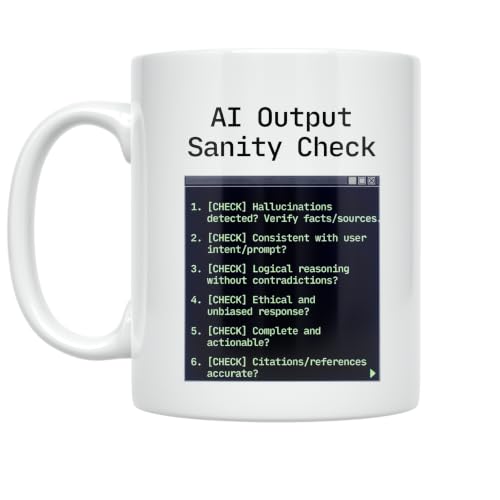
Tool Users Terminal Mug – AI Output Sanity Check Design – 11 oz Ceramic
- Design Theme: AI Output Sanity Check Checklist
- Print Style: Double-Sided Printing
- Capacity and Material: 11 oz Ceramic
As an affiliate, we earn on qualifying purchases.
As an affiliate, we earn on qualifying purchases.
Monitoring Vendor Responses and Reliability Improvements
Expect continued discussions on user forums and bug tracker updates as vendors work to fix bugs and improve reliability. Regulatory agencies may scrutinize transparency and incident response, while users will likely demand clearer communication and more predictable service levels. The next few months will reveal whether these systemic issues can be effectively addressed to restore trust and facilitate broader AI adoption.
![Norton 360 Deluxe, Antivirus software for 5 Devices with Auto-Renewal – Includes Advanced AI Scam Protection, VPN, Dark Web Monitoring & PC Cloud Backup [Download]](https://m.media-amazon.com/images/I/51S6L0zvXyL._SL500_.jpg)
Norton 360 Deluxe, Antivirus software for 5 Devices with Auto-Renewal – Includes Advanced AI Scam Protection, VPN, Dark Web Monitoring & PC Cloud Backup [Download]
- Device Compatibility: Protects 5 devices including PC, Mac, iOS, Android
- Instant Protection: Download and install in minutes
- AI Scam Detection: Advanced AI helps identify scams
As an affiliate, we earn on qualifying purchases.
As an affiliate, we earn on qualifying purchases.
Key Questions
Are these complaints isolated or widespread?
Multiple independent reports, bug reports, and community discussions indicate these issues are widespread across different AI models and platforms in 2026.
Will vendors fix these reliability problems?
Vendors have acknowledged some issues and are working on updates, but the timeline and effectiveness of these fixes remain uncertain.
How do these issues affect AI deployment in business?
Operational problems such as rate limit overuse and quality degradation slow deployment, increase costs, and reduce trust, impacting AI’s role in productivity and labor markets.
Is this a sign of fundamental limitations in current AI models?
The complaints suggest that current deployment challenges are partly due to systemic limitations in reliability and infrastructure, not just model capability.
What should users and developers do next?
Vendors should prioritize transparency and bug fixes, while users should build in operational buffers and monitor for updates to mitigate risks.
Source: ThorstenMeyerAI.com
Back to school Picks
back to school
As an affiliate, we earn on qualifying purchases.