
To make each drone session productive, focus on specific skills like improving your photography or mastering obstacle navigation. Set clear goals, such as capturing better shots or flying through tighter spaces, and review your footage afterward to identify successes and areas to improve. Reflect on mistakes as learning opportunities and adjust your approach accordingly. Stay curious, challenge yourself with new environments, and prioritize safety. Keep honing your skills consistently, and you’ll uncover new insights with every flight—keep exploring to learn even more.
Open a free Amazon Business account
Business pricing, bulk buying and tax-exempt orders.
As an affiliate, we earn on qualifying purchases.
Key Takeaways
- Set specific goals for each session, such as mastering a new technique or navigating obstacles, to focus your learning.
- Review and analyze your footage and control responses post-flight to identify strengths and areas for improvement.
- Experiment with different perspectives, camera settings, and environments to expand your skills and adaptability.
- Reflect on mistakes and challenges during flights, using them as opportunities to adjust and improve your techniques.
- Keep a flight journal or record to track progress, patterns, and insights for continuous growth in flying and photography skills.
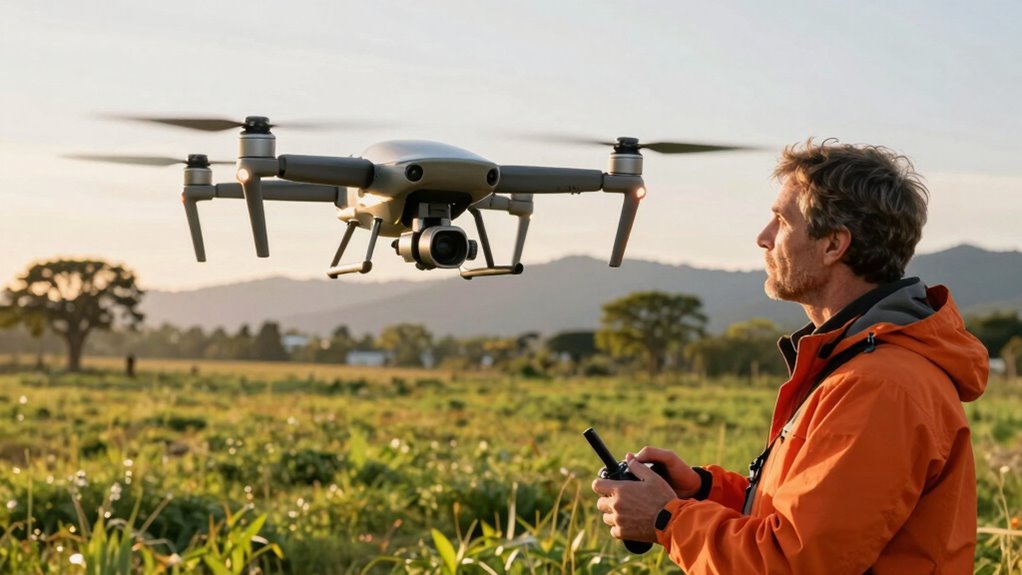
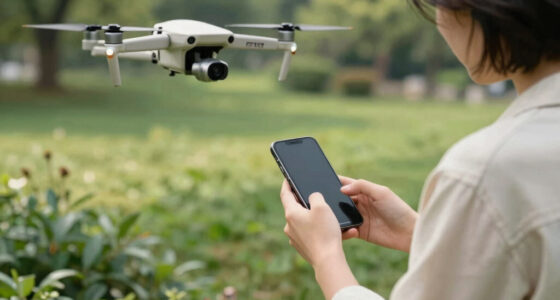
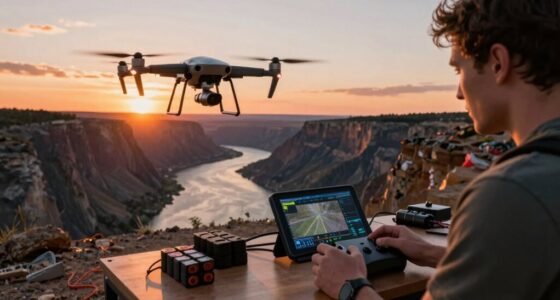
Flying a drone isn’t just about capturing stunning aerial shots; it’s an opportunity to learn and improve with every session. When you focus on aerial photography, you start to notice how lighting, angles, and composition can dramatically change your images. Each flight gives you a chance to experiment with different perspectives, helping you understand what works best for various scenes. You’ll gradually develop an eye for framing shots and understanding how to adjust camera settings on the fly, which makes your photos more dynamic and professional-looking. Always review your footage afterward to identify what worked and what didn’t, so you can refine your approach next time.
Each flight enhances your skills in lighting, angles, and composition, transforming your aerial shots into professional-quality images.
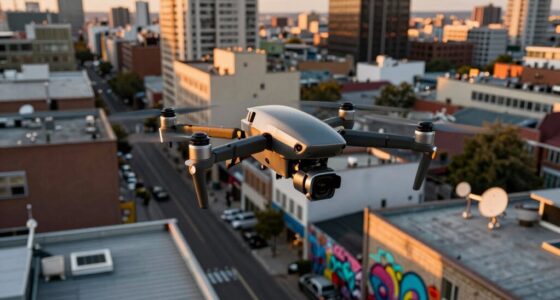
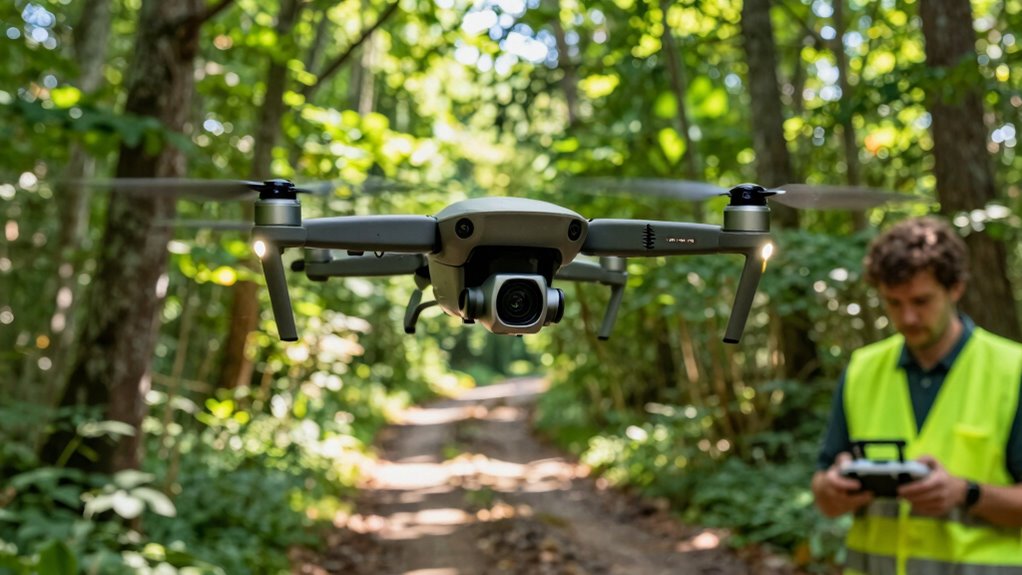
Obstacle maneuvering is another essential skill that elevates your flying experience. During your sessions, challenge yourself to fly through tighter spaces or around objects. This not only sharpens your control but also builds your confidence in handling unexpected situations. As you become more adept at obstacle maneuvering, you’ll learn to anticipate potential hazards and plan your flight paths accordingly. This skill is especially important when capturing complex shots in environments like forests, urban areas, or rocky terrains. It pushes you to become more precise with your drone’s movements, which translates into smoother footage and safer flights.
Every drone session should include a deliberate focus on these skills. Set small goals, like adjusting your flight path to avoid obstacles or experimenting with different aerial photography techniques. Keep track of your progress by taking notes or recording videos of your flights. Over time, you’ll notice patterns and areas where you excel or need improvement. This reflective practice turns each flight into a learning experience rather than just a repetitive task. Incorporating continuous learning into your routine can help you stay motivated and improve more efficiently. Additionally, understanding key aerial photography techniques can further enhance your results and creativity.
Additionally, don’t shy away from making mistakes—they’re your best teachers. If you crash or lose control momentarily, analyze what caused it and think about how to prevent it next time. Maybe you need to improve your spatial awareness or understand your drone’s capabilities better. Use each mistake as motivation to practice more intentionally. Incorporating real-time feedback into your sessions can help you make quick adjustments and accelerate your learning curve. Remember, developing a growth mindset will help you embrace challenges and see setbacks as opportunities for development. Furthermore, exploring drone safety practices can help you minimize risks and build responsible flying habits.
Ultimately, making every drone session teach you something useful means maintaining a mindset of continuous learning. Whether it’s perfecting aerial photography or mastering obstacle maneuvering, your skills will grow through consistent effort and reflection. With each flight, you become more skilled, confident, and capable of capturing incredible shots while safely maneuvering your environment. Keep challenging yourself, review your progress, and stay curious—that’s the key to turning every drone session into a valuable learning experience.
drone camera filters for aerial photography
As an affiliate, we earn on qualifying purchases.
As an affiliate, we earn on qualifying purchases.
Frequently Asked Questions
What Equipment Is Essential for Effective Drone Learning?
You need essential equipment like a reliable drone, extra batteries, and a charger for effective learning. Don’t forget tools for drone maintenance, such as screwdrivers and cleaning supplies, to keep your device in top shape. Managing your batteries properly helps you maximize flight time and safety. With the right equipment, you can focus on improving your skills, troubleshooting issues, and gaining valuable experience during each drone session.
How Do I Analyze My Drone Flight Data?
Sure, analyzing your drone flight data is a breeze—just pretend you’re a spy decoding secret messages. Immerse yourself in your flight path and scrutinize data metrics like altitude, speed, and battery use. Spot patterns, identify anomalies, and learn what each metric reveals about your flying skills. With a bit of detective work, you’ll turn raw data into insights, making every flight smarter, safer, and more impressive.
What Safety Precautions Should I Follow During Sessions?
During drone sessions, you should always prioritize safety by preparing for emergencies and considering weather conditions. Keep emergency preparedness kits nearby, know how to handle unexpected issues, and stay updated on weather forecasts. Avoid flying in strong winds, rain, or storms, as these can compromise control and safety. By staying vigilant about weather considerations and having emergency plans in place, you protect yourself, others, and your equipment.
How Can I Improve My Drone Piloting Skills Quickly?
To improve your drone piloting skills quickly, focus on practicing aerial photography and obstacle navigation regularly. Challenge yourself with different environments and lighting conditions to refine your control and camera skills. Watch tutorials and analyze your flight recordings to identify areas for improvement. Stay patient, and gradually increase complexity in your flights. This consistent practice helps you develop better reflexes, precision, and confidence, making you a more skilled drone pilot in no time.
What Resources Are Available for Advanced Drone Techniques?
Think of your drone as a canvas and advanced techniques as your palette. You can find online courses, tutorials, and forums dedicated to aerial maneuvers and navigation skills. Manufacturers often offer advanced training programs and software tools. Practice by challenging yourself with complex flight patterns, and study videos from expert pilots. These resources help sharpen your skills, turning your drone into an extension of your creative expression and technical mastery.
As an affiliate, we earn on qualifying purchases.
Conclusion
Every drone session is like a secret garden waiting to reveal its treasures. With curious eyes and an enthusiastic heart, you’ll uncover lessons hidden in every flight, transforming mistakes into stepping stones and challenges into catalysts for growth. Embrace each session as a chapter in your flying adventure, where the sky’s the limit and every wobble or wobble teaches you more. Keep flying, keep learning—soon, you’ll master the art of turning every flight into a story of success.
drone flight controller with GPS
As an affiliate, we earn on qualifying purchases.
As an affiliate, we earn on qualifying purchases.
professional drone carrying case
As an affiliate, we earn on qualifying purchases.
As an affiliate, we earn on qualifying purchases.
Back to school Picks
back to school
As an affiliate, we earn on qualifying purchases.